
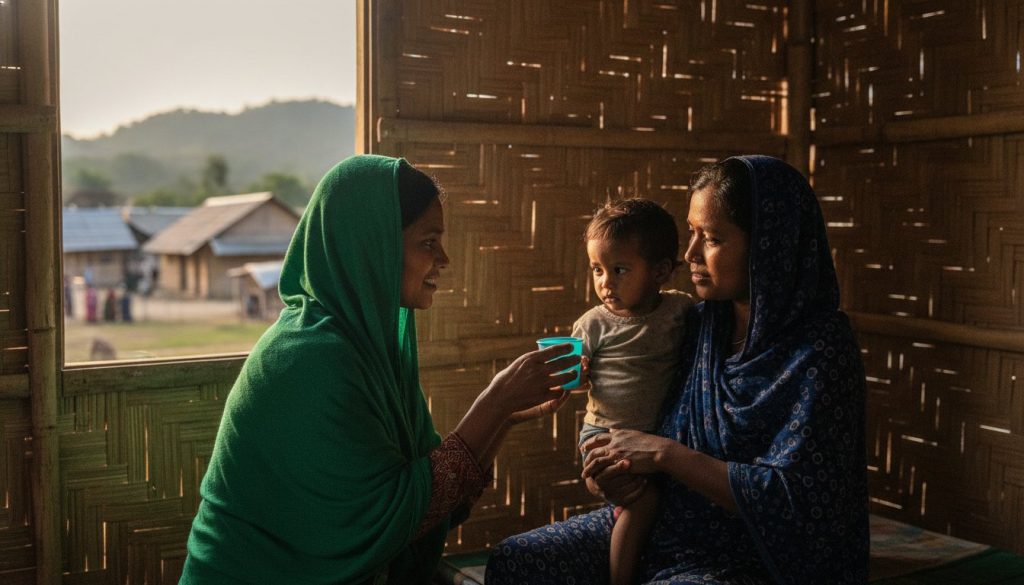
The health and dignity of any society are measured by how it treats its most vulnerable members. For those who have been forcibly displaced from their homes, access to healthcare is not a privilege but a fundamental human right—a lifeline in a world of uncertainty and a cornerstone of their ability to rebuild. Yet, this right is consistently challenged by systemic barriers, from legal documentation to institutional discrimination.
This guide explores the complex landscape of healthcare access for displaced people, examining the global principles that should protect them, the stark realities they face, and the actionable steps we can all take to advocate for change. We will focus on the specific struggles of the Rohingya people—from the crisis in their homeland of Arakan State to the refugee camps of Bangladesh and the administrative hurdles in Malaysia—and connect these global challenges to the support systems available here in the United Kingdom.
Table of Contents
- Understanding Healthcare Access for Displaced People as a Fundamental Right
- The Rohingya Context: Healthcare Challenges in Rakhine State and Beyond
- Navigating Documentation and Legal Barriers to Medical Care
- Facilitating Healthcare Access for Refugees in the United Kingdom
- How You Can Take Action Today
- Frequently Asked Questions
Understanding Healthcare Access for Displaced People as a Fundamental Right
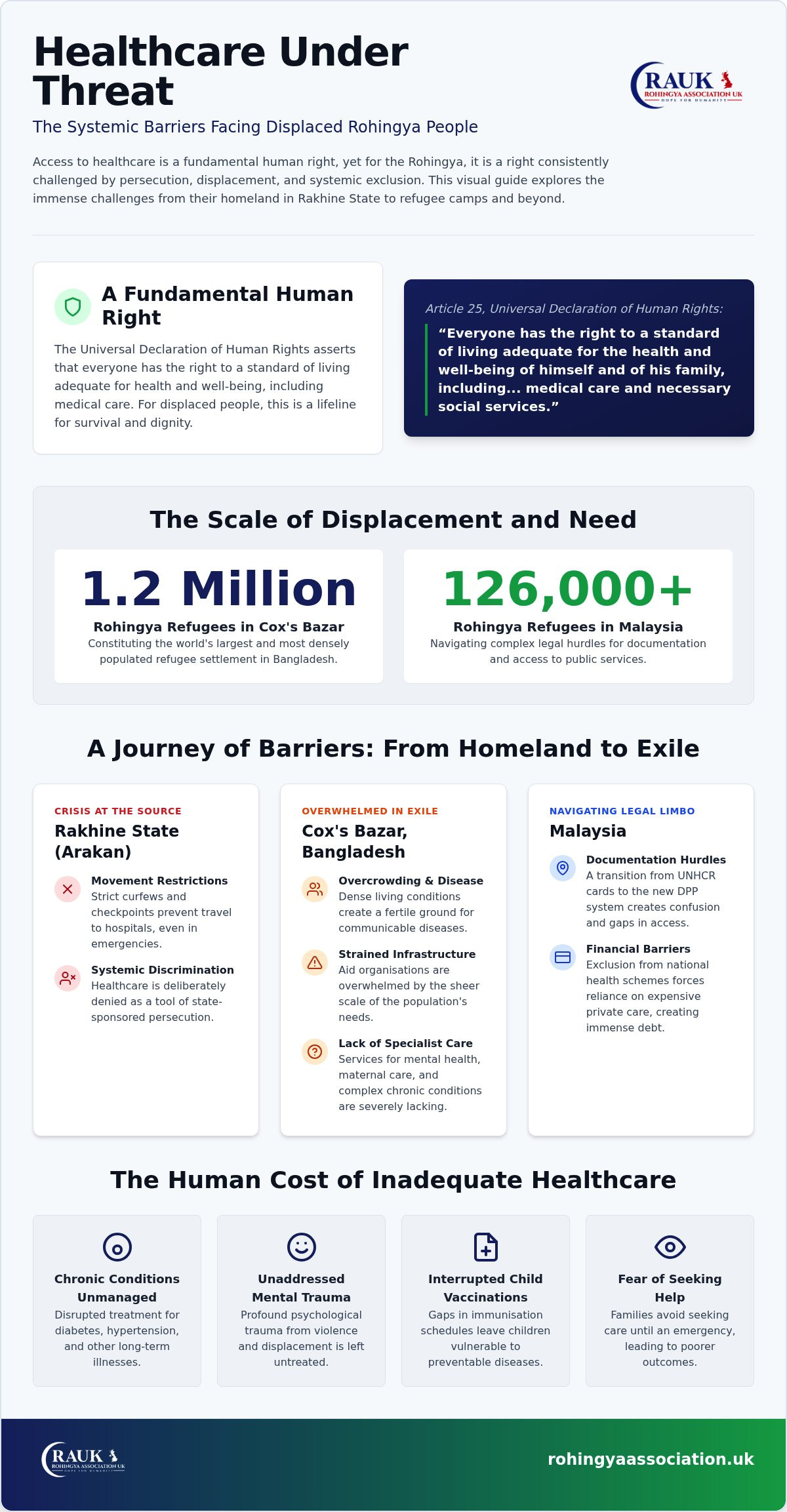
The right to health is a universal principle, enshrined in foundational human rights documents, including the Universal Declaration of Human Rights. It asserts that every individual is entitled to the highest attainable standard of physical and mental health. For displaced populations—refugees, asylum seekers, and the stateless—this right is often the first to be compromised. Displacement violently disrupts the continuity of care, halting treatment for chronic conditions like diabetes and hypertension, interrupting vaccination schedules for children, and leaving profound psychological trauma unaddressed.
Providing medical assistance regardless of a person’s legal status is therefore not merely an act of charity; it is a moral and legal imperative. When communities are uprooted, access to healthcare becomes a powerful tool for restoring stability and dignity. It signals that, even in the face of immense loss, a person’s life and well-being are still valued. Through this lens, community-led support becomes essential, offering a bridge to services that formal systems may deny and helping families navigate an often-intimidating new environment.
The Principle of Universal Health Coverage
The World Health Organization (WHO) champions the goal of Universal Health Coverage (UHC), which aims to ensure that all people can obtain the quality health services they need without suffering financial hardship. This principle is built on the belief that health is a prerequisite for human development. However, for the world’s most marginalised groups, UHC remains a distant aspiration.
- Exclusion from National Systems: Stateless and displaced populations are frequently excluded from national health insurance schemes and public health infrastructure, leaving them reliant on under-funded NGOs or expensive private care.
- Financial Barriers: The profound poverty that accompanies displacement means that even minor medical costs can be catastrophic. Without the right to work or a stable income, families are often forced to choose between food and medicine.
- Impact on Health-Seeking Behaviour: The fear of incurring debt or being unable to pay for treatment often prevents displaced people from seeking medical help until a condition becomes a life-threatening emergency, leading to poorer outcomes and higher costs for the system as a whole.
Health as a Pillar of Human Dignity
Health outcomes are inextricably linked to social and economic stability. A person who is unwell cannot work, study, or care for their family, perpetuating a cycle of poverty and marginalisation. To address this, we must pursue health justice. Health justice is the removal of systemic barriers—such as discrimination, restrictive laws, and economic inequality—that prevent individuals and communities from reaching their full health potential.
“Everyone has the right to a standard of living adequate for the health and well-being of himself and of his family, including food, clothing, housing and medical care and necessary social services.”
– Article 25, The Universal Declaration of Human Rights
Navigating complex medical systems whilst displaced requires immense psychological resilience. Patients must often overcome language barriers, cultural misunderstandings, and the trauma of their past experiences simply to make an appointment. Restoring access to healthcare is therefore a critical step in restoring a sense of agency and hope, allowing individuals to move from merely surviving to actively rebuilding their lives.
The Rohingya Context: Healthcare Challenges in Rakhine State and Beyond
To understand the current health crisis facing the Rohingya, we must look to its roots in Myanmar’s Rakhine State, historically known as Arakan State. For decades, the Rohingya have faced state-sponsored persecution, including the systemic and deliberate denial of basic rights like healthcare. This has created a legacy of chronic health issues and deep-seated trauma that follows families as they flee.
Today, approximately 1.2 million Rohingya refugees reside in the sprawling camps of Cox’s Bazar, Bangladesh, forming the world’s largest refugee settlement. The conditions are immensely challenging; camps are overcrowded, and infrastructure is strained, creating a fertile ground for the spread of communicable diseases. Whilst aid organisations work tirelessly, the sheer scale of the population means that the system is overwhelmed. Specialist medical services, particularly for complex chronic conditions, mental health, and maternal care, remain severely lacking.
Crisis in Rakhine (Arakan) State
Within Myanmar, the denial of healthcare to the Rohingya has long been a tool of oppression. Families have faced, and continue to face, severe restrictions that make accessing medical facilities nearly impossible.
- Movement Restrictions: Strict curfews and checkpoints prevent Rohingya from travelling to hospitals and clinics in other townships, even for emergencies.
- Discriminatory Practices: Reports have documented instances of segregation in hospitals, denial of treatment, and extortionate fees being demanded from Rohingya patients.
- Attacks on Healthcare: The destruction of medical facilities and the targeting of healthcare workers have further decimated an already fragile system.
Securing long-term health rights for the Rohingya is inseparable from the broader pursuit of justice for Rohingya people. Without accountability and the restoration of citizenship, healthcare will continue to be used as a weapon of control.
The Cox’s Bazar Healthcare Landscape
In Bangladesh, a network of primary health centres (PHCs), often run by NGOs and UN agencies, forms the backbone of the medical response in the camps. These centres provide essential services such as vaccinations, basic consultations, and maternal health checks. However, the system faces significant challenges.
Referrals for secondary and tertiary care—specialist treatment or complex surgeries—are a major bottleneck. Limited hospital capacity in the surrounding host community means that only the most critical cases can be transferred. Patients often face long waits for specialist appointments, and the logistical and financial burdens of transport and accommodation outside the camps can be prohibitive. For a deeper insight into the daily realities, our guide to life inside a rohingya refugee camp offers a comprehensive overview.
Navigating Documentation and Legal Barriers to Medical Care
For displaced people worldwide, the lack of legal identity is one of the most significant barriers to healthcare access. Without official documentation, individuals become invisible to state systems, locking them out of public services and exposing them to institutional discrimination. The fear of detention or deportation is a powerful deterrent, often forcing people to endure treatable illnesses in silence rather than risk seeking help from authorities.
This challenge is acutely felt by the over 126,000 Rohingya refugees in Malaysia, who are currently navigating a major administrative shift. For years, many relied on documentation from the United Nations High Commissioner for Refugees (UNHCR). However, the Malaysian government has begun transitioning to its own system, known as the Dokumen Pendaftaran Pelarian (DPP), creating a period of uncertainty and anxiety for a community already on the edge.
The Transition to the DPP System in Malaysia
The introduction of the DPP system represents an effort by the Malaysian government to take a more direct role in registering and managing the refugee population. Whilst the stated aim may be to improve data and administration, the transition has raised significant concerns about its impact on healthcare access.
- Affordability: Previously, UNHCR cardholders were sometimes granted discounts at public hospitals. It remains unclear whether the DPP will confer similar benefits, raising fears of significantly higher medical costs for refugees.
- Accessibility: The process of registration and the criteria for eligibility under the DPP system are not yet fully transparent, potentially leaving thousands of vulnerable people without any form of valid documentation.
- Exclusion: There is a risk that a government-led system could be used to categorise refugees in ways that limit their access to essential services based on nationality or other factors.
In this environment, documentation is the “gatekeeper” to medical safety. Without it, a hospital door can remain firmly closed, regardless of the severity of the illness behind it.
Institutional Discrimination and Language Barriers
Beyond legal documentation, cultural and linguistic barriers create further obstacles to effective healthcare. A patient who cannot communicate their symptoms accurately, or a doctor who cannot explain a treatment plan clearly, leads to misdiagnoses, poor adherence to medication, and ultimately, worse health outcomes. This is why the provision of professional medical translators is not a luxury but a necessity in any country hosting refugee populations.
Healthcare services must be organised to be inclusive and culturally competent. This involves training medical staff to understand the unique health challenges and cultural contexts of displaced communities, from traditional health beliefs to the psychological impact of trauma. Building trust between providers and patients is paramount, especially for communities that have experienced persecution at the hands of state authorities.
Facilitating Healthcare Access for Refugees in the United Kingdom
In the United Kingdom, the National Health Service (NHS) is founded on the principle of being comprehensive, universal, and free at the point of delivery. This principle extends, in large part, to refugees and asylum seekers, though navigating the system can be challenging.
Asylum seekers and refugees have the right to access NHS services. However, practical hurdles often stand in the way. Registering with a General Practitioner (GP) can be difficult for those without a fixed address or official identification, even though NHS guidance explicitly states that these are not required. Furthermore, the support of local organisations is often crucial for providing guidance on entitlements, overcoming administrative obstacles, and connecting families with culturally sensitive care. This is a key part of building effective community support for displaced families, ensuring they can integrate fully into society.
Understanding NHS Entitlements
For those navigating the UK asylum system, understanding their healthcare rights is the first step towards accessing care. The rules can seem complex, but the core entitlements are clear.
- Free Primary and Emergency Care: Everyone in the UK, regardless of their immigration status, is entitled to free treatment at a GP surgery and in an Accident & Emergency (A&E) department. This includes refused asylum seekers.
- Registering with a GP: You do not need proof of address, immigration status, or a fixed identity document to register with a GP. However, some reception staff may be unaware of this guidance, a behaviour known as “gatekeeping.” Politely referring them to the official NHS England guidelines can often resolve the issue.
- Help with Health Costs: Asylum seekers receiving support from the Home Office are entitled to an HC2 certificate, which provides full help with health costs, including free prescriptions, dental care, and sight tests.
Local Support Systems in Bradford
In cities like Bradford, which has a significant and established Rohingya community, local organisations play a vital role in bridging the gap between families and the NHS. At Rohingya Association UK, we provide direct, practical assistance to help families navigate these systems.
Our team assists newly arrived families with the process of registering at local clinics, explaining how the appointment system works, and ensuring they understand their rights. We also recognise that health literacy is closely tied to language skills. Our English language classes empower individuals to communicate their health needs confidently and independently. This community-led approach ensures that families not only receive care but also build the skills and confidence to manage their health in the long term. If you are inspired to help, we encourage you to volunteer with Rohingya Association UK and become part of this essential local support network.
How You Can Take Action Today
The challenges to healthcare access for displaced people are systemic and profound, but they are not insurmountable. Bridging these health gaps requires a combination of urgent advocacy, direct aid, and a collective global commitment to upholding human rights. Every action, whether large or small, contributes to a world where a person’s health is not determined by their legal status or country of origin.
Your support can provide immediate relief to families in crisis and help build a more just and equitable future. The restoration of health is a collective responsibility, and together, we can make a tangible difference.
Support Global and Local Health Initiatives
Direct support for health projects provides a critical lifeline to those in the most desperate need. Your contributions can fund medical supplies, support mobile health clinics, and help build long-term health infrastructure in refugee camps and host communities.
- To fund sustainable health solutions that provide continuous benefit, you can donate your Sadaqah Jariyah.
- To provide targeted medical aid to the 1.2 million refugees in Cox’s Bazar, please support our Bangladesh projects.
Advocate for Systemic Change
Lasting change requires us to address the root causes of health inequality. Raising awareness is a powerful form of advocacy. Share the facts about the Rohingya crisis and the barriers displaced people face with your network. Write to your elected representatives, urging them to support policies that protect the right to health for all, regardless of immigration status.
By lending your voice to this cause, you help in the essential work of tackling inequality and ensuring that healthcare remains a universal human right, not a privilege of circumstance.
Frequently Asked Questions
Do refugees have a right to healthcare under international law?
Yes. The 1951 Refugee Convention, along with international human rights law, stipulates that refugees should be granted the same access to public health services as nationals of the host country. The Universal Declaration of Human Rights also affirms the right to medical care for all people.
How many Rohingya refugees are currently living in Cox’s Bazar?
As of 2026, it is estimated that approximately 1.2 million Rohingya refugees are living in the camps in Cox’s Bazar, Bangladesh, making it the largest refugee settlement in the world.
What is the DPP system in Malaysia and how does it affect healthcare?
The DPP (Dokumen Pendaftaran Pelarian) is a new registration system being introduced by the Malaysian government to manage its refugee population, which includes over 126,000 Rohingya. There are concerns this transition away from UNHCR documentation could lead to higher healthcare costs and potential exclusion from services for those unable to register.
Can asylum seekers in the UK access the NHS for free?
Yes. All asylum seekers are entitled to free primary care (GP registration) and emergency A&E treatment on the NHS. Those receiving financial support from the Home Office are also eligible for an HC2 certificate, which covers costs like prescriptions and dental care.
What are the main health issues facing people in refugee camps?
Common health issues include communicable diseases (like cholera and diphtheria) due to overcrowding and poor sanitation, malnutrition, respiratory infections, and significant mental health challenges, including PTSD, anxiety, and depression resulting from trauma.
How does the Rohingya Association UK help with healthcare access?
We provide practical support to Rohingya families in the UK, particularly in Bradford, by assisting with GP registration, explaining NHS entitlements, and offering English language classes to improve health literacy and empower individuals to communicate effectively with medical professionals.
What happened to healthcare in Arakan State?
In Rakhine State (historically Arakan State), the Rohingya have long faced systemic discrimination in healthcare, including severe travel restrictions preventing them from reaching hospitals, denial of treatment, and the destruction of medical infrastructure, all of which have been used as tools of persecution.
How can I support medical aid for Rohingya families?
You can provide support by donating to organisations like ours that fund medical projects in Bangladesh and support refugee health in the UK. You can also advocate for policy changes that guarantee healthcare access for all displaced people.