
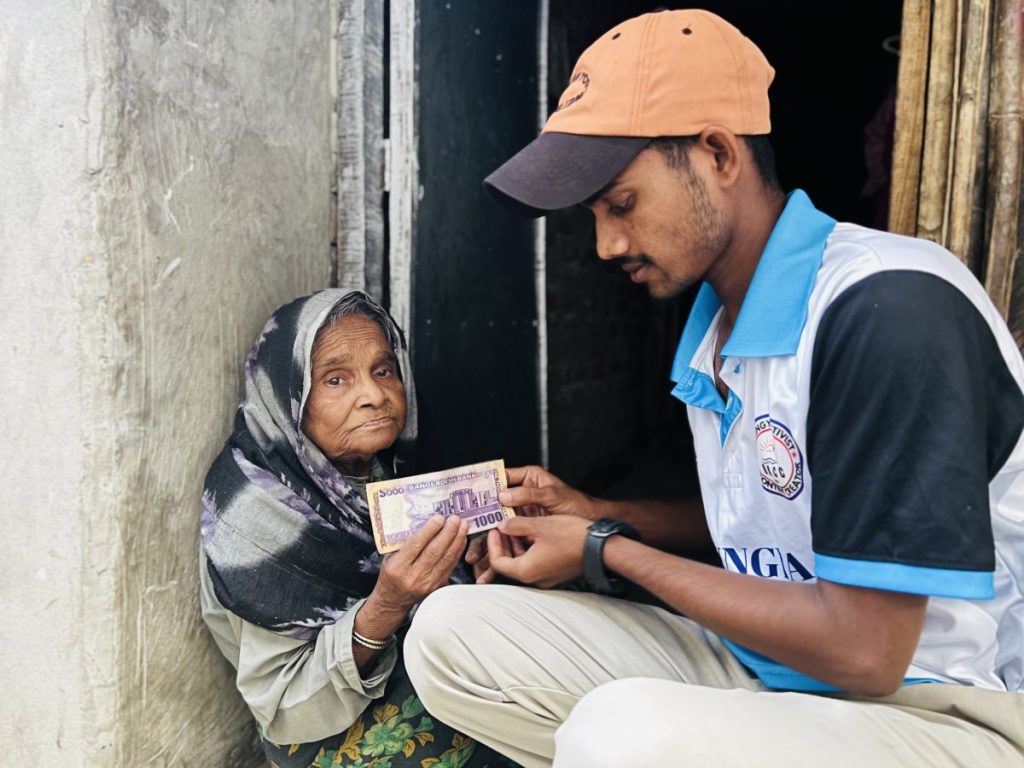
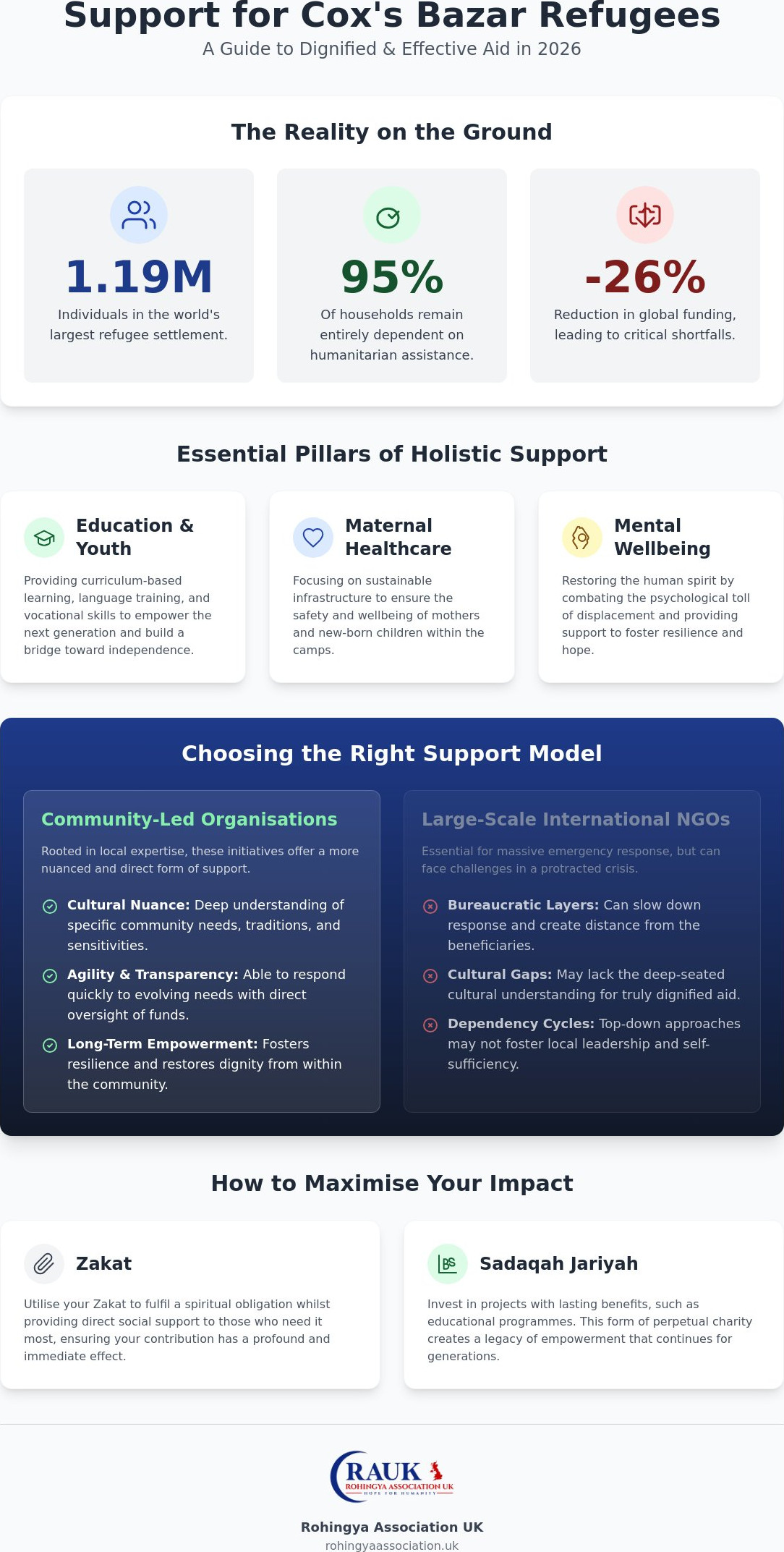
Did you know that 95% of Rohingya households in Cox’s Bazar remain entirely dependent on humanitarian assistance, even as the global funding appeal for 2026 has been slashed by 26%? It’s natural to feel overwhelmed by the sheer scale of the world’s largest refugee settlement, particularly when donor fatigue and transparency concerns begin to cloud the path forward. However, providing effective support for Cox’s Bazar refugees isn’t just about charity; it’s about justice, dignity, and the restoration of a people. Every family deserves safety, every child requires education, and every community needs a voice.
You likely believe that meaningful change is possible when aid is rooted in local expertise and cultural pride. This guide will show you how to provide dignified support that transcends mere survival and focuses on long-term empowerment. We’ll explore the most pressing needs of the 1,194,123 individuals currently in the camps, identify how community-led organisations ensure transparency, and outline how you can advocate for the systemic justice this resilient community deserves. Together, we can move beyond temporary relief toward a legacy of protection, heritage, and hope.
Key Takeaways
- Understand the evolving 2026 landscape of Cox’s Bazar, where the transition from emergency relief to protracted crisis management requires a more sustainable, long-term commitment to aid.
- Identify the most effective forms of support for Cox’s Bazar refugees by focusing on holistic pillars like maternal healthcare, mental wellbeing, and youth empowerment programmes.
- Recognise the distinct advantages of community-led charities, which provide the cultural nuance and agility needed to address the specific needs of the Rohingya community with dignity.
- Learn how to maximise your impact through strategic giving, including the spiritual and social benefits of utilising Zakat and Sadaqah Jariyah for educational initiatives.
- Discover how the unique connection between the UK diaspora and the camps allows for direct, transparent advocacy that restores hope and fosters resilience for families in need.
The Reality of Cox’s Bazar in 2026: A Protracted Crisis
Cox’s Bazar stands today as the world’s largest refugee settlement, a sprawling network of bamboo and tarpaulin shelters that provides a fragile sanctuary for over 1.19 million residents. As we move through 2026, the international community’s approach has fundamentally shifted from the frantic energy of a sudden emergency response to the weary, complex reality of protracted crisis management. This transition is not merely a matter of semantics; it reflects a deepening struggle to maintain safety, dignity, and hope for a population that has been living in limbo for nearly a decade. The terrain itself remains a constant threat, as evidenced by the devastating landslides in July 2026 that claimed lives and displaced thousands within the world’s largest refugee camp. These environmental hazards, coupled with the persistent risk of fire in overcrowded sectors, make the provision of consistent support for Cox’s Bazar refugees a life-saving necessity rather than an optional charity.
The Burden of Statelessness and Legal Vulnerability
The Rohingya people carry the heavy weight of being the world’s largest stateless population, a status that strips them of formal citizenship and complicates every facet of aid delivery. Without legal recognition in Myanmar, refugees are caught in a bureaucratic vacuum that limits their movement, prevents legal employment, and restricts access to formal education. Providing humanitarian aid for Myanmar refugees is essential to bridge these systemic gaps, ensuring that legal invisibility doesn’t equate to human neglect. This lack of status creates a cycle of dependency, where families remain trapped within camp boundaries, unable to build independent futures whilst awaiting a safe, dignified return to their ancestral lands.
Current Humanitarian Gaps in 2026
In 2026, the humanitarian landscape is marred by a 26% reduction in funding through the Joint Response Plan, leading to critical shortfalls in basic rations and fuel. Whilst the world’s attention may have drifted, the needs of the most vulnerable—the elderly, the disabled, and the orphans—have only intensified. Basic aid is no longer sufficient for a generation of children born within these camp fences; they require more than just calories to survive. They need protection, education, and the opportunity to grow. Addressing these gaps requires a move toward sustainable, community-led models that prioritise the restoration of human spirit alongside physical health. Understanding the structured phases of humanitarian aid for refugees can help donors and advocates navigate these complex shortfalls more effectively. We must recognise that for many, the support for Cox’s Bazar refugees is the only shield against total despair.
Essential Pillars of Holistic Support for Cox’s Bazar Refugees
Restoring a community requires more than just meeting immediate physiological needs; it demands a comprehensive framework that honours the human spirit. Effective support for Cox’s Bazar refugees in 2026 must address the whole person, ensuring that aid is not merely a transaction of survival but a foundation for future renewal. This involves a strategic shift toward sustainable infrastructure that prioritises maternal safety, mental health restoration, and the preservation of a unique cultural identity. For those seeking a clear and accessible overview of the crisis, it becomes evident that the focus must move beyond the perimeter of the camp toward the potential of the people within it. We must look toward models of care that offer protection, stability, and growth.
Education as a Tool for Resilience
The classroom is often the first place where a child can reclaim a sense of normalcy and purpose. In the camps, curriculum-based learning provides the structure necessary to combat the psychological toll of displacement. By investing in refugee youth empowerment programs, we provide the tools for agency, literacy, and leadership. These initiatives, which include English language training and vocational skills development, prepare the next generation for a life of independence. Education isn’t a luxury; it’s a form of perpetual charity that builds a bridge toward a more stable future. It empowers the youth to become advocates for their own justice and architects of their own return.
Healthcare and Wellbeing
As the crisis enters its ninth year, the mental health needs of the community have reached a critical point. Emergency clinics are evolving into centres for maternal health and psychological support, addressing the deep-seated trauma of the past whilst preparing for the needs of the future. Nutrition programmes for children under the age of five remain vital, as nearly the entire population remains dependent on humanitarian assistance for their daily sustenance. Community health volunteers, drawn from the refugee population itself, play a pivotal role in disease prevention and health education. This community-led approach ensures that healthcare is culturally sensitive, accessible, and trusted by those who need it most.
Dignified shelter and cultural preservation are equally paramount to the long-term health of the community. Living conditions must respect the sanctity of the family unit, providing privacy and safety whilst fostering a sense of belonging amidst the bamboo structures. Protecting the Rohingya language, art, and Islamic heritage is essential for the youth, ensuring their identity remains intact despite their displacement. By supporting these pillars, we do more than provide aid; we defend a culture and uphold the dignity of a people. You can join this mission by becoming a partner in our community-led advocacy and helping us bridge the gap between survival and restoration.
Comparing Support Models: International NGOs vs. Community-Led Initiatives
The humanitarian ecosystem in Cox’s Bazar is a complex tapestry of diverse actors, each playing a critical role in the survival of over a million people. Large-scale international organisations possess the logistical might to manage massive supply chains, negotiate with governments, and coordinate technical sectors such as water and sanitation. These entities are essential for the macro-level response, yet as documented in reflections on the Rohingya Refugee Crisis at 7 Years, the sheer scale of these bureaucracies can sometimes lead to a disconnect from the lived realities of individual families. In contrast, community-led initiatives offer an agility and cultural sensitivity that larger organisations often struggle to replicate. By prioritising community support for displaced families, these smaller charities build deep, durable trust that is essential for the success of sensitive interventions like mental health support or cultural preservation.
The Value of Lived Experience
Lived experience is perhaps the most potent tool in the humanitarian arsenal. Rohingya-led organisations are uniquely positioned to identify hidden needs that might escape an external observer, such as specific barriers to maternal care or the nuances of faith-based education. The Rohingya diaspora, particularly our community in Bradford, acts as a vital bridge, translating the urgent requirements of the camps into actionable advocacy. This cultural familiarity ensures that crisis intervention is not just efficient but also respectful, acknowledging the Islamic heritage and communal traditions that provide strength to those in exile. When you provide support for Cox’s Bazar refugees through a community-rooted organisation, you’re investing in a partnership that understands the heartbeat of the settlement and the specific aspirations of its residents.
Transparency and Accountability in Aid
In an era of donor fatigue, transparency and accountability are non-negotiable. Donors increasingly seek evidence that their contributions are reaching the front lines rather than being consumed by complex administrative overheads. When evaluating where to direct your support, look for clear reporting, direct project outcomes, and a visible connection to the community being served. Supporting smaller, focused projects often yields more tangible results; whether that’s the construction of a specific learning centre or the funding of a targeted nutrition programme for vulnerable infants. At RAUK, we maintain rigorous governance and direct cultural ties to ensure every donation is utilised effectively. We believe that accountability is a two-way street; we are responsible to our donors in the UK and, most importantly, to the families we serve in Bangladesh, India, and beyond. Effective support for Cox’s Bazar refugees requires a blend of this professional rigour and heartfelt empathy.
How You Can Make a Tangible Difference: A Strategic Guide
While the scale of the crisis can appear insurmountable, individual agency remains a powerful force for restoration. Providing effective support for Cox’s Bazar refugees requires a move toward a more sophisticated philanthropic strategy that balances immediate relief with long-term stability. One-off donations are vital during seasonal emergencies, such as the monsoon-induced landslides seen in July 2026, yet it’s monthly contributions that allow for the sustainable planning of schools and clinics. Regular giving provides the predictability needed to employ teachers, stock pharmacies, and maintain community centres. By committing to a steady partnership, you help transform a cycle of survival into a path of renewal, ensuring that the Rohingya community is never forgotten by the global conscience.
Integrating Faith and Philanthropy
For many, the act of giving is deeply rooted in spiritual duty and the pursuit of social justice. Zakat, when applied ethically and effectively, serves as a transformative tool for refugee aid, targeting the most vulnerable whilst upholding their inherent dignity. We encourage donors to view their contributions as a form of Sadaqah Jariyah; a perpetual charity that continues to yield benefits long after the initial gift. Investing in a water well, a community kitchen, or a youth empowerment centre isn’t just relief; it’s a strategic investment in the future of a people. If you want to ensure your generosity reaches those who need it most, our 2026 checklist for how to donate to Bangladesh refugee camps provides a practical framework for making every contribution count. This approach moves beyond the “emergency” mindset, focusing on the growth, protection, and long-term agency of the families within the settlements.
Beyond the Donation: The Power of Advocacy
Advocacy is the only path to a permanent solution for the Rohingya people. Whilst financial aid keeps families safe today, it is sustained awareness and political pressure that will eventually secure their rights and their return. You can play a critical role by sharing insights into the daily life and resilience found within the rohingya refugee camp, ensuring that their stories aren’t buried under newer headlines. Utilise your social media platforms, organise local community events, and participate in global human rights campaigns to keep this protracted crisis in the public eye. Your voice acts as a shield against the silence that often accompanies long-term displacement.
Local engagement is equally vital, particularly in cities like Bradford where the Rohingya diaspora has found a home. Volunteering with community-led organisations allows you to support integration efforts and cultural events that strengthen the bond between the UK and those still in the camps. This local action directly fuels our global advocacy, proving that support for Cox’s Bazar refugees is a collective effort that spans continents. We invite you to join our mission and become a steadfast advocate for a community that refuses to be defined by its trauma.
The RAUK Mission: Restoring Hope from Bradford to Bangladesh
The Rohingya Association UK (RAUK) occupies a unique position within the humanitarian landscape, serving as a vital, community-led bridge between the diaspora in Bradford and the families surviving in the camps of Bangladesh and Myanmar. As a registered charity (number 1211433), we operate with the professional rigour expected of a leading NGO whilst maintaining the deep cultural ties and lived experience of the community we serve. We don’t view ourselves as distant benefactors; instead, we act as a protective shield and a guiding hand for those who have lost nearly everything. Our mission is rooted in a sense of duty that transcends simple charity, positioning us as a principled leader in the fight for systemic change and long-term justice. By providing support for Cox’s Bazar refugees through our organisation, you’re joining a movement that prioritises the restoration of a people’s dignity alongside their physical survival.
Local support within the UK directly fuels our global advocacy and on-the-ground projects, ensuring that the voices of the Rohingya are heard in the corridors of power. This connection allows us to remain agile, responding to immediate crises such as seasonal landslides whilst simultaneously building the foundations for a future of independence. We believe that true empowerment comes from within the community, which is why our initiatives are designed to foster agency and resilience rather than permanent dependency. This is a commitment to growth, protection, and the unwavering pursuit of a safe return home.
Our Projects in Cox’s Bazar
Our work within the settlements focuses on three critical pillars: education, healthcare access, and crisis intervention. We recognise that for the youth in the camps, education is the only path toward a life of agency, which is why we prioritise curriculum-based learning that respects their heritage. Our healthcare projects move beyond basic clinics to address maternal safety and the psychological trauma of displacement, ensuring every individual receives care with the respect they deserve. Crucially, we work to preserve the Rohingya language and Islamic traditions amongst the youth, protecting a cultural identity that others have sought to erase. This dignified approach ensures that aid is never a source of shame but a tool for communal restoration.
Join the Rohingya Association UK
We invite you to step beyond the role of a donor and become a partner in our mission for justice and empowerment. Our website offers a transparent view of our governance and reporting, allowing you to see exactly how your contributions are being utilised to transform lives in the camps. From impact stories of youth empowerment to updates on our latest crisis interventions, we maintain a steady, honest dialogue with our supporters. Choosing to provide support for Cox’s Bazar refugees through RAUK means choosing an organisation that is deeply embedded in the community and tirelessly committed to long-term change. Stand with us as we work to build a brighter, more dignified future for every Rohingya family. Support the Rohingya Association UK today and help us turn the tide of this protracted crisis.
Building a Legacy of Resilience and Justice
The landscape of Cox’s Bazar in 2026 demands a sophisticated response that acknowledges the gravity of the crisis whilst refusing to accept it as the final chapter for the Rohingya people. We’ve explored how holistic aid must move beyond basic survival to embrace education, healthcare, and the vital preservation of cultural heritage. By choosing a community-led approach, you ensure that your support for Cox’s Bazar refugees is delivered with the nuance and respect that only lived experience can provide. RAUK stands at the forefront of this mission, combining professional expertise in refugee crisis intervention with a deep-rooted commitment to advocacy. As Registered Charity number 1211433, we provide a transparent, direct link between the UK diaspora and those in the camps, ensuring every contribution fuels a movement of restoration. The path to justice is long, but it’s built on the steadfast partnership of those who refuse to look away. Join our mission to provide dignified support for Cox’s Bazar refugees and become a catalyst for renewal today. Every family deserves a future defined by safety and hope.
Frequently Asked Questions
How much of my donation actually goes to the refugees in Cox’s Bazar?
RAUK ensures that the vast majority of your contribution directly funds our front-line projects, maintaining low administrative costs through our lean, community-led structure. As a registered charity in the UK (number 1211433), we are subject to rigorous reporting standards that guarantee transparency and accountability. Every pound you provide as support for Cox’s Bazar refugees is carefully tracked to ensure it facilitates restoration, protection, and growth for the families who need it most.
Can I donate Zakat to support Rohingya refugees through RAUK?
Yes, you can ethically and effectively donate your Zakat to support the Rohingya community through our dedicated programmes. We ensure that these funds are distributed in accordance with Islamic principles, prioritising the most vulnerable households in the camps. By utilising Zakat for education or crisis intervention, you participate in a form of Sadaqah Jariyah that provides lasting benefits and restores hope to displaced families whilst upholding their inherent dignity.
What are the most urgent needs for refugees in Cox’s Bazar right now?
The most urgent needs in 2026 include food security, landslide-resistant shelter, and maternal healthcare, particularly following the 26% reduction in global funding appeals. Heavy monsoon rains continue to displace thousands, making crisis intervention and emergency repairs a constant priority for camp residents. Beyond physical survival, there is a critical requirement for curriculum-based education to prevent a lost generation amongst the youth who have been born within the camp boundaries.
How does RAUK ensure aid reaches the most vulnerable families in the camps?
RAUK leverages its direct cultural ties and network of community volunteers to identify and verify the needs of the most marginalised families. Unlike distant organisations, our team is embedded within the community, allowing us to reach widows, orphans, and the disabled who might be overlooked by larger distribution systems. This grassroots approach ensures that aid is delivered with precision to those in the greatest distress, ensuring no household is left without protection.
Is it better to donate to large international NGOs or smaller community-led charities?
Both models are necessary, but community-led charities like RAUK offer unique agility and cultural nuance that large NGOs often lack. Whilst international organisations handle macro-level logistics, we provide the lived experience needed to build deep trust with displaced families. Supporting smaller, focused initiatives allows your support for Cox’s Bazar refugees to have a more tangible impact on specific projects, such as youth empowerment, mental health care, or cultural preservation.
How can I volunteer to support the Rohingya community in the UK?
You can volunteer by joining our advocacy campaigns or supporting our integration projects in cities like Bradford. We encourage individuals to help organise cultural events, manage social media awareness, or assist with local fundraising initiatives that link the UK diaspora with the families in the camps. Your time and expertise are vital in keeping the Rohingya crisis in the public eye and fighting for the systemic justice the community deserves.
What is the long-term solution for the Rohingya refugee crisis?
The only sustainable long-term solution is the safe, voluntary, and dignified repatriation of the Rohingya people to Myanmar with their full citizenship rights restored. This requires persistent global advocacy and systemic change to address the root causes of their displacement and statelessness. Until that day, providing meaningful aid is essential to maintain their resilience, protect their heritage, and prepare the next generation for an eventual, safe return to their ancestral lands.
Does RAUK provide support for Rohingya families living in the UK?
Yes, RAUK provides comprehensive support for Rohingya families as they navigate the complexities of settlement and integration within the UK. We offer guidance on community integration, host cultural events to preserve our heritage, and advocate for the rights of the diaspora. Our work in Bradford ensures that families feel a sense of belonging whilst remaining connected to their roots and the families they left behind in Myanmar and Bangladesh.