
In 2026, the international appeal for the Rohingya crisis stands at $710.5 million, yet this figure masks a troubling 26% reduction in funding at a time when 1.2 million refugees remain displaced in Cox’s Bazar, Bangladesh. You might feel a deep sense of frustration at the scale of this shortfall or perhaps a lingering distrust of the vast, impersonal bureaucracies that often manage humanitarian aid for refugees. It’s difficult to reconcile the gravity of the situation in Rakhine State, formerly known as Arakan State, with the complex and often opaque systems of international relief. True restoration demands a different approach.
We understand that the path to meaningful change feels obscured by legal jargon and shifting policies, such as the UK’s transition to 30-month temporary status or Malaysia’s new DPP registration system. This guide promises to demystify these frameworks; it offers you a clear understanding of the intervention phases that prioritise safety, dignity, and agency. We will explore how community-led charities provide an intimate, reliable, and principled alternative to distant institutions. You’ll gain the confidence to choose effective support channels and discover practical steps to aid refugee integration, restoration, and growth within our own local communities.
Key Takeaways
- Understand the 2026 landscape of the Rohingya crisis, including the critical needs of 1.2 million people in Cox’s Bazar and the legal transitions within the Malaysian DPP system.
- Learn to identify high-impact humanitarian aid for refugees by prioritising frameworks that transition from immediate life-saving relief to long-term community restoration.
- Gain the expertise to evaluate charitable organisations, focusing on community-led models that maintain direct ground access in Rakhine State, also known as Arakan State.
- Discover practical, actionable strategies for supporting refugee integration in the UK through local advocacy, education, and dedicated settlement initiatives.
Understanding the Mechanics of the Rohingya Refugee Crisis
Refugee crisis intervention isn’t merely a logistical exercise; it’s a multi-stage humanitarian response designed to preserve life, restore dignity, and secure a future for those forced from their homes. In 2026, the Rohingya refugee crisis remains the world’s most profound statelessness emergency. This displacement is rooted in decades of systemic exclusion within Rakhine State, which was historically known as Arakan State. Today, the scale of the crisis is immense, with approximately 1.2 million refugees seeking safety in the camps of Cox’s Bazar, Bangladesh, and over 126,000 individuals navigating survival in Malaysia. Providing effective humanitarian aid for refugees requires us to look beyond the numbers and recognise the human faces behind these statistics.
The Legal Framework of Statelessness and Non-Refoulement
The core of this crisis lies in the denial of citizenship rights within Myanmar, a policy that has triggered recurring cycles of violence and flight. For many, seeking safety abroad brings new legal complexities. In Malaysia, we’re seeing a significant transition as the government implements the DPP (Dokumen Pendaftaran Pelarian) system to replace previous documentation issued by international refugee protection organisations. This shift creates a period of uncertainty for thousands who rely on legal recognition to access basic services. Amidst these shifting policies, the international community must uphold the principle of non-refoulement. This non-negotiable pillar of protection ensures that no individual is forcibly returned to a territory where they face persecution, torture, or irreparable harm. Delivering humanitarian aid for refugees is as much about legal protection as it is about physical survival.
Current Realities in Rakhine and Arakan State
Conditions within Rakhine (Arakan) State remain volatile, characterised by a staggering lack of basic healthcare, restricted movement, and limited access to education. These internal pressures continue to drive displacement, making the work of community-led organisations even more critical. Securing justice for Rohingya people is essential for long-term stability and eventual voluntary return. Advocacy plays a vital role here; it bridges the gap between emergency relief and the pursuit of global accountability. By addressing the root causes of statelessness, we move beyond temporary fixes toward a future defined by restoration, protection, and growth. True intervention requires a steadfast commitment to both immediate care and systemic change.
Core Pillars of Emergency Humanitarian Aid for Refugees
Effective humanitarian aid for refugees is built upon four non-negotiable pillars: food security, clean water, shelter, and medical care. In the immediate aftermath of displacement, life-saving measures focus on the ‘WASH’ framework (Water, Sanitation, and Hygiene). These services provide a protective shield against disease outbreaks in densely populated areas. As the crisis enters a protracted phase, the focus shifts from temporary emergency tents to semi-permanent, weather-resistant structures. These dwellings offer families a vital sense of privacy, safety, and dignity whilst they navigate the uncertainty of statelessness.
Inside the Logistics of Cox’s Bazar
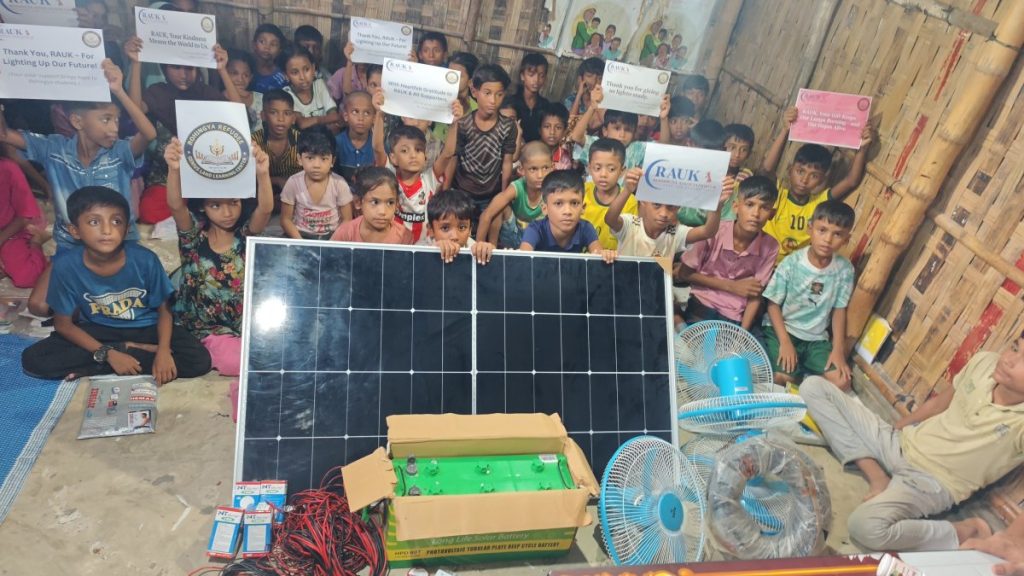
Managing a rohingya refugee camp involves monumental logistical challenges. To maintain regional stability, support for Cox’s Bazar refugees must address infrastructure beyond basic survival. This includes solar lighting to reduce gender-based violence at night, advanced drainage systems to prevent landslides, and community centres where heritage is preserved. These elements are the foundation for the eventual long-term integration and well-being of displaced populations, ensuring that temporary settlements do not become sites of permanent despair.
The Logistics of Emergency Food Support
Reaching remote areas of Bangladesh and Myanmar requires a resilient and adaptive supply chain. Traditional food distribution is increasingly being replaced by digital food vouchers, which allow families to purchase fresh ingredients from local vendors. This system restores a measure of agency, supports regional economies, and reduces the risk of aid dependency. During the monsoon seasons, humanitarian aid for Myanmar refugees becomes an urgent race against time. Teams work tirelessly to reinforce food depots and ensure that life-saving rations reach those cut off by flooding or landslides.
Protection services are the moral compass of any intervention. With over 77.6% of the displaced population being women and children, maternal health clinics and child nutrition programmes are vital to prevent long-term developmental harm. Youth empowerment initiatives provide a sanctuary for education, whilst specialised care for the elderly ensures that the wisdom and heritage of the community are not lost to the hardships of displacement. These services form a social safety net that prevents the erosion of communal bonds. If you feel moved to support these efforts, you can explore our community-led initiatives that prioritise direct impact and local agency.
Bridging the Gap: From Crisis Relief to Long-term Integration
Whilst emergency relief provides the immediate foundation for survival, the transition toward sustainable development is what ultimately restores a person’s agency. Emergency humanitarian aid for refugees is designed to address the acute trauma of flight, but it cannot be the final destination. To break the cycle of dependency, we must shift our focus toward self-sufficiency and the long-term well-being of displaced populations. This evolution requires a nuanced understanding of how global policy, such as U.S. Refugee and Humanitarian Assistance, interacts with local community-led efforts to provide a pathway from statelessness to stability.
Education and Skills as Tools for Resilience
Education is the most potent weapon against the stagnation of the refugee experience. For the next generation, refugee youth empowerment programmes are not merely extracurricular; they are essential lifelines that provide the digital literacy and vocational skills needed to navigate a modern economy. In the UK, this often begins with intensive English language classes that allow individuals to advocate for themselves and their families. In cities like Bradford, we’ve seen how tailored skills development programmes enable families to regain their independence, moving from the weight of displacement toward the dignity of contribution. These initiatives transform the narrative from one of loss to one of potential.
Preserving Cultural Heritage in the Diaspora
Integration does not mean the erasure of identity. In fact, maintaining a strong connection to one’s heritage is a critical component of mental health and communal resilience. For the Rohingya community, cultural and Islamic events serve as vital anchors, offering a sense of belonging in an often unfamiliar landscape. Preserving the Rohingya language and traditions whilst settling in the UK creates a bridge between a painful past in Rakhine (Arakan) State and a hopeful future in British society. This cultural continuity strengthens the social fabric, ensuring that the bonds of family and faith remain intact despite the geographic distance from home.
Ultimately, providing community support for displaced families represents the final, most enduring stage of successful intervention. It moves beyond the delivery of physical goods to address the deep-seated mental health toll of displacement through shared experience and mutual aid. By fostering an environment of collective effort and shared identity, we ensure that humanitarian aid for refugees leads not just to survival, but to true restoration and growth. This holistic approach is what defines a principled and effective response to one of the greatest human rights challenges of our time.
How to Evaluate and Support Effective Intervention Strategies
Choosing where to direct your support can feel overwhelming, especially when faced with the scale of global displacement. To ensure your contribution makes a tangible difference, you must look for organisations that operate with transparency and direct, lived experience. Community-led initiatives often provide the most effective humanitarian aid for refugees because they understand the cultural nuances and specific needs of the people they serve. They act as a bridge between high-level policy and the human reality on the ground, ensuring that resources are not lost in impersonal bureaucracies.
An Ethical Checklist for Humanitarian Giving
Before you donate to Bangladesh refugee camps, it’s vital to verify the charity’s credentials. A registered charity number, such as RAUK’s 1211433, offers a baseline of accountability and professional standards. Beyond registration, consider these essential factors:
- Regional Presence: Does the charity have established roots in the UK, Myanmar, and Bangladesh? Direct access to Rakhine (Arakan) State is a hallmark of an embedded and trusted organisation.
- Funding Type: Understand the difference between restricted giving, which is ring-fenced for immediate emergency items, and unrestricted giving, which allows for long-term growth and systemic advocacy.
- Empowerment Factor: Look for programmes that create a path to independence and self-sufficiency rather than fostering long-term aid dependency.
Local Advocacy and Community-Led Support
Support isn’t always financial. In cities like Bradford, finding and joining local refugee support groups can amplify the impact of humanitarian aid for refugees. You can use your professional skills to assist with charity operations or help organise community events that raise awareness. Sharing factual information about the 1.2 million refugees in Cox’s Bazar or the legal shifts in Malaysia’s DPP system helps counter misinformation and builds public empathy. Raising your voice in support of human rights and justice ensures the crisis remains on the political agenda.
Principled leadership in the humanitarian sector requires a commitment to both immediate relief and systemic change. By prioritising organisations that are deeply embedded in their communities, you transition from being a distant benefactor to a dedicated partner in the process of restoration. If you are ready to make a direct impact through a community-led model, you can explore our active projects and volunteer opportunities to help drive lasting change.
How You Can Take Action Today: The RAUK Model
The Rohingya Association UK (RAUK) operates as a principled leader in the humanitarian sector, acting as a bridge between the stark global statistics and the human lives they represent. Our model is built on the belief that effective humanitarian aid for refugees must be community-led to be truly transformative. By leveraging direct ground access in Rakhine State, formerly known as Arakan State, and our deep roots in the UK diaspora, we ensure that every intervention is culturally sensitive, transparent, and focused on long-term restoration. We don’t just provide relief; we build the foundations for a future where no displaced family has to navigate a complex, impersonal system alone.
Our work spans the entire journey of displacement. In the camps of Cox’s Bazar, where 1.2 million people face dwindling international support, we prioritise sustainable infrastructure. In Malaysia, we monitor the transition to the DPP registration system to protect the rights of over 126,000 refugees. Locally, in Bradford and across the North of England, we focus on the essential pillars of housing, healthcare, and education to ensure successful integration. This unified approach transforms small, consistent contributions into systemic change, proving that collective effort can overcome even the most overwhelming crises.
Direct Support Opportunities for Global and Local Projects
Meaningful participation starts with choosing a channel that aligns with your values and guarantees direct impact. Whether you’re looking to provide immediate relief or invest in the future of the Rohingya community, there are several ways to engage with our mission:
- Infrastructure for the Future: You can donate your Sadaqah Jariyah to fund the construction of semi-permanent shelters, solar lighting, and community learning centres that serve generations.
- Direct Crisis Relief: To provide life-saving food, clean water, and medical supplies to those in the most precarious conditions, you can support our Bangladesh projects through direct financial contributions.
- Local Community Action: If you’re based in Bradford or the surrounding regions, we invite you to volunteer with Rohingya Association UK to assist with settlement support, language tutoring, and cultural events.
Staying Informed and Engaging with Advocacy
Effective humanitarian aid for refugees requires a well-informed and vocal support base. We encourage you to sign up for our regular updates to see the tangible impact of your support and to stay updated on the evolving legal landscapes in Myanmar and Malaysia. Beyond financial aid, your voice is a powerful tool for justice. By joining our global advocacy campaigns, you help us pressure international bodies to address the root causes of statelessness and ensure the protection of human rights. Share this guide within your networks to help others move past the confusion of global aid systems and toward a model of support that is transparent, dignified, and deeply rooted in a sense of shared duty.
Securing a Future of Dignity and Restoration
The scale of the Rohingya crisis, encompassing 1.2 million individuals in Cox’s Bazar and complex legal shifts like the Malaysian DPP system, requires more than fleeting emotional responses. It demands a commitment to structured, community-led humanitarian aid for refugees that prioritises long-term self-sufficiency over perpetual dependency. By focusing on education, cultural preservation, and principled advocacy, we bridge the gap between initial survival and true integration within our local societies.
As a registered charity (number 1211433), the Rohingya Association UK provides a vital link between our Bradford-based support centre and direct, ground-level access to the camps in Bangladesh. This proximity ensures that your contributions are managed by those who deeply understand the heritage and needs of the people they serve. We invite you to Support our Bangladesh projects and help provide life-saving intervention today. Your partnership helps transform the weight of displacement into a narrative of agency and renewal. Together, we can ensure that the resilience of the Rohingya people is met with the steadfast support they deserve.
Frequently Asked Questions
What exactly is refugee crisis intervention?
Refugee crisis intervention is a multi-stage humanitarian response designed to address the immediate and long-term needs of people forced into displacement. It begins with life-saving measures, such as providing food security and clean water, before evolving into sustainable support frameworks. These later stages focus on restoration, protection, and growth, ensuring that families can move from a state of emergency toward self-sufficiency and successful integration into new communities.
How many Rohingya refugees are currently in Cox’s Bazar?
There are approximately 1.2 million Rohingya refugees currently seeking safety in the camps of Cox’s Bazar, Bangladesh. This population remains the world’s largest group of stateless people, facing immense challenges due to overcrowding and a 26% reduction in international funding in 2026. Maintaining effective humanitarian aid for refugees in this region is critical to preventing a total collapse of basic services and regional stability.
What is the DPP system in Malaysia and how does it affect refugees?
The DPP (Dokumen Pendaftaran Pelarian) is the Malaysian government’s official registration system for refugees, which is currently replacing the previous UNHCR documentation framework. This transition affects over 126,000 individuals within the country, creating a period of legal uncertainty. For many, navigating this new system is essential for securing recognition and avoiding detention, though the shift requires careful monitoring by advocacy groups to ensure human rights are upheld.
Can I specify where my donation goes when supporting RAUK?
Yes, we prioritise transparency by allowing donors to direct their contributions toward specific global or local projects. You can choose to fund immediate emergency relief through restricted giving or support our long-term infrastructure and advocacy through unrestricted donations. This ensures that your humanitarian aid for refugees aligns with your personal values, whether you wish to provide a meal today or build a school for the future.
How does RAUK support refugees in Bradford specifically?
In Bradford, we operate a dedicated community-led centre that provides a protective shield and a guiding hand for arriving families. We facilitate housing assistance, healthcare access, and education whilst hosting cultural and Islamic events to preserve Rohingya heritage. Our local team acts as a bridge, helping individuals navigate the UK’s asylum system and find paths toward vocational training and long-term integration within the North of England.
Why is the Rohingya crisis often called a ‘statelessness’ crisis?
The crisis is defined by statelessness because the Rohingya have been systematically denied citizenship rights in Myanmar, leaving them without legal identity or protection. This exclusion in Rakhine State, formerly known as Arakan State, means they cannot access basic services like healthcare or travel freely. Without a recognised nationality, they remain uniquely vulnerable during displacement, as they lack the legal standing to claim the standard rights afforded to citizens.
What is the difference between Sadaqah and Sadaqah Jariyah in refugee aid?
Sadaqah is a voluntary act of charity intended to meet an immediate, short-term need, such as providing an emergency food parcel. In contrast, Sadaqah Jariyah is a “continuous charity” that funds projects with long-term benefits, such as building a well or an education centre. Both are vital; one preserves life in the present, whilst the other creates a sustainable foundation for the community’s future growth and resilience.
How can I verify if a refugee charity is legitimate in the UK?
You can verify any UK charity by searching for its registration number on the official Register of Charities. For instance, Rohingya Association UK is registered under charity number 1211433. Legitimate organisations will always display this number clearly and provide transparent reports on their activities. You should also look for community-led initiatives with direct ground access, as this often indicates a deeper, more reliable connection to the people being served.