
Refugee camps are rarely the transient tent cities that headlines depict; for millions of displaced families, they have become complex, enduring societies forged amidst profound adversity. If you have ever wondered what is life like in a refugee camp beyond clinical donor statistics and fleeting news alerts, you aren’t alone. It is easy to feel disconnected when human stories are reduced to impersonal tallies of aid consignments and displacement figures.
Behind the corrugated zinc and bamboo frames lies a lived reality defined by systemic scarcity, resourcefulness, and collective strength. In this guide, you will discover the authentic daily realities of camp existence in 2026; from how families navigate food rations, healthcare, and communal water points, to the vibrant ways they educate their children and protect their cultural heritage. We pull back the curtain on settlements like Cox’s Bazar to reveal how ordinary people transform spaces of temporary exile into enduring communities of dignity and hope.
Key Takeaways
- Understand what is life like in a refugee camp beyond impersonal statistics, examining how families navigate fragile shelter, resource rationing, and environmental extremes.
- Explore the delicate logistical networks that supply clean water, nutritional food support, and basic healthcare across densely populated settlements.
- Unpack the profound legal and emotional strain of protracted displacement, where movement restrictions and lack of legal status create years of indefinite waiting.
- Discover the remarkable agency of displaced populations who establish informal learning centres, community markets, and spaces of cultural preservation.
- Identify meaningful ways to advance from passive awareness to principled support for grassroots humanitarian aid and refugee empowerment initiatives.
What Is Life Like in a Refugee Camp? Understanding the Daily Reality
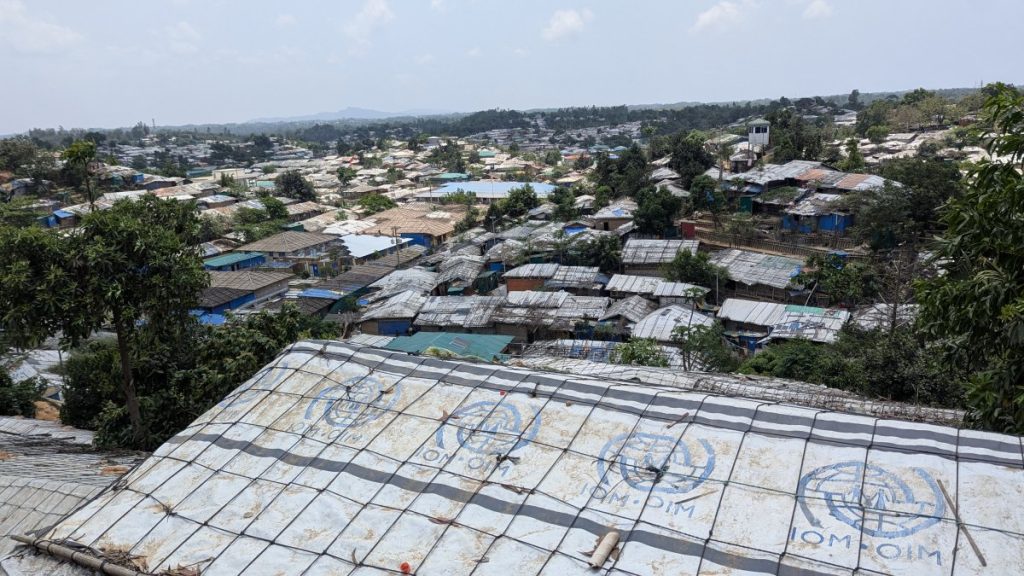
Protracted refugee settlements aren’t temporary staging posts. For millions worldwide, they represent years, sometimes decades, of indefinite suspension. When asking what is life like in a refugee camp, one must look past high-level agency reports and step directly onto the steep, red-clay pathways. The sensory reality hits immediately: the sharp scent of damp earth, smoke rising from earthen stoves, and the ceaseless hum of tens of thousands of lives compressed into fragile perimeters. In mega-camps like Cox’s Bazar, shelters sit shoulder to shoulder across hillsides stripped of natural vegetation, creating an environment that feels both intensely communal and utterly lacking in privacy.
To gain an authentic visual perspective on these domestic conditions, observe this direct dispatch from the ground:
The Anatomy of Camp Shelter: Living Under Tarpaulins and Bamboo
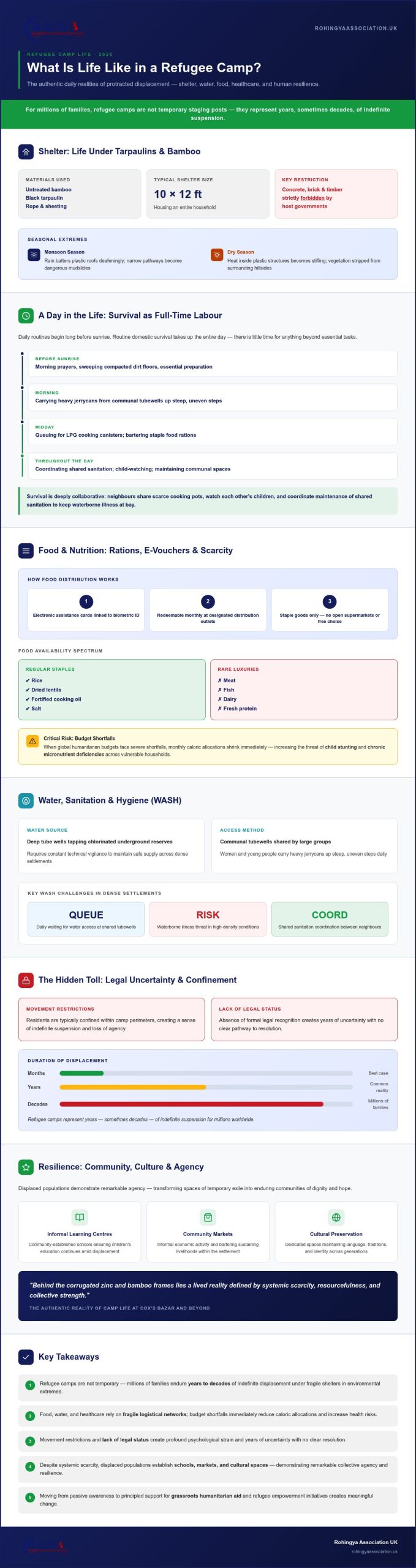
Life within these settlements is governed by enforced impermanence. Host governments frequently prohibit permanent building materials, meaning concrete foundations, brick walls, and timber frames are strictly forbidden. Families build their lives using untreated bamboo culms, rope, and black tarpaulin sheeting. During intense monsoon rains, water batters plastic roofs deafeningly and turns narrow footpaths into slick, dangerous mudslides; during dry spells, the heat inside these plastic structures becomes stifling. Within a single shelter measuring barely ten by twelve feet, households hang worn saris or cotton sheets to partition sleeping quarters, carving out precious pockets of personal dignity.
A Day in the Life: Morning Chores, Queues, and Essential Survival
Daily routines begin long before sunrise with morning prayers, sweeping compacted dirt floors, and preparing for essential physical labour. Gaining a genuine sense of what is life like in a refugee camp requires understanding that routine domestic survival takes up the entire day. Women and young people navigate steep, uneven steps to carry heavy jerrycans from communal tubewells, wait in line for distributed LPG cooking canisters, and barter staple food rations. Survival remains deeply collaborative; neighbours share scarce cooking pots, watch over each other’s children, and coordinate maintenance around shared sanitation facilities to keep waterborne illness at bay.
Essential Infrastructure: How Water, Food, and Healthcare Operate
Maintaining life across crowded settlements requires staggering logistical coordination under relentless pressure. To understand what is life like in a refugee camp from a structural perspective, one must examine the fragile lifelines of water distribution, food allotments, and frontline medicine. Across vast grids like Cox’s Bazar, where hundreds of thousands reside in close proximity, these basic provisions mean the difference between community stability and rapid humanitarian catastrophe. You can explore our detailed guide on the rohingya refugee camp settlement network to see how these dynamics play out in specific camp sectors.
Securing Daily Rations: E-Vouchers, Rice Supplies, and Nutrition
Food security inside protracted camps rarely involves open supermarkets or unrestricted choice. Instead, families rely on electronic assistance cards linked to biometric identification, which are redeemable monthly at designated distribution outlets for staple goods like rice, dried lentils, fortified cooking oil, and salt. Fresh proteins such as meat, fish, and dairy remain rare luxuries. When global humanitarian budgets face severe shortfalls, monthly caloric allocations shrink immediately. These ration reductions increase the threat of child stunting and chronic micronutrient deficiencies across vulnerable households.
Water, Sanitation, and Hygiene (WASH): Managing the Water Scarcity Challenge
Clean water requires constant technical vigilance. Deep tube wells tap chlorinated underground reserves and pump supply to communal tap stands, where residents gather throughout the day. Managing waste in sandy, steep terrain is equally arduous. Families share communal pit latrines that fill quickly and present acute contamination risks during torrential monsoon downpours. As independent research on essential infrastructure: how water, food, and healthcare operate indicates, maintaining durable drainage and hygienic sanitation networks is central to preserving human dignity and stopping acute cholera outbreaks before they spread.
Field Hospitals and Community Health Posts: Battling Epidemics
Frontline healthcare depends on community health workers walking house to house to conduct wellness checks, identify fever clusters, and monitor prenatal health. Camp clinics and field hospitals handle respiratory infections, severe dehydration, and essential maternity care. However, they lack advanced surgical theatres, dialysis units, and specialist oncology treatment. When chronic illness strikes, families face heartbreaking gaps in tertiary medical access. Strengthening these frontline safety nets through dedicated community advocacy and grassroots humanitarian aid and food support remains crucial to saving lives across the settlements.
The Hidden Toll: Legal Uncertainty, Confinement, and Protracted Waiting
Beyond material deprivation, an invisible architecture of control shapes daily survival. Ask anyone enduring protracted displacement what is life like in a refugee camp across many years, and they will not point only to muddy footpaths or ration queues; they speak of time standing still. Rigorous academic studies analysing the hidden toll: legal uncertainty, confinement, and protracted waiting demonstrate how chronic anxiety, stripped autonomy, and unresolved trauma compound over decades, eroding mental health across whole generations.
Statelessness and the Absence of Basic Legal Protections
For populations like the Rohingya, displacement is compounded by the systemic denial of nationality. Stripped of basic citizenship by Myanmar’s discriminatory legal apparatus, refugees exist inside host territories without recognised civil identities. They are barred from opening bank accounts, signing tenancy agreements, or pursuing formal careers. Host government regulations strictly forbid formal employment, forcing talented teachers, tradespeople, and youth into perpetual humanitarian dependency or precarious illicit work. Without civil registration for births or marriages, children inherit their parents’ legal invisibility. Dismantling this vulnerability requires relentless international advocacy and coordinated legal pressure to secure justice for Rohingya people through global tribunals.
Barbed Wire and Curfews: Life Under Physical Confinement
This marginalisation is reinforced by physical boundaries. High perimeter fences wrapped in barbed wire, armed security checkpoints, and mandatory biometric monitoring enclose settlement sectors. Leaving these zones requires specialised government transit permits, which are difficult to secure even for emergency hospital referrals. Such severe containment magnifies danger during environmental crises. When fast-moving blazes ignite dense bamboo shelters, perimeter fences have trapped fleeing families and obstructed emergency responders. These physical barriers illuminate what is life like in a refugee camp when basic human movement is managed through perpetual restriction rather than dignity and protection.
Resilience in the Dust: Community Schools, Markets, and Cultural Identity
Charity campaigns often portray camp residents solely as passive recipients of emergency relief. That image is fundamentally incomplete. If you truly wish to comprehend what is life like in a refugee camp, you have to look at the remarkable enterprise and cultural tenacity thriving within these settlements. Far from waiting in quiet resignation, displaced communities actively reconstruct their social fabric, building grassroots classrooms, mutual aid circles, and dynamic marketplaces from the ground up.
Informal Education and Passing Down Knowledge to the Youth
With formal, accredited schooling severely restricted by host territory regulations, community elders and former teachers establish volunteer-run classrooms under bamboo roofs. Inside these informal learning spaces, educators teach mathematics, history, and languages using chalkboards nailed to woven split-bamboo walls. Young people attend literacy circles and vocational apprenticeships to preserve their intellectual ambition against the deadening effects of idle confinement. Discover how refugee youth empowerment programs foster educational and leadership opportunities that mirror these grassroots community efforts abroad.
Bazaars, Enterprise, and Self-Sufficiency Under Siege
Camp alleyways transform daily into bustling bazaars powered by sheer determination. Small merchants wire modest solar arrays to run mobile phone charging stations, while tailors operate foot-treadle sewing machines beneath tarpaulin awnings. In makeshift tea stalls, neighbours gather to debate current events and trade news from home. Women organise embroidery collectives to produce traditional needlework, generating essential income that supplements static food rations. This self-directed trade restores personal agency, proving that economic vitality persists even in protracted exile.
Preserving Heritage, Faith, and Memory in Exile
Cultural preservation serves as a vital shield against systemic erasure. Communal mosques and religious spaces host daily prayers, religious festivals, and wedding ceremonies that anchor collective dignity. Older residents pass down ancestral folklore, historical genealogies, and poetic oral traditions to children who have never seen their ancestral homeland. This deliberate stewardship of heritage reinforces a shared identity, keeping alive the hope for a safe, dignified return. You can stand with these resilient communities by supporting our advocacy and awareness campaigns to protect displaced cultures worldwide.
From Awareness to Action: Supporting Displaced Families Worldwide
Understanding what is life like in a refugee camp marks only the initial step towards meaningful solidarity. Empathy alone cannot repair a leaking roof or feed a family facing depleted monthly rations. Genuine solidarity requires moving from passive observation to principled action; this means backing grassroots initiatives that combine immediate crisis intervention with long-term systemic advocacy.
The Vital Importance of Direct Grassroots Humanitarian Aid
Large international bodies frequently encounter bureaucratic friction that slows direct response times. Community-led charities work differently. Because they operate directly alongside camp leadership, grassroots teams swiftly deliver essential emergency food relief, seasonal monsoon tarpaulins, and basic medical support when unexpected crises emerge. As a registered charity (UK Registered Charity number: 1211433), Rohingya Association UK operates direct crisis intervention and educational projects across the UK, Myanmar, and Bangladesh camps. Led directly by members of the displaced diaspora, our interventions maintain complete financial transparency, cultural sensitivity, and mutual respect, ensuring that every distribution reinforces community dignity.
Bridging Camp Survival with Settlement Support in the UK
The journey does not end when a displaced family leaves the camp perimeter. Resettling in British cities brings profound cultural adjustments, linguistic barriers, and complex social systems. Families often struggle to navigate social housing allocations, register with local GP surgeries, or access accredited English language courses (ESOL). Rohingya Association UK bridges this divide from our community centre in Bradford, West Yorkshire. We deliver tailored refugee settlement and integration support, tackling inequality through youth mentorship, community events, and targeted crisis support. Read our practical guidance on community support for displaced families to learn how British communities can welcome vulnerable newcomers. Transform your perspective on what is life like in a refugee camp into purposeful advocacy, standing beside displaced communities as they build secure, self-determined futures.
Beyond the Perimeters: Restoring Dignity and Collective Hope
Gaining an authentic perspective on what is life like in a refugee camp reveals a profound truth: behind fragile bamboo walls and ration queues lies an extraordinary capacity for enterprise, community care, and cultural survival. Protracted exile tests the human spirit, yet families don’t surrender their ambition. They educate their children, maintain their sacred traditions, and protect one another against overwhelming odds.
True solidarity means standing alongside these families as equal partners in renewal. As a community-led registered charity (UK Registered Charity number: 1211433), Rohingya Association UK delivers crisis intervention, youth education, and settlement support spanning Bradford, Myanmar, and Bangladesh camps. When you support our life-saving humanitarian work and local community programmes today, you help convert compassionate awareness into principled action. Together, we can ensure that prolonged exile doesn’t extinguish dignity or silence the voices of those striving for a safer tomorrow.
Frequently Asked Questions
How long do displaced families typically remain inside a refugee camp?
Most displaced families remain in camps for years, often spanning decades. Protracted displacement has become the global norm rather than an exception, with approximately two-thirds of refugees caught in situations lasting five years or longer. Without viable pathways for safe voluntary repatriation, local integration in host territories, or third-country resettlement, entire generations grow up within temporary settlements, spending their childhoods and adult lives awaiting permanent legal resolution.
Do children receive an accredited formal education within refugee settlements?
Formal accreditation remains exceedingly rare in most camps. Host governments frequently restrict national curricula, leaving children dependent on informal learning centres, religious madrasas, or pilot programmes run by community volunteers. While basic literacy and numeracy are taught, students rarely sit recognised state examinations or earn certificates valid for higher education. This educational deficit poses a grave risk, driving grassroots diaspora groups to advocate continuously for recognised learning pathways.
Can refugees work or start formal businesses whilst living in camps?
Formal employment is almost universally barred by host governments to prevent competition with local labour markets. As a result, refugees cannot sign commercial contracts, register businesses, or earn statutory wages. To survive, enterprising individuals establish informal micro-enterprises inside camp perimeters, such as small grocery stalls, solar repair shops, or tailoring services. These informal ventures provide vital daily purpose, yet families remain vulnerable to crackdowns and severe economic instability.
What medical and healthcare facilities exist inside major refugee camps?
Medical care is primarily delivered through frontline health posts, basic field clinics, and mobile outreach teams operated by international agencies and non-governmental organisations. These centres manage common infectious diseases, malnutrition screenings, immunisations, and routine maternity care. However, specialist treatments, advanced diagnostic imaging, and complex surgical care are virtually non-existent inside camp boundaries, requiring strict off-site referral permissions that can prove exceptionally difficult to obtain during emergencies.
How do families secure drinking water and sanitation facilities daily?
Understanding what is life like in a refugee camp means recognising that clean water requires daily physical exertion. Families collect chlorinated water from communal deep tube wells or shared tap stands, carrying heavy canisters across steep paths several times each day. Sanitation relies on shared pit latrines distributed across residential blocks, which require constant maintenance and desludging to avert dangerous waterborne outbreaks like cholera and acute watery diarrhoea.
What happens when severe weather, such as monsoons or cyclones, hits a camp?
Severe weather brings catastrophic instability to fragile settlements constructed from bamboo and plastic sheeting. Torrential monsoon rains trigger flash floods and landslides, washing away unreinforced hillside shelters and contaminating shallow water networks. When cyclones strike coastal regions, high winds rip roofs off dwellings and destroy community buildings. Residents rely on pre-positioned emergency repair kits, rapid volunteer response teams, and shared community centres for temporary safety.
How does Rohingya Association UK support displaced families both abroad and locally?
As a community-led registered charity (UK Registered Charity number: 1211433), Rohingya Association UK delivers direct crisis intervention, educational projects, and emergency food support across Myanmar and Bangladesh camps. In the UK, we empower arriving families through refugee settlement and integration, cultural events, youth empowerment programmes, and welfare guidance from our base in Bradford. Our diaspora leadership ensures our initiatives address real lived needs while actively tackling inequality.