
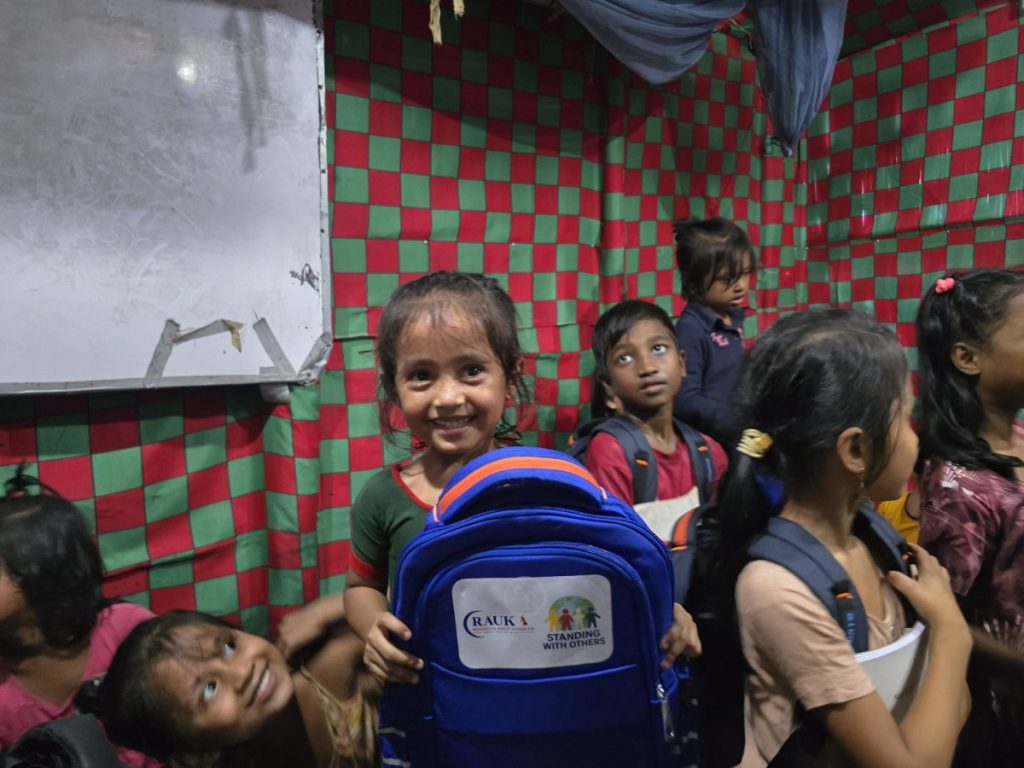
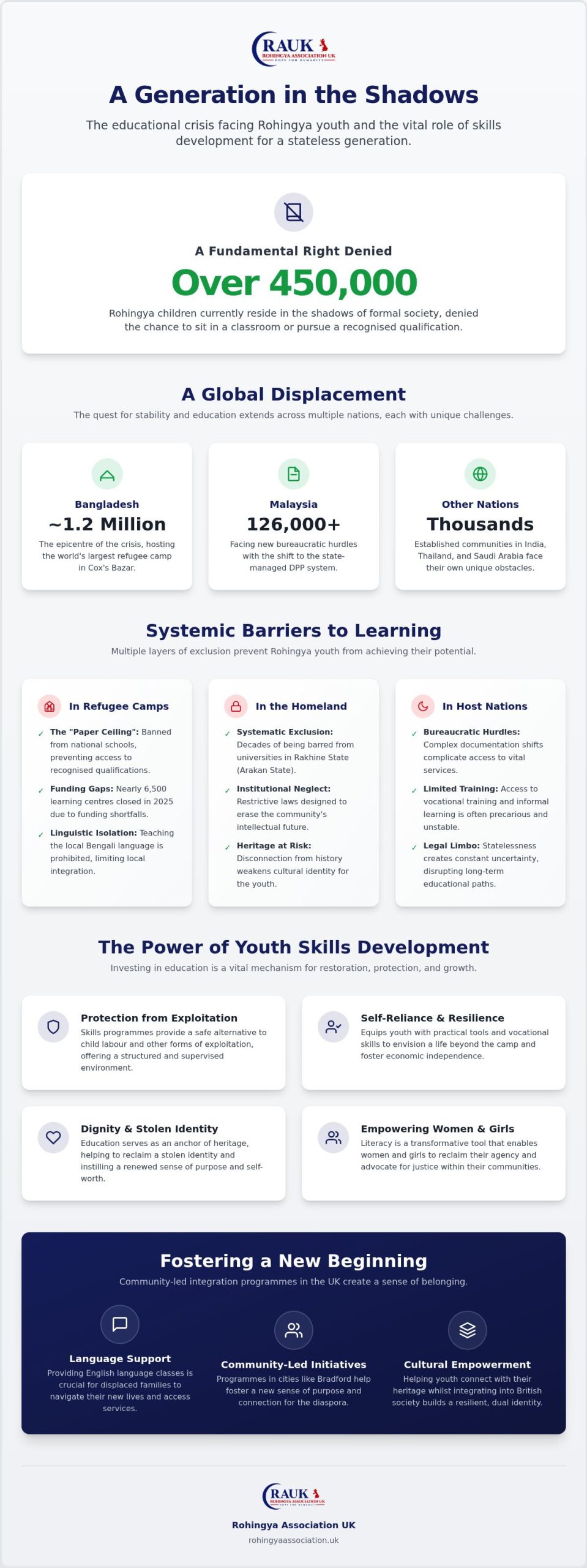
Over 450,000 Rohingya children currently reside in the shadows of formal society, denied the fundamental right to sit in a classroom or pursue a recognised qualification. Statelessness is not merely a legal designation; it is a profound theft of potential that leaves an entire generation suspended between a lost past and an uncertain future. Investing in Rohingya youth skills development is therefore not just an act of charity; it is a vital mechanism for restoration, protection, and growth.
You likely feel the crushing weight of this humanitarian crisis, whilst wondering if a single contribution can truly penetrate the systemic barriers facing these displaced families. We understand that finding an effective, trusted way to help can feel daunting amongst so much global instability. This article demonstrates how your support for targeted education projects can dismantle those barriers, offering a tangible path toward dignity for youth in the UK and abroad. We will examine the critical educational gaps in Cox’s Bazar, the importance of community-led advocacy, and how local integration programmes in cities like Bradford are fostering a new sense of belonging and purpose.
Key Takeaways
- Understand the complexities of the current educational landscape in refugee camps, including the transition to the Myanmar curriculum and the persistent barriers to formal accreditation.
- Learn how community-led initiatives in West Yorkshire facilitate the successful integration of displaced families through language support and cultural empowerment.
- Discover the vital role of Rohingya youth skills development in protecting vulnerable children from exploitation whilst fostering a spirit of self-reliance and resilience.
- Explore the transformative impact of literacy in empowering women and girls to reclaim their agency and advocate for justice within their communities.
- Identify transparent and effective ways to support registered charity projects that deliver a dual impact for refugees in both Bangladesh and the United Kingdom.
The Educational Landscape for Rohingya Children in 2026
The quest for education amongst the Rohingya is more than a pursuit of literacy; it is a fundamental struggle to reclaim a stolen identity. For this stateless Indo-Aryan ethnolinguistic group, education projects serve as essential anchors of heritage and dignity in a world that has often denied them both. To understand the depth of this mission, we must look at the current landscape across the globe.
Article Contents
The scale of the displacement remains staggering. Bangladesh serves as the epicentre of this humanitarian crisis, hosting approximately 1.2 million refugees in the Cox’s Bazar district. However, the need for Rohingya youth skills development extends far beyond these borders. Significant populations continue to seek stability elsewhere, including 126,000 individuals in Malaysia, alongside established communities in India, Thailand, and Saudi Arabia. Each of these regions presents unique obstacles to learning and self-sufficiency.
The Crisis in Rakhine State (Arakan State)
The roots of this educational vacuum lie in the systematic exclusion of the Rohingya from Myanmar’s national infrastructure. For decades, the state has utilised restrictive laws to bar Rohingya students from universities and professional training. This institutionalised neglect has been compounded by cycles of violence; historical casualty statistics and legal metrics presented to international courts highlight a deliberate attempt to erase the intellectual future of the community. Preserving cultural heritage whilst navigating these modern barriers is vital for survival. Without a connection to their history in Arakan State, the youth risk losing the very identity they are fighting to protect.
Life in Cox’s Bazar: A Generation at Risk
In the rohingya refugee camp system, the focus is shifting from immediate emergency aid to long-term resilience. The statistics are sobering: over 450,000 children are currently denied access to formal, accredited schooling. The closure of nearly 6,500 learning centres in 2025 due to funding shortfalls has left a profound void in the camps. Denying a child the right to learn inflicts a deep psychological wound, fostering a sense of hopelessness that can last a lifetime. By prioritising Rohingya youth skills development, we provide these children with the psychological and practical tools necessary to envision a life beyond the perimeter of a camp fence.
Overcoming Barriers to Formal Learning and Accreditation
One of the most significant obstacles to Rohingya youth skills development is the pervasive ban on formal, certified education in primary host nations. In Bangladesh, whilst the government has recently permitted the use of the Myanmar curriculum within camp boundaries, Rohingya refugees remain strictly prohibited from enrolling in national public schools or universities. This creates a structural “paper ceiling” where even the most dedicated students cannot obtain the recognised qualifications necessary for professional employment or higher education.
The tension between linguistic heritage and practical survival is equally complex. Learning centres in Cox’s Bazar primarily utilise the Myanmar curriculum to prepare youth for eventual repatriation; however, the prohibition against teaching the national Bengali language limits their ability to navigate local markets or integrate into the regional economy. This linguistic isolation is mirrored in Malaysia, where the landscape is currently shifting. The transition from UNHCR-led documentation to the state-managed Dokumen Pendaftaran Pelarian (DPP) system has introduced new layers of bureaucracy, often complicating the already precarious access refugee youth have to vocational training and informal learning spaces.
Accreditation is not merely a matter of academic vanity; it is a vital prerequisite for future self-sufficiency. Without transferable certificates, the skills acquired in displacement remain invisible to global employers. Securing recognised credentials is a critical step in moving beyond aid dependency, ensuring that when the time for repatriation or resettlement arrives, these individuals possess the documented expertise to rebuild their lives. You can help us bridge this gap by supporting our advocacy for recognised learning paths for all displaced students.
The Impact of the Informal Education Ban
Restrictive policies frequently cap learning at the primary level, effectively abandoning adolescents just as they reach the age for secondary schooling. This systemic gap leaves thousands of teenagers vulnerable to exploitation and child labour, as they have no structured environment to continue their intellectual growth. Community-based learning centres, often established and managed by the refugees themselves, serve as the only buffer against this total educational blackout. Within the 2026 humanitarian framework, “Informal Education” is defined as any structured learning programme that, despite providing essential knowledge, lacks state-sanctioned certification or an official pathway to academic degrees.
Accreditation and the Path to Global Citizenship
Advocating for the international recognition of learning achievements is a moral and practical imperative. Collaboration with international bodies to standardise refugee curricula ensures that a child’s education is not lost when they cross a border. This drive for intellectual empowerment is inextricably linked to the broader pursuit of justice for Rohingya people, as it equips the next generation with the tools to advocate for their own rights. The World Bank has previously highlighted the long-term economic consequences of limited access to schooling in Myanmar, a deficit that host nations and the international community must work together to rectify if we are to foster true global citizenship.
Integrating the Diaspora: Education Projects in the UK
Whilst the crisis in Cox’s Bazar represents a massive humanitarian challenge, the struggle for dignity continues for those resettled in the United Kingdom. Effective community support for displaced families is the cornerstone of successful resettlement, transforming a state of mere survival into one of active participation. In West Yorkshire, and specifically within the city of Bradford, many Rohingya families face the daunting task of rebuilding their lives from the ground up. RAUK serves as a vital sanctuary, providing a safe space where cultural heritage is honoured, collective bonds are strengthened, and educational growth is nurtured.
Language remains the most formidable barrier to accessing basic human rights, such as healthcare and secure housing. Without the ability to communicate symptoms to a doctor or understand the nuances of a tenancy agreement, refugees remain trapped in a cycle of dependency and vulnerability. These linguistic hurdles often lead to social isolation, preventing families from fully engaging with the vibrant local communities that surround them. Our work addresses these inequalities directly, ensuring that the diaspora can advocate for themselves with confidence and clarity in every aspect of British life.
English Language Classes for Refugees in Bradford
RAUK’s ESOL (English for Speakers of Other Languages) programmes are meticulously structured to serve both adults and youth. These classes are not merely academic exercises; they are practical lifelines. By mastering the English language, refugees gain the agency to:
- Navigate the complex UK housing guidance system to secure safe, permanent homes.
- Communicate effectively with healthcare providers to ensure family well-being.
- Engage in local social activities, fostering a sense of belonging and mutual respect.
We’ve seen countless individuals move from isolation to social inclusion, finding their voice within the Bradford community through the simple but transformative power of communication. Success stories from our centre highlight how language skills lead to improved employment prospects and a deeper connection to the local heritage of West Yorkshire.
Skills Development and Youth Empowerment
True integration requires a bridge between immediate resilience and long-term professional success. Our focus on Rohingya youth skills development ensures that the next generation isn’t defined solely by their displacement. Through tailored refugee youth empowerment programmes, we provide the mentorship and training necessary for young people to thrive in the UK workforce. This initiative prepares them for roles in advocacy, community service, and professional leadership. By investing in these skills, we’re cultivating a generation of principled leaders who will continue to fight for justice, both here and for their kin still in the camps of Bangladesh and Myanmar.
Why Your Contribution Matters: The Impact of Educational Aid
Education serves as a protective mechanism that extends far beyond the classroom walls. In the confined reality of the camps, where traditional livelihoods are often suspended, educational projects act as a direct deterrent to child labour and exploitation. When children have access to structured learning, they’re shielded from the predatory forces that thrive on poverty and lack of supervision. By providing a safe sanctuary for growth, we ensure that the youth are not forced into hazardous work to support their families’ survival.
Literacy acts as a powerful catalyst for gender equity within displaced communities. For Rohingya women and girls, the ability to read and write is a foundational step toward bodily autonomy, healthcare awareness, and community leadership. It allows them to navigate the complexities of aid distribution and advocate for their families with newfound authority. This empowerment creates a ripple effect, as educated mothers are significantly more likely to prioritise the schooling of their own children, breaking the cycle of illiteracy for good.
Investing in Rohingya youth skills development is also a strategic investment in regional peace. Education fosters critical thinking and social cohesion, providing a constructive outlet for the frustrations inherent in long-term displacement. By building intellectual resilience, we cultivate a generation that is less vulnerable to radicalisation and more committed to the non-violent pursuit of justice. Knowledge provides the tools for dialogue, understanding, and the eventual rebuilding of a society rooted in mutual respect.
Long-term Benefits of Literacy and Numeracy
Skilled employment is the only sustainable route to economic independence for families in the diaspora. Beyond immediate survival, literacy empowers individuals to document their own histories and advocate for human rights on the global stage. The Hanifi Rohingya script, which was formally added to the Unicode Standard in 2018, remains a powerful symbol of this cultural resilience; its preservation through education ensures that the Rohingya voice cannot be silenced by those who seek to erase it. This historical continuity is vital for a people whose very existence has been under threat for decades.
Sadaqah Jariyah: Investing in Eternal Knowledge
Within the Islamic tradition, education is viewed as the ultimate form of Sadaqah Jariyah, or ongoing charity. Unlike temporary aid that is consumed and forgotten, the gift of knowledge multiplies as it is shared across generations. When you support a student, you’re not just providing a book or a lesson; you’re planting a seed of wisdom that will continue to benefit the community for decades to come. This provides a reward that continues to grow long after the initial contribution is made. We invite you to donate your Sadaqah Jariyah to ensure the long-term stability of our educational projects in both the UK and Bangladesh.
How You Can Take Action Today: Supporting RAUK Projects
The plight of the stateless cannot be resolved through passive concern alone; it requires a committed, structured response from a global community of advocates. By choosing to support our Bangladesh projects and our local UK initiatives, you are directly challenging the systemic erasure of a people. The Rohingya Association UK (RAUK) operates as a principled leader in this space, ensuring that every contribution is handled with the utmost integrity. As a registered charity (No. 1211433), we maintain a transparent and accountable framework, providing you with the confidence that your generosity reaches those who need it most. Our community-led approach ensures that aid is not merely a distant transaction but a direct investment in human dignity.
Financial Contributions and Ethical Giving
Small, consistent efforts often yield the most profound results. Regular monthly donations are the lifeblood of our educational infrastructure, providing the reliable funding necessary for classroom supplies, digital learning tools, and fair salaries for volunteer teachers. Whether you are fulfilling your religious obligations through Zakat or seeking the ongoing rewards of Sadaqah, your contribution builds the foundations of Rohingya youth skills development. These funds allow us to maintain learning centres in Cox’s Bazar whilst expanding our ESOL and integration services in West Yorkshire. You can contribute securely via the RAUK website, where every pound is directed toward the restoration of hope and agency for those who have lost everything.
Community Engagement and Advocacy
Beyond financial aid, your time and voice are invaluable assets in the fight for justice. We invite you to volunteer with Rohingya Association UK at our centre in Bradford, where you can assist with language classes, mentor young refugees, or help organise our community outreach programmes. Advocacy also takes place in your local neighbourhoods, places of worship, and social circles. By sharing our factual reports and verified data, you act as a shield against the misinformation that often surrounds the refugee crisis. Participating in our cultural events further honours the rich heritage of the Rohingya people, ensuring their traditions are celebrated and preserved amongst the diaspora. Together, we can ensure that the next generation is defined by their potential rather than their displacement.
Restoring Agency Through Collective Action
The struggle for Rohingya education is fundamentally a struggle for the right to exist with dignity, heritage, and purpose. We’ve explored how educational projects serve as essential anchors for a generation facing systematic exclusion, providing a path toward self-reliance in both the refugee camps of Cox’s Bazar and the communities of West Yorkshire. By prioritising Rohingya youth skills development, we don’t merely provide lessons; we dismantle the barriers of statelessness and equip young leaders with the tools to advocate for their own justice.
RAUK stands as a steadfast partner in this mission. We’re a community-led organisation by Rohingya for Rohingya, ensuring that every initiative is rooted in lived experience and communal bond. As a registered charity (No. 1211433), we deliver direct impact through ESOL classes in Bradford and essential learning centres abroad. Your support is the bridge between a lost potential and a resilient future. Support Rohingya education projects and donate your Sadaqah Jariyah today to secure a legacy of knowledge and hope. Together, we can ensure that no child’s future is defined by the borders they were forced to cross.
Frequently Asked Questions
How many Rohingya refugees are currently in Cox’s Bazar?
There are approximately 1.2 million Rohingya refugees residing in the Cox’s Bazar district of Bangladesh as of 2026. This population remains almost entirely dependent on international humanitarian assistance for survival, protection, and basic services. Whilst the numbers have stabilised, the density of the camps continues to present significant challenges for the delivery of consistent, high-quality educational programmes for the hundreds of thousands of children living there.
What is the difference between Rakhine State and Arakan State?
Arakan and Rakhine State refer to the same geographical region on the western coast of Myanmar, though the names carry distinct historical and political connotations. Arakan is the traditional name used by the Rohingya and other indigenous groups to honour their long-standing heritage and ancestral ties to the land. Conversely, Rakhine State is the official administrative name designated by the Myanmar government following the 1982 Citizenship Law, which systematically stripped the Rohingya of their rights.
Can I donate my Sadaqah Jariyah specifically to education projects?
Yes, you can specifically direct your Sadaqah Jariyah toward our educational initiatives to ensure your contribution provides an ongoing benefit. RAUK facilitates targeted giving that funds classroom infrastructure, teacher training, and essential learning materials for displaced youth. By investing in a student’s education, you are participating in a form of charity that continues to yield rewards as that knowledge is utilised and passed down through future generations.
What are the main barriers to Rohingya children getting an education?
The primary barriers to education include restrictive host-government policies, significant funding shortfalls, and a lack of formal accreditation. In many regions, Rohingya children are prohibited from enrolling in national school systems, forcing them to rely on informal learning centres that often lack resources. Prioritising Rohingya youth skills development is essential to overcoming these obstacles, as it provides practical vocational paths that exist outside the limitations of traditional, state-sanctioned academic frameworks.
How does the Rohingya Association UK support refugees in Bradford?
RAUK provides a comprehensive range of integration services in Bradford, including ESOL language classes, housing guidance, and youth mentorship programmes. We act as a community-led sanctuary where resettled families can preserve their cultural identity whilst gaining the skills necessary to navigate life in the United Kingdom. Our centre serves as a vital hub for social inclusion, helping individuals overcome isolation and advocate for their own rights within the local community.
What is the DPP system in Malaysia and how does it affect refugees?
The Dokumen Pendaftaran Pelarian (DPP) is a state-managed registration system in Malaysia designed to track and document the refugee population within the country. Whilst it aims to provide a more centralised administrative framework, the transition from UNHCR documentation has created uncertainty regarding access to vocational training and informal education. For many refugees, navigating these new bureaucratic requirements is a significant hurdle that can delay their participation in essential skills-building programmes.
Is it possible to volunteer with Rohingya refugees in the UK?
Volunteering opportunities are available at our centre in Bradford for those who wish to support the Rohingya community directly. We welcome individuals who can assist with English language tutoring, digital literacy training, or the organisation of cultural and community events. By offering your time and expertise, you help build a protective shield around vulnerable families and foster a deeper sense of belonging for those who have been displaced from their homes.
Why is accreditation so important for refugee students?
Accreditation is vital because it provides refugee students with transferable, recognised evidence of their learning that is valid across international borders. Without certified qualifications, the progress made in Rohingya youth skills development remains invisible to future employers or higher education institutions. Securing recognised certificates is a matter of justice and dignity; it ensures that a student’s intellectual efforts are not lost if they are eventually repatriated or resettled in a third country.