
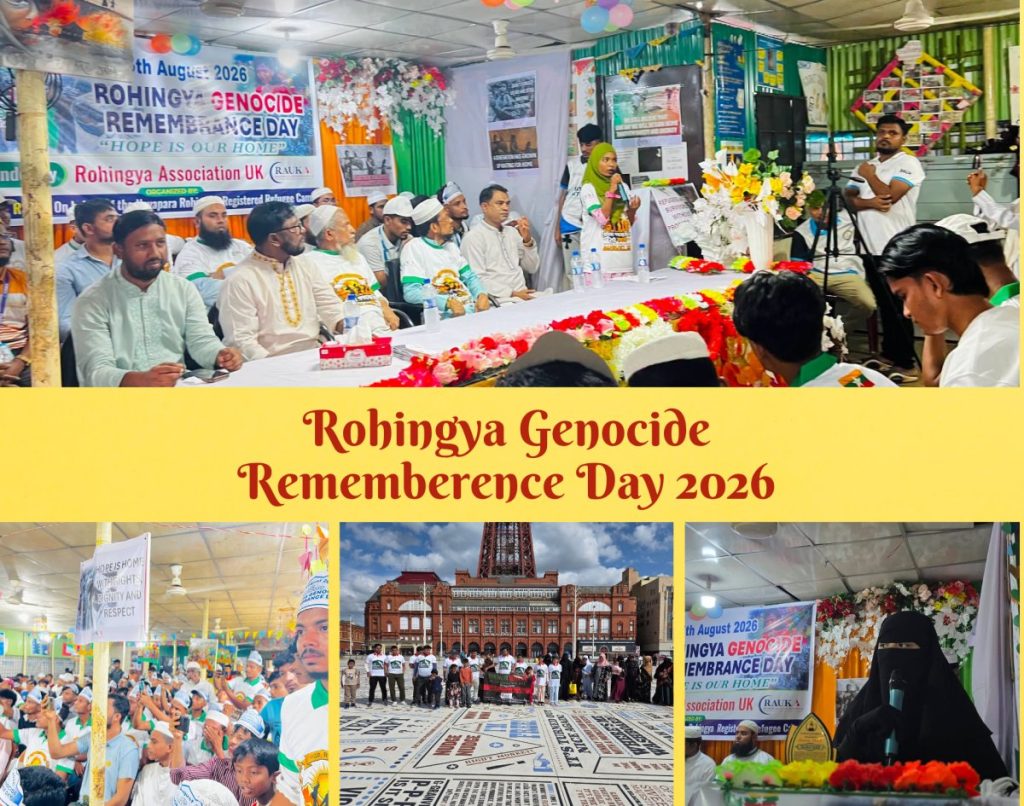
The Rohingya Community in the UK: A Legacy of Resilience
Across the United Kingdom, a vibrant and resilient Rohingya diaspora has taken root, weaving a new chapter of hope from a history of persecution. This community, settled in cities from London to Bradford, represents not just a group of survivors but a powerful network of advocates, culture-bearers, and future leaders. For families displaced by violence and stripped of their homeland, community-led organisations serve as the essential bedrock upon which new lives are built, preserving cultural and religious identity whilst navigating the complexities of integration.
The Rohingya community in UK cities acts as a vital bridge, connecting local life with the ongoing global struggle for justice. It is a community that understands its dual responsibility: to thrive in its new home and to amplify the voices of those left behind. In this ecosystem of support, the Rohingya Association UK (RAUK) provides a protective shield for new arrivals, offering guidance on housing, education, and healthcare, whilst simultaneously fostering the long-term growth and empowerment that allows individuals to move from a state of survival to one of belonging.
From Displacement to Belonging in Bradford
Bradford has emerged as a central hub for the UK’s Rohingya population, a city where shared heritage finds a new home and a supportive civic infrastructure offers a pathway to stability. This concentration is no accident; it is the result of dedicated community-building and the city’s long history of welcoming diverse cultures. For many Rohingya families, the journey to social inclusion is fraught with challenges, from overcoming the trauma of displacement to navigating the bureaucratic hurdles of refugee resettlement. The psychological scars of genocide run deep, making the establishment of communal bonds and mental health support not just a benefit, but a necessity. Local support groups, spearheaded by community leaders, play an indispensable role in this process, creating safe spaces where stories can be shared, burdens can be lightened, and a sense of collective strength can be forged.
Preserving Heritage in a New Land
Maintaining a profound connection to one’s roots is fundamental to the resilience of any displaced people. In the UK, RAUK and its partners organise a rich tapestry of cultural and Islamic events designed to keep the spirit of Rohingya heritage alive. These gatherings are more than social occasions; they are acts of defiance against a regime that sought to erase their identity. Language classes ensure that the Rohingya tongue is passed to the next generation, whilst youth empowerment initiatives equip young people with the skills and confidence to become leaders. By investing in the young, the community ensures that its legacy will not only be preserved but will also evolve, contributing a unique and valuable thread to the multicultural fabric of Britain. This work is crucial, as detailed in our guide on Refugee Youth Empowerment Programmes, which build brighter futures for those who have lost so much.
Rohingya Genocide Remembrance Day: Honouring 25 August
Rohingya Genocide Remembrance Day is a solemn annual commemoration held on 25 August to mark the date in 2017 when the Myanmar military launched a brutal and systematic campaign of violence against the Rohingya people. It is a day of profound mourning, collective honour, and unwavering demand for justice. Each year, the global Rohingya community and its allies gather to remember the thousands who were killed, the countless who were brutalised, and the more than 700,000 who were forced to flee their ancestral homeland for the safety of neighbouring Bangladesh. This day transforms personal grief into a powerful, unified call for international accountability, ensuring that the atrocities are never forgotten and that the perpetrators are held responsible. For the Rohingya people, remembrance is a vital tool of resistance against the erasure of their history and their very existence.
The Ninth Anniversary: Nine Years of Seeking Justice
As we approach 2026, we mark the ninth anniversary of the genocide- nine long years of a relentless pursuit of justice. This milestone offers a moment for sombre reflection on the progress made and the significant gaps that remain in global accountability. Whilst international legal cases have been initiated, the path to justice is arduous and slow, demanding sustained pressure from governments and civil society. The enduring strength of survivors, who bravely continue to share their testimonies, remains the most powerful evidence in this fight. Their courage fuels the global movement and reminds the world of the human cost of impunity. The ongoing struggle highlights the need for a unified international response to one of the most pressing human rights crises of our time, a topic explored in depth in our analysis of Justice for Rohingya People.
Remembrance as a Catalyst for Advocacy
Honouring the past is not a passive act; it is the fuel that drives the fight for human rights protection today. Each commemorative event, whether in Bradford, London, or online, serves to raise the profile of the crisis amongst British policymakers and the public. These gatherings are platforms for advocacy, where the stories of loss are channelled into strategic calls for sanctions, humanitarian aid, and diplomatic intervention. They remind the world that the Rohingya crisis is not a historical event but an ongoing emergency, with over a million people still living in precarious conditions in refugee camps and millions more facing persecution within Myanmar. Rohingya Genocide Remembrance Day is a cornerstone of Rohingya identity and survival, reaffirming their right to exist, their right to remember, and their right to a future.
RAUK Awareness Programmes: Strengthening the Mission in Bangladesh
Beyond commemoration, tangible action is at the heart of the Rohingya struggle for dignity. To this end, RAUK organised several awareness programmes in Bangladesh, designed to empower residents of the world’s largest refugee settlement in Cox’s Bazar. These initiatives move beyond the traditional model of humanitarian aid, focusing instead on building capacity and agency from within the community. The programmes cover essential topics such as human rights, legal status, educational opportunities, and health awareness. This community-led approach is fundamentally more effective because it is delivered by trusted leaders who understand the cultural and social nuances of the camps, ensuring the information is not only received but also embraced. Operating within such a challenging environment presents immense logistical hurdles, but the impact on community resilience is immeasurable.
Organising Events in Bangladesh for Local Empowerment
The specific focus of these initiatives demonstrates a deep understanding of the community’s needs. For instance, RAUK organised events in Bangladesh that are tailored specifically for youth and women—two of the most vulnerable groups within the camps. Workshops on leadership skills for young people provide them with the tools to become future advocates, whilst sessions on women’s health and rights create safe spaces for dialogue and empowerment. These programmes are a powerful antidote to the misinformation and despair that can fester in the cramped conditions of the camps. By providing reliable information and fostering a sense of purpose, these events restore hope and agency to a people living in a state of protracted statelessness.
Advocacy Beyond the Borders
The work within the camps is intrinsically linked to a broader global advocacy strategy. The awareness programmes serve to document the realities of life for refugees, gathering firsthand accounts and data that are then used to inform international human rights bodies and policymakers. By connecting the voices of those in Cox’s Bazar to global platforms, RAUK ensures that the international community cannot ignore the ongoing humanitarian needs and the political resolutions required. This documentation is crucial for building a case for justice and for designing effective aid programmes that truly address the root causes of suffering. Understanding the conditions on the ground is the first step toward meaningful support for Cox’s Bazar refugees.
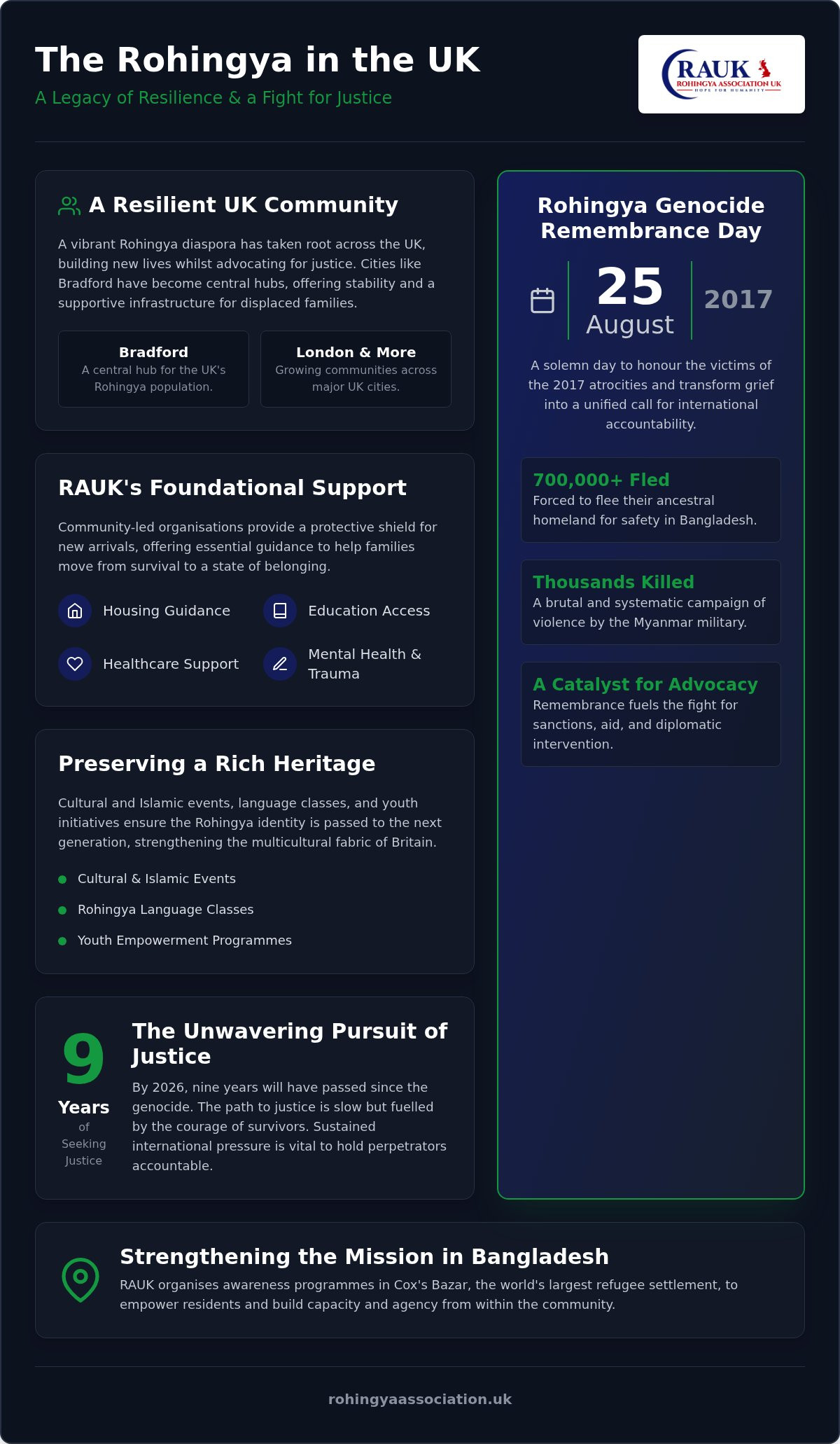
Bridging the Gap: How the UK Community Supports Global Justice
There is a powerful, symbiotic relationship between the Rohingya community in the UK and the humanitarian efforts on the ground in Bangladesh. Fundraising activities organised in British cities directly translate into life-sustaining projects in the refugee camps. This connection ensures that the act of remembrance on 25 August is not merely symbolic but is backed by a tangible commitment to action and responsibility. The diaspora in the UK, with its relative freedom and access to political institutions, serves as a powerful voice for those who remain silenced inside Myanmar or are constrained by their status in the camps. This advocacy requires a professional, stable, and long-term commitment, moving beyond immediate crisis response to build sustainable pathways towards justice and restoration.
UK Advocacy and Political Engagement
A core pillar of RAUK’s mission is to keep the Rohingya crisis on the British political agenda. This involves consistent engagement with Members of Parliament, civil servants, and human rights organisations to advocate for robust UK foreign policy on Myanmar. The voices of the diaspora are particularly impactful in these corridors of power, offering personal testimony and community-led expertise that can shape policy decisions. This work is structured around three key pillars: Advocacy, to demand political action; Education, to inform the public and policymakers; and Restoration, to rebuild the lives of those affected by the genocide. This tripartite approach ensures a comprehensive strategy for long-term change.
Direct Aid and Crisis Intervention
Donations from the British public and diaspora community have a direct and immediate impact. They fund essential food support, healthcare services, and educational materials for children in the camps in Bangladesh, addressing the most urgent needs of the refugee population. At the same time, RAUK provides critical support for those arriving in the UK, offering housing guidance and integration services to help families navigate their new environment. This dual focus, addressing both the immediate crisis abroad and the long-term integration at home, is central to the holistic mission of supporting Rohingya families in exile, ensuring that every individual is given the chance to rebuild their life with dignity.
Taking Action: How to Support the Rohingya Cause in 2026
Standing in solidarity with the Rohingya people is a moral imperative, and there are numerous practical ways for the British public to contribute. The fight for justice and dignity is a collective effort, and every act of support, no matter how small, adds to a powerful current of change. Charitable donations are the lifeblood of our organisation, sustaining the long-term advocacy work and essential integration services that empower displaced families both in the UK and in Bangladesh. You can also offer your time and skills by volunteering at our centre in Bradford, providing direct support to local refugee families as they build their new lives. Finally, one of the most powerful tools you possess is your voice; spreading awareness through conversation and social media helps keep the Rohingya crisis in the public consciousness, creating the political will necessary for meaningful action.
The Power of Collective Effort
It is easy to feel overwhelmed by the scale of the global refugee crisis, but it is small, consistent contributions that build the foundation for systemic change. Supporting community-led charities like RAUK is particularly impactful, as these organisations possess an innate understanding of the cultural nuances and specific needs of the people they serve. Your support is not just a donation; it is an investment in a resilient, self-determined community. We call on you to transform your empathy into tangible action, providing the resources needed to help displaced families restore their lives and secure their future.
Engaging with RAUK Organised Events
Active participation is a profound form of solidarity. We invite you to attend local remembrance ceremonies on Rohingya Genocide Remembrance Day and participate in the awareness workshops we host across the UK. These events offer an opportunity to learn directly from community members and to show your support in person. For those unable to attend physically, participating in our digital advocacy campaigns is an equally vital way to contribute, helping to amplify our message and reach a wider audience. Each action you take reinforces our collective mission. The mission of RAUK is to serve as a steadfast partner in the journey toward restoration, advocating for justice whilst empowering our community to build a future of dignity, safety, and belonging.
Frequently Asked Questions (FAQs)
What is Rohingya Genocide Remembrance Day and when is it observed?
Rohingya Genocide Remembrance Day is a solemn commemoration observed annually on 25 August. It marks the date in 2017 when Myanmar’s military began its violent and systematic "clearance operations" against the Rohingya people, leading to mass killings, widespread atrocities, and the forced displacement of over 700,000 people to Bangladesh. The day serves to honour the victims, preserve the memory of the genocide, and reinforce the global call for justice and accountability.
How many Rohingya people live in the UK community today?
While exact figures are difficult to ascertain due to the complexities of refugee data collection, it is estimated that several thousand Rohingya people have settled in the United Kingdom. The largest and most established community is based in Bradford, West Yorkshire, with smaller communities located in other cities across the country.
What kind of awareness programmes does RAUK organise in Bangladesh?
RAUK organises several awareness programmes in the refugee camps in Bangladesh, focusing on community empowerment. These events cover critical topics such as human rights education, understanding legal status and pathways to justice, women’s health, and leadership training for youth. The programmes are community-led, designed to build resilience, counter misinformation, and provide residents with the knowledge and skills to advocate for themselves.
How can I support the Rohingya community in Bradford?
You can support the Rohingya community in Bradford in several ways. Financial donations to RAUK help fund local integration services, including housing guidance, English language classes, and youth empowerment projects. You can also volunteer your time and skills at our community centre. Additionally, attending our local events and helping to raise awareness about the community’s needs and achievements are invaluable forms of support.
Why is 25 August a significant date for the Rohingya people?
The date 25 August is profoundly significant as it marks the beginning of the most intense and brutal phase of the genocide perpetrated by the Myanmar military in 2017. It represents a moment of immense collective trauma and loss for the Rohingya people. Commemorating this date is an act of defiance against the attempt to erase their history and a solemn promise to never forget the victims and to continue fighting for justice.
Does RAUK provide direct aid to refugees in Cox’s Bazar?
Yes, through partnerships and community networks, RAUK facilitates the delivery of direct aid to refugees in the camps in Cox’s Bazar, Bangladesh. Donations from the UK and elsewhere are used to fund essential projects such as food support, healthcare initiatives, and educational materials for children. Our focus is on supporting sustainable, community-led projects that address the most urgent needs of the camp’s residents.
How can I volunteer for Rohingya advocacy in the UK?
You can volunteer for Rohingya advocacy by contacting RAUK directly to see what opportunities are available. Roles can range from assisting with event organisation and fundraising campaigns to supporting our digital advocacy efforts and administrative tasks. We welcome passionate individuals who are committed to human rights and want to contribute to our mission of achieving justice and security for the Rohingya people.
What are the main challenges facing the Rohingya community in the UK in 2026?
In 2026, the main challenges include navigating the complexities of the UK’s asylum and immigration system, overcoming language and employment barriers, and addressing the long-term mental health trauma resulting from the genocide. Another key challenge is ensuring the younger generation, many of whom were born in exile or arrived as children, remain connected to their cultural heritage while successfully integrating into British society. Sustaining political and public interest in the global justice efforts also remains a constant challenge.