
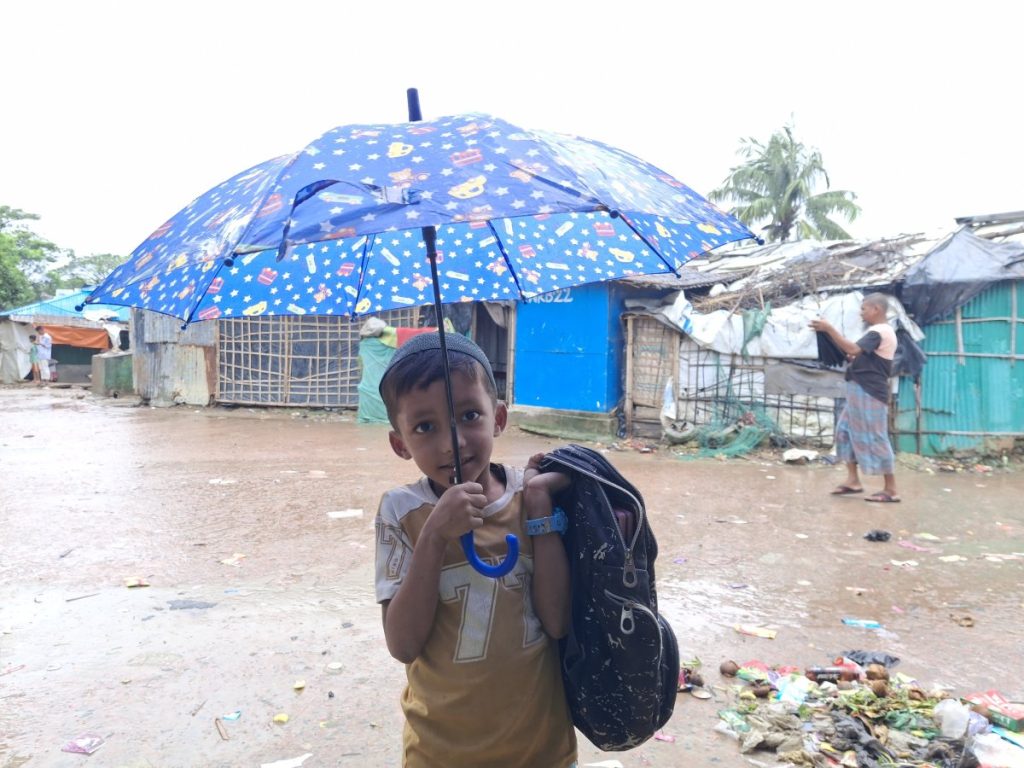
As we move through 2026, nearly half of the essential funding required to sustain over a million lives remains unfulfilled, leaving an entire community on the precipice of a forgotten catastrophe. This staggering shortfall in the current Rohingya crisis appeal is not merely a fiscal statistic; it represents the food, medicine, and safety denied to families who have already endured a decade of displacement. It is natural to feel a sense of fatigue as this crisis persists, whilst global attention frequently drifts toward newer conflicts. You deserve to know that your compassion is being directed where it is most needed, reaching the most vulnerable through transparent, community-led action.
This article provides a comprehensive overview of the humanitarian landscape in 2026, detailing how your support provides essential aid and empowers displaced families to reclaim their future. We will examine the urgent requirements of the Joint Response Plan, the latest developments in international justice proceedings, and the enduring strength of the Rohingya heritage. By understanding the current state of advocacy and integration, you can help us provide the protection, restoration, and growth that every human being deserves.
Key Takeaways
- Understand the critical scale of the 2026 humanitarian landscape, where nearly one million Rohingya remain stateless despite waning international attention and funding.
- Explore the essential requirements for sustainable shelter and water infrastructure within refugee camps to ensure long-term stability and health for displaced families.
- Learn why local integration and community support in the UK are vital components of a comprehensive global strategy for refugee empowerment and restoration.
- Discover how to differentiate between emergency aid and long-term development when contributing to a Rohingya crisis appeal to ensure your gift has a lasting impact.
- Recognise the value of a community-led approach that combines direct humanitarian aid with a steadfast commitment to cultural preservation and international justice.
The Rohingya Crisis in 2026: Why Your Support is Still Vital
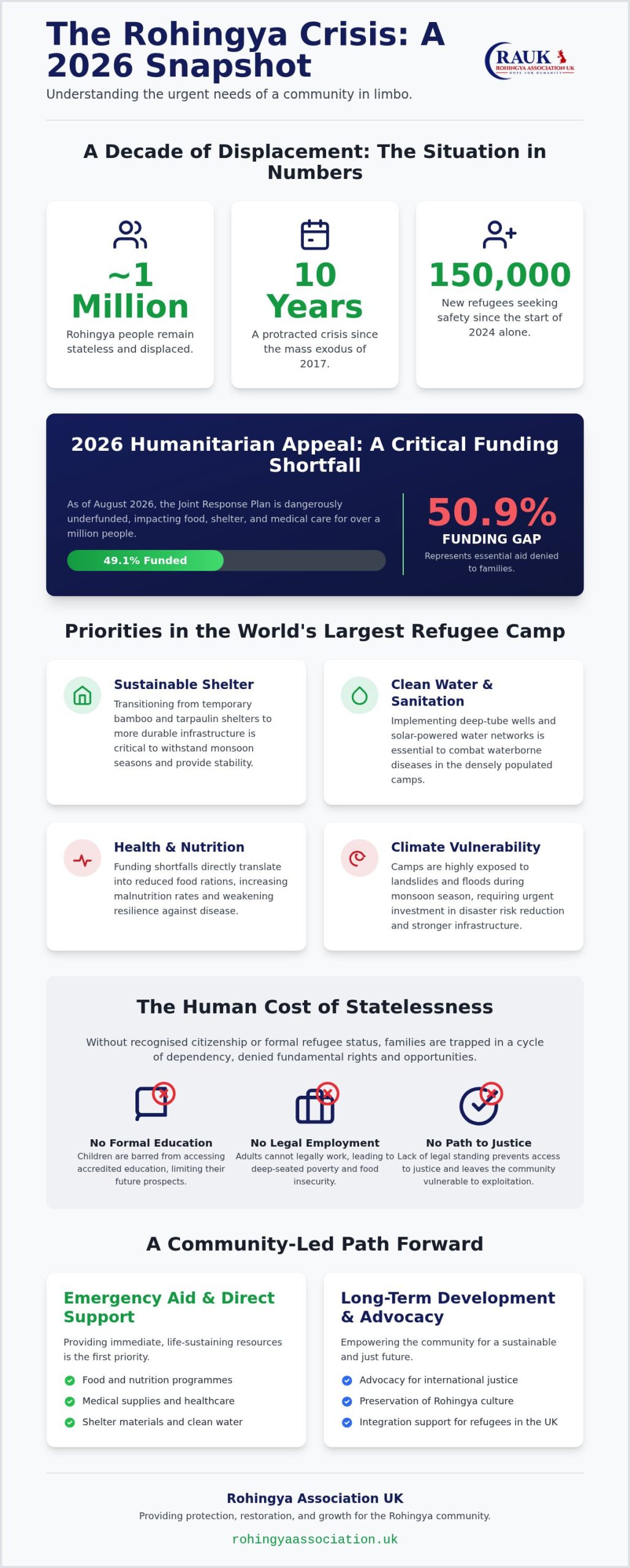
Nearly a decade has passed since the mass exodus of 2017, yet the humanitarian landscape remains fraught with peril. In 2026, nearly one million Rohingya people continue to live in a state of indefinite displacement, primarily within the sprawling camps of Cox’s Bazar. What began as a sudden, violent emergency has solidified into one of the most protracted refugee situations in modern history. The world’s gaze has frequently shifted toward newer, more visible conflicts; leaving the Rohingya in a precarious shadow where needs are rising whilst resources are dwindling. Since the start of 2024 alone, approximately 150,000 new refugees have sought safety in Bangladesh, placing an even greater strain on an already exhausted infrastructure.
The 2026 Rohingya crisis appeal highlights a sobering reality: despite the growing complexity of the situation, international funding has reached a critical low. As of August 2026, only 49.1% of the required humanitarian budget has been secured, a figure that is significantly lower than in previous years. This deficit isn’t just a number on a ledger; it translates directly to reduced food rations, crumbling infrastructure, and a loss of hope for families who have nowhere else to turn. It’s a situation that demands a stable, long-term commitment rather than a fleeting emotional reaction.
To gain a deeper perspective on why sustained support is essential this year, watch this brief overview of the current humanitarian priorities:
The Reality of Statelessness in 2026
For the Rohingya, the year 2026 is defined by a persistent legal limbo that stifles every aspect of daily life. Without recognised citizenship in Myanmar or formal refugee status in host countries, families are trapped in a cycle of dependency. This lack of legal identity restricts children from accessing formal education and prevents adults from obtaining life-saving healthcare or legal employment. Achieving justice for Rohingya people is the only path toward resolving this status, especially as the memory of the Rohingya genocide remains a visceral barrier to safe repatriation. Without legal standing, the community remains vulnerable to exploitation, human trafficking, and systemic neglect.
Emerging Challenges: Climate and Conflict
Environmental vulnerability has become an inescapable part of the refugee experience. The seasonal monsoons in Bangladesh now pose an even greater threat, as years of camp expansion have left shelters prone to devastating landslides and floods. Simultaneously, the internal instability within Myanmar has intensified, making any talk of a dignified return premature. Families face a double burden: they cannot go home, and they cannot build a permanent life where they are. This stagnation has led to rising food insecurity amongst those who remain legally barred from working, making community-led intervention more vital than ever. We must address these needs with urgency, empathy, and a focus on long-term resilience.
Humanitarian Priorities in the World’s Largest Refugee Camp
Inside the rohingya refugee camp in 2026, the temporary has become terrifyingly permanent. Bamboo and tarpaulin structures, originally designed for weeks of use, have endured years of monsoon rains and scorching sun. A core focus of the current Rohingya crisis appeal is the transition from makeshift shelters to sustainable infrastructure. Clean water remains a luxury; without deep-tube wells and solar-powered distribution networks, waterborne diseases continue to threaten the dense population. We must shift our focus from a short-term humanitarian response to sustainable solutions that honour the dignity of every resident.
Vulnerability is not evenly distributed amongst the residents. Widows and orphaned children face unique risks, often lacking the traditional family protections that provide a shield in such environments. Crisis intervention must be deeply rooted in cultural and religious values, ensuring that aid is delivered with the modesty and respect that the Rohingya community holds dear. This approach builds trust and ensures that the most marginalised don’t fall through the cracks of a generic aid system. When aid is delivered through a community-led lens, it respects the heritage of the people it serves whilst providing a protective barrier against further trauma.
Healthcare and Nutrition: A Constant Struggle
Malnutrition amongst children born in the camps is a silent epidemic. These children have never known a life with varied diets or food security. Mobile clinics are essential for reaching families in the more remote sections of the camp, whilst hygiene kits serve as the first line of defence against outbreaks. Providing basic sanitation is a moral imperative that requires consistent, reliable funding. Without these interventions, the health of an entire generation remains at risk.
Education: Preventing a Lost Generation
For the youth, the camps are their entire world. Without formal schooling, they face a future of limited opportunity and increased risk of exploitation. Education provides more than just literacy; it’s a protective mechanism against trafficking and radicalisation. By investing in refugee youth empowerment programs, we can foster resilience and prepare the next generation to lead their community toward restoration. The ongoing Rohingya crisis appeal remains the primary lifeline for these educational initiatives, ensuring that the light of knowledge isn’t extinguished by the darkness of displacement. If you wish to support these efforts, you can learn more about how RAUK provides direct aid to those in need.
Supporting the Rohingya Community in the UK
Whilst the international Rohingya crisis appeal often focuses on the sprawling camps in Bangladesh, the humanitarian journey doesn’t end at the border. In the UK, particularly in cities like Bradford, the Rohingya Association UK (RAUK) acts as a vital bridge for those who have sought sanctuary on British soil. Supporting new arrivals is a fundamental extension of our global mission; it’s not enough to simply provide safety from violence. We must ensure that families have the tools to rebuild their lives with dignity. Without tailored support, many face severe barriers to adequate housing, healthcare, and stable employment, which can lead to a debilitating cycle of poverty and social exclusion.
Effective integration is a reciprocal process that strengthens both the refugee community and the society that welcomes them. By providing community support for displaced families, we prevent the isolating effects of trauma and cultural shock. This local work ensures that the diaspora remains a strong, healthy voice for their relatives still suffering in Myanmar. It transforms survivors into advocates, creating a resilient network that spans from West Yorkshire to South East Asia, ensuring that the plight of the Rohingya is never forgotten by the British public.
Language and Skills: Tools for Belonging
Mastering the English language is the first step toward independence. Our classes don’t just teach grammar; they build the confidence required to navigate a GP appointment or attend a parent-teacher meeting. Alongside language, skills development programmes are essential for helping refugees transition into the UK workforce. When a person can contribute their talents and earn a living, they regain a sense of agency that displacement often strips away. These shared learning environments also offer profound psychological benefits, fostering a sense of belonging amongst those who have lost everything.
Preserving Heritage Whilst Integrating
Integration shouldn’t mean the loss of one’s identity. We organise cultural and Islamic community events to ensure that the rich heritage of the Rohingya people is preserved and celebrated. These gatherings strengthen faith-based bonds and provide a sanctuary where traditions can flourish. This cultural grounding is vital for mental well-being, especially for youth who are navigating two different worlds simultaneously. At the same time, the UK diaspora plays a crucial role in global advocacy. By maintaining their cultural identity, they keep the world’s attention on the ongoing Rohingya crisis appeal and the pursuit of justice in their homeland.
How to Contribute: A Guide to Meaningful Giving in 2026
Choosing where to direct your generosity in 2026 requires a discerning approach, especially as donor fatigue sets in across the humanitarian sector. When evaluating a Rohingya crisis appeal, it’s helpful to distinguish between emergency relief and long-term development funding. Emergency aid provides the immediate essentials, such as clean water, food support, and crisis intervention, which are vital during the monsoon season or sudden displacements. In contrast, long-term development focuses on education, youth empowerment, and the pursuit of justice. Both are necessary; whilst one preserves life today, the other builds the foundation for a dignified tomorrow.
Regular, sustained contributions, often referred to as Sadaqah Jariyah, offer the most stable support for protracted crises. These recurring gifts allow organisations to plan ahead, ensuring that schools remain open and healthcare clinics stay stocked throughout the year. To ensure your contribution has the greatest impact, consider the following framework for giving:
- Prioritise community-led charities that have direct, lived experience with the people they serve.
- Look for transparency in reporting and a dual focus on both immediate aid and systemic advocacy.
- Balance your one-off emergency donations with monthly commitments to provide predictable funding.
By choosing a community-led charity like the Rohingya Association UK, you ensure maximum transparency. Our status as a registered UK charity means your support is governed by strict standards of accountability, whilst our deep roots in the community ensure that aid is delivered with cultural precision and empathy.
Zakat and Sadaqah: Faithful Giving
Zakat is a transformative tool for stateless families, providing a structured way to tackle inequality and restore hope. Donating to Muslim-led charities in the UK offers the assurance that your religious obligations are handled with the necessary expertise and spiritual care. RAUK ensures that all Zakat-eligible projects are meticulously vetted, directing funds to the most deserving individuals amongst the widowed, the orphaned, and the destitute. This faithful giving acts as a protective shield for those who have been stripped of their legal rights and status.
Beyond Financial Aid: Advocacy and Awareness
Contributing to the Rohingya crisis appeal doesn’t always require a financial transaction. Advocacy is a powerful form of support that keeps the plight of the Rohingya on the political agenda. By sharing verified facts and combatting misinformation, you help maintain the international pressure necessary for systemic change and justice. Local volunteering in centres like Bradford also provides direct support to the diaspora, helping new arrivals navigate the complexities of UK integration. Every voice added to the call for accountability strengthens the collective effort toward restoration.
If you feel moved to support our mission, you can donate to our active appeals today and make a direct impact on lives in the UK and overseas.
The Rohingya Association UK: Your Partner in Change
The Rohingya Association UK (RAUK) stands in a unique position as a community-led, registered charity (No. 1211433) that understands the intricate nuances of this crisis from the inside out. We are not just a distant provider of aid; we are a dedicated partner, a protective shield, and a guiding hand for those who have been marginalised for decades. Our dual focus on UK-based integration and international humanitarian projects ensures that our impact is felt both in the streets of Bradford and the shelters of South East Asia. By choosing to support our Rohingya crisis appeal, you are opting for a level of transparency and cultural sensitivity that only a community-rooted organisation can provide. We act as a principled bridge between the British public and the families we serve, ensuring that every gift translates into direct, precise, and dignified action.
We approach our mission with a sophisticated blend of somber gravity and resilient optimism. We recognize the weight of the history we carry, yet we remain steadfast in our belief that restoration is possible. This is not a fleeting emotional reaction to a headline, but a stable, long-term commitment to the people we represent. Our work is grounded in the universal human concepts of family, heritage, and safety, steering away from impersonal bureaucracy in favour of collective effort and shared identity.
Our Direct Impact in 2026
Our work this year continues to address the most urgent needs whilst keeping an eye on the horizon of justice. In Cox’s Bazar and throughout Myanmar, we are delivering food support and crisis intervention that respects the cultural values of the recipients. Within the UK, our integration programmes have seen remarkable success in building self-sufficiency, helping families navigate the complexities of British life whilst preserving their unique cultural identity. Beyond direct aid, we act as a persistent voice in global human rights advocacy forums, ensuring that the legal status and rights of the Rohingya remain a priority for international policymakers. We believe that true restoration requires the bread of today, the education of tomorrow, and the justice of the future.
Join the Mission for Restoration
We invite you to move beyond a one-off response and become part of a long-term solution for a community that has endured far too much for far too long. The challenges of 2026 are significant, but they are not insurmountable when met with moral seriousness and enduring commitment. Every contribution to our appeal helps restore the safety, dignity, and hope that have been systematically stripped away. By standing with us, you are helping to build a future where the Rohingya people are no longer defined by their displacement, but by their strength and their heritage. Join us in this mission of protection, restoration, and growth.
Support the Rohingya Association UK Appeal Today
Restoring Dignity and Securing a Just Future
The humanitarian landscape of 2026 demands more than a temporary response; it requires a steadfast commitment to both immediate survival and the enduring pursuit of justice. We’ve examined the critical necessity of sustainable infrastructure within the camps, the vital importance of UK-based integration, and the transformative power of community-led advocacy. By supporting the Rohingya crisis appeal, you aren’t merely providing emergency aid; you’re participating in a collective mission to preserve a rich heritage and protect a vulnerable community from further neglect.
As a community-led organisation (Registered Charity: 1211433), the Rohingya Association UK manages active projects across the UK, Myanmar, and Bangladesh. Our deep roots within the diaspora ensure that your generosity reaches the most deserving families with total transparency and cultural sensitivity. We invite you to act as a partner in this journey of renewal and restoration. Please Donate to the Rohingya Crisis Appeal 2026 today to provide the essential resources required for safety and growth. Together, we can ensure that the light of hope remains resilient and that the promise of justice is finally realised for every Rohingya family.
Frequently Asked Questions
Is the Rohingya crisis still happening in 2026?
The Rohingya crisis remains a critical humanitarian emergency in 2026, with nearly 1.2 million refugees residing in Bangladesh and an estimated 500,000 still inside Myanmar. Whilst international attention has fluctuated, the need for a sustained Rohingya crisis appeal is more urgent than ever due to significant funding shortfalls. Families continue to face statelessness, restricted movement, and a lack of access to formal education, making your continued support a vital lifeline for their survival and future restoration.
How can I be sure my donation reaches Rohingya refugees?
Transparency is a cornerstone of our mission as a community-led organisation. As a registered UK charity (No. 1211433), we are subject to rigorous regulatory oversight, ensuring that every contribution is accounted for and directed to those in need. Our deep roots within the Rohingya community allow us to bypass impersonal bureaucracies and deliver aid directly to families in the UK, Myanmar, and Bangladesh, ensuring your generosity has the most immediate and profound impact possible.
What is the difference between RAUK and larger international charities?
The primary difference lies in our community-led structure and cultural sensitivity. Unlike larger, more impersonal NGOs, the Rohingya Association UK is governed by members of the community itself, providing us with an intimate understanding of the linguistic, religious, and social needs of our people. This unique position allows us to act as both a protective shield and a guiding hand, offering a more nuanced and dignified approach to humanitarian aid and long-term integration.
Can I donate Zakat to the Rohingya crisis appeal?
Yes, you can direct your Zakat toward our active appeals to support stateless families and those in extreme poverty. We ensure that all Zakat-eligible projects are meticulously vetted and implemented in accordance with Islamic principles, reaching the most vulnerable individuals amongst widows, orphans, and the destitute. Your faithful giving acts as a transformative tool, providing not just immediate relief but also the hope and security required for families to rebuild their lives.
How does RAUK support Rohingya families living in the UK?
We provide comprehensive support for families in the UK, primarily through our centre in Bradford. Our services include practical guidance on housing and healthcare access, alongside English language classes and skills development programmes designed to foster independence. By organising cultural and Islamic community events, we also help preserve Rohingya heritage, ensuring that displaced families feel a sense of belonging and cultural pride whilst they navigate the complexities of integration into British society.
What are the most urgent needs for refugees in Cox’s Bazar right now?
The most pressing requirements in 2026 include sustainable shelter, clean water infrastructure, and consistent food support. Overcrowded camps face increased vulnerability to seasonal monsoons, making durable housing and sanitation projects a priority. Additionally, there is a critical need for education and youth empowerment programmes to prevent a lost generation. Your contribution to a Rohingya crisis appeal helps fund these essential services, providing protection for vulnerable groups and a path toward long-term resilience.
How can I help the Rohingya people without making a financial donation?
Advocacy and awareness are powerful ways to support our mission without a financial commitment. You can help by sharing verified information about the crisis to combat misinformation and by participating in campaigns that keep the Rohingya plight on the political agenda. If you are based near Bradford, volunteering with our local integration programmes offers a direct way to assist new arrivals. Every voice that calls for justice and accountability strengthens our collective effort toward restoration.
Is RAUK a registered charity in the UK?
Yes, the Rohingya Association UK is a fully registered charity in the United Kingdom, operating under the Charity Commission number 1211433. This registration ensures that we maintain the highest standards of financial accountability, governance, and transparency. Our status as a registered entity provides donors with the confidence that their support is managed professionally and ethically, whilst our community-led nature ensures that we remain deeply connected to the people we serve.