
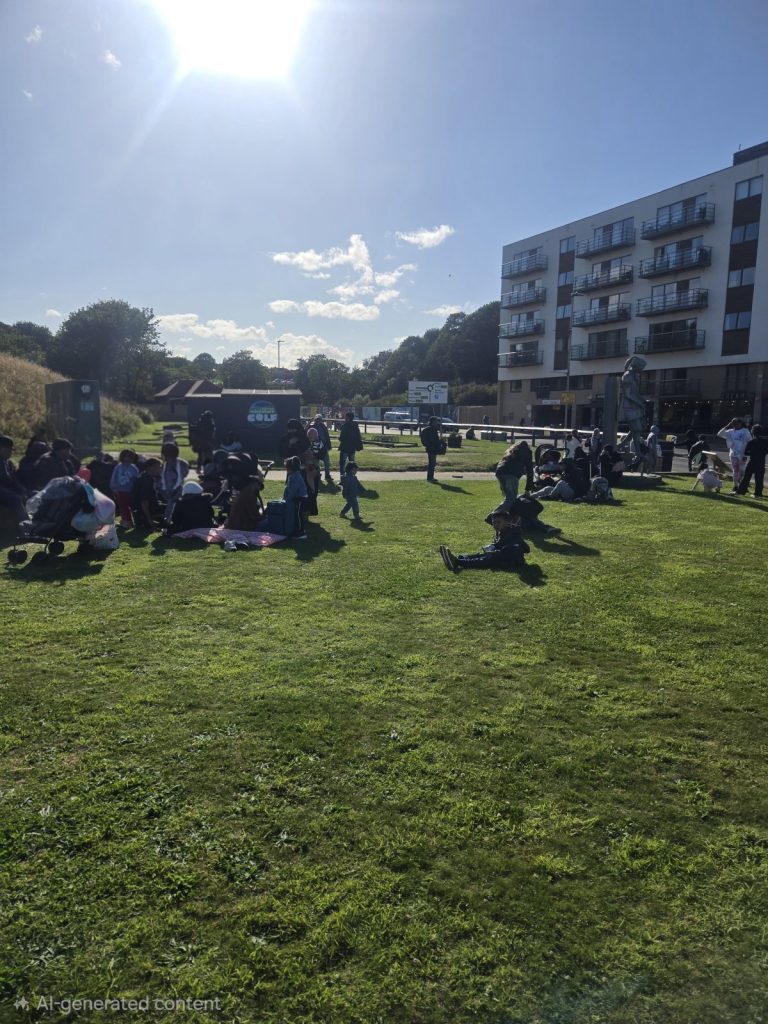
For a people systematically denied a place to belong, the act of putting down roots in a new country is more than just survival; it is a profound declaration of existence. You likely understand the immense weight of starting over, especially as the UK introduces challenging new asylum policies like the June 2026 repayment law and stricter family reunion rules. The fear of social isolation and the worry that younger generations might lose their connection to the traditions of Rakhine State, formerly known as Arakan State, are heavy burdens to carry. This guide explores the vital work of Rohingya community building UK as a pathway to healing, restoration, and empowerment.
We promise to show you how families are successfully navigating complex housing and healthcare systems whilst maintaining their rich cultural heritage. You will learn how to access practical integration tools, find a supportive local network, and join the fight for global justice for the 1.2 million refugees currently in Cox’s Bazar. By blending local resilience with international advocacy, the community is creating a future defined by dignity, safety, and belonging.
Key Takeaways
- Learn how Rohingya community building UK acts as a vital tool for restoring agency and belonging for families resettling from Rakhine State, also known as Arakan State.
- Discover essential methods for navigating the complexities of the UK housing and healthcare systems to secure long-term stability for your family.
- Explore the importance of religious heritage and language preservation in ensuring that Rohingya youth maintain a strong connection to their roots whilst growing up in the UK.
- Understand the link between local community efforts and global advocacy for the 1.2 million refugees in Cox’s Bazar and those transitioning to the DPP system in Malaysia.
- Find out how you can take direct action through local volunteering or by supporting humanitarian aid projects that drive systemic change and restoration.
The Rohingya Community in the UK: A Journey of Resilience and Renewal
Rohingya community building UK is a profound process of restoration. It involves more than simple socialising; it’s about reclaiming agency after a history defined by systemic exclusion and the trauma of displacement. For many, the journey to the United Kingdom represents the hard-won end of a perilous flight from Rakhine State, also known as Arakan State, where the community has faced decades of state-sponsored persecution. Transitioning from a state of total statelessness to becoming active, contributing members of British society requires a stable foundation of mutual support, shared identity, and collective hope.
To understand the background of this resilient community, one must first ask Who are the Rohingya people and what has driven their global displacement. By establishing local networks, survivors move from being passive recipients of aid to becoming the primary architects of their own futures. Community-led organisations are vital in this transition, as they provide the nuanced, culturally specific guidance that generic social services often lack, ensuring that integration is a dignified process rather than a loss of self.
To better understand the strength of this community in a local context, watch this helpful video:
From Rakhine (Arakan) State to the United Kingdom
The flight from persecution often involves traumatic journeys through multiple countries before reaching safety. For those who have found sanctuary in the UK, preserving historical memory is a form of resistance against the erasure they faced in their homeland. Cities like Bradford have become central hubs for the diaspora, offering a space where families can gather to share stories and maintain their unique heritage. This local presence is a vital link to the global struggle, especially for the 1.2 million refugees currently in Cox’s Bazar, Bangladesh, and the 126,000 Rohingya in Malaysia navigating the transition to the new DPP system. In these hubs, the past is honoured whilst the future is carefully built.
The Role of the Rohingya Association UK (RAUK)
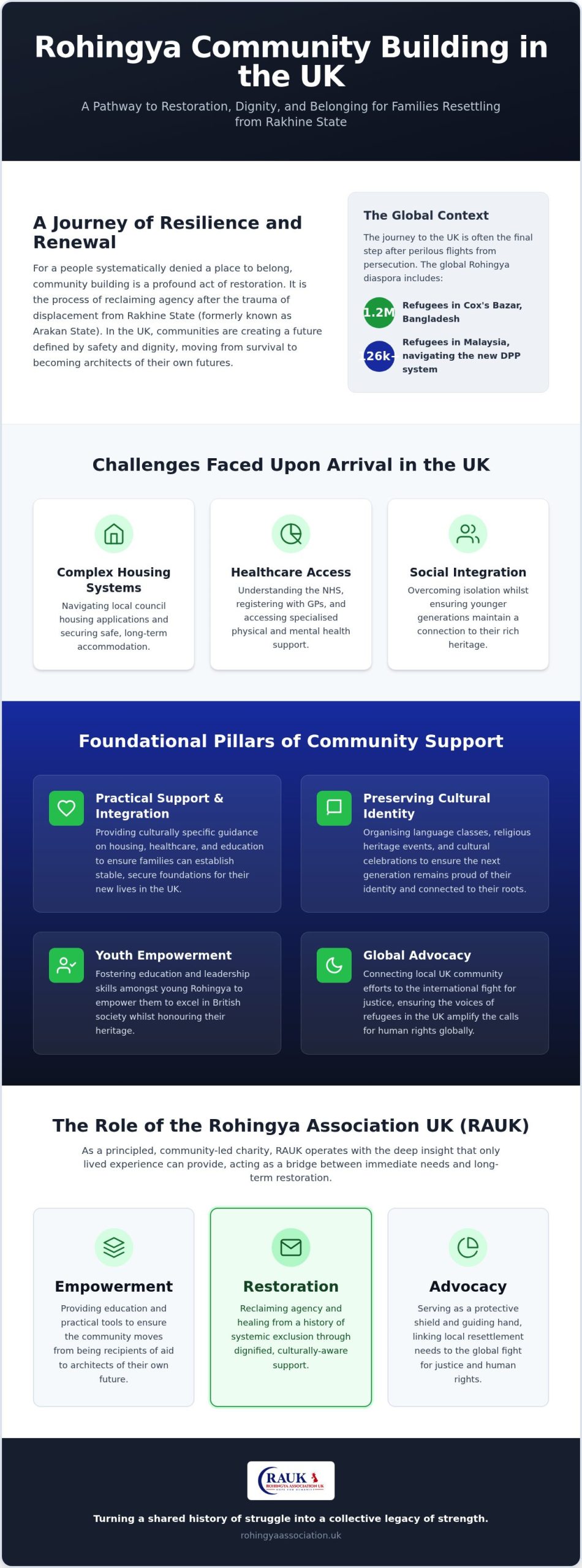
The Rohingya Association UK (RAUK) serves as a principled leader within this landscape, acting as a bridge between immediate needs and long-term restoration. As a community-led charity, RAUK operates with the deep insight that only lived experience can provide, ensuring every project is grounded in reality. It acts as both a protective shield for new arrivals and a guiding hand for those seeking to navigate the complexities of British life. The mission of RAUK is rooted in three pillars: empowerment, restoration, and advocacy. By providing education and youth empowerment, the organisation ensures that the next generation remains proud of their identity whilst excelling in their new home. This work is the heart of Rohingya community building UK, turning a shared history of struggle into a collective legacy of strength. You can help strengthen these efforts when you volunteer with Rohingya Association UK to support our local resettlement projects.
Foundational Pillars of Community Support and Integration
Successful integration is not a passive event; it’s a deliberate construction of new foundations. Within the framework of Rohingya community building UK, the focus remains on providing the structural support necessary for families to move from survival to stability. This involves a coordinated effort to dismantle the barriers that often keep newly arrived families on the margins of society. By addressing the practical needs of housing, health, and language, we create a landscape where restoration isn’t just a hope but a reality.
Refugee Housing Guidance and Healthcare Access
Securing safe, long-term accommodation is the first step towards restoration. For many families in West Yorkshire, navigating local council housing systems feels like an insurmountable challenge due to complex eligibility criteria and long waiting lists. This struggle is compounded by the specific legal context of their arrival. The UK Government Policy on Rohingya acknowledges the severe persecution faced in Rakhine State, traditionally known as Arakan State, yet the administrative path to settled status remains arduous. Beyond housing, healthcare access must be prioritised. Survivors often carry the invisible weight of displacement trauma, requiring sensitive, trauma-informed psychological support that respects their cultural and religious values. You can find more detailed advice on these processes in our guide to Community Support for Displaced Families.
Education and Youth Empowerment Programmes
The youth represent the community’s greatest potential for long-term renewal. Providing supplementary education and skills development ensures that young people don’t just adapt to British life but excel within it. These initiatives are designed to bridge the gap between their heritage and their future, fostering a sense of pride and confidence. By participating in Refugee Youth Empowerment Programmes, the next generation gains the leadership skills required to advocate for their community both locally and globally. Language remains a critical tool for agency. Tailored English classes help break down the isolation that prevents parents and elders from fully engaging with schools, doctors, and local services. This holistic approach ensures every family member has the opportunity to contribute to their new home. You can help us expand these vital services when you volunteer with Rohingya Association UK to support our local resettlement efforts.
Preserving Identity: Cultural and Religious Heritage in the Diaspora
Identity preservation serves as a vital shield against the erasure faced in Rakhine State, previously known as Arakan State. Within the framework of Rohingya community building UK, cultural and religious heritage acts as a protective anchor, ensuring that the trauma of displacement doesn’t lead to a loss of self. Organising community gatherings isn’t merely about socialising; it’s a methodical effort to weave the threads of the past into the fabric of a new life in Britain. These events serve as a platform for collective restoration, where the voice of the diaspora is amplified and the dignity of the people is upheld through shared tradition.
Faith and Communal Bonds
Faith provides a sense of stable, long-term commitment that transcends borders. The mosque serves as more than a place of worship; it’s a centre for Islamic education that offers children a moral compass and a profound sense of belonging. Religious festivals like Eid provide essential moments of normalcy and joy, allowing families to celebrate their shared values whilst looking forward with optimism. This approach prioritises a tripartite focus: strengthening faith, supporting the family unit, and securing a prosperous future for the next generation. By grounding the youth in these spiritual foundations, we protect them from the social isolation that often accompanies life in a new country.
Heritage Preservation Projects
Maintaining the Rohingya language amongst youth born in the UK is a significant challenge, yet it’s essential for keeping the connection to their roots alive. We use cultural storytelling and art as evocative tools to document oral histories, capturing the wisdom of elders before it’s lost to time. These projects celebrate the vibrant colours of traditional dress, the unique flavours of our food, and the intricate customs that define us. Understanding these roots helps the diaspora connect with the reality of those still living Inside the Rohingya Refugee Camp, fostering a global bond of solidarity. Through these preservation efforts, the community transforms the narrative of victimhood into one of resilient optimism. It’s a way of ensuring that despite the systematic attempts to destroy our culture, it continues to grow, adapt, and flourish in new soil. You can help us sustain these traditions when you support our Bangladesh projects to protect heritage beyond our borders.
Global Advocacy: Connecting Local Communities to International Justice
Rohingya community building UK serves as a vital bridge between local resettlement and the pursuit of international accountability. When survivors find safety in cities like Bradford, they don’t turn their backs on those left behind; instead, they use their newfound agency to amplify the voices of the 1.2 million refugees currently enduring life in Cox’s Bazar, Bangladesh. This collective effort transforms personal survival into a principled movement for justice, accountability, and restoration. By organising locally, the diaspora ensures that the ongoing human rights gaps in Rakhine State, traditionally known as Arakan State, remain at the forefront of the global political agenda.
Advocacy for the Stateless
The struggle for legal recognition remains a central pillar of our global advocacy. We closely monitor the conditions of Rohingya populations across the world, ensuring their plight isn’t forgotten by the international community. Current metrics for the global diaspora include:
- Bangladesh: Advocating for the 1.2 million refugees residing in the Cox’s Bazar region.
- Malaysia: Assisting 126,000 individuals navigating the transition from UNHCR documentation to the Malaysian government’s DPP (Dokumen Pendaftaran Pelarian) system.
- Regional Populations: Tracking the status of those trapped in Saudi Arabia and those seeking safety in India, Indonesia, and Thailand.
This legal monitoring is essential for achieving long-term Justice for Rohingya People. By documenting these transitions, we hold international bodies accountable to their humanitarian obligations.
Supporting Overseas Aid Projects
Local community strength directly fuels our ability to intervene in global crises. UK-based support allows us to fund essential projects in Myanmar and Bangladesh, providing a lifeline to those facing extreme hardship. These initiatives prioritise three core areas of care:
- Crisis intervention and emergency relief during periods of heightened conflict.
- Food support and nutritional security for vulnerable families in camp environments.
- Healthcare access and trauma-informed psychological care for survivors of violence.
We maintain strict factual integrity in our reporting, basing our casualty statistics and camp data from Rakhine State, also known as Arakan State, on verifiable sources. Your commitment to global justice begins with local action, and you can directly impact these lives when you support our Bangladesh projects today. This work is not a fleeting reaction to tragedy; it’s a stable, long-term commitment to the survival and dignity of our people.
How You Can Take Action Today: Building a Brighter Future Together
Empowerment begins with a single, deliberate choice to stand in solidarity with those seeking restoration. While the challenges facing the community are significant, the possibility for renewal is real and within reach through collective action. Rohingya community building UK is most effective when it is driven by local, grassroots leadership that understands the nuanced needs of survivors. By moving beyond passive sympathy towards active partnership, you help transform the landscape of refugee integration into one of shared dignity and mutual growth. This is not merely about providing aid; it is about building a future where every individual has the agency to thrive.
Volunteering and Local Support
Direct engagement is the most powerful way to break down the social isolation that many families face upon arrival. When you choose to volunteer with Rohingya Association UK, you provide more than just assistance; you become a guiding hand for families navigating the complexities of British life. Our Bradford-based projects rely on dedicated individuals to mentor youth, assist with language barriers, and help parents understand local systems. You can also advocate for the community by organising awareness events within your own school, workplace, or mosque. These efforts build vital bridges between the Rohingya diaspora and the wider British public, fostering an environment of empathy and protection that counters the erasure faced in Rakhine State, also known as Arakan State.
Faithful Giving and Financial Support
Sustainable change requires a stable, long-term commitment that transcends immediate crisis intervention. For those within the Muslim community, the decision to donate your Sadaqah Jariyah offers a pathway to provide ongoing restoration for generations to come. These contributions are prioritised for projects that create lasting stability, such as education centres and healthcare initiatives. Your financial support doesn’t just provide relief; it fuels the fight for global justice for the 1.2 million refugees in Cox’s Bazar and the 126,000 Rohingya in Malaysia currently transitioning to the DPP system.
We ensure that every contribution is utilised with strict transparency and factual integrity. When you support our Bangladesh projects, you are investing in the survival of a culture that others have tried to destroy. This is an invitation to move from a fleeting emotional reaction to a dedicated, principled partnership. Together, we can ensure that the resilience shown in the diaspora is matched by a global movement that prioritises the safety, heritage, and future of every Rohingya individual.
Restoring Hope Through Collective Action
We’ve explored how the diaspora is reclaiming its identity by navigating UK systems and preserving the traditions of Rakhine State, formerly Arakan State. This process of Rohingya community building UK ensures that the trauma of displacement is met with the strength of communal bond. By anchoring families in Bradford whilst advocating for 1.2 million refugees in Cox’s Bazar, we bridge the gap between local safety and international accountability. Integration is not merely a technical procedure; it’s a profound act of agency that honours our past whilst securing our future.
As a community-led organisation (Registered Charity 1211433), we remain a steadfast advocate for those still seeking a place to belong. Your partnership is a vital part of this renewal, turning principled leadership into tangible results. Please support our mission and donate your Sadaqah Jariyah today to help us provide direct aid and long-term restoration. Together, we can build a future where every Rohingya individual is protected, valued, and empowered to lead.
Frequently Asked Questions
How many Rohingya refugees are currently living in the UK?
The exact number of Rohingya individuals in Britain isn’t recorded as a separate ethnic category in national census data, though community estimates suggest several hundred families. Significant populations have settled in West Yorkshire, particularly Bradford, which has become a primary hub for the diaspora. These families have arrived through various resettlement schemes and asylum routes seeking safety from systematic persecution in Rakhine State.
What are the primary challenges for Rohingya families integrating in Bradford?
Families often face significant hurdles related to language barriers and navigating complex social welfare systems. The trauma of displacement from Rakhine State, traditionally known as Arakan State, requires sensitive healthcare support that’s often difficult to access. Additionally, the June 2026 asylum repayment policy and stricter family reunion rules have added new financial and emotional pressures. Overcoming these obstacles is the heart of Rohingya community building UK.
How does the Rohingya Association UK support refugees in Cox’s Bazar?
RAUK provides direct humanitarian aid to the 1.2 million refugees currently residing in the camps of Bangladesh. This support includes crisis intervention, food security programmes, and essential healthcare services for those facing extreme hardship. By maintaining a presence in the region, we ensure that aid reaches the most vulnerable whilst advocating for their rights and restoration on the global stage.
Can I volunteer with Rohingya Association UK if I don’t speak the language?
Yes, we welcome volunteers from all backgrounds who are committed to the cause of restoration and justice. While speaking the language is helpful, many roles involve mentoring youth, assisting with administrative tasks, or organising local awareness events. Your unique skills can help build bridges between the diaspora and the wider British public, fostering a more inclusive and supportive environment for everyone.
What is the difference between Zakat and Sadaqah Jariyah for refugee aid?
Zakat is an obligatory annual payment intended for immediate relief and poverty alleviation within the Muslim community. In contrast, Sadaqah Jariyah represents a voluntary, ongoing form of charity that funds long-term projects like education centres or healthcare facilities. Choosing to donate your Sadaqah Jariyah ensures a stable, long-term commitment to the restoration and empowerment of families both in the UK and overseas.
How does RAUK ensure the preservation of Rohingya culture in the UK?
We prioritise cultural preservation through community-led events that celebrate traditional dress, food, and religious heritage. By documenting oral histories from elders, we ensure that the younger generation remains connected to their roots in Rakhine State, also known as Arakan State. These initiatives protect the community against the erasure they faced in their homeland and foster a sense of collective pride and resilient optimism.
What is the status of Rohingya refugees in Malaysia and the DPP system?
As of April 2026, there are over 126,000 Rohingya refugees in Malaysia who are currently navigating a significant legal shift. The community is transitioning from UNHCR documentation to the Malaysian government’s DPP (Dokumen Pendaftaran Pelarian) system. This change has created a period of uncertainty, making international advocacy and support more critical than ever to ensure their safety and continued legal protection.
How can I support human rights advocacy for the Rohingya people?
You can support advocacy by staying informed about the legal metrics and human rights conditions in Rakhine State, formerly Arakan State. Raising awareness in your local community or mosque helps keep the plight of the 1.2 million refugees in Cox’s Bazar on the public agenda. Additionally, you can volunteer with Rohingya Association UK or contribute funds to support our Bangladesh projects and global justice campaigns.