
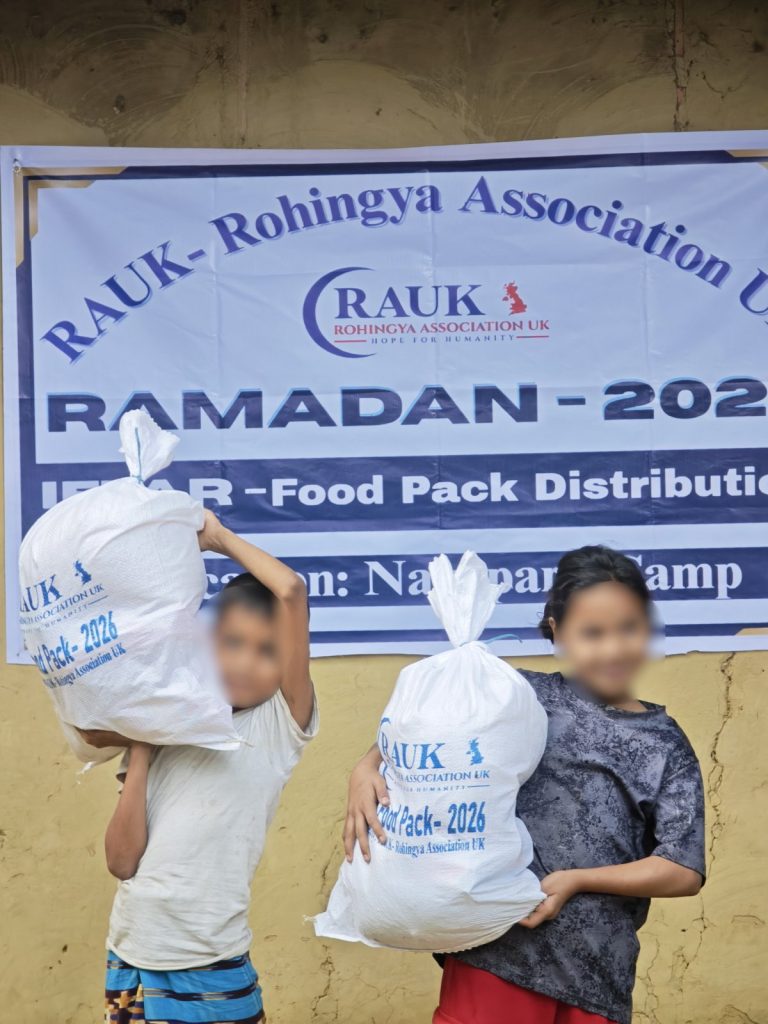
The strength of a community is not measured by its wealth, but by the dignity it affords its most vulnerable members during their most sacred moments. You recognise that the essence of Ramadan lies in the collective resilience of the Ummah, where the privilege of plenty carries a deep responsibility toward those facing the hardship of displacement. When you choose to donate Iftar meals for refugees, you aren’t just providing physical sustenance; you’re honouring a bond of global kinship that preserves heritage, restores hope, and upholds dignity. This act of service ensures that even in the face of exile, no family is left to break their fast in isolation.
This guide provides a clear pathway for your generosity, ensuring your contributions reach those in need with transparency and cultural precision. You’ll discover how your Zakat, Sadaqah, and Fidya provide essential nutrition to Rohingya families in Bangladesh and support vital integration efforts right here in the UK. We will examine the tangible impact of community-led aid, the distinction between various forms of food support, and the ways your contribution fosters long-term stability, protection, and growth for a community striving to rebuild its future.
Key Takeaways
- Understand how Ramadan provides a vital sense of spiritual renewal and communal identity for Rohingya families facing the severe restrictions of displacement.
- Learn to navigate religious frameworks such as Zakat, Sadaqah, and Fidya to effectively donate Iftar meals for refugees with confidence and precision.
- Discover how culturally familiar food parcels are sourced locally to provide essential nutrition whilst simultaneously strengthening regional economies.
- Identify the difference between immediate crisis intervention and long-term food security initiatives that empower families through sustainable agricultural support.
- Recognise the value of community-led advocacy, ensuring your contribution supports both local integration in the UK and global humanitarian justice.
The Significance of Ramadan for Displaced Rohingya Families
Ramadan represents a profound paradox for the Rohingya. It is a season of immense spiritual elevation, yet it unfolds against a backdrop of prolonged statelessness and systemic hardship. For a people whose history is marked by the Rohingya refugee crisis, the act of fasting becomes a testament to their endurance and a reclamation of their faith. Observing these sacred rites in the absence of a permanent home requires a unique form of fortitude, where the evening meal is more than just nutrition; it is an assertion of existence. When you donate Iftar meals for refugees, you participate in this act of preservation, ensuring that the physical toll of displacement does not diminish the spiritual sanctity of the month.
Spiritual Resilience in Cox’s Bazar
The scale of necessity inside the rohingya refugee camp remains staggering, with restricted movement and limited resources complicating the basic requirements of Iftar. Hunger statistics in Cox’s Bazar continue to highlight a precarious landscape where food security is a daily struggle rather than a certainty. Community-led distribution is vital here because it respects the nuances of Rohingya culture, ensuring that aid is delivered with the dignity that every human being deserves. Providing a reliable source of food during this holy month alleviates the psychological burden of scarcity. It allows families to focus on prayer, reflection, and communal healing without the looming shadow of hunger.
Ramadan for Refugees in the UK
For those resettled in the UK, particularly in hubs like Bradford, the challenge shifts from physical survival to social integration and emotional wellbeing. Newly arrived families often face a profound sense of isolation, separated from the familiar rhythms of their homeland whilst navigating an unfamiliar society. Shared meals and Islamic community events provide essential community support for displaced families, acting as a vital bridge to their new surroundings. When supporters donate Iftar meals for refugees within these local contexts, they help create spaces where heritage is celebrated and new bonds are formed. These gatherings are not merely charitable acts; they are intentional efforts to tackle inequality, foster belonging, and strengthen the collective fabric of our society. This dual approach ensures that whether in a camp or a city, the spirit of Ramadan remains a source of restoration, protection, and growth.
Choosing the Right Way to Donate Iftar Meals for Refugees
Fulfilling your religious obligations during Ramadan requires both a sincere heart and a clear understanding of Islamic jurisprudence. As the Rohingya humanitarian crisis continues to demand our attention, your decision to donate Iftar meals for refugees serves as a vital lifeline. Ensuring your contribution aligns with Shariah principles guarantees that aid reaches those most eligible whilst providing you with spiritual peace of mind. This process is not merely about a financial transaction; it’s an act of stewardship that requires transparency, efficacy, and cultural dignity.
Zakat, Sadaqah, and Fidya: Which Should You Choose?
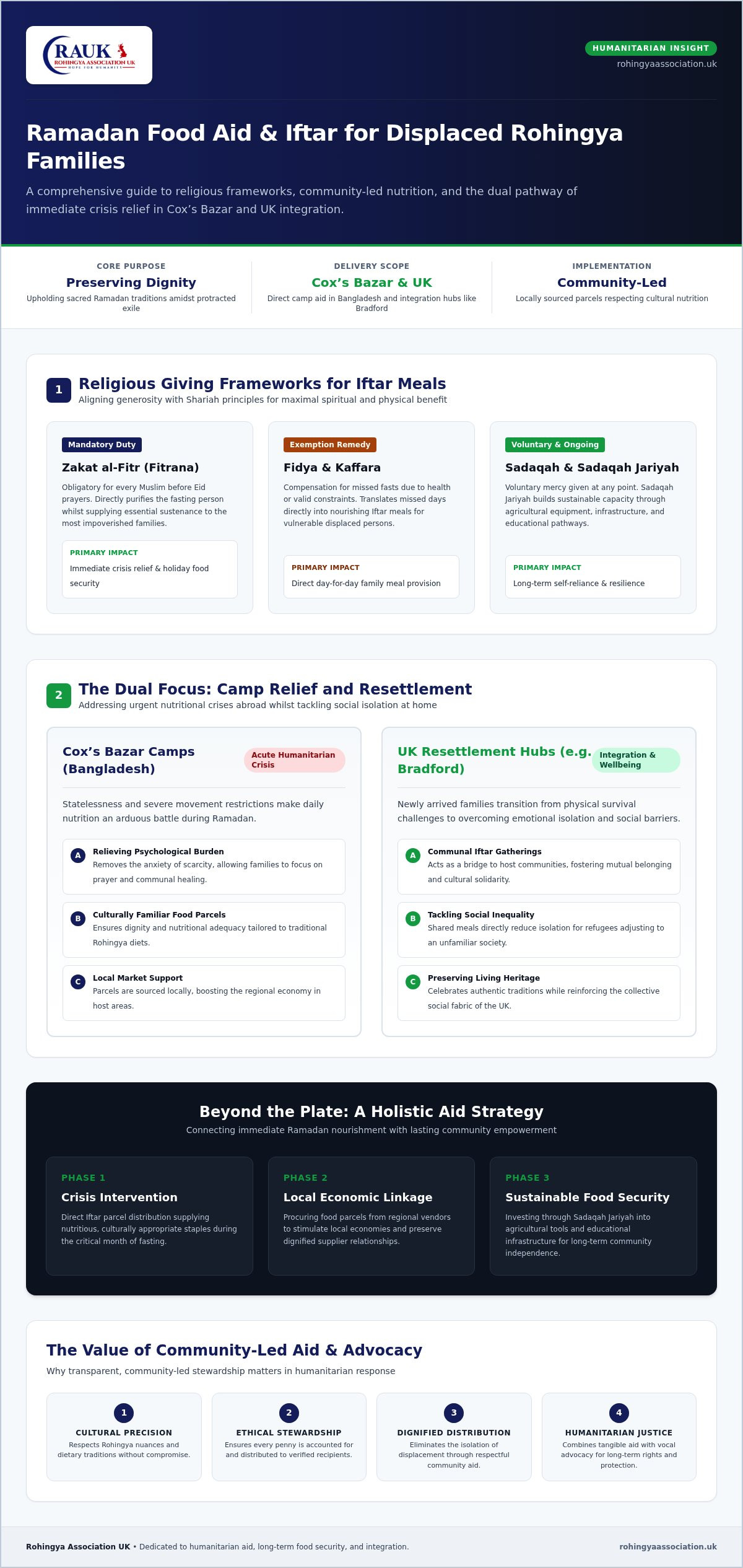
Choosing the appropriate framework for your donation depends on your personal circumstances and the specific needs you wish to address. Zakat al-Fitr, or Fitrana, is a mandatory obligation for every Muslim, intended to purify those who fast and provide for the poor before the Eid prayers. In contrast, Fidya and Kaffara are specifically designed to compensate for missed fasts due to ill health or other valid reasons, directly translating your missed days into sustenance for the hungry.
Sadaqah remains a powerful, voluntary expression of mercy that can be offered at any time amongst the various duties of the month. Whilst Zakat provides immediate relief, consider Sadaqah Jariyah for projects that build long-term resilience, such as agricultural tools or educational infrastructure. When you donate Iftar meals for refugees through these established channels, you ensure that every penny is accounted for and ethically distributed to those in genuine need.
The Impact of Collective Giving
Pooling your resources with a community-led organisation offers a level of precision that generalist NGOs often struggle to match. Because our team is composed of individuals with lived experience of displacement, we understand the logistical complexities of camp life and the cultural preferences of the families we serve. This proximity allows for more efficient food procurement, as we buy in bulk from local markets to support regional economies whilst keeping costs manageable.
Transparency is the cornerstone of our stewardship. We believe that donors deserve to see the tangible results of their generosity, from the initial sourcing of ingredients to the final distribution of parcels. By supporting a dedicated partner like the Rohingya Association UK, you can be certain that your Ramadan giving is organised with the utmost integrity and care. This focused approach transforms individual acts of charity into a powerful, collective movement for justice, stability, and hope.
How Your Donation Transforms Iftar in Refugee Camps and the UK
The transformation begins with the specific composition of the food parcel itself. It isn’t merely a collection of generic calories; it’s a curated selection of essential nutrients, familiar flavours, and cultural dignity. When you donate Iftar meals for refugees, you’re funding a sophisticated logistical operation that prioritises local sourcing. By purchasing staples like rice, lentils, and traditional spices from markets near the camps, we support regional economies whilst ensuring the ingredients are fresh and appropriate. This “Dignity First” approach ensures that distribution is organised, respectful, and rooted in the community’s own leadership. It also extends to the next generation through refugee youth empowerment programs, where the evening meal serves as a foundation for mentorship and heritage preservation.
Nutritional Security in Emergency Contexts
In the restricted environments of Cox’s Bazar, malnutrition remains a persistent threat, particularly amongst children and the elderly. Our parcels are designed to combat this by balancing long-life dry goods with fresh produce, providing the vitamins necessary for sustained health. We ensure that clean, safe water is provided alongside every Iftar, recognising that hydration is as critical as nutrition during the intense heat of the Bangladeshi summer. This holistic approach focuses on the restoration of physical strength, the protection of health, and the growth of communal resilience.
Fostering Belonging in the UK
Within the UK, particularly in our home city of Bradford, the impact of your contribution facilitates social restoration. We organise community Iftars that act as a bridge, welcoming non-Rohingya neighbours to share in our traditions and break bread together. These events are not just social gatherings; they’re catalysts for integration where food facilitates English language learning, informal socialising, and mutual understanding. By participating in these shared moments, families find a sense of belonging and strengthen the bonds of the Rohingya Association UK community. When you choose to donate Iftar meals for refugees, you’re investing in a future where displacement is met with hospitality, stability, and collective care.
A Step-by-Step Guide to Donating Iftar Meals with RAUK
Taking the step from intention to action requires a process that is both secure and transparent. Your decision to donate Iftar meals for refugees is a principled choice that bridges the gap between your personal values and the urgent needs of a displaced community. By choosing a community-led organisation, you ensure that your contribution is managed by those who possess a profound, lived understanding of the challenges involved. This proximity allows us to act as a steadfast advocate for the families we serve, ensuring every meal provided is an act of restoration and respect.
Navigating the Online Donation Process
We’ve designed our donation portal to be methodical and user-friendly, allowing you to direct your support with precision. To begin, visit the official Rohingya Association UK donation centre. From the project list, select “Ramadan Iftar Meals” to ensure your funds are specifically allocated to our seasonal food support initiatives. Finally, enter your details and choose from our secure payment methods to complete your contribution.
You may choose between a one-off donation to mark a specific night of Ramadan or a monthly commitment. Monthly giving is particularly impactful, as it provides the stable, long-term commitment needed to plan distribution throughout the entire holy month and beyond. Regardless of the amount, every contribution is a vital component of our collective effort to uphold the dignity of the Rohingya people. Once your donation is processed, you’ll receive regular updates, allowing you to see the tangible impact of your generosity through our community-led reporting.
Maximising Your Impact with Gift Aid
For British taxpayers, the Gift Aid scheme is a powerful tool that enhances the value of your contribution without any additional cost to you. By simply ticking the Gift Aid declaration box, the government adds 25p to every £1 you give. This allows us to stretch your donation significantly further, covering logistical costs or expanding the reach of our parcels. To be eligible, you must be a UK taxpayer who has paid an amount of Income Tax or Capital Gains Tax at least equal to the amount we will reclaim on your donations in that tax year.
These additional funds are essential for our broader mission. Whilst the primary focus remains on immediate food support, the flexibility provided by Gift Aid helps fund our ongoing work for justice for Rohingya people. It supports our advocacy and awareness campaigns, ensuring that the plight of our community remains on the global agenda. When you take this small extra step, you’re not just providing a meal; you’re strengthening a movement for systemic change. We invite you to support our Ramadan appeal today and become a partner in this vital work of empowerment and protection.
Beyond the Plate: Building Long-Term Food Security for the Rohingya
While the immediate impulse to donate Iftar meals for refugees is rooted in the sacred duty of Ramadan, the impact of your generosity extends far beyond the final prayer of Eid. True restoration requires a transition from emergency relief to sustainable agricultural support and systemic advocacy. By addressing the root causes of food insecurity, we move closer to a reality where the Rohingya are no longer defined by their needs, but by their agency. Your Ramadan giving serves as the fuel for our ongoing human rights work, ensuring that the quest for justice remains as persistent as the hunger we aim to alleviate. We view every meal as a foundation for future stability, protection, and growth.
Investing in Self-Sufficiency
Nutrition is the bedrock upon which all other forms of development are built. Stable access to healthy food allows children to focus on their education, providing the cognitive foundation necessary for future leadership. We invest in skills development programmes that empower individuals to cultivate their own food or pursue vocational training, gradually reducing the cycle of aid dependency. The Rohingya diaspora plays a critical role in this vision, acting as a bridge between current survival and a future Myanmar where our people can live with safety and self-determination. This holistic approach ensures that the protection we provide today fosters the long-term resilience we seek for tomorrow.
How to Stay Involved After Ramadan
The spirit of communal bond that defines our Iftar gatherings shouldn’t dissipate with the new moon. To remain a dedicated partner in our mission, it’s vital to maintain a connection with the community-led work happening both in the UK and abroad. When you donate Iftar meals for refugees, you’re starting a journey of shared identity and collective effort that transforms lives long after the month has concluded. There are several ways to continue your support:
- Subscribe to the RAUK newsletter to receive transparent updates on our global and local projects.
- Explore volunteering opportunities at our Bradford community centre, ranging from youth mentorship to integration support.
- Advocate for the Rohingya cause within your local social and professional circles to ensure our story is never forgotten.
Becoming a long-term partner means standing with us as we tackle inequality and fight for systemic change. This isn’t just about charity; it’s about a principled commitment to human rights and the restoration of a people. We invite you to stay engaged, stay informed, and stay steadfast in your support for the Rohingya community throughout the year.
Honouring Our Shared Humanity This Ramadan
The act of breaking fast is a universal symbol of gratitude, yet for the Rohingya, it remains a hard-won victory over displacement and scarcity. By choosing to donate Iftar meals for refugees, you’re not merely providing a meal; you’re investing in the spiritual resilience and physical restoration of a people. We’ve explored how your contributions facilitate cultural preservation in Bradford and essential survival in Cox’s Bazar, bridging the distance between the diaspora and those remaining in Myanmar whilst ensuring that no family is left to observe the holy month in isolation.
As a community-led organisation (Registered Charity: 1211433), we take our role as stewards of your generosity with the utmost seriousness, ensuring that over 90% of funds reach our direct aid projects. This level of transparency guarantees that your Zakat and Sadaqah perform their intended duty with maximum efficacy and cultural precision. Please donate your Iftar meals to Rohingya families today and join us in this vital work of protection and empowerment. Your generosity today plants the seeds for a future defined by justice, stability, and collective hope.
Frequently Asked Questions
Can I donate my Zakat specifically for Iftar meals for Rohingya refugees?
You can certainly direct your Zakat to provide Iftar meals for Rohingya families. We ensure that all Zakat contributions are managed with strict adherence to Shariah principles, reaching those most eligible under the established categories of need. By choosing to donate Iftar meals for refugees through your Zakat, you’re fulfilling a mandatory pillar of Islam whilst providing essential nutrition to displaced families in Bangladesh, Myanmar, and the UK.
How much does it cost to provide a full Iftar meal for a family of five?
The cost of providing a full Iftar meal fluctuates based on regional market prices and the specific logistical challenges of the distribution area. We prioritise sourcing ingredients locally in Bangladesh and Myanmar to support regional economies and ensure freshness. This approach allows us to maximise the impact of every contribution, providing a culturally appropriate and nutritionally balanced meal that honours the dignity of a family of five during their fast.
Is the Rohingya Association UK a registered charity in the United Kingdom?
Yes, the Rohingya Association UK is a fully registered charity in the United Kingdom, operating under the charity number 1211433. Based in Bradford, we are a community-led organisation dedicated to supporting displaced families through integration services, crisis intervention, and humanitarian aid. Our registered status ensures a high level of transparency and accountability, providing donors with the confidence that their contributions are managed according to strict regulatory standards and ethical practices.
Can I donate Iftar meals on behalf of a deceased loved one as Sadaqah Jariyah?
Donating Iftar meals on behalf of a deceased loved one is a profound way to honour their memory through Sadaqah Jariyah. This voluntary act of compassion provides ongoing blessings for the departed whilst offering immediate relief to those facing the hardship of exile. Whether you choose to fund a single meal or a month-long distribution, your gift serves as a testament to their legacy, providing sustenance, hope, and dignity to the most vulnerable.
How does RAUK ensure that food reaches refugees in Myanmar and Bangladesh?
Our community-led structure is the cornerstone of our distribution network in Myanmar and Bangladesh. Because our team includes individuals with lived experience of the region, we maintain deep-rooted connections with local partners and community leaders on the ground. This proximity allows us to navigate complex logistical landscapes and restricted environments effectively, ensuring that when you donate Iftar meals for refugees, the aid reaches the intended recipients with precision, transparency, and cultural respect.
What is the deadline for donating Fitrana (Zakat al-Fitr) for 2026?
Zakat al-Fitr, or Fitrana, must be paid before the commencement of the Eid al-Fitr prayers at the end of Ramadan. This allows sufficient time for the funds to be organised and distributed to those in need, ensuring they can participate in the joy of Eid. We recommend making your contribution at least several days before the expected date of Eid in 2026 to facilitate the logistical requirements of our community-led distribution teams.
Are there ways to help Rohingya refugees in Bradford besides financial donations?
There are numerous ways to support the Rohingya community in Bradford beyond financial contributions. We welcome volunteers to assist with our English language classes, youth empowerment programmes, and cultural integration events. Your time, professional skills, and advocacy within your own social circles help us tackle inequality and foster a sense of belonging for newly arrived families. Engaging with our local community centre provides a direct way to support the restoration and growth of displaced neighbours.
How do I know if my donation was received and where it was spent?
Transparency is fundamental to our mission as a principled leader in humanitarian aid. Upon making a donation, you will receive a formal receipt acknowledging your contribution. We provide regular updates through our newsletter and annual reports, detailing how funds were utilised across our projects in the UK, Myanmar, and Bangladesh. With over 90% of our funds reaching direct aid projects, you can be certain your generosity is creating a tangible, lasting impact.