
What does it mean to be a stranger in the only land you’ve ever called home? For the Rohingya, this isn’t a philosophical inquiry but a lived reality dictated by a systematic legal erasure that transformed an entire ethnic group into the world’s largest stateless population. You’ve likely felt overwhelmed by the sheer scale of this humanitarian crisis or found yourself lost amongst the complex historical timelines that define it. Understanding the specific reasons why Rohingya refugees fled Myanmar is the first step in moving from a sense of helplessness toward meaningful, principled advocacy.
We’ll examine the historical, legal, and humanitarian forces that have shaped this displacement, with a particular focus on the 1982 Citizenship Law and its legacy of exclusion. This guide provides verified statistics on the 1.2 million refugees currently seeking safety in Cox’s Bazar, whilst highlighting the resilient communities established in Malaysia and the United Kingdom. By the end of this exploration, you’ll have a clear perspective on the roots of this crisis and discover actionable ways to support the community through restoration, protection, and growth.
Key Takeaways
- Trace the ancestral heritage of the Rohingya within Arakan and Rakhine States to understand their indigenous identity and enduring cultural bond.
- Analyse the 1982 Citizenship Law to uncover the legal mechanisms of statelessness that explain why Rohingya refugees fled Myanmar.
- Access verified statistics on the 1.2 million refugees in Cox’s Bazar and the 126,000 in Malaysia to grasp the magnitude of the humanitarian challenge.
- Explore the journey of belonging in the UK, highlighting Bradford as a vital centre for integration, education, and community empowerment.
- Identify actionable ways to contribute to restoration and renewal through donation, volunteering, and advocacy for global justice.
The Roots of Displacement: Understanding Rakhine and Arakan State
To understand the current humanitarian landscape, we must first acknowledge a history that has been intentionally obscured by state-sponsored narratives. The Rohingya are an indigenous Muslim ethnic minority with deep ancestral roots in the coastal region of western Myanmar. For generations, they’ve cultivated a distinct culture, language, and heritage that predates modern borders. This historical identity isn’t just a matter of record; it’s the foundation of justice and the essential starting point for any path toward restoration and renewal.
A Legacy of Identity in Arakan State
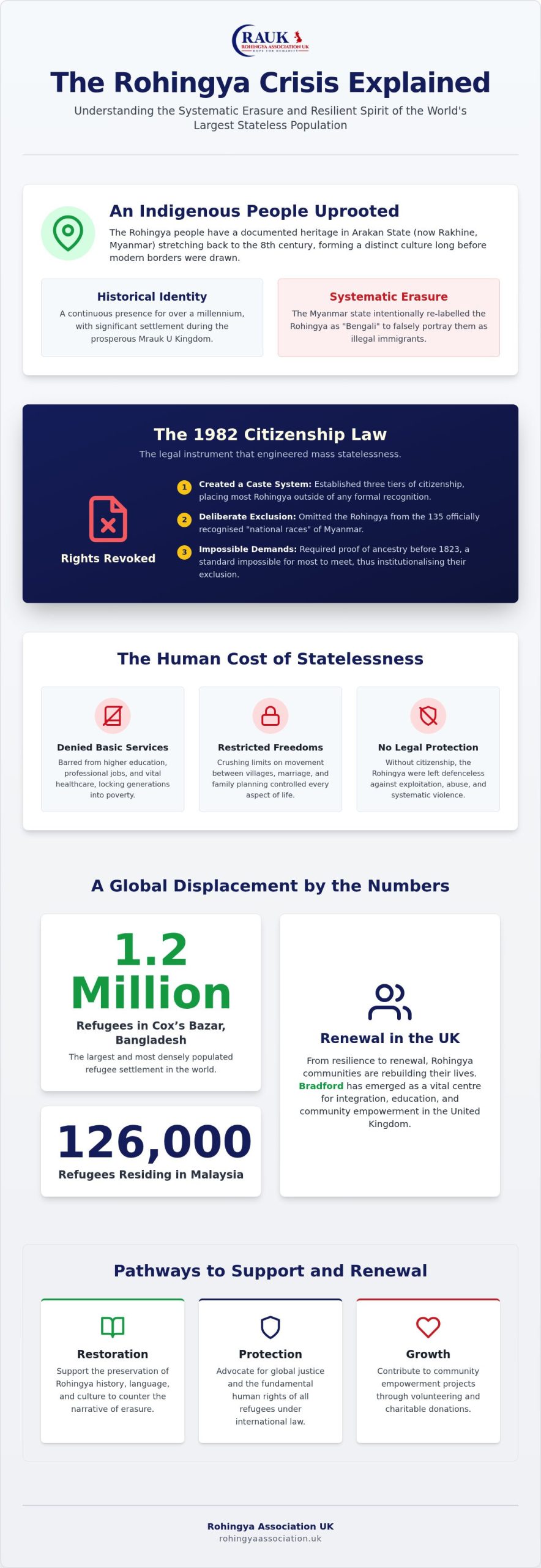
The region now known as Rakhine State was historically called Arakan State, a name that carries centuries of cultural weight for the people who lived there. Historical records indicate a continuous presence of Muslim communities in Arakan since at least the 8th century, with significant settlement during the prosperous Mrauk U Kingdom. This isn’t a story of recent migration. It’s a legacy of belonging that spans over a millennium. Preserving this heritage is vital because it directly counters the official rhetoric that seeks to erase their very existence. We approach this subject with a deep sense of moral seriousness, recognising that cultural preservation is a powerful act of resistance against erasure.
The Denial of Ethnic Recognition
Despite this documented history, the Myanmar state has long promoted a harmful narrative of “illegal immigration” to justify persecution. By intentionally labelling the Rohingya as “Bengali”, authorities have attempted to frame an indigenous population as foreign interlopers from neighbouring Bangladesh. This linguistic exclusion served as a calculated precursor to systematic segregation and institutionalised discrimination. It highlights a primary reason why Rohingya refugees fled Myanmar over several decades; they were being legally and socially unmade in their own homes.
This erasure reached a horrific peak in what has been internationally recognised as the Rohingya genocide, a campaign of violence designed to uproot a community from its ancestral soil. Even amidst such profound hardship, the resilience of Rohingya identity remains unbroken. They don’t just carry memories of Arakan State; they carry a communal bond that refuses to be severed by borders or discriminatory laws. This strength is what we honour as we move from understanding a painful history to advocating for a future defined by safety, dignity, and global justice.
The 1982 Citizenship Law: Engineering Statelessness
The 1982 Citizenship Law stands as the primary legal catalyst explaining why Rohingya refugees fled Myanmar. It was not merely a bureaucratic change but a calculated policy of erasure that stripped an entire population of their fundamental rights. By redefining who belonged to the nation, the Myanmar state transformed an indigenous community into the world’s largest stateless population. This legal framework created a environment where persecution was not only possible but institutionalised.
The Legal Mechanism of Exclusion
The law established three distinct tiers of citizenship: full, associate, and naturalised. To qualify for full citizenship, an ethnic group had to prove their presence in the country prior to 1823, the start of the first Anglo-Burmese War. By omitting the Rohingya from the list of 135 recognised “national races”, the state effectively revoked their right to belong. This exclusion had immediate, devastating consequences for daily life. Access to higher education was barred; professional employment became an impossibility; and vital healthcare services were severely restricted. These legal barriers were prioritised to ensure the community remained on the margins of society, unable to build a stable or secure future. Understanding these mechanics is essential, as The Rohingya Crisis Explained by the Council on Foreign Relations highlights how legal frameworks can be weaponised to facilitate mass displacement.
Life Without a State: The Human Cost
Being stateless in a modern world leaves individuals without a protective shield against exploitation and abuse. Within Rakhine (Arakan) State, the Rohingya faced crushing restrictions on their freedom of movement, often requiring official permits just to travel between neighbouring villages. Perhaps most intrusive were the requirements for marriage and family planning permits, which allowed the state to monitor and limit the growth of the community. This systematic oppression resulted in a cycle of isolation, vulnerability, and poverty. Without a state to advocate for their safety, the Rohingya became targets for forced labour and arbitrary detention, leaving them with no choice but to seek sanctuary across borders.
Whilst the legal landscape in their homeland remains hostile, our mission is to restore the dignity and agency that these laws attempted to destroy. We invite you to learn more about our work in tackling inequality and providing a stable foundation for those who have lost everything to these unjust systems. By addressing the legal roots of this crisis, we can better support the journey toward justice and communal renewal.
The 2017 Exodus and the Global Refugee Landscape
In August 2017, the world witnessed one of the most rapid and brutal mass displacements in recent history. State-led “clearance operations” in Rakhine (Arakan) State forced over 750,000 people to seek sanctuary across the border in a matter of weeks. This violent surge remains the most visible answer to why Rohingya refugees fled Myanmar, though it was merely the culmination of decades of systemic erasure. Today, the Rohingya diaspora is scattered across the globe, each community facing its own unique challenges whilst striving to maintain a connection to their heritage and identity.
Cox’s Bazar: The World’s Largest Refugee Settlement
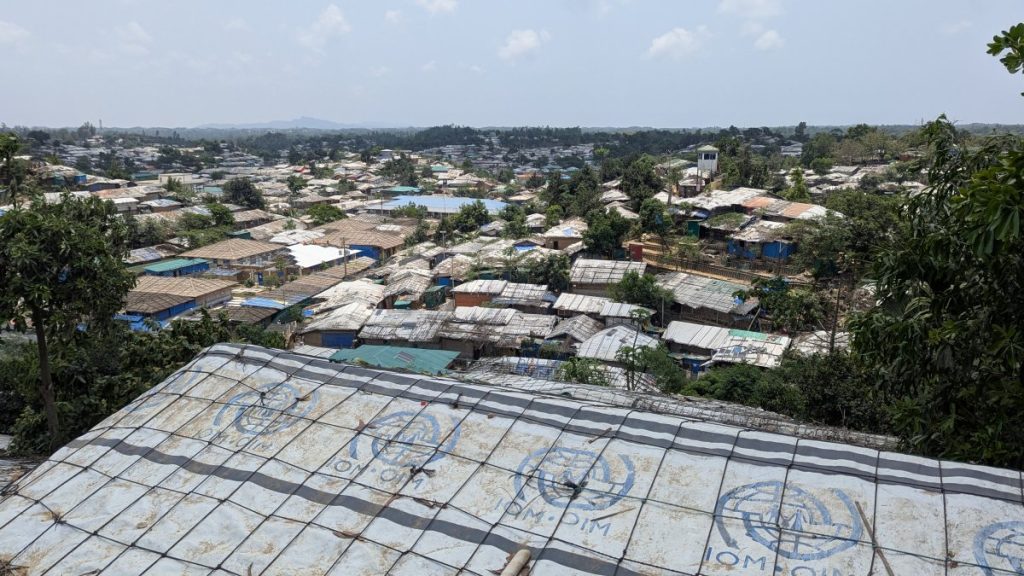
Bangladesh currently hosts the vast majority of the displaced population, with approximately 1.2 million refugees residing in the sprawling camps of Cox’s Bazar. These settlements are dense, fragile, and deeply reliant on sustained international support. For a detailed perspective on the daily realities of these communities, you can read our guide Inside the Rohingya Refugee Camp. The requirement for consistent crisis intervention, humanitarian aid, and food support is constant; the camps face seasonal monsoons and shrinking international funding. Despite these hardships, the spirit of mutual aid and communal resilience remains a powerful force amongst the residents.
The crisis has created a complex web of displacement throughout South and Southeast Asia. Significant populations have sought safety in India, whilst others remain trapped in precarious conditions in Saudi Arabia, Thailand, and Indonesia. In these nations, the lack of formal legal status often leaves families vulnerable to detention and prevents them from accessing stable employment or education for their children. Each location presents a different set of hurdles, yet the fundamental need for protection remains universal.
Navigating Documentation in Malaysia
Malaysia serves as another significant hub for the diaspora, with over 126,000 Rohingya refugees currently seeking safety within its borders. The community is presently navigating a complex transition from UNHCR-issued documentation to the Malaysian government’s digital Tracking Refugees Information System, known as the DPP system. This shift highlights the legal precariousness faced by those in the region, as the absence of permanent legal status creates barriers to integration and safety. Global advocacy remains essential to address the root causes of why Rohingya refugees fled Myanmar and to ensure that these documentation systems serve as a bridge to security rather than a tool for further exclusion. Our commitment is to act as a steadfast advocate for these families, fighting for the systemic change they deserve as they build lives of dignity and purpose.
From Resilience to Renewal: The Rohingya in the UK
The journey from the camps of Cox’s Bazar to the streets of West Yorkshire represents far more than a simple change in geography; it’s a profound testament to the enduring strength of a people who refused to be erased. Whilst the legal and historical reasons why Rohingya refugees fled Myanmar were rooted in systematic exclusion, the journey in the United Kingdom is defined by the hard work of inclusion, restoration, and growth. Bradford has emerged as a vital centre for this renewal, acting as a sanctuary where families can finally begin to process the trauma of displacement and look toward the future. Through our work at the Rohingya Association UK (RAUK), we provide the essential bridge between arrival and belonging, offering expert guidance on housing and ensuring that every individual can navigate the complexities of healthcare access with dignity.
Preserving Heritage in a New Home
Rebuilding a life requires more than just physical safety; it demands the restoration of one’s cultural soul and the preservation of ancestral identity. We organise cultural and community events that serve as a protective shield for our heritage, allowing the traditions of Arakan State to flourish amongst the next generation. These gatherings are not merely social; they are acts of reclamation that strengthen communal bonds, honour our history, and foster a sense of shared identity. Alongside these celebrations, our English language classes provide families with the essential tools for empowerment and agency. Whilst the traumatic reasons why Rohingya refugees fled Myanmar were defined by loss, their lives in the UK are defined by hope and heritage. This resilient optimism is the heartbeat of our community, transforming the pain of the past into a foundation for a stable, long-term future. For more on how we facilitate this transition, explore our guide to Community Support for Displaced Families.
Empowering the Next Generation
The true measure of our collective success lies in the futures we build for our children and the opportunities we create for their growth. Education acts as a vital shield against inequality, providing young people with the intellectual and practical skills they need to break cycles of marginalisation. Our youth education and skills development programmes are specifically designed to nurture talent, build confidence, and provide practical pathways to professional success. By investing in these Refugee Youth Empowerment Programmes, we’re ensuring that the legacy of our community is one of contribution and leadership rather than just survival. We believe that every young person deserves the opportunity to thrive, regardless of the circumstances that forced their family to seek sanctuary. We invite you to join us in advocating for global justice and supporting the families who are making Bradford their home.
How You Can Take Action Today
Understanding the historical and legal reasons why Rohingya refugees fled Myanmar is a vital first step, but knowledge alone cannot restore what has been lost. We carry a collective responsibility to move beyond awareness toward active restoration, protection, and justice. By becoming a dedicated partner with the Rohingya Association UK (RAUK), you join a movement committed to long-term renewal for families who have endured decades of systematic erasure. Our work is rooted in the belief that every individual deserves a future defined by agency rather than displacement. You can explore the broader landscape of global accountability in our analysis of Justice for Rohingya People.
Direct Financial Support
Financial contributions are the lifeblood of our mission, enabling us to provide stable, professional aid where it’s needed most. We encourage you to donate your Sadaqah Jariyah to create a lasting legacy of support that continues to benefit the community for generations. These contributions directly support our Bangladesh projects in Cox’s Bazar, where 1.2 million people face shrinking international aid and escalating insecurity. As a registered charity (number 1211433), RAUK maintains the highest standards of transparency and moral seriousness. Your generosity allows us to provide food support, healthcare guidance, and crisis intervention whilst ensuring the dignity that every human being deserves is upheld.
Community Engagement and Advocacy
For those based in West Yorkshire, we invite you to volunteer with Rohingya Association UK at our Bradford centre. Practical integration is a communal effort; it requires mentors, educators, and advocates who are willing to stand as a protective shield for our newest neighbours. Whether you’re assisting with English language classes or helping families navigate local services, your time is a powerful tool for empowerment. Beyond local efforts, your voice is essential in our advocacy and awareness campaigns. By sharing the truth of why Rohingya refugees fled Myanmar, you challenge the narratives of exclusion and help build a global framework of human rights protection. Together, we can transform the pain of displacement into a journey of belonging. Restoration is possible through our shared commitment. Join us in building a future of justice and renewal today.
Building a Future of Restoration and Justice
The systematic legal erasure and targeted violence of the past decades provide a somber answer to why Rohingya refugees fled Myanmar. Yet, the enduring spirit of the community proves that identity cannot be destroyed by decree or distance. From the ancestral lands of Arakan State to the vibrant streets of Bradford, the journey toward renewal is powered by those who refuse to let heritage fade. We stand as a principled leader in this movement, providing community-led support for over 1.2 million refugees globally whilst remaining deeply rooted in the heart of Bradford.
As a Registered Charity (number: 1211433), we invite you to move beyond understanding and toward impactful action. Your commitment ensures that the next generation can flourish in a land of safety and opportunity. Please support our mission and donate your Sadaqah Jariyah today to help us continue this vital work of restoration and protection. Together, we can transform the legacy of displacement into a future defined by agency, dignity, and shared strength.
Frequently Asked Questions
Who are the Rohingya and why are they considered stateless?
The Rohingya are an indigenous Muslim ethnic minority from Arakan State, now known as Rakhine State. They’re considered stateless because the 1982 Citizenship Law stripped them of their nationality by omitting them from the list of recognised ethnic groups. This legal exclusion denies them basic rights to travel, work, and study, making them the world’s largest population without a country to call home.
What happened in Rakhine State (Arakan State) in August 2017?
In August 2017, the Myanmar military launched brutal “clearance operations” that involved widespread killings, sexual violence, and the burning of entire villages. These horrific events forced approximately 750,000 people to seek safety across the border in a matter of weeks. This violent surge is the most documented reason why Rohingya refugees fled Myanmar in such massive numbers to escape systemic persecution.
How many Rohingya refugees are currently living in Bangladesh?
Approximately 1.2 million Rohingya refugees are currently residing in Bangladesh, primarily within the sprawling camps of Cox’s Bazar and on the island of Bhasan Char. Over half of this population consists of children who have grown up in a state of displacement. These communities remain entirely dependent on international humanitarian aid for essential services like food support, healthcare, and primary education.
What is the DPP system for Rohingya refugees in Malaysia?
The DPP system, or Tracking Refugees Information System, is a digital registration initiative introduced by the Malaysian government. It’s designed to track and register the over 126,000 Rohingya refugees currently living in the country. Whilst it aims to provide a formal record, the transition from UNHCR cards to this new system has created significant legal precariousness for families seeking long-term stability and protection.
Why does the Myanmar government refer to the Rohingya as “Bengalis”?
The term “Bengali” is used as a tool of exclusion to imply that the Rohingya are illegal immigrants from Bangladesh rather than indigenous residents. This narrative is a calculated attempt to justify the denial of citizenship and the erasure of their historical roots in Arakan State. Understanding this narrative helps clarify the political reasons why Rohingya refugees fled Myanmar and continue to seek safety abroad.
How does the Rohingya Association UK support families in Bradford?
Based in the heart of Bradford, the Rohingya Association UK (RAUK) acts as a protective shield for displaced families through housing guidance and healthcare access. We organise cultural and community events to preserve our heritage whilst providing English language classes and youth empowerment programmes. Our community-led approach ensures that families can navigate the journey from the trauma of flight to a life of belonging.
Can I donate Zakat or Sadaqah Jariyah to support Rohingya refugees?
Yes, you can donate Sadaqah Jariyah and other voluntary charitable contributions to fund our vital aid projects. These funds are used for crisis intervention, education, and humanitarian support in the UK, Myanmar, and Bangladesh. As a registered charity (number: 1211433), we ensure that your donations are handled with professional commitment and transparency to provide restoration and protection for those who have lost everything.
What are the main barriers to Rohingya refugees returning home?
The primary barriers to return include the continued lack of citizenship, ongoing conflict in Rakhine State, and the absence of safety guarantees. Without the restoration of their legal status and the return of their ancestral lands, most families feel that a voluntary and dignified return is impossible. True justice requires systemic change and the recognition of their fundamental human rights before they can safely go home.