
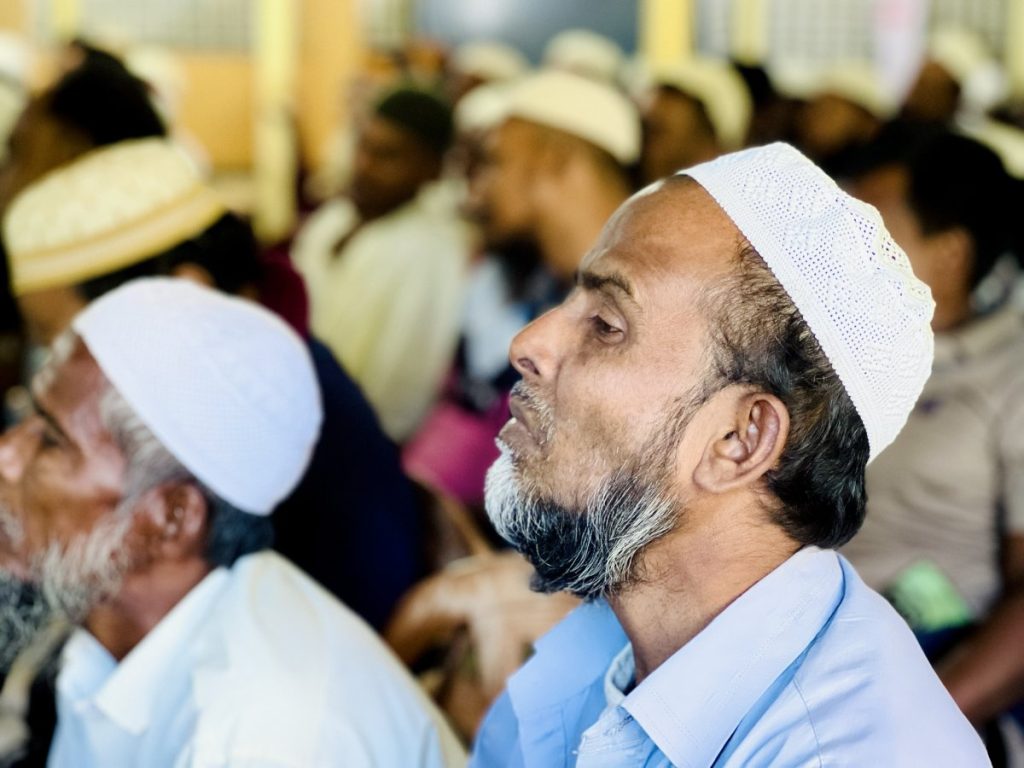
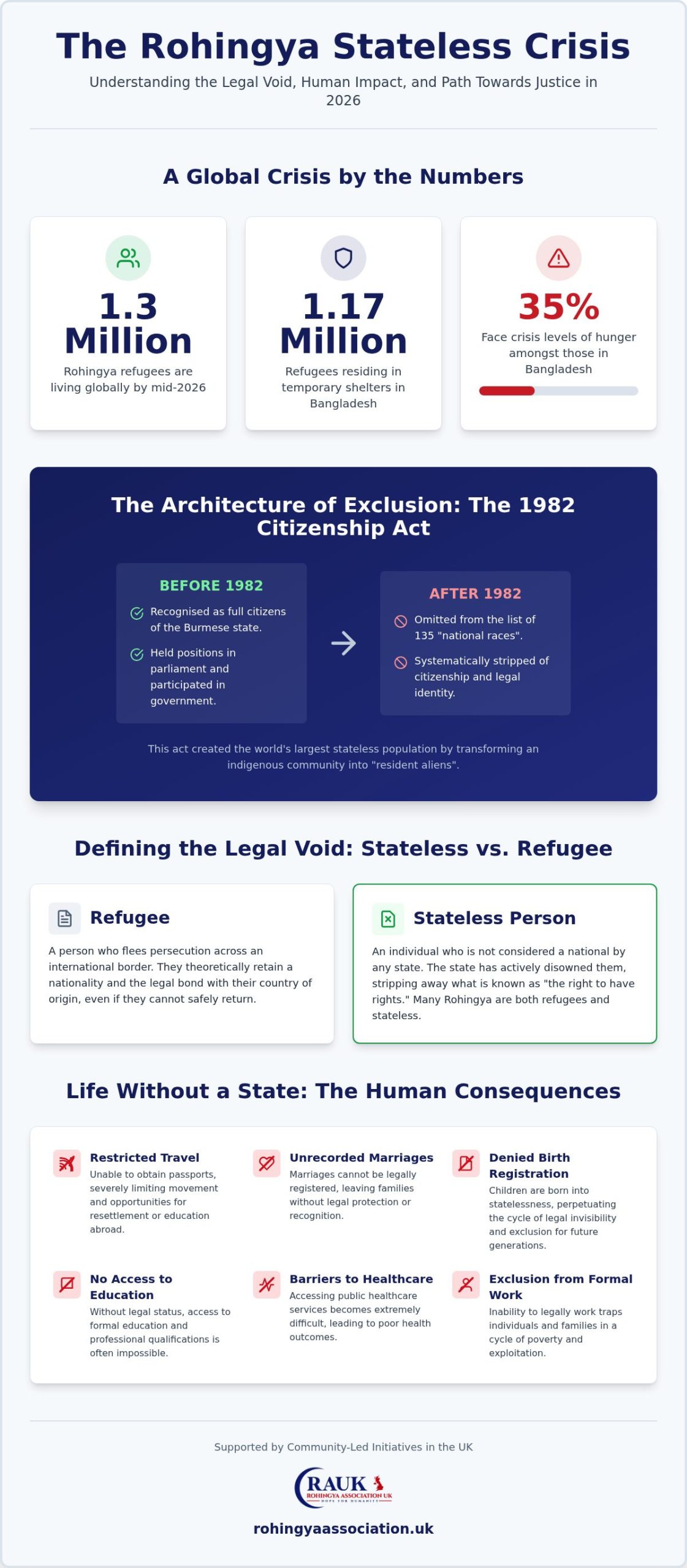
What does it mean to belong nowhere, to have your heritage stripped by the stroke of a pen and your future clouded by the dust of a refugee camp? By the middle of 2026, over 1.3 million Rohingya refugees are living this reality globally, with 35 per cent of those in Bangladesh facing crisis levels of hunger. It’s entirely understandable to feel overwhelmed by the sheer scale of this humanitarian emergency or to find yourself confused by the conflicting political narratives surrounding Rohingya human rights. You aren’t alone in seeking clarity amongst the noise.
This guide promises to help you understand the historical roots, legal complexities, and human impact of this crisis whilst offering a clear path to support justice. We will provide a thorough analysis of the 1982 Citizenship Act, an update on the precarious conditions in Cox’s Bazar in 2026, and practical methods for UK-based advocacy. By establishing a deeper knowledge of the situation, we can move from a place of helplessness toward a future defined by restoration, protection, and collective agency. Through education and shared commitment, we can transform empathy into the steady, long-term action required for systemic change.
Key Takeaways
- Uncover how the 1982 Citizenship Act systematically stripped the Rohingya of their identity. This legal architecture transformed a settled community into the world’s largest stateless population.
- Gain a clear perspective on the daily struggles within Cox’s Bazar in 2026, where climate-related emergencies and shrinking aid have created an urgent need for renewed attention.
- Navigate the complexities of international law and the #IBelong campaign to understand how global pressure influences the protection of Rohingya human rights.
- Discover practical ways to support community-led initiatives in the UK that provide essential housing, education, and healthcare integration for displaced families.
What is the Rohingya Stateless Crisis? Defining the Legal Void
The Rohingya are an indigenous ethno-religious group from Rakhine State who have faced decades of systematic exclusion. To understand the gravity of their current situation, one must first define statelessness. It is the profound absence of any nationality or legal bond with a state; it is a condition where an individual isn’t considered a national by any country under the operation of its law. This legal vacuum is why the UN and various international bodies frequently describe the Rohingya as the most persecuted minority in the world. Their history is defined by the Rohingya genocide, a series of events that forced hundreds of thousands to flee their ancestral homes.
By September 2026, the scale of this crisis remains staggering. There are currently 1,178,000 Rohingya refugees residing in Bangladesh, living in temporary shelters that were never meant to be permanent. This massive displacement isn’t just a regional issue; it’s a global humanitarian emergency that challenges our collective commitment to Rohingya human rights and the basic principles of justice.
The Distinction Between a Refugee and a Stateless Person
Whilst many Rohingya are currently refugees, it’s vital to recognise that statelessness is a separate, more permanent legal condition. A refugee flees persecution but theoretically retains a nationality. For the Rohingya, the state has actively disowned them, stripping away what philosopher Hannah Arendt called the right to have rights. This loss of legal identity creates a cycle of vulnerability that persists even if the physical violence stops. It’s a state of being where you’re legally invisible.
Without a recognised nationality, simple life events become insurmountable hurdles. International travel is restricted, marriages cannot be legally recorded, and birth registration is often denied to children. These barriers don’t just affect the individual; they erode the fabric of the community’s future. Protecting Rohingya human rights requires addressing this fundamental legal erasure to ensure that no child is born without a name and a nation.
The 2026 Landscape of the Rohingya Diaspora
Today, the Rohingya diaspora is spread across the globe, seeking safety, dignity, and recognition. While the vast majority remain in Bangladesh, significant populations have established themselves in Malaysia, Saudi Arabia, and the United Kingdom. By 2026, the UK has become a vital secondary home for those seeking long-term stability and a chance to rebuild lives shattered by conflict. These communities aren’t just surviving; they’re actively working to preserve their culture amongst the challenges of displacement.
Within these global pockets, the focus has shifted toward identity restoration. This isn’t merely about obtaining paperwork; it’s about reclaiming a heritage that was nearly extinguished. For organisations like the Rohingya Association UK, the mission involves more than providing aid. It’s about fostering a sense of belonging and ensuring that the community’s voice is heard in the halls of power, acting as a protective shield for those who have been left without a state.
The Architecture of Exclusion: How the 1982 Citizenship Act Created the Crisis
The 1982 Citizenship Act represents the definitive legal instrument used to dismantle the belonging of an entire people. Between 1948 and 1962, the Rohingya were not merely residents; they were recognised citizens with full participation in the Burmese state, holding positions in parliament and broadcasting in their own language. This era of inclusion was abruptly halted by a regime that sought to redefine national identity through ethnic purity. The 1982 Act introduced a complex, three-tiered system of citizenship: full, associate, and naturalised. Access to these tiers was predicated on belonging to one of the 135 “national races” deemed present in the country before 1823. By omitting the Rohingya from this arbitrary list, the state effectively transformed an indigenous population into a group of foreigners.
From Citizens to “Resident Aliens”
This shift was enforced through the systematic confiscation of National Registration Cards during the late 20th century. In their place, the state issued temporary registration certificates, commonly known as “White Cards”. These documents provided a precarious status that fell far short of the protections required for Rohingya human rights. The final blow to political agency arrived in 2015, when the right to vote was stripped away, completing the community’s transition into a state of total exclusion. To this day, the 1982 law remains the primary obstacle to any safe or voluntary return to Rakhine State.
The Role of Propaganda in Legal Discrimination
Legal exclusion required a supporting narrative of “otherness” to sustain itself. State propaganda began categorising the Rohingya as “illegal Bengali immigrants”, a label designed to justify their lack of rights and dehumanise their presence. This narrative ignores centuries of history, including archaeological, textual, and oral evidence proving a Rohingya presence in Rakhine since at least the 8th century. Denying the use of the term “Rohingya” is not just a semantic dispute; it is a tool of psychological warfare intended to erase a collective heritage.
By documenting these violations, Human Rights Watch reports on Rohingya have provided a global record of this erasure. Amidst this legal darkness, the community continues to fight for the recognition of their history and identity. You can support these efforts for cultural preservation and community-led resilience through the Rohingya Association UK. Every action taken to affirm their identity is a step toward dismantling the architecture of exclusion that has stood for over four decades, ensuring that Rohingya human rights are eventually restored through restoration, protection, and growth.
Life Without a State: The Human Consequences of the Rohingya Crisis
Living in the world’s largest refugee settlement is an exercise in endurance. By mid-2026, the situation in Cox’s Bazar has reached a critical threshold, with over 1.1 million people living in temporary shelters that offer little protection against the elements. In July 2026 alone, more than 630 climate-related emergencies, including landslides and flash floods, devastated the camps, affecting over 56,000 residents. This environmental instability is compounded by a severe lack of resources; currently, 35 per cent of families face crisis levels of hunger as international funding continues to dwindle. These conditions make the struggle for Rohingya human rights a daily battle for survival rather than an abstract legal concept.
A question often asked is why these families cannot simply return home. The reality in 2026 is that Rakhine State remains a landscape of active conflict and forced conscription. With the Myanmar military forcefully conscripting an estimated 125,000 people this year, many of whom are Rohingya, returning is not a path to peace but a sentence to further violence. For the children who make up 52 per cent of the camp population, there is no “home” to remember. They are being born into a cycle of intergenerational trauma, where statelessness is the only inheritance they’ve ever known.
The Barriers to Education and Employment
Statelessness functions as a glass ceiling that prevents an entire generation from reaching their potential. Without a recognised nationality, youth are barred from enrolling in formal universities or obtaining professional licences, regardless of their academic merit. This creates a profound psychological toll; it’s the weight of being told by the world that you don’t exist on any national register. To counter this erasure, many families look toward refugee youth empowerment programmes that provide the skills and agency needed to reclaim a sense of purpose. Education is more than just learning; it’s an act of resistance against a system designed to keep a population in permanent limbo.
Health and Safety in the Absence of Protection
In the absence of a state, basic safety becomes a luxury. Accessing healthcare is a labyrinthine challenge when you lack identity documents, often leaving the most vulnerable without life-saving treatment. Women and children face the highest risks, as the lack of legal status makes them primary targets for human trafficking networks promising a better life outside the rohingya refugee camp. Despite these grave dangers, the community relies on deep-rooted bonding and shared heritage as a survival mechanism. This collective resilience is what keeps the hope for Rohingya human rights alive, even in the most desolate circumstances.
The Global Response: International Law and the #IBelong Campaign
The global community’s attempt to rectify the legal void of statelessness is codified in the 10-part Global Action Plan to End Statelessness (GAP). This framework seeks to resolve existing situations, prevent new cases, and ensure no child is born without a nationality. As the #IBelong campaign reaches its conclusion in 2026, the progress remains deeply uneven. While some regions have improved their legal frameworks, the humanitarian response is faltering; the 2026 UN funding appeal of $710.5 million is 26 per cent lower than the previous year. This shrinking financial commitment threatens to undermine the protection of Rohingya human rights at a time when legal pressure is most critical.
Accountability is now being sought through the International Court of Justice (ICJ). By examining the evidence of systematic erasure, the ICJ plays a critical role in applying legal pressure on Myanmar’s internal citizenship policies. This international scrutiny is essential for maintaining focus on the crisis, ensuring that the atrocities committed are not forgotten by the passage of time. International pressure remains one of the few tools capable of influencing a regime that has historically operated with impunity.
The 1954 and 1961 Conventions on Statelessness
The 1954 and 1961 Conventions form the bedrock of international protection, establishing minimum standards and pathways to nationality. Myanmar is not a signatory to these treaties, allowing it to maintain policies of erasure with little domestic restraint. However, other nations have a legal duty to protect stateless persons on their soil. This collective responsibility is a vital component in the pursuit of justice for Rohingya people.
Advocacy and the Power of Global Awareness
Where states fail, non-governmental organisations bridge the gap by providing aid and documenting abuses for future legal trials. Documentation is an act of preservation; it ensures the narrative of the displaced is not overwritten by state propaganda. Today, the Rohingya diaspora is increasingly leading these advocacy movements. They are transforming from passive recipients of aid into active architects of their own future, ensuring that Rohingya human rights remain a global priority.
Through organisations like the Rohingya Association UK, the community is building a global platform for restoration and growth. You can join this movement by supporting our advocacy and awareness campaigns, which directly challenge the systems of inequality that perpetuate statelessness.
Restoring Hope: How the Rohingya Association UK Supports the Crisis
The Rohingya Association UK (RAUK) stands as a vital community-led beacon, providing a protective shield for families who have arrived in Britain after years of displacement. Based in Bradford, our organisation is deeply embedded in the lives of those we serve, acting as both a compassionate expert and a steadfast advocate for Rohingya human rights. We understand that integration is a journey of restoration, protection, and growth. By providing practical housing guidance, facilitating healthcare access, and organising intensive English classes, we ensure that the transition into British society is marked by dignity rather than despair. Our status as Registered Charity number 1211433 reflects a long-term commitment to transparency and professional service.
Cultural preservation remains a cornerstone of our mission. In Bradford, we host events that celebrate our unique heritage, ensuring that the traditions of Rakhine State are not lost to the void of statelessness. These gatherings are more than social occasions; they are acts of communal resilience that affirm our identity in the face of historical erasure. For the younger generation, RAUK provides the tools for youth empowerment, helping them navigate the complexities of their new home whilst remaining rooted in their cultural pride. We empower them to transition from a status of statelessness to becoming successful, active citizens who contribute to the fabric of the UK.
Local Integration and Skills Development
Navigating the UK asylum and resettlement system can be a daunting process for those fleeing trauma. RAUK provides a guiding hand through this landscape, offering the stability required for long-term integration. Our ESOL programmes are specifically designed to break the cycle of isolation, equipping individuals with the language skills necessary to access employment and education. This community support for displaced families does more than meet immediate needs; it restores the hope that was stripped away by decades of persecution. By focusing on skills development, we help our community members build the agency they need to thrive independently.
Advocacy from the Heart of the UK
Our work extends far beyond the borders of Bradford. From our centre, we organise global awareness campaigns that keep the struggle for Rohingya human rights on the international agenda. RAUK maintains a dual focus, operating crisis intervention projects in Myanmar and Bangladesh whilst fighting for systemic change from the UK. This steadfast commitment is fuelled by the lived experience of our community, making our voice uniquely authoritative in the humanitarian landscape. We invite you to stand with us in this fight for justice. Your participation, whether through donations or volunteering, helps us maintain a stable presence for a people who have waited far too long for a place to call home.
A Path Toward Justice and Restoration
The journey through the legal void of statelessness reveals a landscape defined by systemic exclusion, yet it’s also one where communal resilience remains unbroken. We’ve analysed how the 1982 Citizenship Act dismantled belonging and witnessed the harsh realities of life in Cox’s Bazar. However, the fight for Rohingya human rights isn’t a solitary struggle; it’s a collective effort rooted in the restoration of heritage and the protection of future generations.
As a community-led charity based in Bradford, the Rohingya Association UK (RAUK) acts as a protective shield for families navigating displacement. Our direct aid projects span the UK, Myanmar, and Bangladesh, ensuring that the path to integration is built on stable, long-term commitment. Registered Charity number 1211433, we’re dedicated to transforming legal erasure into agency and cultural pride. This work is only possible through the shared strength of those who believe in a more just world.
You can be part of this renewal. Please support our mission to restore hope and justice for the Rohingya community. Together, we can ensure that every individual has the right to belong, to grow, and to thrive in safety.
Frequently Asked Questions
Why are the Rohingya people considered stateless?
They are stateless because the Myanmar government denies them citizenship, leaving them without a legal bond to any country. This exclusion is rooted in the 1982 Citizenship Act, which stripped them of their nationality. Without status, they lack the “right to have rights,” affecting their ability to travel, marry, and work. This legal void makes them vulnerable to systematic erasure, persistent inequality, and life-long uncertainty.
What was the 1982 Citizenship Act in Myanmar?
The 1982 Citizenship Act is a restrictive piece of legislation that effectively rendered the Rohingya stateless by omitting them from the list of recognised “national races.” It established three tiers of citizenship that the Rohingya could not access. This law transformed an indigenous population into “resident aliens” and remains the primary legal barrier to their safety, dignity, and eventual return to their ancestral lands in Rakhine.
Can stateless Rohingya refugees ever become citizens of another country?
Yes, Rohingya refugees can theoretically become citizens of other nations through naturalisation, though the process is often long and complex. In countries like the UK, families can eventually secure status through the asylum, resettlement, and integration systems. Gaining a new nationality is a vital step toward restoring hope, providing stability, and ensuring that children are no longer born into the cycle of statelessness that has plagued previous generations.
How many Rohingya are currently living in refugee camps in 2026?
By the middle of 2026, there are approximately 1,178,000 Rohingya refugees living in Bangladesh, primarily within the Cox’s Bazar settlements. These camps face severe challenges from climate-related emergencies, overcrowding, and shrinking international aid. Currently, 35 per cent of these families face crisis levels of hunger, highlighting the urgent need for a global commitment to Rohingya human rights through sustained protection, aid, and global solidarity.
What is the difference between being stateless and being a refugee?
A refugee is someone who has fled persecution but may still hold a nationality, whereas a stateless person has no legal bond to any state. Many Rohingya are both refugees and stateless, meaning they have no country to return to that recognises them as citizens. This distinction is crucial because statelessness is a permanent legal condition that requires specific international protection, restoration, and advocacy to resolve effectively.
How does the Rohingya Association UK help those affected by the crisis?
The Rohingya Association UK provides a protective shield for displaced families through community support, education, and advocacy. We offer practical guidance on housing, facilitate healthcare access, and run ESOL classes to build long-term resilience. Our work extends beyond the UK, as we operate crisis intervention and humanitarian aid projects in Myanmar and Bangladesh. We are a community-led charity dedicated to tackling inequality and fostering cultural preservation amongst the diaspora.
Is it safe for Rohingya refugees to return to Myanmar now?
Current conditions in Myanmar make it unsafe for refugees to return. The ongoing conflict in Rakhine State, combined with the military’s forced conscription of around 125,000 people in 2026, poses a direct threat to life, safety, and heritage. Without legal guarantees of citizenship and the protection of Rohingya human rights, any return would be premature. Restoration of peace, security, and legal identity must precede any voluntary repatriation efforts.
How can I support the Rohingya stateless crisis from the UK?
You can support the crisis by contributing to community-led organisations like the Rohingya Association UK. We accept voluntary charitable donations to fund our aid projects, youth empowerment programmes, and integration services. Additionally, you can participate in our advocacy and awareness campaigns to help pressure international bodies for systemic change. Your involvement provides the resources needed for the protection, growth, and long-term stability of displaced families seeking renewal.