
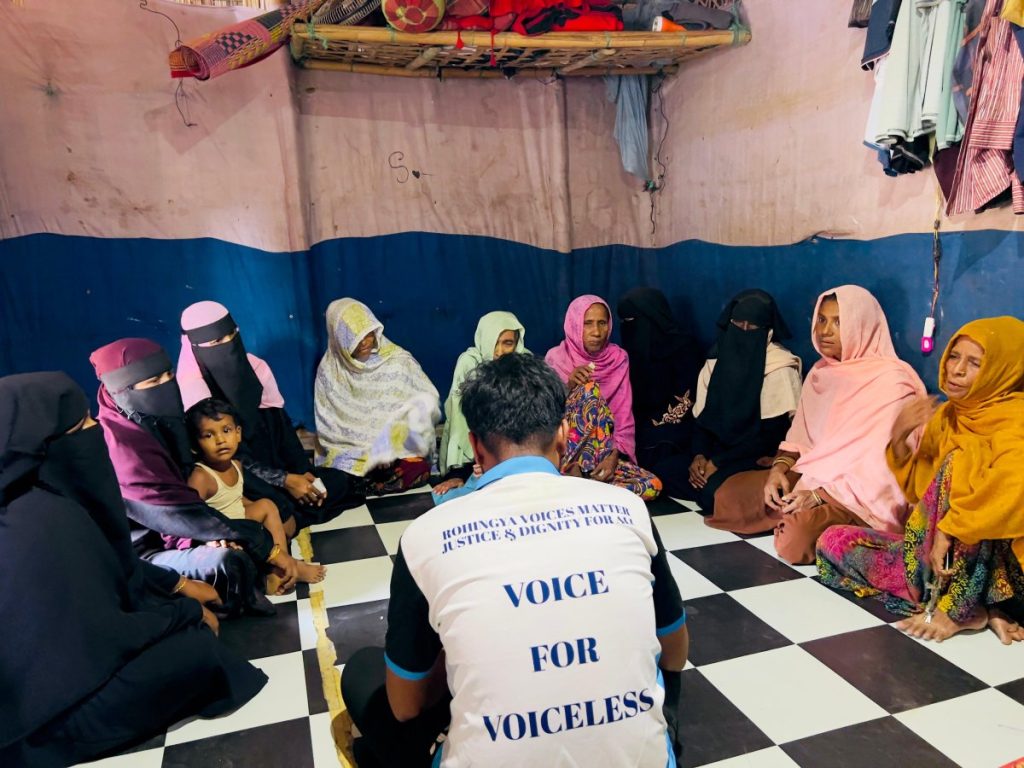
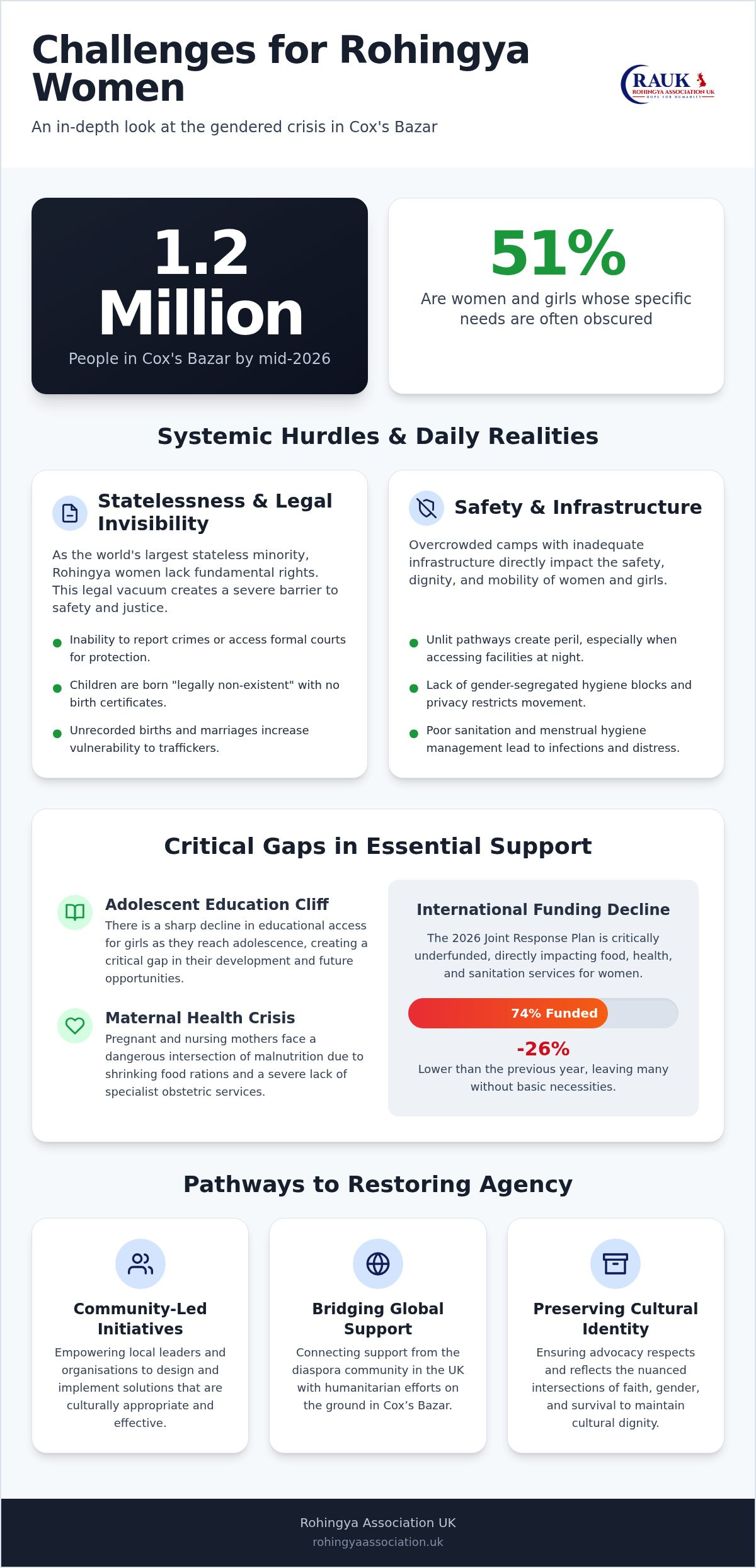
By mid-2026, women and girls constitute 51 per cent of the nearly 1.2 million people living in Cox’s Bazar, yet their specific needs often remain obscured by the sheer scale of the humanitarian response. Whilst the crisis has entered its tenth year, the unique challenges for Rohingya women in refugee camps have only intensified as international funding dwindles and security concerns rise. You might feel overwhelmed by these numbers or struggle to find a nuanced understanding of how gender-specific vulnerabilities manifest in such a protracted state of displacement. It’s a heavy reality to confront, but acknowledging these truths is the first step toward meaningful change.
This article offers an in-depth examination of the unique systemic, social, and physical hurdles faced by Rohingya women and the pathways to restoring their agency. We will investigate the impact of shrinking food rations, the critical gap in adolescent education; and the vital role of community-led advocacy in preserving cultural identity. By understanding these gendered dimensions, we can move beyond simple aid toward a model of restoration, protection, and growth that honours the resilience of every woman. We’ll preview the current landscape of safety, explore the preservation of heritage; and outline clear steps to support effective advocacy.
Key Takeaways
- Examine how the absence of legal status creates a systemic barrier to justice, making it difficult for women to report crimes or seek protection.
- Identify the specific physical risks in overcrowded camp environments and how inadequate infrastructure impacts the safety and dignity of women and girls.
- Gain a comprehensive understanding of the systemic challenges for Rohingya women in refugee camps, specifically regarding the sharp decline in educational access as girls reach adolescence.
- Learn about the critical health needs of pregnant and nursing mothers, focusing on the intersections of malnutrition and the lack of specialist obstetric services.
- Explore the pathways to restoring agency through community-led initiatives that bridge the gap between local support in the UK and humanitarian efforts in Cox’s Bazar.
Navigating Statelessness: The Gendered Reality of Rohingya Women
The Rohingya remain the world’s largest stateless minority, a status that effectively strips away the fundamental right to have rights. For women, this legal vacuum isn’t just a political abstraction; it represents a daily, suffocating barrier to safety and self-determination. Without recognised citizenship, a woman’s capacity to report crimes, access formal courts, or demand protection is severely curtailed. They exist in a shadow land where the law doesn’t reach, and where their voices are often silenced by the weight of their own invisibility. This systemic exclusion is a primary factor amongst the many challenges for Rohingya women in refugee camps today.
The 2017 exodus was defined by targeted, gender-based violence that left deep psychological and physical scars. For survivors, the trauma of displacement is inextricably linked to the lack of legal recourse. There’s a profound, lingering weight in raising children who are born without a nationality. These children enter the world as “legally non-existent” entities, possessing no birth certificates, no papers, and no clear future. This cycle of statelessness creates a sense of perpetual limbo, where the hope for renewal is constantly tested by the harsh realities of the Rohingya refugee camps in Bangladesh.
The Legal Invisibility of Female Refugees
Within the camp infrastructure, registering life’s essential milestones is a complex and often fruitless endeavour. Births frequently go unrecorded in formal databases, whilst marriages are conducted through traditional religious ceremonies that lack the legal weight needed for international recognition. This invisibility facilitates a dangerous environment where exploitation by traffickers and unscrupulous actors goes unchecked. When a woman has no legal identity, she has no shield against those who seek to harm her. The struggle to organise, record, and validate formal documentation is not merely a bureaucratic hurdle; it’s a fight for the right to exist in the eyes of the global community.
Intersectionality of Faith and Identity
Preserving a distinct Islamic identity is a source of immense cultural pride and communal strength, yet it often stands in tension with secular humanitarian aid systems. Many women observe “purdah”, a practice of modest seclusion that can make navigating unlit pathways or crowded aid centres a source of significant distress. Maintaining cultural dignity through traditional dress, such as the abaya, serves as a vital anchor to their heritage. Our mission at the Rohingya Association UK is to champion justice for Rohingya people by ensuring that advocacy reflects these nuanced intersections of faith, gender, and survival.
Safety and Dignity: Physical and Social Infrastructure Challenges
The physical architecture of the camps in Cox’s Bazar is not merely a matter of logistics; it is a fundamental determinant of safety, dignity, and mobility. With the population reaching 1.2 million in mid-2026, the extreme density has created an environment where privacy is a luxury few can afford. For many, the simple act of navigating unlit pathways to communal facilities at night is fraught with peril. These structural deficiencies are central to the challenges for Rohingya women in refugee camps, as they dictate where a woman can go and when she feels safe enough to do so. Poor lighting and the lack of gender-segregated hygiene blocks don’t just cause discomfort; they actively restrict movement, forcing women into a state of semi-seclusion to avoid potential harm.
Sanitation and Menstrual Hygiene Management
In high-density environments, the stigma surrounding menstruation becomes a significant barrier to health and social participation. Communal living spaces often lack the private areas necessary for washing and drying menstrual cloths, leading to avoidable infections and deep psychological distress. Accessing sanitary products is increasingly difficult as funding for the 2026 Joint Response Plan sits 26 per cent lower than the previous year, leaving many without basic necessities. RAUK works tirelessly with partners on the ground to advocate for dignified hygiene solutions that respect cultural values whilst ensuring physical well-being. Supporting these community-led integration efforts is vital for restoring a sense of normality and health for those in the most vulnerable positions.
Insecurity and the Threat of SGBV
The threat of Sexual and Gender-Based Violence (SGBV) remains a dark reality within the camps, exacerbated by the deteriorating security situation. Data from the first quarter of 2026 indicates a 40 per cent increase in serious security incidents, with physical violence accounting for 52 per cent of reported gender-based violence cases. The Council on Foreign Relations has highlighted the specific risks for women and girls in these settings, where the lack of legal recourse and social stigma often deter reporting. “Women Friendly Spaces” have become essential sanctuaries for healing and socialisation, providing a protective shield against the volatility of camp life. During the first quarter of 2026, over 200,000 individuals were reached with GBV prevention services, demonstrating the critical need for continued investment in these safe havens.
The Barrier of Mobility: Economic and Educational Limitations
Economic and educational mobility remains one of the most persistent challenges for Rohingya women in refugee camps. Whilst the humanitarian response often assumes a traditional nuclear family unit, the reality is that thousands of households are now headed by women who lost their partners during the 2017 exodus. These women perform the invisible labour of managing domestic life in extreme poverty, often whilst navigating a voucher-based aid system that fails to recognise their unique status. Managing a household in such conditions is not merely a chore; it’s a constant, exhausting negotiation for survival in a system that wasn’t designed for them.
Access to Education for Girls
By mid-2026, the educational gap for adolescent girls has become a critical concern for the community. Whilst primary school enrollment remains relatively stable, only 8 per cent of girls aged 15 to 18 are enrolled in any formal educational programme. Cultural barriers, a lack of female teachers, and safety concerns often prevent older girls from leaving their shelters to attend learning centres. Breaking this cycle of exclusion requires targeted refugee youth empowerment programmes that offer safe, culturally sensitive spaces. Vocational training in tailoring and traditional handicrafts provides these young women with a sense of purpose and a tangible pathway to agency.
Economic Vulnerability and Exploitation
The lack of formal work rights in Bangladesh disproportionately affects women, leaving them vulnerable to various forms of exploitation. With food rations tiered as low as $7 per person per month in 2026, the pressure to secure additional income for their families is relentless. This economic desperation often compounds the Psychosocial challenges for Rohingya women, significantly increasing the risks of human trafficking and intimate partner violence. We must prioritise female-led economic initiatives within the rohingya refugee camp structure to restore dignity. By supporting community-led integration, we can help women move from a state of total dependency toward a future of resilient self-reliance.
Maternal Health and Psychological Resilience Under Duress
The experience of motherhood within the camps is often shadowed by a profound sense of physical and psychological insecurity. Whilst maternal mortality rates saw a recorded decline of 20 per cent in 2025, the risk remains disproportionately high for those in the most remote blocks. These figures aren’t just statistics; they represent the fragile lives of women navigating the challenges for Rohingya women in refugee camps whilst caring for the next generation. Malnutrition poses a severe threat, as the tiered food assistance system, which provides as little as $7 per month in some areas, often leaves pregnant and nursing mothers without the vital nutrients required for healthy development. It’s a somber reality that requires a steady, long-term commitment to nutritional support and specialist care.
Healthcare Access in a Crisis Zone
Healthcare access in a crisis zone is frequently hindered by physical distance and a historical lack of trust. In the first quarter of 2026, UNFPA-supported facilities assisted with 4,626 facility-based deliveries, yet many women still give birth in shelters due to the difficulty of transport across rugged terrain. Traditional midwives, known as dais, play a pivotal role in the camp ecosystem; they bridge the gap between ancient cultural practices and modern medical intervention. They are the trusted hands that offer comfort when external systems feel alien or intimidating. Building bridges between these community leaders and formal health centres is essential for ensuring that every birth is safe, dignified, and supported.
Preserving Heritage as Mental Health Support
Preserving heritage serves as a vital anchor for mental health, offering a way to process the collective trauma of the 2017 atrocities. Through traditional storytelling, embroidery, and communal art, women find a space to externalise the scars of displacement that words alone cannot reach. This community support for displaced families is not a secondary concern; it’s the foundation of psychological resilience. Cultural events organise a sense of normalcy amongst the chaos, allowing families to reclaim their identity from the narrative of victimhood. These gatherings provide the social fabric necessary for restoration, protection, and growth. You can help us sustain these vital networks by choosing to support our maternal health and advocacy projects today.
From Cox’s Bazar to the UK: Restoring Agency Through Community
The plight of the Rohingya is a global concern that requires a unified, global response. Whilst the challenges for Rohingya women in refugee camps remain severe, the diaspora in the United Kingdom plays a critical role in sustaining hope and driving systemic change. The Rohingya Association UK (RAUK) serves as a vital bridge, connecting the lived experiences of those in Cox’s Bazar with the advocacy and resources available in the West. This connection is not merely about providing aid; it’s about restoring agency, fostering leadership, and ensuring that the voices of the marginalised are heard in the corridors of power. It is a commitment to dignity that transcends borders.
Advocacy and Awareness Campaigns
Effective advocacy requires prioritising the voices of Rohingya women in international human rights forums. RAUK organises global awareness campaigns to ensure that as the crisis enters its tenth year in 2026, it remains at the forefront of the humanitarian agenda. British-based advocacy is particularly influential in shaping UK foreign policy, urging the government to maintain its commitment to humanitarian aid and justice for Rohingya people. By acting as a principled leader, our organisation fights for long-term accountability, legal recognition, and the restoration of fundamental rights. We refuse to let this crisis be forgotten.
Empowerment Through Integration
For those who have reached the UK, the path to renewal begins with integration and community support. In cities like Bradford, we provide English language classes and skills development tailored specifically for women, helping them navigate a new society whilst preserving their cultural identity. Building a sense of belonging for displaced families is a cornerstone of our mission, moving beyond simple crisis intervention to long-term empowerment. This community-led approach ensures that aid is culturally sensitive, respectful, and deeply rooted in a shared sense of duty. Whether through education, youth empowerment, or humanitarian support, your participation helps us provide a protective shield and a guiding hand for those seeking a future of safety and dignity.
Building a Future of Dignity and Resilience
The path toward restoration is built upon a foundation of collective effort and unwavering commitment. We’ve explored how addressing the systemic challenges for Rohingya women in refugee camps requires more than just temporary aid; it demands a long-term commitment to justice, protection, and legal recognition. Dismantling barriers to education and healthcare restores the agency that displacement sought to erase.
At the Rohingya Association UK, we stand as a community-led charity with direct lived experience of this crisis, acting as both a protective shield and a guiding hand. Your donations fund education, healthcare, and advocacy projects that reach those in need across the globe. It’s only through shared identity and collective effort that we can achieve lasting change and ensure that the resilience of Rohingya women is met with the support it deserves.
Support our vital work for Rohingya families and women and join us in building a future where every woman can live with the safety and dignity she is owed. The journey is long, but with your partnership, renewal is possible.
Frequently Asked Questions
What are the main safety risks for women in Rohingya refugee camps?
Safety risks include sexual and gender-based violence, which saw a 40 per cent increase in reported security incidents during early 2026. High-density living and unlit pathways create significant challenges for Rohingya women in refugee camps, as they must navigate communal facilities in darkness. These structural failings restrict mobility and heighten the threat of physical violence, particularly for those living in overcrowded blocks where privacy is almost non-existent.
How does statelessness specifically affect Rohingya women and children?
Statelessness creates a legal vacuum that renders women and children invisible to formal justice systems. Without recognised citizenship, mothers struggle to register births, leaving their children without any legal identity from the moment they are born. This lack of status makes it nearly impossible to report exploitation or seek protection from traffickers. It traps families in a cycle of perpetual limbo where fundamental human rights remain unrecognised.
Are there educational opportunities for girls in Cox’s Bazar?
Educational opportunities exist but are severely limited for older girls, with only 3 per cent of school-aged girls receiving education in 2026. Whilst primary enrollment is more common, the figures plummet for those aged 15 to 18 due to safety concerns and a lack of female teachers. RAUK supports youth empowerment programmes that provide safe spaces for learning, focusing on vocational skills like tailoring to help young women reclaim their agency.
How do female-headed households survive in the refugee camps?
Female-headed households survive through a combination of voucher-based aid and communal support networks. Managing a home in extreme poverty involves exhausting negotiations for food and fuel, especially as rations have been reduced in 2026. These households face the most severe challenges for Rohingya women in refugee camps, as they must navigate an aid system designed for traditional family units. Our organisation prioritises these families through crisis intervention to ensure their survival.
What is being done to address healthcare needs for pregnant Rohingya women?
Healthcare needs are addressed through a network of UNFPA-supported facilities and traditional midwives who bridge the gap between community trust and medical care. In early 2026, these facilities assisted with over 4,600 deliveries, yet the distance to medical centres remains a barrier for many. Maternal health projects focus on providing specialist obstetric care and nutritional support for pregnant women to combat the high rates of mortality found in remote camp sectors.
Can I donate specifically to support women-led projects in the camps?
Yes, you can contribute to specific aid projects that focus on women-led initiatives and crisis intervention through our website. These donations fund vital services including healthcare access, vocational training, and maternal support in Cox’s Bazar and the UK. By choosing to support community-led charities like RAUK, you ensure that your contribution provides culturally sensitive aid designed by those with lived experience of the crisis and its gendered dimensions.
How does the Rohingya Association UK support women in the Bradford community?
In Bradford, RAUK provides practical assistance including housing guidance, healthcare access, and dedicated English language classes for women. We facilitate skills development programmes that help displaced families integrate into the local community whilst maintaining their cultural heritage. These services are designed to tackle inequality and build a sense of belonging, ensuring that women have the tools and confidence to rebuild their lives in a safe and supportive environment.
What role does cultural preservation play in the resilience of Rohingya women?
Cultural preservation serves as a vital anchor for mental health, helping women process collective trauma through storytelling, traditional art, and Islamic community events. These activities organise a sense of normalcy amongst the chaos of displacement and reinforce communal bonds. By honouring their heritage, Rohingya women maintain a dignified distance from the narrative of victimhood, instead focusing on the strength and identity that will sustain their community through long-term displacement.