
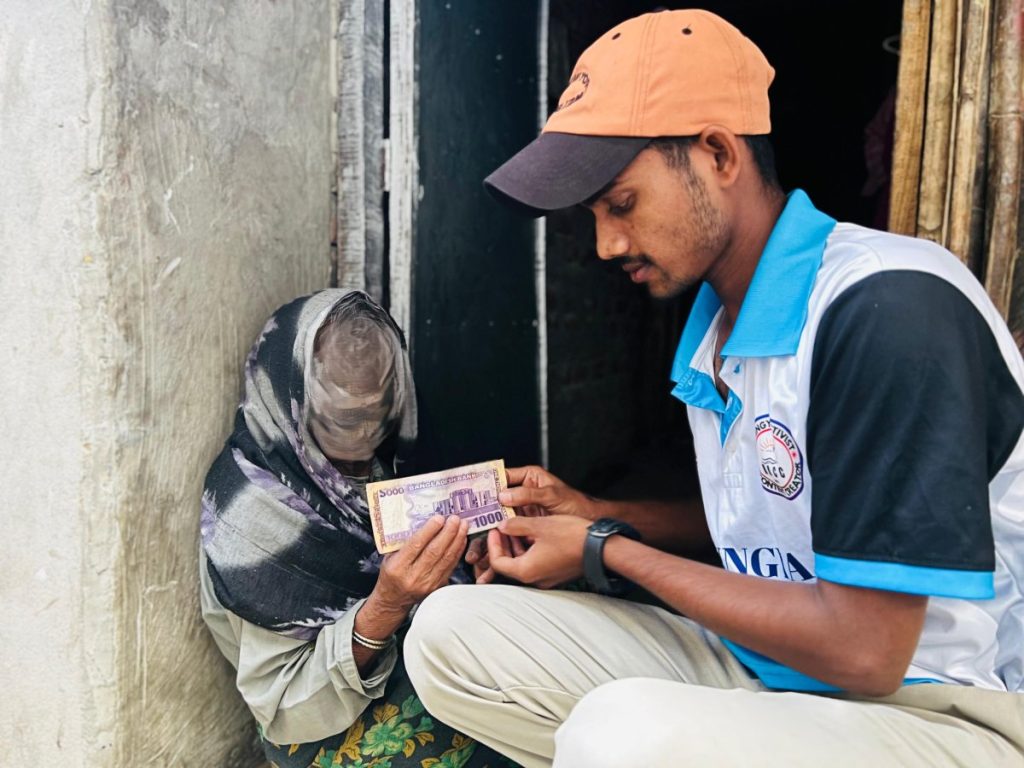
With nearly 1.2 million Rohingya refugees seeking sanctuary in Cox’s Bazar as of mid-2026, the gap between human necessity and available resources has reached a critical threshold. You likely feel the moral weight of this crisis and a profound urge to act, yet you may worry that your contribution will be diluted by administrative overhead or lost within a vast, faceless bureaucracy. It is a valid concern; you want to ensure that when you choose to donate to Bangladesh refugee camps, your generosity translates directly into restoration, protection, and growth for families who have endured unimaginable hardship.
We understand that effective aid requires more than just a transaction; it demands a connection to the people on the ground and a respect for their enduring dignity. This guide serves as your comprehensive 2026 giving checklist, designed to bridge the distance between your intention and tangible impact. We will outline how to verify UK-registered charities for tax efficiency, identify the most urgent requirements for food and education, and select partners who truly honour the Rohingya identity. You will gain the clarity required to fulfil your duties of Zakat or Sadaqah with confidence, ensuring your support provides a stable, long-term commitment to a community that refuses to be forgotten.
Key Takeaways
- Understand the profound necessity of the 2026 humanitarian landscape, where statelessness leaves over a million individuals entirely dependent on external aid for survival.
- Discern the vital differences between global NGO structures and community-led initiatives to ensure you donate to Bangladesh refugee camps with maximum efficiency and cultural respect.
- Utilise a practical donation checklist that integrates spiritual duties like Zakat and Sadaqah with rigorous transparency and impact-tracking requirements.
- Address concerns regarding administrative overhead by reviewing a clear breakdown of the tangible costs for essential food, shelter, and education materials.
- Connect with the Rohingya Association UK as a principled partner that bridges the gap between community support in the UK and life-saving intervention in Bangladesh.
The 2026 Landscape: Why Support for Bangladesh Refugee Camps is Critical
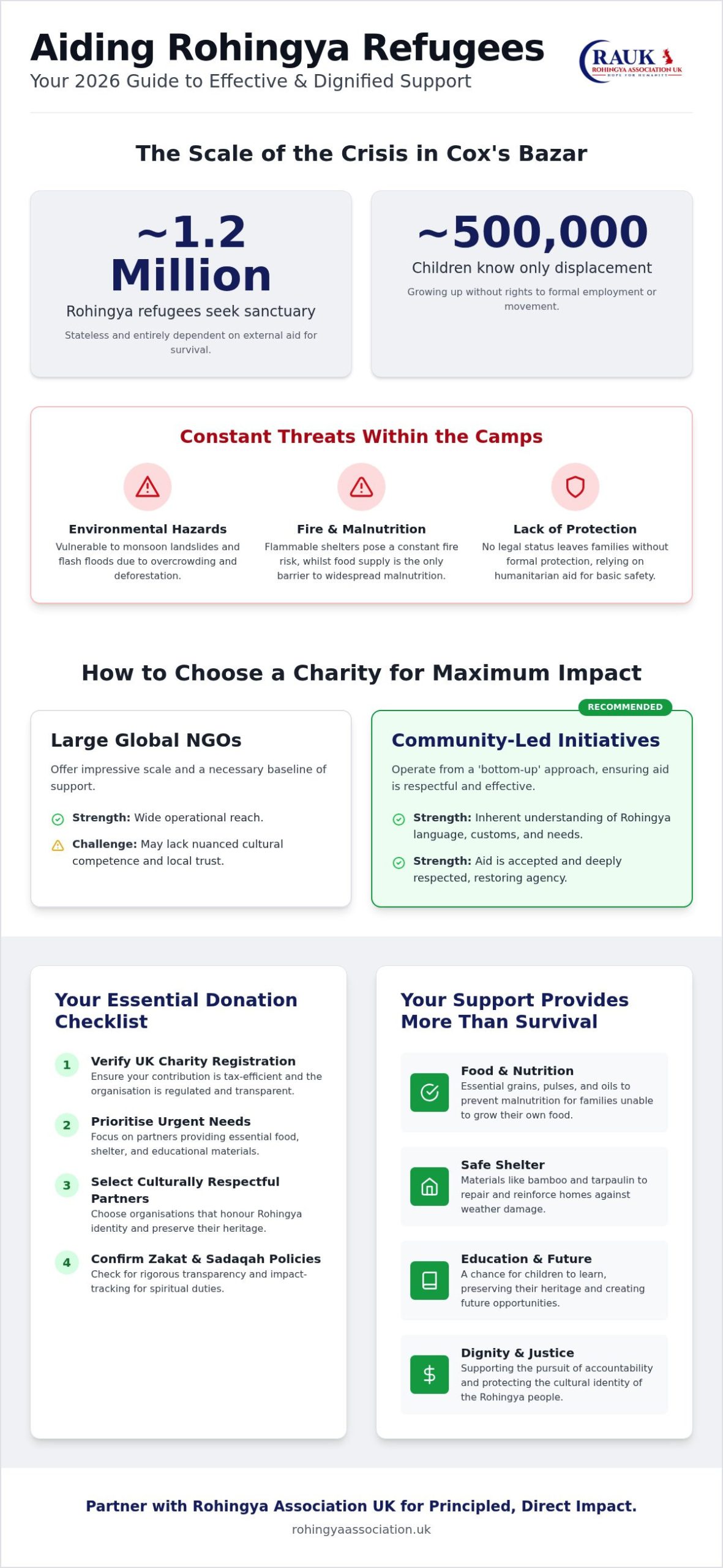
In 2026, the situation for Rohingya refugees in Bangladesh remains one of the world’s most profound humanitarian challenges. Over 1.19 million individuals reside in the sprawling settlements of Cox’s Bazar, where the unyielding spirit of the community persists amidst a landscape of systemic deprivation. Because the Rohingya are denied formal legal status in both Myanmar and Bangladesh, they exist in a state of perpetual statelessness. This legal vacuum means families don’t have the right to formal employment, are restricted in their movement, and remain entirely dependent on the choice of global citizens to donate to Bangladesh refugee camps for their daily survival. The scale is staggering; nearly 500,000 children are coming of age within the confines of these bamboo and tarpaulin shelters, knowing no other life than one defined by displacement.
The Reality of Cox’s Bazar in 2026
The physical environment of the camps has become increasingly precarious. Years of overcrowding have stripped the hillsides of vegetation, leaving the 33 sectors of the settlement vulnerable to the devastating impact of monsoon-induced landslides and flash flooding. In 2026, climate-related infrastructure damage has become a recurring seasonal trauma, whilst the need for sustainable healthcare systems to manage chronic conditions and trauma remains a pressing priority. Fire remains a constant threat, as narrow pathways and flammable materials allow small kitchen blazes to escalate into catastrophic events that displace thousands in minutes. Consistent humanitarian aid for refugees remains the only barrier against widespread malnutrition, providing the essential grains, pulses, and oils required to sustain a population that is forbidden from growing its own food.
Beyond Survival: The Need for Dignity and Justice
Providing calories and bandages is a moral imperative, yet aid that ignores the human soul is incomplete. The psychological toll of long-term displacement is profound, particularly for a generation of youth who see their heritage slipping away whilst their future remains on hold. We believe that true restoration requires a commitment to justice for Rohingya people, ensuring that accountability for past atrocities is pursued alongside the provision of daily bread. Cultural preservation is not a luxury; it is a fundamental human right that allows a displaced community to maintain its identity and sense of belonging. Effective support must therefore encompass education, heritage protection, and the pursuit of systemic change. This approach ensures that we honour the humanity of those we serve, acting as a protective shield and a guiding hand toward a more stable future.
Evaluating Impact: How to Choose Where to Donate
Choosing where to focus your generosity requires a discerning eye and a commitment to efficacy. Whilst large-scale contributions, such as significant U.S. humanitarian assistance, provide a necessary baseline of support, the individual donor often seeks a more direct and culturally resonant impact. To effectively donate to Bangladesh refugee camps, you must evaluate whether an organisation operates through a top-down global mandate or a bottom-up community initiative. Global NGOs offer impressive scale, yet they can sometimes lack the nuanced cultural competence required to navigate the intricate social fabric of the camps. In contrast, community-led groups possess an inherent understanding of the Rohingya language, customs, and traditions; this allows for aid that is not only accepted but also deeply respected by those receiving it.
When you decide to donate to Bangladesh refugee camps, look for evidence of direct intervention that prioritises community voices. True effectiveness is found in support for Cox’s Bazar refugees that looks beyond immediate survival to long-term empowerment. It’s about restoring agency to a population that has been systemically silenced, ensuring that every pound contributed serves as a seed for future stability and growth.
Transparency and Accountability Standards
Your contribution is a sacred trust. To honour that trust, you should prioritise organisations registered with the UK Charity Commission, as this ensures they adhere to strict financial reporting and legal standards. Seek out “low-overhead” models where a higher percentage of your donation reaches the front line rather than being consumed by complex marketing or administrative layers. Reliable partners provide regular impact updates and employ storytelling that centres the recipient’s dignity rather than their desperation. This level of transparency allows you to witness the tangible restoration your donation fosters.
The Value of Community-Led Aid
Rohingya-led organisations occupy a unique position as both providers and members of the community they serve. This dual identity fosters a level of trust that external actors often struggle to achieve. When aid is delivered by those who share the same heritage and history, it transforms from a simple handout into a collective effort of resilience. This approach avoids creating a cycle of dependency; instead, it strengthens the community’s internal structures and provides a sense of agency. A principled leader in this space don’t just deliver food parcels; they advocate for systemic justice and cultural preservation with precision, empathy, and respect. By supporting those who are deeply embedded in the camps, you ensure your aid is delivered with maximum impact. If you are seeking a partner that embodies these values, consider how Rohingya Association UK connects donors directly to these essential community-led efforts.
The Essential Donation Checklist for Bangladesh Refugee Aid
Organising your charitable contributions requires a methodical approach to ensure that every pound serves its intended purpose. When you decide to donate to Bangladesh refugee camps, you aren’t merely sending funds; you’re participating in a collective effort to sustain a community’s life and dignity. This checklist is designed to help you move from a place of compassion to a position of informed action, ensuring your generosity reaches the most vulnerable sectors with precision and transparency. By following these steps, you can transform your intention into a stable, long-term commitment that honours the resilience of the Rohingya people.
Step 1: Identify Your Giving Intent
Begin by defining the nature of your contribution. It’s helpful to distinguish between immediate crisis intervention, such as providing emergency food parcels, and long-term development projects like education or youth empowerment. For many in the UK, this process is guided by spiritual duties. Zakat, the obligatory 2.5% of wealth, is frequently directed toward those in the camps who meet the criteria of being amongst the poor and needy. Alternatively, Sadaqah offers a flexible way to provide voluntary support at any time. If you seek to create a lasting legacy, consider Sadaqah Jariyah. Investing in permanent infrastructure, such as learning centres or water filtration systems, provides continuous benefits for families and ensures your impact endures for years to come.
Step 2: Verify the Organisation’s Reach
Before committing your funds, confirm that the charity maintains an active and verified presence within the specific rohingya refugee camp sectors they claim to support. The most effective partners provide a holistic range of services that address the complex needs of the displaced. This includes food support, healthcare, and cultural preservation. It’s also vital to consider the human rights landscape; the 2022 Report on International Religious Freedom highlights the vulnerabilities of minority groups in the region, reinforcing why targeted aid for the Rohingya is so critical. Look for organisations that also work alongside host communities in Bangladesh to ensure social cohesion and prevent local tensions, as this integrated approach creates a safer environment for everyone involved.
Step 3: Optimise Your Contribution
To maximise the value of your gift, consider the “mode” of your giving. Whilst one-off donations are vital during sudden emergencies, regular monthly giving provides the financial stability charities need to plan essential programmes. This consistency allows for better resource management and a more reliable protective shield for families. If you are a UK taxpayer, always ensure you tick the Gift Aid box; this allows the charity to reclaim 25p for every £1 you give from the government at no extra cost to you. Finally, try to provide some “unrestricted” funds. These contributions allow a charity to respond with agility to sudden disasters, such as camp fires or monsoon flooding, ensuring that help is always available exactly when it’s needed most. When you donate to Bangladesh refugee camps with this level of foresight, you ensure your support is both powerful and professional.
Addressing Common Concerns: Where Does Your Money Go?
It is natural to feel a sense of caution when entrusting your hard-earned resources to a charitable organisation. You want to be certain that when you choose to donate to Bangladesh refugee camps, your contribution isn’t diluted by excessive administrative layers or swallowed by marketing budgets. Radical transparency isn’t just a policy; it’s a moral obligation to the donor and a vital lifeline for the recipient. By understanding the logistical path your money takes, you can move from a place of hesitation to one of confident, impactful giving.
The Journey of a Donation
The path of a donation begins with a secure digital transfer from your UK bank account to our dedicated relief funds. To ensure maximum efficiency, we often employ local procurement strategies within Bangladesh. This approach doesn’t just reduce international shipping costs; it also supports the local economy and ensures that food parcels contain familiar, culturally appropriate staples like rice, lentils, and vegetable oil. Once the goods reach the perimeter of Cox’s Bazar, the distribution is managed by a network of trusted Rohingya community leaders and local volunteers. These individuals possess the intimate knowledge required to navigate the camp sectors and identify families who are often overlooked by larger, more distant bureaucracies. Rigorous monitoring and regular audits are conducted at every stage to prevent waste and ensure that aid reaches the most vulnerable households with professional precision.
Tangible Impacts: What a Donation Provides
Your generosity translates into specific, life-sustaining resources that provide both immediate relief and long-term hope. A single contribution can facilitate the distribution of several essential items:
- Emergency Shelter Kits: High-quality tarpaulins, bamboo poles, and rope to reinforce dwellings against monsoon winds.
- Clean Water Systems: The maintenance of deep tube wells and solar-powered water hubs to prevent the spread of waterborne diseases.
- Learning Materials: English language workbooks and heritage-based educational tools that empower youth and prevent a “lost generation.”
- Maternal Healthcare: Access to basic medical supplies and trained birth attendants to protect the health of mothers and infants.
By focusing on these core areas, we ensure that every pound provides a protective shield for the community. Education projects are particularly vital; they offer young people a sense of purpose and the skills required for a future beyond the camp boundaries. This holistic approach ensures that your support does more than just sustain life; it fosters restoration and growth. To see the direct results of this community-led model, you can support our ongoing missions and join a network of donors committed to transparency and justice.
Partnering with Rohingya Association UK for Direct Impact
Choosing a partner for your humanitarian contributions is a decision of profound moral significance. The Rohingya Association UK (RAUK) stands as a principled leader in this space, offering a direct, community-led link between donors in the UK and displaced families in Cox’s Bazar. As a registered charity (1211433), we are uniquely positioned because we are the community we serve. This identity ensures that when you donate to Bangladesh refugee camps through our platform, your aid is delivered with a level of cultural precision, empathy, and respect that larger organisations often struggle to maintain. We don’t just provide aid; we advocate for the restoration of dignity, the protection of heritage, and the pursuit of systemic justice.
Our Presence in the UK and Bangladesh
Our work begins in the heart of the UK, specifically within the vibrant community of Bradford. Here, we provide essential integration services for the Rohingya diaspora, including housing guidance, English language classes, and youth empowerment programmes. This local expertise is not separate from our international missions; it informs them. By supporting refugees as they settle in the UK, we gain a deeper understanding of the trauma and challenges faced by those still residing in the camps abroad. This local expertise ensures that when you choose to donate to Bangladesh refugee camps, your funds are managed by those who truly understand the ground reality. Our cultural events in Bradford serve to keep the Rohingya identity alive, ensuring that our heritage remains a source of strength rather than a memory of loss. This dual presence allows us to act as a protective shield for our people, whether they are seeking sanctuary in West Yorkshire or surviving the hardships of a bamboo shelter in Bangladesh.
How to Take Action Today
Your journey as a partner in this mission can begin immediately. We invite you to visit our website to facilitate your contribution, where every pound is tracked with the transparency and accountability you deserve. Beyond financial support, there are numerous ways to amplify your impact. You might choose to participate in our advocacy campaigns, volunteer your professional skills, or help raise awareness about the ongoing need for Rohingya community support. We don’t seek mere benefactors; we seek dedicated partners who are committed to a long-term vision of renewal. Join us today as we work to transform the landscape of displacement into one of agency, stability, and hope. Together, we can ensure that the Rohingya people are not just sustained, but are empowered to reclaim their future.
Empowering Restoration through Principled Giving
The plight of over one million displaced individuals in Cox’s Bazar remains a profound test of our collective humanity. By following a structured approach to your generosity, you ensure that your support bypasses administrative hurdles and directly reaches the families who need it most. You now possess the tools to evaluate transparency, optimise your contributions through Gift Aid, and align your spiritual duties with tangible outcomes on the ground.
When you choose to donate to Bangladesh refugee camps, you aren’t just providing food and shelter; you are investing in the preservation of a culture and the education of a generation. The Rohingya Association UK (Registered Charity 1211433) offers a unique, community-led bridge between your intention and real-world impact. As an organisation led by Rohingya refugees ourselves, we manage direct aid projects in Bangladesh, Myanmar, and the UK with the precision, empathy, and cultural authority that only lived experience can provide.
We invite you to Donate to Bangladesh Refugee Camps: Support the Rohingya Association UK and join a movement dedicated to justice and renewal. Your commitment today serves as a protective shield and a guiding hand for those who refuse to be forgotten. Together, we can foster a future defined by stability, heritage, and hope.
Frequently Asked Questions
Is my donation to Bangladesh refugee camps tax-deductible in the UK?
Yes, your contribution is tax-efficient when you utilise the Gift Aid scheme. As a registered UK charity (1211433), we can reclaim 25p for every £1 you give from HMRC at no extra cost to you. Higher-rate taxpayers can also claim additional relief through their annual self-assessment tax returns. This ensures your choice to donate to Bangladesh refugee camps provides the maximum possible value to displaced families whilst respecting your tax status.
Can I specify that my donation should go towards Zakat for Rohingya refugees?
You can absolutely designate your contribution as Zakat. We maintain a rigorous system to ensure all Zakat funds are ring-fenced and distributed according to Islamic principles to eligible Rohingya families in the camps. Whether you are fulfilling your annual obligation or providing voluntary Sadaqah, we ensure your funds are directed toward life-saving essentials such as food support, medical care, and emergency shelter for those in greatest need.
What is the most urgent need in the Bangladesh refugee camps right now?
Food security and climate-resilient infrastructure are the most pressing priorities in 2026. Severe funding shortfalls have forced international agencies to reduce basic rations, leaving thousands at risk of acute malnutrition. Additionally, the current monsoon season has caused significant damage to bamboo shelters and sanitation systems. Your support helps us provide the urgent repairs and nutritional parcels required to protect families from landslides and waterborne diseases amongst the overcrowded camp sectors.
How does Rohingya Association UK ensure aid reaches the right people?
We utilise a community-led verification process that relies on our deep, personal links within the settlements. Because our organisation is led by Rohingya people themselves, we possess an inherent trust and access that external groups often lack. We coordinate with local community leaders to identify households in acute distress, ensuring that every resource is delivered directly to those who have been overlooked by larger, more distant aid bureaucracies.
Can I donate physical items like clothes or food to the camps?
We generally advise against sending physical items due to the prohibitive costs and logistical complexities of international shipping. Cash contributions are far more effective as they allow us to purchase supplies directly within Bangladesh. This strategy supports the local host community economy, reduces our environmental impact, and ensures that the items provided are fresh, culturally appropriate, and meet the immediate, specific requirements of the families on the ground.
How does community-led aid differ from large international NGO support?
Community-led aid prioritises the lived experience and agency of the Rohingya people. Whilst global NGOs manage large-scale infrastructure, our bottom-up approach ensures aid is delivered with superior cultural competence and significantly lower administrative overheads. We operate as a principled leader, focusing on the restoration of dignity and heritage alongside survival. This fosters resilience and shared identity rather than creating a cycle of dependency on distant benefactors.
What percentage of my donation goes directly to the field projects?
We maintain a low-overhead model to ensure the vast majority of your gift reaches our field projects in Bangladesh and the UK. As a community-led charity, we don’t spend your money on expensive global headquarters or complex marketing campaigns. This lean structure allows us to direct more of your pound toward food parcels, hygiene kits, and learning materials. We are committed to transparency and provide regular updates to show the tangible impact of your generosity.
How can I support Rohingya refugees living in the UK as well as those in camps?
You can support our diaspora work by contributing to our integration programmes based in Bradford. We provide essential housing guidance, English language classes, and cultural events that help refugees thrive within their new communities. Supporting these local initiatives ensures our people have the tools required to build a stable life in the UK whilst maintaining a vital connection to their heritage and supporting their families back in the camps.