
The Rohingya refugee crisis is one of the most profound human rights challenges of our time, a complex story of statelessness, persecution, and displacement that spans generations. For those in the United Kingdom seeking to understand the core issues, the sheer volume of information can be overwhelming, often leaving more questions than answers. This guide is designed to provide clarity. It cuts through the noise to deliver the essential facts, from the deep historical roots of the crisis to the current humanitarian landscape in 2026 and the tangible paths toward justice and restoration. Discover the essential facts regarding the Rohingya crisis, from the roots of statelessness to the current humanitarian landscape and the path towards justice.
The narrative of the Rohingya people is not merely one of victimhood; it is a testament to incredible resilience. It is a struggle for identity, dignity, and a future where rights are recognised and heritage is preserved. This crisis is a global issue with local implications, demanding a dual approach that combines international advocacy with dedicated community empowerment right here in the UK. At the Rohingya Association UK (RAUK), we believe that understanding these facts is the first step towards meaningful action.
The Origins of Statelessness: Understanding the Rohingya Identity
To comprehend the current crisis, one must first understand the identity of the Rohingya people and the systematic denial of their existence. The Rohingya are an indigenous Muslim ethnic group with a centuries-long history in what is now Rakhine State (formerly known as Arakan) in Myanmar. Their story is not one of recent migration but of a deep-rooted presence that has been systematically erased from national records and consciousness.
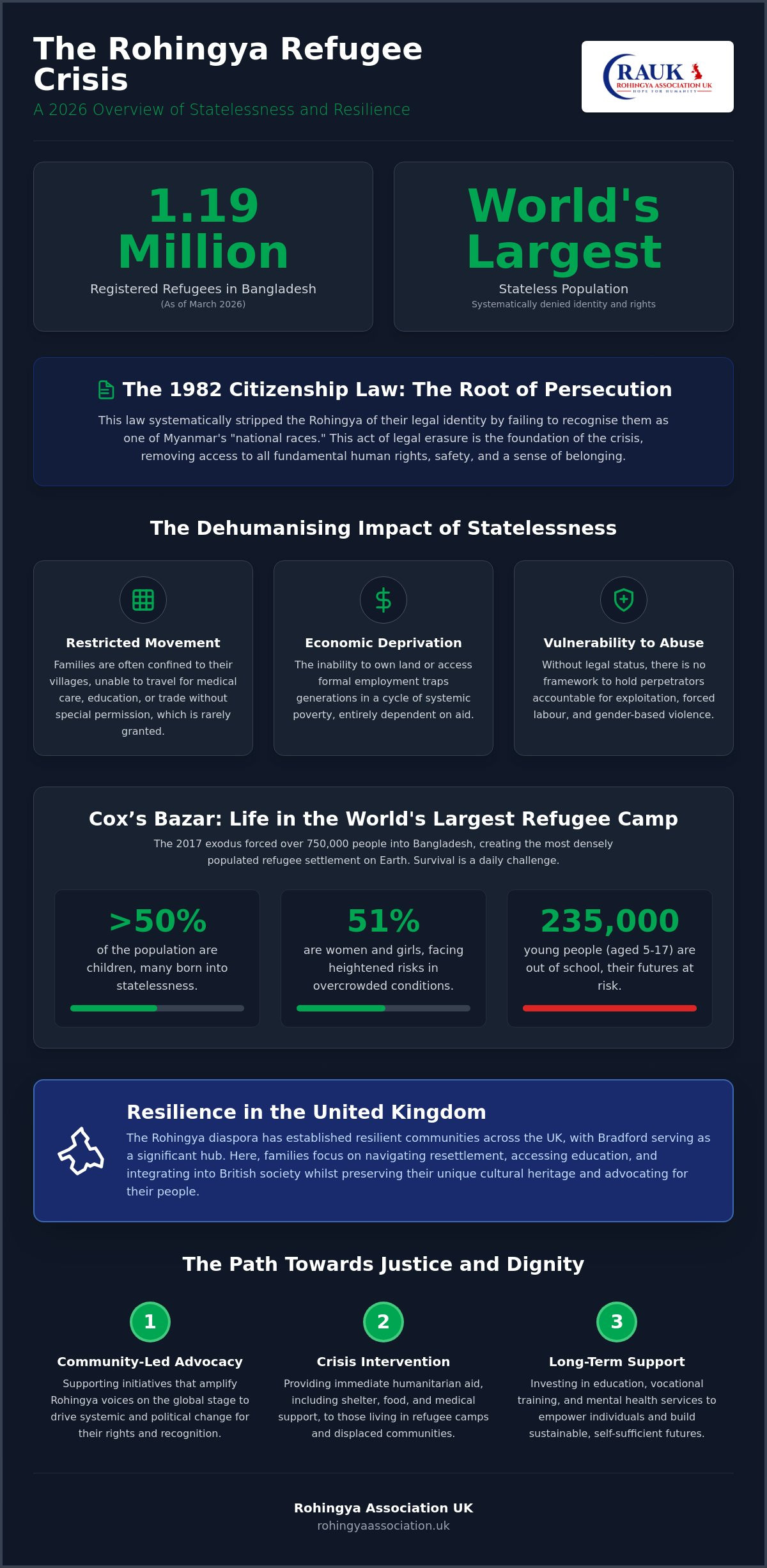
The pivotal moment in their legal disenfranchisement came in 1982 with the passage of the Burmese Citizenship Law. This legislation effectively rendered the Rohingya stateless, officially denying them citizenship and excluding them from the list of 135 recognised national ethnic groups. This act stripped them of legal recognition in their own homeland, creating the world’s largest stateless population and laying the groundwork for decades of persecution. Being “stateless” means being denied the fundamental rights that citizenship affords: the right to vote, to own land, to access higher education, to travel freely, and to receive protection from the state. The United Nations has repeatedly described the Rohingya as one of the most persecuted minorities in the world, a direct consequence of this state-sanctioned exclusion.
The Historical Context of Rakhine State
The history of Muslim communities in the region of Arakan stretches back for centuries, long before the establishment of modern-day Burma. They were an integral part of the social and cultural fabric of the independent Kingdom of Arakan. However, following the transition from British colonial rule to an independent Burma and later Myanmar, the political landscape shifted dramatically. A rising tide of ethno-nationalism began to marginalise minority groups, with the Rohingya facing particularly severe discrimination.
Prior to the escalation in 2017, the erosion of their rights was systematic and suffocating. The state imposed severe restrictions on their freedom of movement, marriage, and education. They were subjected to forced labour, arbitrary land confiscation, and relentless violence at the hands of the military and nationalist groups. This long-term, institutionalised persecution created an environment where a large-scale atrocity was not only possible but tragically predictable.
The Legal Implications of Being Stateless
Statelessness is a legal void that traps individuals and entire communities in a state of perpetual vulnerability. For the Rohingya, it means being unable to obtain essential documents like passports, national identity cards, or even birth and marriage certificates. Without legal proof of identity, they cannot formally own land, enrol in universities, or hold many professional jobs. This lack of legal status facilitates widespread exploitation, as stateless individuals have no legal recourse against abuse. In the context of the 1982 law, statelessness is the deliberate, state-enforced condition of having no recognised nationality, thereby denying an entire ethnic group its fundamental human rights and legal existence.
This vulnerability is particularly acute for women and girls, who face heightened risks of human trafficking and gender-based violence with little to no protection from the authorities. The inability to register a marriage or a child’s birth perpetuates the cycle of statelessness, passing this devastating legacy from one generation to the next. It is a weapon of exclusion designed to make life so untenable that people are forced to flee.
The 2017 Exodus and the Reality of Cox’s Bazar in 2026
The simmering persecution of the Rohingya erupted into a full-blown humanitarian catastrophe in August 2017. In response to attacks by a Rohingya militant group, the Myanmar military launched a brutal and disproportionate campaign of violence against the entire Rohingya population in Rakhine State. These "clearance operations," as the military called them, involved mass killings, widespread sexual violence, and the razing of entire villages. The United Nations High Commissioner for Human Rights described it as a "textbook example of ethnic cleansing."
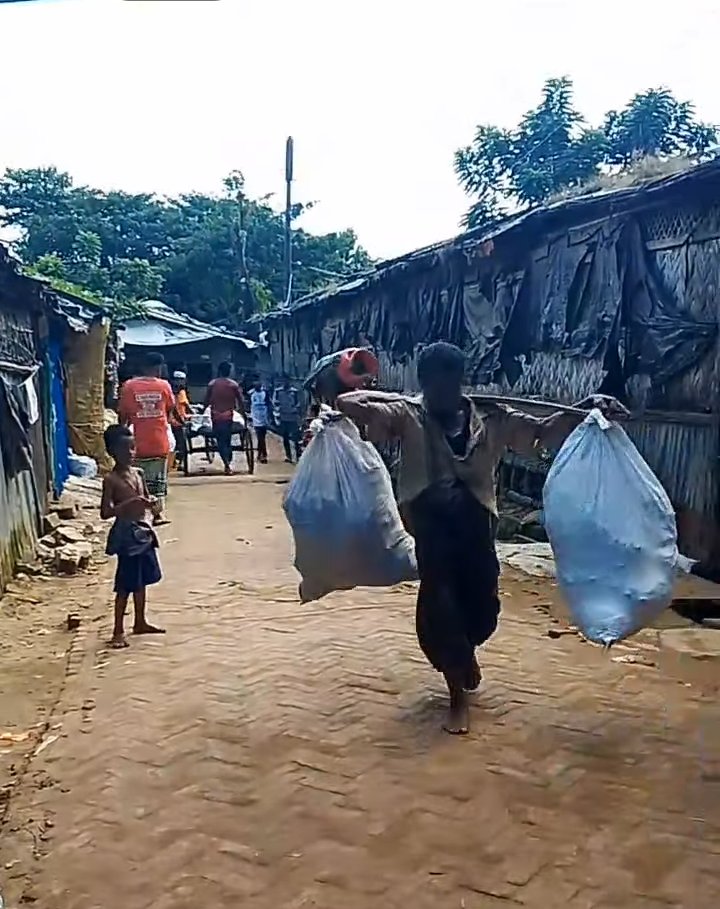
Faced with unimaginable terror, over 700,000 Rohingya fled across the border into neighbouring Bangladesh in a matter of weeks. This mass displacement created the world’s largest refugee settlement in Cox’s Bazar. By 2026, the situation remains dire. The population in these camps has swelled to over one million people, the majority of whom are women and children who arrived with nothing but the trauma they had endured. The camps are a sprawling, densely packed city of temporary shelters, where ongoing challenges of fire, disease, and overcrowding are a part of daily life.
Life Inside the Camp: Resilience Amongst the Tents
Life in Cox’s Bazar is a daily struggle for survival and dignity. Families live in fragile shelters constructed from bamboo and tarpaulin, offering minimal protection against the elements. Whilst humanitarian organisations provide essential aid like food, water, and basic healthcare, the conditions are far from sustainable. For an entire generation of Rohingya children, a formal education remains an elusive dream, and adults are denied the right to work, leaving them entirely dependent on aid and with few opportunities to build a self-reliant future. For a deeper insight into the daily realities and the incredible resilience of the people, you can read our comprehensive guide to life inside the Rohingya refugee camp.
The Threat of Climate Change and Monsoons
The precarious existence of the refugees is further compounded by a severe environmental threat. The camps are situated in a region prone to powerful cyclones and heavy monsoon rains from the Bay of Bengal. The hastily constructed settlements were built on deforested hillsides, making them extremely vulnerable to catastrophic landslides and flash floods. Each year, the monsoon season brings fresh devastation, destroying thousands of shelters and displacing families yet again.
Climate change acts as a "threat multiplier" in this context. Rising sea levels and more extreme weather patterns exacerbate the risks, turning seasonal rains into life-threatening emergencies. This environmental degradation, coupled with the immense strain of a million people on local resources, creates a secondary crisis that threatens both the refugee population and the host community.
Beyond the Camps: The Global Search for Safety
The desperate conditions in the camps and the lack of a viable future have forced thousands of Rohingya to seek safety elsewhere. Many embark on perilous journeys by sea across the Andaman Sea and the Bay of Bengal, often in rickety boats operated by human traffickers. These voyages are fraught with danger, with countless individuals perishing from starvation, dehydration, or drowning. Those who survive often find themselves in other countries in the region, such as Malaysia, India, and Thailand, where their legal status remains precarious and they continue to face the risk of detention and deportation.
A common question from those unfamiliar with the crisis is, "Why can’t they just go home?" The answer is painfully simple: it is not safe. The military junta that seized power in Myanmar in 2021 is the same institution responsible for the 2017 genocide. Returning to Myanmar under the current regime would mean returning to the very real threat of further persecution, violence, and internment. Without guarantees of citizenship, security, and justice, repatriation is not a viable option.
The Perils of Human Trafficking
The condition of statelessness makes Rohingya refugees exceptionally vulnerable to human trafficking and smuggling rings. Desperate to escape the camps or find work to support their families, many fall prey to traffickers who promise safe passage and employment but deliver exploitation and abuse. Women and unaccompanied children are at the greatest risk, often forced into bonded labour or sexual exploitation. This tragic reality underscores the urgent need for robust international human rights protection for Rohingya, not just in Myanmar but across the entire region, to safeguard those in transit and hold perpetrators accountable.
The Stalled Repatriation Process
The international community has stipulated that any return of Rohingya refugees to Myanmar must be "safe, voluntary, and dignified." This means refugees must be able to return to their original homes, have their citizenship and rights restored, and see those responsible for the atrocities held accountable. None of these conditions have been met. Efforts to begin a formal repatriation process have repeatedly failed because the refugees themselves do not feel safe to return.
Meanwhile, the wheels of international justice turn slowly. The Gambia has brought a case against Myanmar at the International Court of Justice (ICJ), accusing the state of violating the Genocide Convention. Whilst these legal proceedings offer a glimmer of hope for long-term accountability, they do not provide an immediate solution for the million people languishing in camps. Justice requires both legal action on the world stage and sustained support for the survivors.
The Rohingya Diaspora: Integration and Community in the United Kingdom
Whilst the majority of Rohingya refugees remain in Bangladesh, a small but significant diaspora has formed in countries around the world, including the United Kingdom. In the UK, the city of Bradford has become a vital hub for the Rohingya community, a place where families who have endured unimaginable trauma can begin to rebuild their lives. However, the challenges of resettlement are immense. New arrivals often grapple with significant language barriers, the complexities of securing housing, and the profound sense of cultural shock that comes with starting over in a new country.
This is where community-led organisations like the Rohingya Association UK (RAUK) play a critical role. Based in Bradford, RAUK provides essential, culturally sensitive support to newly arrived families. We offer practical guidance on navigating the housing system, accessing healthcare services through the NHS, and enrolling children in schools. Crucially, we provide English language classes, which are fundamental to fostering independence, enabling communication, and empowering individuals to integrate into British society.
Bradford: A Centre for Rohingya Culture
In Bradford, the Rohingya community has found more than just a place to live; they have found a sanctuary. The city has become a centre for the preservation and celebration of Rohingya culture. RAUK organises regular community events, often centred around Islamic traditions, which are vital for maintaining social cohesion and combating the isolation that many refugees experience. These gatherings provide a space for families to connect, share their experiences, and strengthen the bonds that have sustained them through so much adversity. Furthermore, our dedicated youth empowerment programmes are designed to equip the next generation with the skills and confidence they need to build a bright future in the UK, honouring their heritage whilst embracing new opportunities.
Preserving Heritage in a New Land
For a people whose identity has been systematically targeted for erasure, the preservation of culture is not a luxury—it is an act of resistance and a vital component of mental and emotional well-being. Keeping traditions alive, from language and food to religious practices and oral histories, is essential for healing the wounds of displacement. The "Community Support & Integration" services offered by RAUK are designed to do just that. By creating a supportive environment where cultural heritage is valued, we help restore a sense of identity and belonging that was stolen from them. This work is fundamental to rebuilding lives with dignity, and you can learn more about our approach to community support for displaced families.
Restoring Justice: How Advocacy and Community Support Create Change
The path toward justice for the Rohingya people is a long and multifaceted one. It begins with meeting immediate humanitarian needs but must extend to securing long-term legal accountability, restoring rights, and empowering the community to lead its own recovery. This requires a concerted effort, combining global advocacy to pressure the international community with grassroots support that builds resilience from within. RAUK operates at the intersection of these two approaches, combining crisis intervention in Bangladesh with long-term skills development and advocacy in the UK.
Effective engagement from concerned citizens like you can make a profound difference. Here is a simple framework for how you can help move the needle from awareness to action:
- Educate Yourself and Others: Understand the facts of the crisis and share them within your network. Correcting misinformation is a powerful first step.
- Amplify Rohingya Voices: Follow and support Rohingya-led organisations and activists. Justice must be centred on the needs and aspirations of the community itself.
- Advocate for Political Action: Encourage your elected representatives to support international justice mechanisms and maintain diplomatic pressure on Myanmar.
- Provide Direct Support: Contribute to organisations that are providing essential services on the ground, both in the camps and within the UK diaspora.
The Power of Grassroots Advocacy
Change is often driven from the ground up. As a community-led organisation (Registered Charity No. 1211433), RAUK harnesses the power of those with lived experience to advocate for meaningful change. We organise awareness campaigns to inform the British public and policymakers about the ongoing crisis and the need for justice. This work is guided by the principle of "principled leadership," ensuring that our advocacy is always rooted in the authentic voice and priorities of the Rohingya community. To see how we translate these principles into action, explore our guide on Rohingya human rights advocacy.
How You Can Make a Difference in 2026
The feeling of helplessness in the face of such a large-scale crisis is understandable, but your support can have a direct and tangible impact. Voluntary charitable donations are the lifeblood of our work, enabling us to sustain aid projects in both the UK and Bangladesh. Your contribution can provide a family with shelter, fund English classes that unlock a future in Bradford, or support our youth empowerment programmes that are nurturing the next generation of community leaders.
If you live near Bradford, consider joining local support groups or volunteering your time. Every action, no matter how small, contributes to a larger movement of solidarity and hope. By standing with the Rohingya community, you are helping to restore not only their immediate needs but also their fundamental right to a future defined by justice, dignity, and peace. Support our mission to restore hope and justice for the Rohingya people—donate to RAUK today.
Frequently Asked Questions About the Rohingya Crisis
Who are the Rohingya people and where do they come from?
The Rohingya are a Muslim ethnic minority group who are indigenous to Rakhine State (formerly Arakan) in Myanmar. They have a distinct language and culture and have lived in the region for centuries. Despite their long history, the Myanmar government does not recognise them as citizens.
Why is the Rohingya crisis described as ethnic cleansing?
The term "ethnic cleansing" was used by senior UN officials to describe the actions of the Myanmar military in 2017. This was due to the organised and systematic nature of the violence, which included mass killings, sexual violence, and the burning of villages, all aimed at driving the Rohingya population out of the country.
How many Rohingya refugees are there in the world in 2026?
As of 2026, there are over one million Rohingya refugees living in camps in Bangladesh, primarily in the Cox’s Bazar area. Additionally, hundreds of thousands more live as refugees or internally displaced people in other countries, including Malaysia, India, Thailand, and within Myanmar itself.
What is the current situation in the Cox’s Bazar refugee camps?
The situation in Cox’s Bazar remains a critical humanitarian emergency. The camps are severely overcrowded, and residents face significant challenges, including inadequate shelter, limited access to formal education and employment, and risks from fires, floods, and disease outbreaks.
Can Rohingya refugees return to Myanmar safely?
No. Currently, it is not safe for Rohingya refugees to return to Myanmar. The conditions for a safe, voluntary, and dignified return—which include guarantees of citizenship, security, and justice for past atrocities—have not been met by the military junta in power.
How does the Rohingya Association UK support refugees in Bradford?
The Rohingya Association UK (RAUK) provides comprehensive support to Rohingya refugees in Bradford. This includes assistance with housing, healthcare access, English language classes, cultural and community events, and youth empowerment programmes to help families integrate and rebuild their lives.
What is the 1982 Citizenship Law and why does it matter?
The 1982 Citizenship Law is a piece of legislation in Myanmar that officially denied citizenship to the Rohingya people. It is a cornerstone of their persecution, as it formally rendered them stateless and stripped them of fundamental rights, making them vulnerable to discrimination and violence.
How can I donate to help Rohingya refugees through RAUK?
You can make a voluntary charitable donation directly through the Rohingya Association UK website. Your contribution supports our vital projects providing aid, education, and community integration services to Rohingya families in both the UK and Bangladesh.