
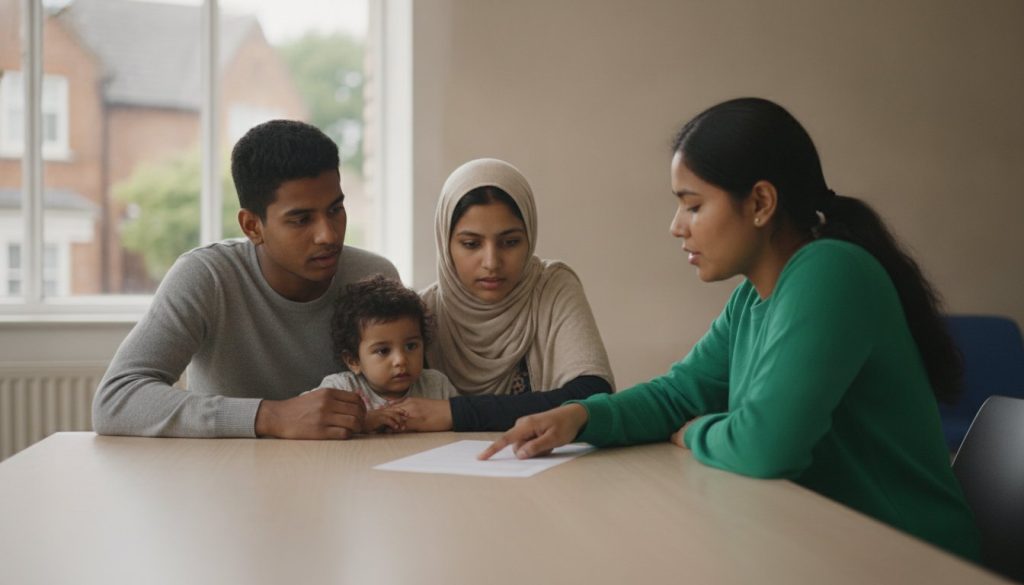
What if the true measure of safety isn’t just the absence of danger, but the presence of a community that truly understands your language, your faith, and your history? For many families arriving in Britain, the relief of reaching a new shore is quickly overshadowed by a dense fog of confusion regarding legal rights and the gnawing anxiety of where they will sleep. Navigating the complex landscape of emergency support for refugees UK can feel like an overwhelming task whilst facing language barriers and the isolation of a foreign culture. It’s a heavy burden to carry; however, your resilience in seeking a better future is the foundation upon which restoration is built.
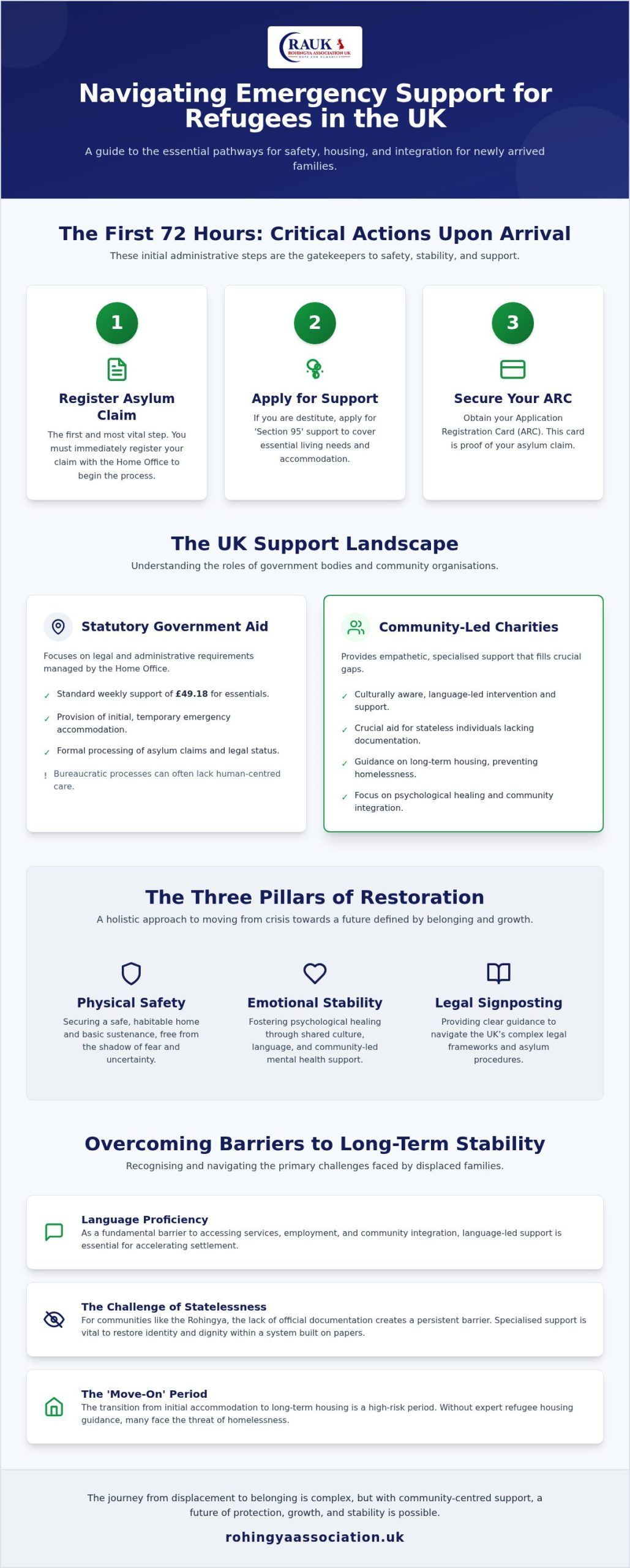
We understand the gravity of your situation, so this guide helps you discover the essential pathways to immediate safety, housing, and healthcare for displaced families. You’ll learn how to access the standard weekly support of £49.18 for essentials and understand the significant implications of the Immigration and Asylum Bill 2026. We will examine the immediate financial assistance available, the impact of new legislative shifts, and the community-led models that foster long-term integration to help you move from a state of crisis toward a future defined by belonging, protection, and growth.
Key Takeaways
- Identify the critical distinctions between statutory government aid and the specialised emergency support for refugees UK provided by community-led organisations.
- Discover the essential first steps for newly arrived families to secure immediate housing, healthcare, and basic sustenance through a clear arrival checklist.
- Explore why shared cultural heritage and language-led intervention are fundamental to accelerating the psychological healing and restoration of displaced individuals.
- Recognise the primary barriers to long-term stability, including language proficiency, and learn how to navigate these challenges through community integration.
- Access a practical, five-step framework for connecting with dedicated advocacy and crisis intervention services to begin the journey toward settlement.
What is Emergency Support for Refugees in the UK?
Emergency support for refugees UK represents the immediate provision of safety, sustenance, and shelter for individuals who have fled persecution to seek sanctuary on British soil. It serves as the initial, vital bridge between the trauma of displacement and the possibility of a settled life. Whilst statutory government support focuses on the basic administrative and legal requirements of the asylum system, charitable crisis intervention provides the empathetic, human-centred care that bureaucratic structures often lack. We view restoration through three essential pillars: physical safety, emotional stability, and legal signposting. The first 48 hours after arrival are critical; they set the tone for a person’s entire journey of integration, determining whether they feel like a welcome guest or a nameless statistic.
To better understand the human reality behind these policies, watch this insightful report on how individuals react to the changing landscape of British immigration:
Immediate Needs: Food, Shelter, and Safety
Families arriving with no resources require more than just a roof; they need the security of knowing their basic human rights are upheld. Local authorities carry the responsibility of providing initial emergency accommodation, yet these environments can often feel clinical or temporary. True restoration begins in “safe spaces” where individuals can rest without the constant shadow of fear. Historically, initiatives such as the Gateway Protection Programme have highlighted the importance of structured resettlement, ensuring that the transition from crisis to stability is managed with dignity, care, and foresight.
The Unique Challenges of Statelessness
Statelessness creates a profound complication within the standard refugee support pathway, as families often arrive without the documentation required to prove their identity or origin. For communities like the Rohingya, this lack of a recognised nationality acts as a persistent barrier to accessing essential services and legal status. Standard systems are built for those with papers; they’re not designed for those whose very existence has been systemically denied. This is why specialised, community-led support is so vital. By providing a bridge between stateless individuals and the UK’s complex legal frameworks, we ensure that identity, dignity, and hope are restored to those the world has ignored.
Navigating the UK Refugee Support System
The UK refugee support system is a complex network of statutory obligations and administrative procedures. Primary responsibility rests with the Home Office, which manages asylum claims and initial support, whilst local authorities and the Department for Work and Pensions (DWP) step in once status is granted. Understanding the UK’s safe and legal routes for refugees provides a necessary foundation for those navigating this landscape. Upon arrival, families must immediately register their asylum claim, apply for Section 95 support if they’re destitute, and secure their Application Registration Card (ARC). These administrative steps are the gatekeepers to safety, stability, and the eventual restoration of a life lived in dignity. Accessing emergency support for refugees UK begins with these formal declarations of need.
Securing Safe Accommodation
Finding a place to call home is often the most pressing challenge for those seeking emergency support for refugees UK. The system distinguishes between initial accommodation, which is temporary and often communal, and long-term social housing provided once a positive decision is received. Refugees have the right to housing that is safe, habitable, and free from serious hazards. Navigating the transition between these stages is fraught with risk; without expert refugee housing guidance UK, many families face the threat of homelessness during the move-on period. Charities play a vital role here, acting as advocates amongst local councils and private landlords to ensure no one is left without a roof.
Accessing Essential Healthcare
Primary healthcare through the NHS is a fundamental human right in the UK, accessible to everyone regardless of their immigration status or ability to pay. It’s essential to register with a local General Practitioner (GP) as soon as possible to ensure continuity of care for chronic conditions and access to prescriptions. For survivors of conflict, the need for culturally competent mental health support is often as urgent as physical treatment. Restoration requires healing the mind, body, and spirit. Emergency dental care is also available, though it often requires specific signposting from community partners who understand the local landscape. If you’re struggling to access these services, our team at the Rohingya Association UK can offer the guidance needed to protect your family’s health.
The Vital Role of Community-Led Charities
Large institutions often operate with a degree of clinical distance that can leave displaced families feeling invisible amongst a sea of administrative requirements. Whilst many individuals receive vital emergency support from the British Red Cross, community-led charities offer a level of trust rooted in shared identity and mutual understanding. This bond is not merely social; it is a critical component of emergency support for refugees UK. When a family is met by someone who speaks their dialect and understands the specific nuances of their journey, the barriers of fear begin to dissolve. Trust is the currency of restoration, allowing for a deeper level of engagement than bureaucratic systems can typically achieve.
We operate as a principled leader, balancing the urgent need for direct aid with a steadfast commitment to systemic advocacy. Providing community support for displaced families involves more than just transactional assistance. It requires a deep understanding of the cultural frameworks that influence how a family seeks help or perceives safety. By acting as both a protective shield and a guiding hand, community-led organisations prevent the long-term isolation that so often follows the initial trauma of displacement. This model ensures that aid is not just delivered, but is received in a way that respects the dignity of the individual.
Cultural and Religious Sensitivity in Crisis
For many arriving in the UK, emotional restoration is inextricably linked to faith and heritage. Islamic community gatherings and cultural events are not optional extras; they are essential for maintaining a sense of self in a foreign land. Preserving heritage allows refugees to anchor themselves whilst navigating the complexities of a new society. In Bradford, we organise events that strengthen these communal bonds, ensuring that the heavy weight of the past is shared amongst friends who understand its specific burden. This cultural continuity acts as a powerful antidote to the psychological impact of conflict and loss.
Bridging the Gap: Local Expertise vs. National Policy
Local charities act as the essential intermediaries between displaced individuals and the often-daunting statutory services of the state. Designing support programmes through the lens of lived experience ensures that aid is practical, respectful, and effective. Our Rohingya charity Bradford initiatives demonstrate how tailored local solutions can solve problems that national policies might overlook. We don’t just provide help; we build bridges of understanding that empower families to reclaim their agency and participate fully in their new communities.
Overcoming Barriers to Long-Term Stability
The journey from arrival to genuine stability is often impeded by a series of systemic hurdles that persist long after the initial crisis has passed. Language proficiency remains the primary barrier to accessing both emergency support for refugees UK and the long-term resources necessary for a dignified life. When an individual cannot articulate their needs or understand their rights, they remain vulnerable to exploitation and neglect. This linguistic isolation is often compounded by digital exclusion, as the UK’s administrative frameworks increasingly rely on online portals and digital documentation. For families who lack the hardware or the technical literacy to navigate these systems, the path to restoration feels needlessly obstructed.
Healing the psychological scars of displacement requires more than just time; it demands culturally competent trauma care that acknowledges the specific horrors of persecution. We believe that true restoration involves addressing the mind, body, and spirit in unison. Our refugee youth empowerment programmes are designed to break these cycles of inequality by providing the next generation with the tools they need to lead. By investing in the potential of young people, we ensure that the resilience shown during flight is transformed into the strength required for leadership, protection, and growth.
Education and Language as Empowerment
English language classes represent far more than a simple academic exercise; they are a vital form of self-advocacy. Mastering the local tongue allows a refugee to speak for themselves, reducing the reliance on intermediaries and restoring a sense of personal agency. Skills development programmes further this mission by bridging the gap between past experience and future employment. Providing educational pathways early in the resettlement process ensures that youth are not left behind, but are instead empowered to pursue their ambitions with confidence, clarity, and purpose.
Tackling Inequality and Social Exclusion
Systemic barriers often prevent refugees from participating fully in the social and economic life of the UK, leading to a state of permanent isolation. Advocacy is essential to challenge the public perceptions and policy decisions that sustain these inequalities. Community bonding initiatives serve to reduce the somber gravity of social exclusion, replacing it with a sense of shared identity and collective strength. By fostering these connections, we protect families from the corrosive effects of loneliness whilst building a more inclusive society. If you believe in a future where every displaced family has the chance to thrive, we invite you to join our mission at RAUK and support our ongoing advocacy efforts.
How to Access and Support Refugee Intervention
Accessing emergency support for refugees UK is a journey that requires both courage and a guiding hand. Whilst the administrative hurdles we’ve discussed can be daunting, the path to restoration is clearer when walked with a community that understands your history. We provide a bridge for those in Bradford, ensuring that no family remains isolated in their time of greatest need. This intervention isn’t just about survival; it’s about reclaiming the dignity and agency that displacement so often strips away. By moving from immediate crisis to long-term belonging, we help families transform their resilience into a stable, flourishing future.
Contacting RAUK for Support
Families in Bradford seeking guidance can follow these five steps to begin their journey toward stability:
- Initial Contact: Reach out to our team to share your immediate circumstances and location.
- Needs Assessment: Meet with a dedicated caseworker to identify urgent housing, food, or healthcare requirements.
- Direct Signposting: Receive tailored advice on navigating local council systems and registering with essential services.
- Programme Enrolment: Join our English language classes or skills development initiatives to build your independence.
- Community Integration: Participate in our cultural and Islamic events to build lasting bonds with your peers.
Every interaction is handled with the utmost confidentiality. We’re committed to providing dignified care that respects your journey and your heritage, acting as a steadfast partner in your restoration.
Ways to Contribute to the Mission
The public plays a vital role in sustaining these efforts through voluntary charitable donations and active advocacy. Your contributions directly fund crisis intervention, providing the resources necessary to protect vulnerable families arriving with nothing. Beyond financial support, participating in community-led advocacy campaigns is essential for promoting justice for Rohingya people on a global scale. We invite you to join local support groups in Bradford, fostering the social inclusion that prevents isolation and builds a stronger, more resilient community for everyone. Whether through volunteering or raising awareness, your involvement creates a ripple effect of hope.
The impact of this work extends far beyond West Yorkshire, resonating across our heritage sites in Myanmar and Bangladesh. By supporting our mission, you’re investing in a global movement of renewal and protection. We look forward to a future where every displaced person finds not just a house, but a home rooted in heritage and hope. Together, we can ensure that the somber gravity of the past is replaced by the resilient optimism of a new beginning.
Building a Future Rooted in Dignity and Belonging
The journey from the initial crisis of displacement to a life of stability is an arduous one, yet it’s defined by the immense resilience of the human spirit. We’ve explored how navigating the UK’s legal frameworks provides the baseline for survival, whilst community-led intervention offers the deeper healing required to truly thrive. Securing emergency support for refugees UK is merely the first step in reclaiming a sense of safety, identity, and hope. By bridging the gap between statutory services and cultural heritage, we ensure that families don’t just survive; they begin the vital work of restoration.
As a registered charity (1211433) led by those with lived experience, we act as both a protective shield and a guiding hand for families in the UK, Myanmar, and Bangladesh. Our commitment is rooted in the belief that every person deserves a future where their heritage is honoured and their safety is guaranteed. We invite you to stand with us as we continue this principled fight for justice, empowerment, and communal bond. Support our mission to restore hope and dignity to displaced families. Together, we can transform the weight of displacement into a foundation for lasting renewal.
Frequently Asked Questions
What should I do first if I have just arrived in the UK as a refugee?
Your first priority is to register your asylum claim with the Home Office to initiate the formal support process. Once registered, you should contact local authorities or community organisations to secure immediate sustenance and shelter. If you’re based in Bradford, our team offers guidance on these initial steps. We help families navigate the complex administrative requirements to ensure they don’t remain in a state of crisis without a clear path toward restoration and safety.
Can I access emergency housing if I am a stateless person?
Stateless individuals are entitled to the same basic protections as other displaced people fleeing persecution. Whilst the lack of documentation can complicate the process, local authorities still hold a duty of care to provide emergency accommodation. We specialise in supporting stateless families by providing the necessary signposting to ensure their rights are recognised. Restoration of dignity begins with securing a safe place to sleep, regardless of your current nationality or documentation status.
Are refugees entitled to free healthcare on the NHS?
Primary healthcare through the NHS is a fundamental right for all asylum seekers and refugees in Britain. You’re entitled to register with a local General Practitioner (GP) and access emergency dental care without charge in most circumstances. Accessing emergency support for refugees UK involves understanding these rights to ensure your family remains healthy. We provide practical assistance in finding local clinics and navigating the registration process to protect your physical and emotional wellbeing.
How can I find a local refugee support group in Bradford?
The Rohingya Association UK serves as a central hub for those seeking community in the Bradford area. We are a community-led registered charity (1211433) that organises regular cultural and Islamic events to foster social inclusion. Finding a group that shares your heritage is vital for emotional restoration. You can connect with us directly to join our network of families and youth who are working together to build a brighter, more integrated future.
What kind of emergency support does the Rohingya Association UK provide?
We provide comprehensive crisis intervention that includes housing guidance, healthcare access, and humanitarian aid. Our model is built on lived experience, allowing us to act as a bridge between immediate needs and long-term settlement. It’s important to clarify that we don’t provide legal representation, direct financial loans, or a 24/7 emergency hotline. Instead, we focus on empowering families through education, skills development, and cultural preservation to ensure a stable and dignified life.
Is it possible to get help with English language classes as a new arrival?
Yes, we offer dedicated English language classes specifically designed for new arrivals. These sessions are a core part of our education and youth empowerment programmes, providing the linguistic tools needed for self-advocacy. Learning the language is the most effective way to break cycles of inequality and isolation. By participating in these classes, you gain the confidence to communicate with statutory services, find employment, and participate fully in your new local community.
Will seeking emergency support from a charity affect my asylum claim?
Seeking assistance from a charity will not negatively affect your asylum claim. Charities like ours operate independently of the Home Office and the formal legal system. Our role is to provide the emergency support for refugees UK that government systems might lack, such as cultural integration and emotional care. Accessing these services demonstrates your commitment to integration and provides the stable foundation you need whilst your legal status is being determined by the authorities.
How can I donate to support Rohingya refugees in the UK and overseas?
You can support our mission by making voluntary charitable donations through our official channels. These contributions fund vital projects across the UK, Myanmar, and Bangladesh, focusing on crisis intervention and youth empowerment. Every donation helps us tackle inequality and provide essential aid to families who have lost everything. Your support allows us to maintain our global advocacy reach whilst continuing our dedicated on-the-ground work within the Bradford community and beyond.