
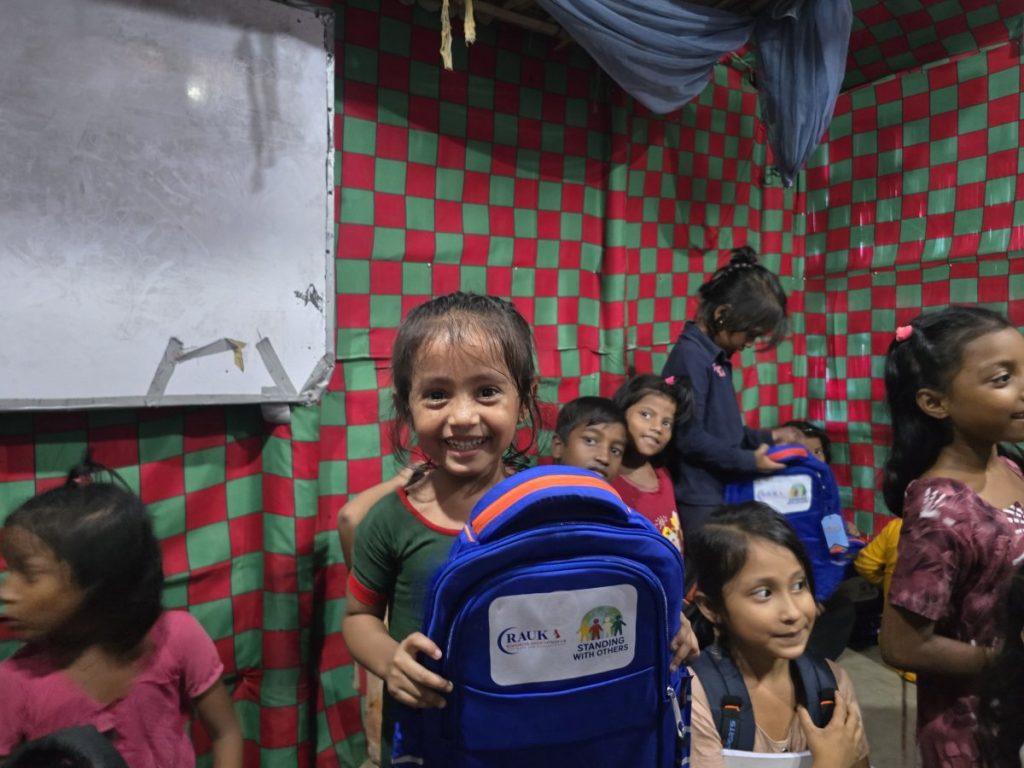
Education for a displaced child is far more than a simple lesson; it is a strategic act of restoration that guards against the erasure of an entire people. Whilst the 2026 Joint Response Plan appeal has been reduced by 26 per cent to USD 710.5 million, the impact of donations on Rohingya education remains the most effective tool for dismantling the cycle of statelessness. We recognise your deep concern regarding aid transparency and the haunting fear that a “lost generation” might emerge from the camps in Bangladesh. You seek more than a temporary fix; you want to ensure your support builds a foundation for long term stability and communal strength.
This guide promises to show you how your contributions provide more than short term relief, instead securing a dignified future through literacy, leadership, and cultural pride. We will examine the measurable outcomes of community led learning, the preservation of identity through education, and the specific ways your support empowers youth to become the architects of their own renewal. By understanding the tangible results of your generosity, you can move from a place of uncertainty to one of confident, purposeful advocacy for those who refuse to be forgotten.
Key Takeaways
- Understand how statelessness creates an educational void and why community-led initiatives are essential to prevent a “lost generation” of youth.
- Explore the profound impact of donations on Rohingya education by funding essential infrastructure and empowering community members to become skilled educators.
- Learn to distinguish between short-term relief and systemic change to ensure your contributions provide sustainable, long-term stability.
- Discover how to identify Zakat-eligible projects and the enduring value of Sadaqah Jariyah in fostering knowledge that secures a dignified future.
- Gain insights into the RAUK holistic “Rohingya helping Rohingya” model and how it restores cultural pride across the full displacement journey.
The Crisis of Statelessness and the Educational Void
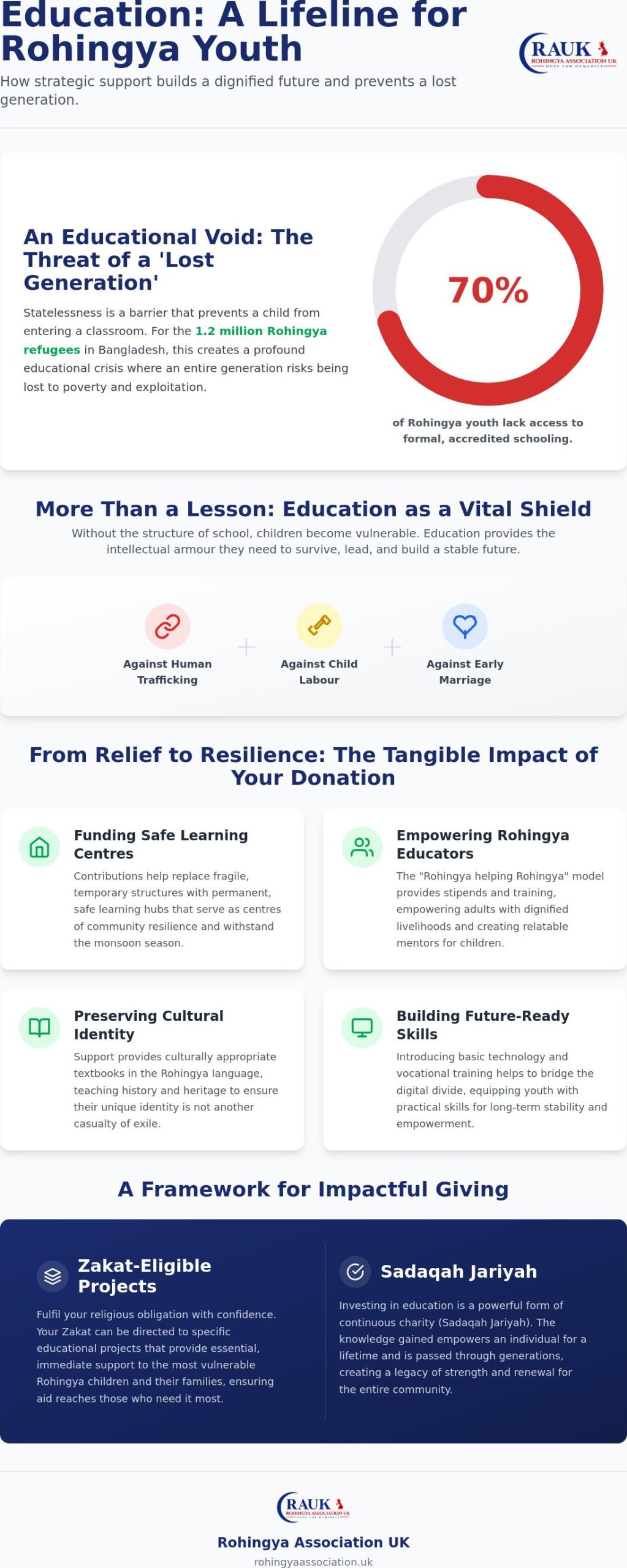
The denial of education is a quiet, systematic form of erasure. For the 1.2 million Rohingya refugees currently in Bangladesh, the legacy of the Rohingya genocide continues through a profound educational void. Statelessness is not merely a legal status; it is a barrier that prevents a child from entering a classroom, holding a pen, or imagining a life beyond the perimeter of a camp. When a child is denied the right to learn, they’re effectively stripped of their future agency. Current estimates suggest that over 70 per cent of Rohingya youth lack access to formal, accredited schooling, creating a precarious environment where an entire generation risks being “lost” to poverty and exploitation.
Understanding the impact of donations on Rohingya education requires looking past the immediate need for books. Education serves as a vital protective shield, offering a safeguard against human trafficking, child labour, and early marriage. Without the structure of a school, children become vulnerable to those who seek to exploit their desperation. By investing in learning, we’re not just teaching children to read; we’re providing the intellectual armour they need to survive and lead. The long term socio-economic cost of intellectual stagnation is immense, as it traps displaced communities in a cycle of dependency that can span decades.
Barriers to Learning in Cox’s Bazar and Rakhine State
The path to a classroom is fraught with obstacles that extend beyond simple geography. In Cox’s Bazar, the lack of a formal, recognised curriculum means that even when children do study, their achievements often lack the certification needed for higher education or professional employment. Learning centres are frequently overcrowded, fragile structures that struggle to withstand the monsoon season. Amongst these challenges, the gender gap remains a significant concern. Cultural expectations and safety risks often prevent girls from attending classes, making targeted support for female students a moral necessity for any organisation seeking to provide comprehensive care.
The Psychological Necessity of the Classroom
A classroom provides a sanctuary of predictability in a world defined by displacement and loss. For a child who has witnessed the unthinkable, the simple routine of a school day offers a path toward trauma recovery and emotional stability. These spaces do more than impart facts; they restore a sense of dignity and purpose. By teaching the Rohingya language and history, these centres ensure that cultural identity isn’t another casualty of exile. Education becomes a method of preservation, ensuring that heritage remains a living, breathing force for the youth of tomorrow, whilst fostering the resilience required to build a new life.
How Your Donations Transform the Educational Landscape
The transition from immediate survival to long-term stability begins with the construction of a classroom. Whilst emergency aid provides the calories needed to endure the day, the impact of donations on Rohingya education provides the intellectual framework needed to build a life. By funding the infrastructure of community-led learning centres, supporters enable us to move beyond temporary structures toward spaces of permanence and safety. These centres are more than buildings; they’re hubs of communal resilience where heritage is honoured and the future is actively designed. As highlighted in a comprehensive study on the educational crisis, the absence of such structured environments often leads to a total collapse of social development amongst displaced youth.
Empowerment is most effective when it is internal. A significant portion of educational funding is directed toward teacher training and stipends for Rohingya adults, allowing them to step into roles of leadership and authority. This model ensures that education isn’t something imposed from the outside, but rather a gift passed from one generation to the next. It provides adults with a dignified livelihood whilst ensuring children see themselves reflected in their mentors. We also prioritise the provision of culturally appropriate learning materials and textbooks that respect the linguistic nuances of the community, ensuring that learning remains accessible and relevant. By introducing basic technology and vocational skills, we’re slowly bridging the digital divide that threatens to leave the displaced behind in a rapidly evolving global economy.
From Primary Literacy to Vocational Empowerment
Early years education is the cornerstone of cognitive development, providing the foundation upon which all future learning rests. Our programmes focus on literacy and numeracy, but they also extend into vocational training to prepare older youth for self-sufficiency. Complementing this approach, targeted skills development for refugees restores professional identity and builds the economic independence needed to move beyond aid-dependency. We don’t stop at the children; adult literacy programmes are vital because an educated parent is better equipped to advocate for their family’s rights. This holistic approach ensures that the entire community moves forward together, rather than leaving the older generation in the shadows of the past. If you’re interested in how we facilitate these transitions, consider joining our mission to restore hope through collective effort.
English Language as a Tool for Integration
In the UK, the focus shifts toward integration and the removal of communicative barriers. Our English language classes for refugees in Bradford serve as a critical resource for those navigating a new society. Proficiency in English isn’t just about daily conversation; it’s a powerful tool for advocacy and global storytelling. When a refugee masters the language of their host country, they gain the ability to share their history, demand justice, and break the isolation of the diaspora. Language becomes the bridge that connects local struggles to global awareness, turning survivors into articulate ambassadors for their people.
Evaluating Education Projects: A Framework for Donors
The decision to support a humanitarian cause is an act of profound moral weight, yet it requires a discerning eye to ensure that generosity translates into lasting transformation. Whilst every contribution provides a degree of relief, the most profound impact of donations on Rohingya education is felt when funds are directed toward systemic change rather than fleeting interventions. Donors must look beyond simple enrolment numbers to evaluate the quality of learning, the emotional wellbeing of students, and the long-term viability of the project. Transparency and accountability are paramount, especially as we witness the devastating impact of foreign aid cuts on education within the camps, which forces organisations to do more with significantly fewer resources. A robust framework for evaluation should prioritise three core pillars: durability, community agency, and holistic care.
True success is measured not just by the number of children in a classroom, but by their ability to think critically, express themselves freely, and envision a future beyond displacement. When you fund teacher stipends and curriculum development, you’re investing in a legacy that remains even if physical structures are threatened. This approach ensures that your generosity creates a stable environment where children can thrive, rather than merely survive. By demanding clear reporting on learning outcomes and student welfare, supporters can move from being distant benefactors to becoming active partners in the restoration of a people.
Emergency Relief vs. Long-term Educational Development
One-off school supply kits are often a visible and satisfying way to give, yet they’re rarely enough to sustain a child’s educational journey. Sustainable development requires a multi-year commitment to support the pillars of learning: teacher salaries, infrastructure maintenance, and curriculum refinement. We must balance the urgent need for basic materials with a vision of a self-sustaining future where the community is no longer dependent on external aid for their fundamental right to learn. This long-term focus ensures that the impact of donations on Rohingya education builds a foundation for intellectual sovereignty that lasts a lifetime.
The ‘Community-Led’ Advantage
Projects designed and managed by the Rohingya community possess an inherent advantage in both effectiveness and longevity. This “by the community, for the community” model ensures that curriculum design respects cultural nuances and addresses specific communal needs. This same sensitivity is required when tackling the challenges for Rohingya youth in the UK, where navigating identity and resilience requires a deep understanding of their heritage. When the community leads, every pound spent is amplified by trust, relevance, and a shared vision of communal renewal.
A Supporter’s Guide to Impactful Giving in 2026
The impact of donations on Rohingya education is most profound when individual generosity is channelled through structured, high-impact mechanisms. As we look toward the challenges of 2026, supporters have the opportunity to transform their empathy into a stable, long-term commitment that dismantles the barriers to learning. Whether through faith-based contributions or collective community efforts, your support acts as a catalyst for restoration, protection, and growth. By choosing the right giving model, you ensure that every pound spent provides the maximum possible benefit to those who have been marginalised for too long. Effective giving is not just about the amount; it’s about the strategic application of resources to create lasting, systemic change.
Faith-Based Giving and Educational Empowerment
For many in our community, the act of giving is deeply rooted in spiritual duty and the pursuit of social justice. Education is widely recognised as a valid category for Zakat eligibility, as it empowers the individual to move from a state of dependency to one of self-sufficiency. By removing the financial barriers to knowledge, you fulfil a moral obligation whilst providing a child with the tools to advocate for their own rights. Sadaqah Jariyah represents a continuous investment in a child’s future, ensuring that the ripple effects of literacy and skill-sharing endure long after the initial gift is given. This form of “everlasting charity” is particularly powerful in an educational context, where the knowledge gained by one student is often shared amongst their entire family and future generations.
Maximising Your Contribution in the UK
In the United Kingdom, specific financial mechanisms allow you to amplify the reach of your generosity without any additional cost to yourself. By choosing to Gift Aid your donation, you enable registered charities to reclaim the basic rate of tax on your gift, effectively increasing its value by 25 per cent. This extra support can be the difference between a classroom having the basic materials it needs or struggling in silence. To ensure a steady build-up of momentum for our projects, we recommend the following steps:
- Monthly Standing Orders: Setting up a recurring gift provides the predictable funding necessary for teacher salaries and building maintenance.
- Corporate Social Responsibility (CSR): UK businesses can partner with RAUK to align their corporate values with meaningful humanitarian advocacy.
- Impact Tracking: You can follow the tangible results of your support through our regular reporting, which details how funds are utilised to restore hope and classroom excellence.
For those looking to combine their support with a personal challenge, organising a sponsored event such as a tandem jump with UK Skydiving is a powerful way to raise visibility and funds for our educational work.
Collective action often starts with a single conversation. Organising a community fundraiser, whether it’s a local event in Bradford or a digital awareness campaign, allows you to move from individual support to a powerful, communal effort. When we work together, we create a protective shield around the youth who need it most. If you feel called to make a difference, you can invest in a child’s future and help us secure a dignified path forward for the next generation.
Partnering with RAUK: Restoring Hope through Education
Partnering with the Rohingya Association UK (RAUK) means joining a principled movement that is deeply embedded in the community it serves. As a registered charity (number 1211433) based in Bradford, we occupy a unique position as a community-led organisation. We understand that the impact of donations on Rohingya education is most effective when the people receiving the aid are also the ones designing the solutions. Our work spans the full displacement journey, operating in the UK, Myanmar, and Bangladesh to provide a seamless support network that protects families and empowers youth. We aren’t a distant benefactor; we’re a dedicated partner in the fight for justice and communal renewal.
Our holistic approach ensures that we don’t just focus on the classroom in isolation. We provide comprehensive community support for displaced families, recognising that a child cannot learn whilst their basic needs for safety, nutrition, and integration remain unmet. By bridging the gap between the global crisis in the camps and local support in the UK, RAUK acts as both a protective shield and a guiding hand. This integrated model allows us to address the root causes of inequality whilst fostering a sense of cultural pride and communal bond amongst those we serve.
The RAUK Difference: By the Community, For the Community
The “Rohingya helping Rohingya” model is the cornerstone of our efficacy. Every pound you contribute is directed by individuals who possess lived experience of the crisis, ensuring that resources are used where they’re needed most. We’re committed to preserving our heritage through language and history classes whilst simultaneously building modern skills in literacy and technology. In 2026, our supporter-funded projects continue to sustain active learning centres that provide more than just lessons; they provide a sanctuary of hope. These success stories are the tangible results of a shared vision where the displaced are no longer victims, but the architects of their own restoration. Our refugee youth empowerment programmes are central to this vision, transforming displaced young people from survivors into community leaders equipped with the skills and confidence to shape their own futures.
Take Action: Secure a Future for a Rohingya Student
Your role in this movement is vital. By choosing to support RAUK, you’re investing in the intellectual sovereignty of a generation that has been systematically denied a voice. You can make a direct contribution through our website, where you can choose to support specific educational initiatives or provide general aid to our ongoing programmes. We also invite our supporters to visit our centre in Bradford for cultural and community events, where you can see the impact of your generosity firsthand and connect with the families you’re helping to empower.
The path to a dignified future is paved with knowledge, and your donation is the bridge that allows a child to cross it. Don’t let another year pass where a student’s potential is stifled by a lack of resources. Join us today in our mission to dismantle the barriers to learning and secure a future defined by agency, excellence, and resilience. Together, we can ensure that the light of education reaches every corner of our community, from the streets of Bradford to the camps of Cox’s Bazar.
Securing the Intellectual Sovereignty of a Generation
The journey from displacement to dignity is paved with the knowledge and resilience fostered within a community-led classroom. We’ve seen how education acts as a vital protective shield, guarding against exploitation whilst preserving a rich cultural heritage that refuses to be erased. The impact of donations on Rohingya education is not merely a matter of funding supplies; it’s a strategic investment in the intellectual sovereignty of a people. By prioritising community-led initiatives and long-term systemic change, your generosity provides the stability needed for youth to thrive across the UK, Myanmar, and Bangladesh.
RAUK remains a dedicated partner in this mission, operating as a registered charity (number 1211433) with a focus on transparency and communal empowerment. Your contribution is the bridge between a child’s current hardship and their future potential. Together, we can ensure that the light of learning continues to shine, providing a path toward restoration and justice. Support Rohingya Education Projects: Donate to RAUK Today and become a steadfast advocate for those who refuse to be forgotten. Your support ensures that the dream of a dignified future remains within reach for every Rohingya child.
Frequently Asked Questions
Is my donation to Rohingya education Zakat-eligible?
Yes, your contributions to education projects are Zakat-eligible as they fall under the categories of aiding those in need and supporting the path of knowledge. By funding literacy and vocational skills, you empower individuals to move from a state of dependency to one of self-reliance. RAUK ensures that Zakat funds are handled with the utmost care and transparency, directly supporting the most vulnerable members of our community across the full displacement journey.
How does RAUK ensure the money reaches children in the refugee camps?
We utilise a community-led model that relies on established ground networks within the camps in Bangladesh and Myanmar. Because our leadership has lived experience and direct connections on the ground, we can bypass many of the logistical hurdles that face larger, more distant organisations. This “Rohingya helping Rohingya” approach ensures that your support is channelled directly into learning materials, teacher stipends, and the maintenance of essential learning centres.
Can I sponsor a specific student or classroom?
We currently focus on collective sponsorship models rather than individual student matching to ensure every child in a learning centre receives equal support. This approach allows us to maintain the overall classroom infrastructure and pay fair stipends to educators, which benefits the entire community. By pooling resources, you help us create a stable and inclusive environment where no child is left behind due to a lack of a specific benefactor.
What is the difference between Sadaqah and Zakat in the context of education?
Zakat is an obligatory annual payment that can be directed toward education to empower the needy, whilst Sadaqah is a voluntary act of charity. In an educational context, Sadaqah Jariyah is particularly powerful because it represents an investment in knowledge that continues to benefit the recipient and their family for a lifetime. Both forms of giving are vital for sustaining the long-term impact of donations on Rohingya education and communal growth.
Does RAUK provide education support for Rohingya families living in the UK?
Yes, we provide comprehensive educational support for families who have resettled in the UK, with a particular focus on our centre in Bradford. We offer English language classes, skills development, and youth empowerment programmes designed to facilitate successful integration into British society. These initiatives help refugees navigate their new environment whilst maintaining their cultural identity and building the confidence needed to contribute to their local communities and the wider economy.
How has the educational situation in Cox’s Bazar changed in 2026?
The situation in 2026 has become increasingly critical due to a 26 per cent reduction in the Joint Response Plan funding appeal compared to the previous year. This significant decrease has led to a “hyper-prioritised” response that often sidelines educational needs in favour of immediate survival. Consequently, many informal learning centres have faced closure, making private and community-led support more essential than ever to prevent a total collapse of the educational system.
What are the most urgent educational needs for Rohingya youth right now?
The most urgent needs include the provision of a formal, accredited curriculum and sustainable stipends for community teachers who act as mentors. There’s also a pressing demand for vocational training and basic digital literacy to help youth prepare for a life beyond the camp gates. Addressing these gaps is crucial for the impact of donations on Rohingya education, as it provides the tools necessary for long-term self-sufficiency and resilience. Investing in skills development for refugees is therefore an essential complement to classroom learning, restoring economic agency and building pathways to independence.
Can I volunteer my time to help with education projects in Bradford?
We warmly welcome volunteers to assist with our various education and integration projects at our Bradford centre. Whether you can help with English language tutoring, administrative support, or organising cultural events, your time is a valuable contribution to our mission. Volunteering allows you to see the tangible results of our work firsthand and helps build the bridges of understanding and solidarity that are essential for a cohesive and supportive community.