
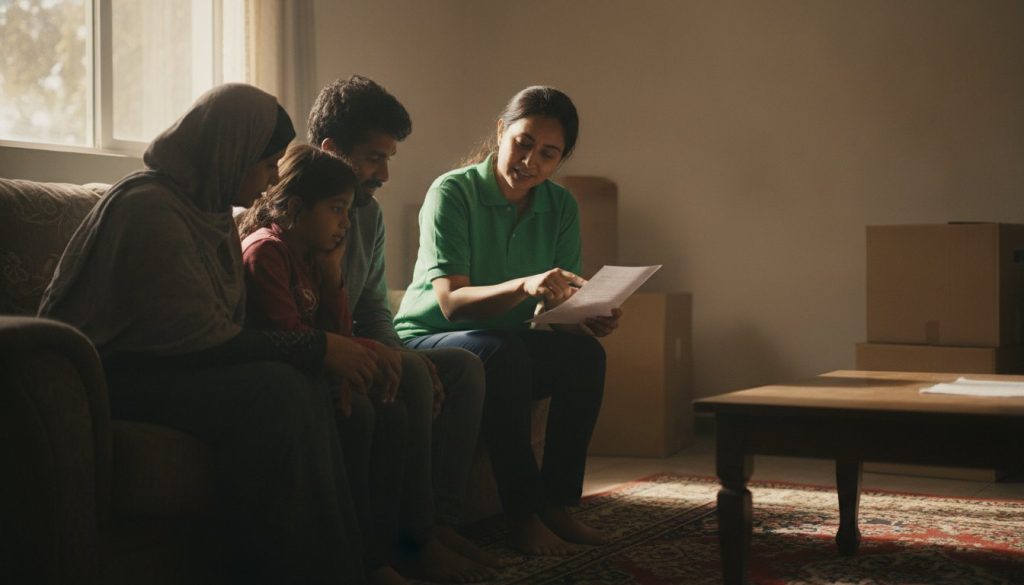
True resettlement is not defined by the arrival of a flight or the handing over of keys to a temporary flat; it’s the slow, deliberate work of turning a stranger into a neighbour. While the legal refugee resettlement process UK has shifted toward 30-month Core Protection status, the fundamental human requirement for stability, dignity, and belonging remains unchanged. You’ve likely watched the news and felt the weight of a system that often appears more like a bureaucratic maze than a path to safety. It’s natural to feel overwhelmed by the distinction between state obligations and the vital, local work of community support.
We believe that a successful transition requires a steadfast advocate to bridge the gap between surviving and thriving. This article clarifies the essential role charities play in providing housing guidance, healthcare access, and cultural connection. You’ll gain a clear perspective on the current resettlement landscape, understand the power of community-led integration models, and find practical ways to help restore hope for those starting over. Together, we can move beyond the headlines to build a future rooted in mutual respect, shared heritage, and lasting safety.
Key Takeaways
- Understand the vital distinction between government mandates and the holistic, wrap-around support charities provide throughout the refugee resettlement process UK.
- Learn why securing stable housing and healthcare access serves as the essential foundation for restoring dignity amongst displaced families.
- Discover how cultural preservation and community events facilitate a transition from mere survival to a genuine sense of belonging and identity.
- Explore how specialised youth empowerment programmes address social exclusion and provide the tools necessary for the next generation to thrive.
- Recognise the unique impact of community-led advocacy models that prioritise lived experience to drive long-term integration and social justice.
Understanding the Resettlement Journey: How Charities Facilitate Transition
True resettlement is far more than a legal designation; it’s a comprehensive, holistic journey that encompasses legal, social, and economic integration into British society. Within the refugee resettlement process UK, this transition marks the shift from the precariousness of displacement to the security of community belonging. While the state provides a necessary framework for protection, the profound work of rebuilding a shattered life often falls to community-led organisations. These charities act as the vital bridge between a person’s legal presence and their eventual flourishing as a neighbour, ensuring that the goal of resettlement extends far beyond mere survival.
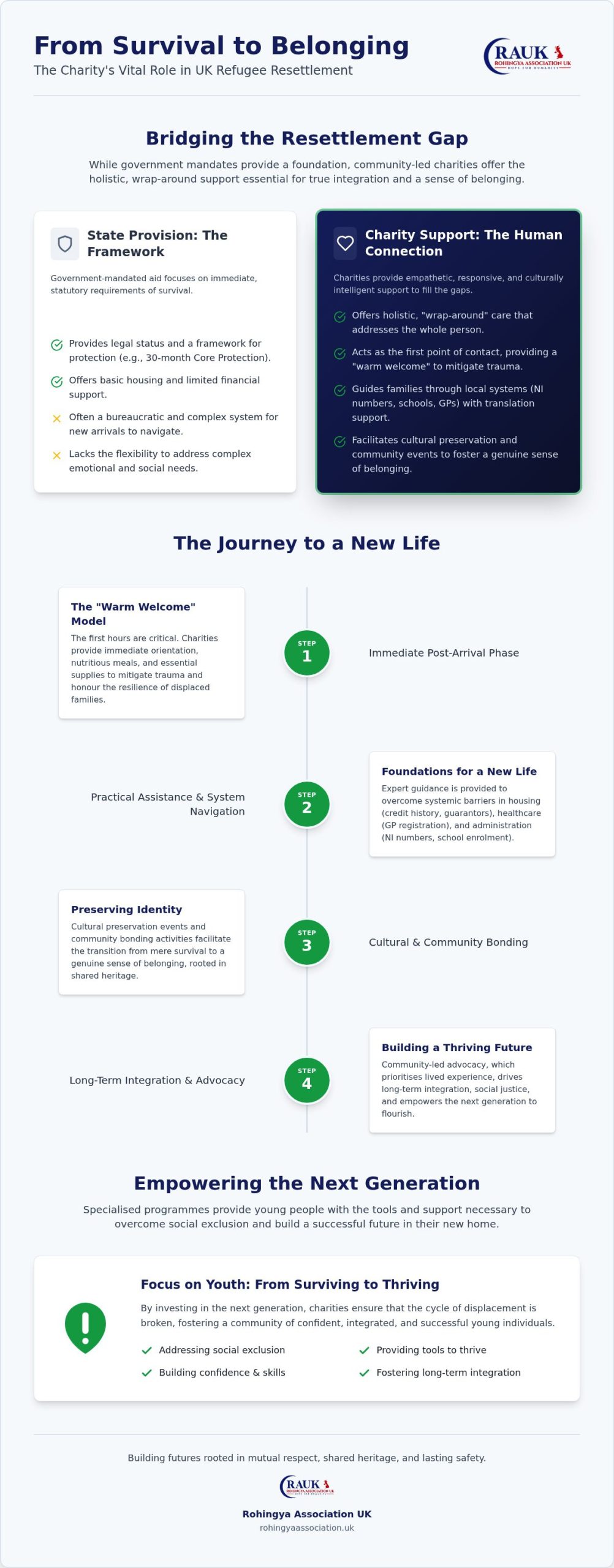
Charities often serve as the first point of contact for families arriving in a landscape that feels entirely foreign. Government-mandated statutory aid typically focuses on the immediate requirements of survival, such as basic housing and limited financial support. However, these services frequently lack the flexibility to address the emotional and social complexities of starting over. Charities provide the supplementary, wrap-around care that fills these gaps, offering a level of empathy, responsiveness, and cultural intelligence that large bureaucracies cannot replicate. By understanding the specific histories of those arriving through various UK resettlement schemes, these organisations ensure that dignity remains the central pillar of the transition.
To better understand the practical application of these principles, watch this report on the commitment to welcoming those in need:
The Immediate Post-Arrival Phase
The initial hours following arrival are often the most disorienting and fraught with anxiety. Charities employ a “warm welcome” model designed to mitigate trauma through immediate orientation, nutritious meals, and essential supplies. This reception is not merely a matter of logistics; it’s a principled act of restoration that honours the strength, resilience, and humanity of the displaced. Resettlement is the methodical process of moving from survival to long-term stability. By providing a compassionate shield during this phase, charities help families begin the work of healing and growth.
Navigating Local Systems and Bureaucracy
British systems can be notoriously complex for those unfamiliar with the administrative landscape. Charities serve as a guiding hand, assisting with essential registrations for National Insurance numbers, school enrolments, and local GP services. They provide the necessary translation of Home Office terminology into native languages, ensuring that families understand their rights, their obligations, and their new environment. Because navigating the refugee resettlement process UK requires more than just paperwork, these organisations provide a protective layer that prevents families from becoming lost in a confusing bureaucracy.
Practical Assistance: Securing the Foundations of a New Life
Securing a safe and stable environment is the first prerequisite for any meaningful integration. Within the refugee resettlement process UK, the transition from temporary accommodation to a permanent home is fraught with systemic challenges that require expert navigation. Charities provide the essential scaffolding for this transition, focusing on the three pillars of stability: housing, healthcare, and education. Without these foundations, the potential for long-term independence remains fragile; with them, individuals can begin the profound work of reclaiming their agency and dignity.
The UK private rental market presents a significant barrier for new arrivals. Landlords often require extensive credit histories, UK-based guarantors, or long-term employment records; requirements that are impossible for a recently arrived refugee to meet. Charities intervene by acting as advocates and facilitators, helping families find landlords who understand their status whilst providing the necessary guidance to ensure tenancies are sustainable. This intervention is not merely about finding a roof; it’s about ensuring that the living conditions are safe, fair, and conducive to a stable family life.
Refugee Housing Guidance and Stability
Charities play a critical role in educating families about their housing rights and responsibilities. By explaining the nuances of tenancy agreements and local authority protocols, these organisations prevent exploitation and ensure safe living conditions. Robust community support for displaced families is essential to prevent homelessness and provide the security needed for children to settle into local schools. These efforts ensure that a house becomes a home, providing a stable base for the challenges that lie ahead.
Healthcare Access and Mental Well-being
Navigating the NHS involves more than just registering with a GP; it requires overcoming language barriers, historical trauma, and a lack of medical records. Charities facilitate access to trauma-informed care, ensuring that survivors of conflict receive the psychological support necessary for recovery. By providing professional translation and accompanying individuals to appointments, advocates ensure patient agency and accurate diagnoses. This support is vital for addressing both immediate physical ailments and the long-term mental health impacts of displacement, ensuring that healthcare is a right realised rather than a system feared.
Beyond these immediate needs, English language classes (ESOL) serve as the primary key to social mobility and confidence. Proficiency in English allows individuals to communicate with neighbours, understand their legal status, and eventually enter the workforce. When paired with skills development programmes, these educational opportunities foster economic independence and long-term self-reliance. By equipping refugees with the tools to contribute to their local economies, charities help transform a state of dependency into one of resilient growth. If you wish to support these efforts, consider how you can strengthen community-led integration today.
Beyond Survival: The Vital Role of Cultural and Community Bonding
Resettlement is incomplete if it demands the erasure of a person’s history. For those navigating the refugee resettlement process UK, the arrival in a new city often marks the beginning of a profound internal conflict: the desire to adapt whilst fearing the loss of one’s heritage. Charities recognise that true belonging is not achieved through assimilation, but through the respectful integration of one’s identity, faith, and culture. A person’s history is their foundation. Without it, the house of their new life in Britain remains unstable.
The isolation of displacement is a heavy burden. Community bonding acts as a psychological buffer, transforming a group of displaced individuals into a resilient diaspora. In cities like Bradford, cultural and Islamic community events serve as vital touchpoints for families who have lost everything but their shared history. These gatherings break the profound silence of the refugee experience. They replace the trauma of the past with the warmth of shared recognition. By fostering these connections, charities ensure that the journey to safety does not result in a loss of self.
Organising Cultural and Heritage Events
Traditional celebrations are more than social gatherings; they are acts of resistance against the erasure of memory. By organising events that feature traditional food, art, and storytelling, charities provide a space for continuity and collective pride. These occasions also serve an educational purpose, offering the wider British public an insight into the rich history and contributions of refugee communities. This shared cultural exchange builds bridges. It turns a “displaced person” into a neighbour with a story worth hearing. Through art and heritage, the community finds its voice once more.
Faith and Community: Islamic Support Networks
For many, faith provides the most stable moral and social framework during periods of immense upheaval. Local mosques and community centres act as spiritual anchors, offering social safety nets that the state cannot provide. Charities facilitate collective prayer and religious education, ensuring that communal ties remain strong amongst families. This faith-based support offers a familiar structure in an unfamiliar land, providing the spiritual sustenance needed to navigate the complexities of the refugee resettlement process UK. It offers a sense of order and peace amidst the chaos of starting over.
For the younger generation, these cultural connections are particularly crucial. Preserving language and heritage allows youth to confidently navigate their dual identity as British-Rohingya. It ensures they don’t feel caught between two worlds but are instead rooted in both, equipped with a strong sense of self that supports their academic and social success. This cultural confidence is the ultimate protection against social exclusion, allowing young people to contribute to British society whilst remaining proud of their ancestral roots.
Empowering the Next Generation: Youth and Education
For the children of displaced families, the journey toward belonging does not end with a school enrolment form. The refugee resettlement process UK often places young people in a complex environment where they must master a new language whilst simultaneously navigating the social hierarchies of British classrooms. These youth frequently face social exclusion, not through a lack of talent, but due to the profound cultural and linguistic gaps that systemic education often fails to bridge. Charities recognise that for the next generation to truly thrive, support must extend beyond the school gates, fostering a sense of agency that allows them to envision a future beyond their current circumstances.
Specific refugee youth empowerment programmes are designed to address these multifaceted needs. By providing safe spaces for recreation and emotional expression, these initiatives allow young people to process their experiences amongst peers who understand their history. This communal environment is essential for breaking the isolation that often follows displacement. When youth are given the tools to express themselves, they transition from being passive recipients of aid to active participants in their own resettlement journey.
Access to Education and Language Support
After-school clubs and homework support provide a vital lifeline for students learning English as an additional language (EAL). These sessions offer more than academic tutoring; they provide a structured environment where children can build the confidence required to participate in class. Charities also act as a bridge between the home and the classroom, helping parents engage with schools and understand the UK curriculum to support their children effectively. Youth empowerment is the process of providing the tools for agency and self-advocacy. By empowering the whole family, we ensure that the educational journey is a shared success rather than a source of domestic tension.
Skills Development and Future Aspirations
As young people move toward adulthood, the focus shifts toward vocational training and higher education. Mentorship programmes that connect refugee youth with professionals in their local community help demystify the British job market and provide tangible role models. Whether it’s supporting university applications or providing leadership roles within the charity itself, these efforts are designed to foster long-term economic agency. Education is the primary tool for breaking cycles of inequality, turning the challenges of the past into the leadership of the future. If you are inspired by the resilience of our youth, you can support our empowerment initiatives to help build a brighter tomorrow for the next generation.
How the Rohingya Association UK Leads Community-Led Resettlement
The Rohingya Association UK (RAUK) stands as a principled leader within the diaspora, acting as both a protective shield and a guiding hand for those who have lost everything. Based in Bradford, our organisation maintains a global advocacy reach that ensures the voices of the displaced are heard in the halls of power whilst providing direct, grounded support on the streets of West Yorkshire. We approach the refugee resettlement process UK with a deep sense of moral seriousness, understanding that the journey from survival to belonging requires a steadfast, long-term commitment. Our multi-layered approach addresses the immediate trauma of arrival and the enduring, vital pursuit of justice for Rohingya people.
Statelessness presents a unique set of systemic hurdles that traditional aid structures often overlook. Many families arrive without basic government documentation, legal proof of identity, or a recognised heritage, which creates profound barriers to housing and healthcare. RAUK tackles this inequality by providing a bridge between systemic exclusion and community belonging. We act as a dedicated partner, ensuring that families aren’t just processed through a system but are instead welcomed into a community that honours their strength, resilience, and humanity.
Local Support in Bradford: A Model of Integration
Trust is the essential currency of successful resettlement. Top-down humanitarian aid can sometimes feel distant or transactional; by contrast, our community-led model ensures that lived experience informs every service we deliver. In Bradford, we provide the practical tools for restoration, protection, and growth through English classes, housing guidance, and culturally sensitive events. This approach builds a sense of shared identity and communal bond that top-down models cannot replicate. We remain committed to advocacy, ensuring that the Rohingya voice remains a powerful force for change both in the UK and globally.
How You Can Participate in the Mission
The work of rebuilding shattered lives requires a collective effort rooted in a sense of duty. Voluntary charitable donations directly fund the integration projects and global aid initiatives that allow displaced families to reclaim their dignity and economic agency. By participating in this mission, you help foster community cohesion and challenge the cycles of inequality that often define the refugee experience. Whether through financial support or active involvement with local refugee support groups, your contribution serves as an invitation to participate in the possibility of renewal. We invite you to support our mission to rebuild lives and preserve heritage today.
Building a Future of Shared Belonging and Resilience
It’s a journey of profound courage that requires more than just administrative processing. Successful navigation of the refugee resettlement process UK depends on the steadfast advocacy of community-led organisations that prioritise dignity, heritage, and agency. By providing essential foundations such as housing guidance and healthcare access, whilst simultaneously fostering cultural pride and youth empowerment, we bridge the gap between mere survival and a life of genuine purpose.
The Rohingya Association UK (Registered Charity: 1211433) remains dedicated to this mission, guided by individuals with lived experience who understand the weight of starting over. Our active projects across the UK, Myanmar, and Bangladesh serve as a protective shield for the vulnerable and a guiding hand for those seeking a brighter future. We invite you to donate to the Rohingya Association UK to support community-led resettlement and participate in this vital work of restoration. Together, we’ll ensure that every family finds a safe place to call home and the opportunity to flourish once more.
Frequently Asked Questions
How do charities help refugees find housing in the UK?
Charities provide expert guidance on tenancy rights, advocate with private landlords, and bridge the gap between temporary state accommodation and permanent homes. They help families understand UK rental laws and responsibilities to ensure long-term safety and stability. Within the refugee resettlement process UK, this support prevents homelessness by addressing systemic barriers like the lack of credit histories or guarantors, ensuring every family has a secure place to call home.
What is the difference between a refugee and an asylum seeker in terms of support?
An asylum seeker is someone awaiting a decision on their protection claim, whilst a refugee has received a positive decision and the right to remain. Asylum seekers typically receive limited state support and are restricted from working. Once granted status, refugees begin the refugee resettlement process UK, gaining access to mainstream benefits, the right to work, and more comprehensive integration support from principled community-led organisations.
Can I volunteer with a refugee charity if I do not speak another language?
Yes, speaking a second language isn’t a requirement for many vital volunteer roles. Charities often need assistance with administrative tasks, organising community events, or providing homework support for youth. Your proficiency in English and knowledge of local British systems are invaluable assets for helping displaced families navigate their new environment. Your presence helps build the social bridges necessary for long-term community cohesion, mutual respect, and genuine understanding amongst neighbours.
How do charities support the mental health of displaced people?
Charities facilitate access to trauma-informed care and provide culturally sensitive environments where individuals can process their experiences with dignity. By offering safe spaces for storytelling and socialisation, these organisations help break the profound isolation often associated with displacement. This support isn’t merely clinical; it involves building resilient networks that restore a sense of agency and emotional stability amongst those recovering from the weight of conflict, displacement, and loss.
What role does education play in the resettlement process?
Education serves as the primary tool for social mobility and long-term economic independence. It provides the linguistic and professional skills needed to contribute to British society whilst building the confidence of the next generation. Charities support this through English classes, homework clubs, and mentorship programmes. By fostering academic success and vocational training, we ensure that young people can transition from a state of survival to one of leadership, empowerment, and growth.
How can I ensure my donation to a refugee charity is used effectively?
You should look for registered charities, such as the Rohingya Association UK (Charity number: 1211433), which maintain transparent reporting and community-led models. Donations to organisations with lived experience ensure that funds are directed toward the most pressing needs, from local integration in Bradford to global crisis intervention. Supporting established groups with active projects in multiple regions ensures your contribution has a tangible, long-term impact on rebuilding lives and restoring hope.
Why is community support so important for stateless families?
Stateless families often lack the official documentation required to access standard government services, making them particularly vulnerable to social exclusion. Community-led support provides a protective shield, offering housing guidance and healthcare access that acknowledges their unique legal status. By fostering a sense of shared identity and heritage, charities provide the social safety net that the state cannot, ensuring these families aren’t left behind by bureaucratic gaps whilst they rebuild their lives.
How do charities help refugees find employment in the UK?
Charities assist with CV writing, interview preparation, and navigating the complexities of the British job market. They often run skills development programmes and connect individuals with local businesses or mentorship networks. By addressing barriers such as language gaps and the recognition of foreign qualifications, these organisations empower refugees to reclaim their economic agency. This methodical support turns potential into participation, allowing families to achieve financial independence and contribute to their local economy.