
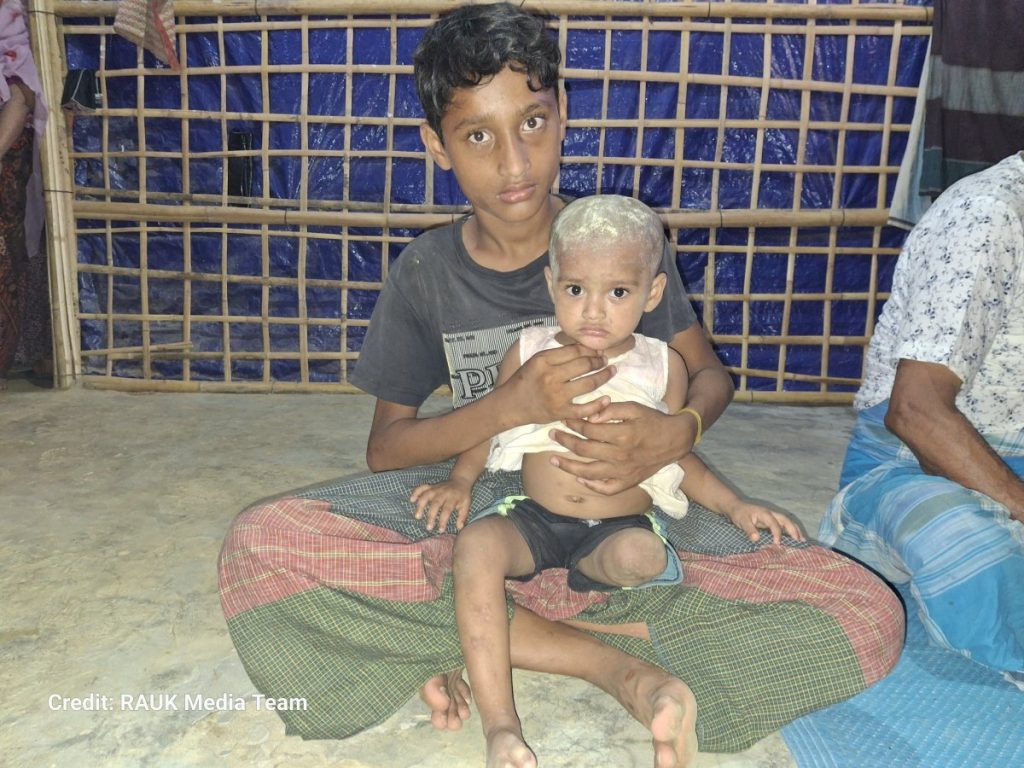
Healthcare is a fundamental human right that transcends the boundaries of citizenship, yet for those without a country to call their own, the path to a GP surgery often feels blocked by invisible walls. You might feel a deep sense of trepidation when approaching a clinic, fearing that a lack of documentation could lead to prying questions or a report to the authorities. It’s exhausting to live in the shadows whilst managing your physical well-being. We recognise that the search for healthcare for stateless refugees UK is often fraught with anxiety, confusion, and silence, especially when you’re told that your status makes simple treatments complicated.
This guide serves as a protective shield and a guiding hand through the NHS landscape in 2026. You’ll learn how to secure the medical attention you deserve, regardless of whether you hold a passport or a fixed address. We’ll clarify the vital distinction between urgent and immediately necessary care, provide a roadmap for successful GP registration, and explain which services remain free of charge. By understanding your legal entitlements, you can replace uncertainty with the confidence needed to advocate for the health, safety, and restoration of your family.
Key Takeaways
- Understand that NHS primary care is rooted in clinical necessity, ensuring that a lack of formal status does not prevent access to essential medical services.
- Learn how to navigate the registration process for healthcare for stateless refugees UK without the requirement for a passport, identity documents, or a fixed home address.
- Identify the specific protections surrounding “urgent” and “immediately necessary” care, alongside vital charging exemptions for those who have endured torture or exploitation.
- Master the practical steps to overcome documentation hurdles at GP surgeries, ensuring your family receives the treatment and restoration they deserve.
- Explore how dedicated community advocacy acts as a guiding hand to help you navigate complex NHS bureaucracy and secure your fundamental health rights.
Understanding Healthcare Entitlements for Stateless People in the UK
Statelessness is a profound and heavy burden. It describes a person whom no state considers a national under the operation of its law. Within the British medical system, this lack of identity often creates a wall of administrative silence. Whilst asylum seekers originate from a specific country, stateless individuals exist without that legal anchor. This makes Understanding the NHS essential for those navigating a life without papers. The system is designed to prioritise clinical necessity over administrative status. However, the reality on the ground is often more complex.
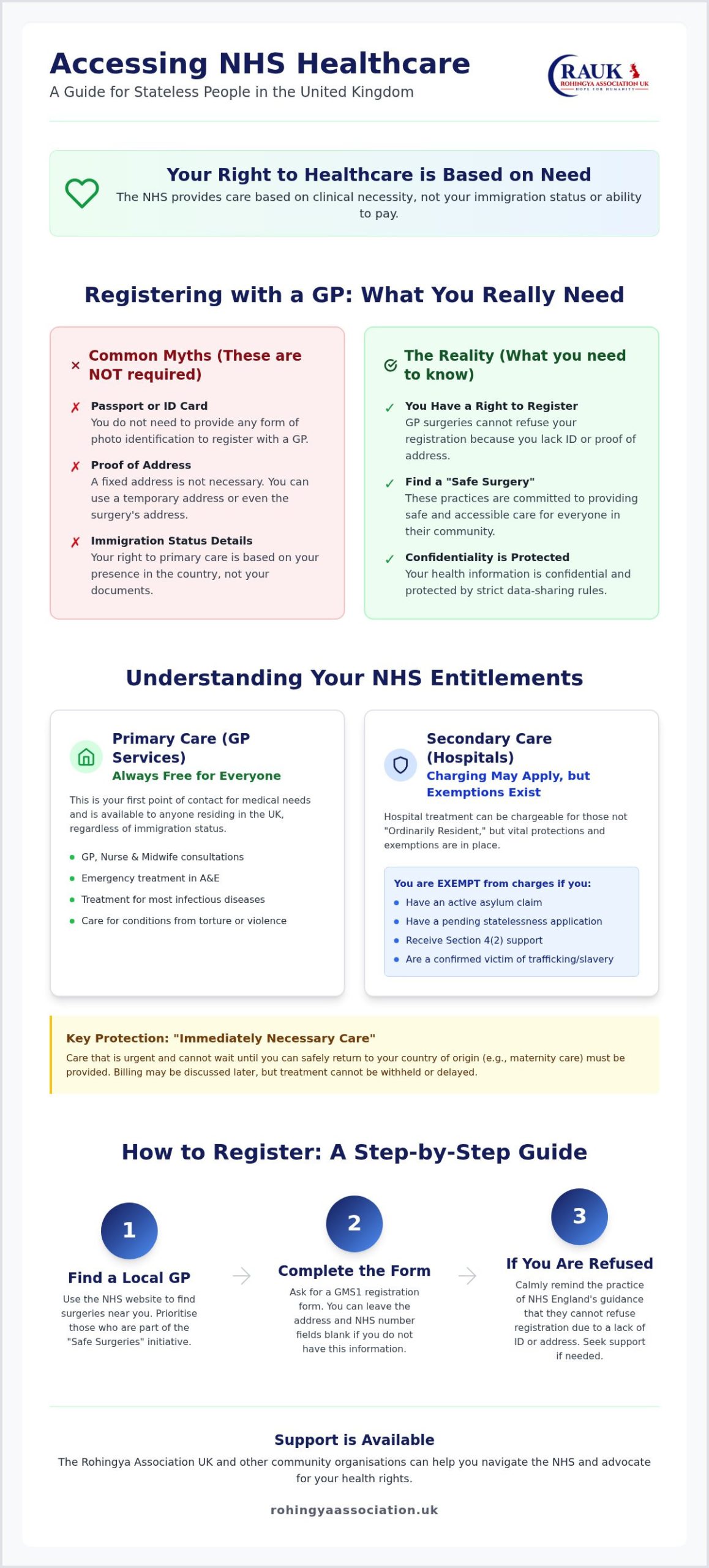
The fundamental promise of the National Health Service is that care should be available based on need, not the ability to pay. In 2026, this principle remains the bedrock of healthcare for stateless refugees UK. Even as the government seeks to reduce asylum spending, the moral and legal duty to provide medical assistance persists. You aren’t required to provide a passport to access a doctor. Your health is the only passport that matters in a clinical setting.
To better understand the broader context of support systems, watch this helpful video:
The Legal Right to Health
Human rights frameworks provide a protective shield for those displaced by conflict or a lack of nationality. Securing healthcare for stateless refugees UK often requires a deep understanding of these international and domestic legal frameworks. Whilst "Ordinary Residence" is a legal term used to determine hospital charges, statelessness complicates this definition. If you have an active claim for asylum or a pending application for statelessness leave, your rights are more clearly defined. Those without an active claim face greater hurdles. Statistics from June 2026 show that 40,168 people were awaiting initial decisions on their claims. Many of these individuals are stateless and require specific advocacy to ensure their rights aren’t ignored by staff. You may also be exempt from charges if you receive support under Section 4(2) of the Immigration and Asylum Act 1999.
Primary Care vs Secondary Care
Your local GP surgery is the first point of contact for almost all medical needs. Primary care is free for everyone in the UK. This includes consultations with a doctor, nurse, or midwife. Certain other services are also exempt from charges regardless of status, such as treatment for infectious diseases and care for conditions caused by torture or sexual violence. Maternity care is always considered immediately necessary and cannot be withheld, even if charges may apply later.
The "Safe Surgeries" initiative has gained significant momentum in 2026. This programme trains GP practices to understand that a lack of ID or proof of address is never a valid reason to refuse registration. By choosing a Safe Surgery, you’re entering a space where your safety and health are prioritised over your immigration status. This collective effort ensures that nobody is left to suffer in the shadows.
Navigating the Unique Barriers of Statelessness and Displacement
The journey to wellness is often obstructed by shadows of fear and misinformation. Many individuals believe they’re barred from medical help because they lack a passport or a biometric residence permit. This "No ID" myth is one of the most significant hurdles to securing healthcare for stateless refugees UK. According to official government guidance on healthcare, you don’t need to provide proof of address or immigration status to register with a GP surgery. Your right to primary care is based on your presence in the country, not the documents in your pocket.
The fear of data sharing with the Home Office often keeps people in a state of silent pain. You might worry that a routine check-up or a blood test will alert the authorities to your presence. In 2026, the firewall between the NHS and immigration enforcement remains a vital protection for public health. Clinical staff are trained to treat your body, not to audit your legal status. Breaking through this wall of anxiety is the first step toward restoration and long-term safety. We understand that this requires courage, but your health is a priority that transcends administrative boundaries.
The Mental Health Burden of Statelessness
Living without a national identity carries a heavy psychological cost that often manifests as physical illness. The constant state of legal limbo creates a cycle of chronic anxiety, insomnia, and exhaustion. Securing mental healthcare for stateless refugees UK is a vital component of holistic recovery. Trauma-informed care is essential here; it’s a practice where doctors recognise how displacement impacts your current well-being. You’re entitled to seek specialist support through the NHS to process the weight of your journey. These services offer a path toward resilience, helping you reclaim a sense of agency over your own life.
Communication and Advocacy
Language should never be a barrier to safety or dignity. You have a legal right to a professional interpreter during any NHS appointment, ensuring your symptoms are understood without any loss of detail. Don’t rely on family members to translate complex medical terms; a professional ensures your voice is heard accurately and privately. "Health Passports" are another powerful tool for self-advocacy. These documents summarise your medical history and specific needs, allowing you to bridge the gap between your experiences and the clinical care you require during short consultations.
If you’re struggling to navigate these barriers alone, our team provides community support for displaced families to ensure no one is left behind. We act as a steadfast advocate, helping you secure the dignity and care you deserve whilst you rebuild your life in the UK.
NHS Charges: What is Free and What is Charged?
The financial burden of medical care often creates a secondary layer of trauma for those without a state. Understanding the nuances of NHS billing is a vital act of self-protection. In England, refused asylum seekers who are stateless face a complex charging regime for secondary care, but it’s essential to remember that clinical need always takes precedence over payment. Medical professionals must never delay treatment that is deemed "immediately necessary" or "urgent" to resolve billing issues. Maternity care is the most critical example; it’s always classified as immediately necessary, ensuring that every mother and child receives protection regardless of their financial or legal standing.
If you’re incorrectly billed, you have the right to challenge the charge. For many, an unpaid NHS debt of over £500 can negatively impact future immigration applications, making it imperative to address errors early. Whilst the system can feel rigid, advocacy groups and charities provide a guiding hand to those navigating these financial labyrinths. Securing healthcare for stateless refugees UK shouldn’t lead to a cycle of debt that hinders your path to settlement.
Services That Are Always Free
Regardless of your immigration status or your history of displacement, certain services are accessible without cost to everyone. These include:
- Accident and Emergency (A&E): Treatment within an A&E department remains free until the point of hospital admission.
- Infectious Diseases: Testing and treatment for conditions like TB, HIV, or malaria are exempt from charges to protect public health.
- Violence and Torture: Care for physical or mental health conditions directly caused by torture, domestic violence, or sexual violence is always free.
- Family Planning: Services related to contraception are provided without charge to ensure reproductive safety and autonomy.
Secondary Care and the Charging Regime
Secondary care refers to hospital-based treatment that requires a referral from a GP. In 2026, the landscape for healthcare for stateless refugees UK varies significantly depending on where you reside. In Scotland, Wales, and Northern Ireland, anyone who has formally applied for asylum is entitled to free secondary care, even if their claim was previously refused. In England, however, refused asylum seekers are generally chargeable unless they receive support under Section 4(2) of the Immigration and Asylum Act 1999 or from a local authority.
The "pre-payment" rule requires hospitals to seek payment before non-urgent treatment begins. However, if a clinician deems your care "urgent" or "immediately necessary", they must proceed with treatment first. This distinction is a vital safeguard. If you find yourself facing healthcare debt, community-led organisations can help you verify your eligibility for exemptions and ensure your rights are upheld with dignity.
Practical Steps to Register with a GP Without Documentation
Securing a place at a local surgery is a vital step toward stability and restoration. If you’re residing in a city like Bradford, you can locate a practice in the Bradford centre or your specific neighbourhood by using the "Find a GP" tool on the NHS website. When you approach the reception desk, you may feel a sense of exposure or trepidation. It’s common for staff to ask for a passport or utility bill out of habit, yet you’re entitled to register without these documents. If questioned, calmly state that you don’t have these items and that NHS England guidelines permit registration for everyone regardless of their immigration status.
The GMS1 form is the standard document used for registration across the country. You don’t need to complete every section to be accepted. If you don’t have an NHS number or a previous address in the UK, you can leave those fields blank. Should a surgery refuse your application, they’re required to provide a reason in writing within two weeks. This written refusal is a powerful tool; it allows you to seek support from advocacy groups or Healthwatch to challenge the decision and ensure your rights to healthcare for stateless refugees UK are upheld with dignity.
Registering Without a Fixed Address
Many stateless individuals find themselves "sofa surfing" or living in temporary, unstable accommodation. This precarious living situation is not a legal barrier to medical care. You have the right to register at a surgery even if you’re homeless or lack a permanent residence. In such cases, you can use the address of a friend, a local community organisation, or even the address of the GP surgery itself to receive correspondence. The "Safe Surgeries" toolkit provides specific guidance for practices to support patients in these exact circumstances, ensuring that your physical location doesn’t dictate your access to safety and healing.
Your First Appointment
Your initial consultation is an opportunity to build a protective shield around your long-term health. Since you likely won’t have access to your previous medical records, it’s helpful to write down a brief history of your vaccinations, past illnesses, and current symptoms beforehand. You should request a "double appointment" if you have complex health needs or require a professional interpreter. This extra time ensures that your concerns are heard without the pressure of a ticking clock. Building a relationship of trust with your GP is a gradual process, but it begins with this first, honest conversation about your well-being.
We are dedicated to acting as a guiding hand for those facing these administrative hurdles. If you need practical assistance with GP registrations or navigating the healthcare system, explore our community support and integration services to find the help you deserve.
How the Rohingya Association UK Supports Your Health Journey
Navigating the British medical system as a stateless person is rarely a solitary journey. It requires a partner who understands the weight of your history and the urgency of your future. We act as a steadfast advocate, ensuring that the search for healthcare for stateless refugees UK doesn’t end in a bureaucratic dead end. Our team provides community support for displaced families, acting as a bridge between the clinical environment of the NHS and the lived experience of those in exile. We don’t just explain your rights; we stand beside you as you claim them.
Our assistance extends to the practical, often exhausting details of NHS bureaucracy. We help families complete GMS1 forms, accompany individuals to appointments when they feel vulnerable, and challenge surgeries that incorrectly refuse registration. This hands-on support is vital for those who have spent years in the shadows. By demystifying the registration process, we help you secure the medical attention required for long-term restoration. We believe that your health is a fundamental right that shouldn’t be contingent on the possession of a passport.
Beyond individual care, we are committed to justice for Rohingya people at a systemic level. Our advocacy work in 2026 focuses on highlighting the unique health inequalities faced by stateless communities. We engage with policymakers and healthcare providers to ensure that the "Safe Surgeries" initiative isn’t just a policy on paper, but a lived reality in every clinic. This dual approach provides both immediate relief and a path toward lasting structural change.
Local Support in Bradford and Beyond
Our centre in Bradford serves as a sanctuary where cultural pride and practical aid meet. It’s a space where you can connect with volunteers who speak your language and understand the specific nuances of your heritage. We help you integrate into UK systems whilst preserving the traditions that define your identity. This community bonding is a powerful antidote to the isolation often felt by those seeking healthcare for stateless refugees UK. We ensure that our centre acts as a protective shield, guiding you toward formal services with confidence and dignity.
A Call to Action for Supporters
The work of restoring health and hope depends on collective effort. Your donations directly empower our healthcare advocacy projects, providing the resources needed to tackle inequality in refugee health. By supporting our mission, you’re ensuring that no stateless person is forced to suffer in silence due to a lack of documentation. We invite you to join us as a partner in this vital work. Together, we can build a future where every displaced individual is treated with the moral seriousness and professional care they deserve.
Reclaiming Your Right to Health and Dignity
Navigating the British medical system requires a balance of legal awareness and personal resilience. We’ve explored how primary care remains a universal right, ensuring that your health is never contingent on the possession of a passport or a permanent address. Whilst the charging regime for hospital treatment in England presents challenges, the protections for urgent and immediately necessary care act as a vital safeguard for your family’s well-being. Understanding these entitlements is the first step toward securing the healthcare for stateless refugees UK that you deserve.
As a community-led registered charity (1211433), the Rohingya Association UK stands as a protective shield for those in exile. Our specialist knowledge of Rohingya heritage and the unique trials of displacement allows us to act as a guiding hand through the complexities of the NHS. We’re dedicated to restoring hope, safety, and dignity to every individual we serve. We invite you to support our mission to provide healthcare advocacy for stateless families and join us in tackling the inequalities that persist in our society. Your health is your heritage; let us help you protect it.
Frequently Asked Questions
Can a GP surgery refuse to register me if I have no ID?
No, a GP surgery cannot legally refuse your registration based on a lack of identification or proof of address. National guidelines in 2026 confirm that primary care is accessible to everyone in the UK regardless of their immigration status. If a receptionist insists on a passport, you can explain that you’re entitled to register under the "Safe Surgeries" initiative. This ensures that healthcare for stateless refugees UK remains a fundamental right rather than a privilege.
Will my healthcare information be shared with the Home Office?
Your clinical information is protected by strict patient confidentiality rules and is not routinely shared with immigration authorities. Doctors and nurses prioritise your well-being over your administrative status. Whilst some administrative data may be shared in specific cases involving high-cost secondary care debt, your routine health records remain private. This firewall is essential for maintaining trust and ensuring that fear doesn’t prevent you from seeking the medical attention you need to survive.
What happens if I cannot afford to pay for hospital treatment?
If you require "immediately necessary" or "urgent" care, the NHS will provide treatment regardless of your ability to pay. You might receive a bill later if you aren’t exempt, but care shouldn’t be delayed. It’s important to address these bills early, as an unpaid debt of over £500 can negatively impact future immigration applications. We assist families in verifying their eligibility for exemptions, ensuring that the cost of care doesn’t become an insurmountable barrier.
Am I entitled to free prescriptions as a stateless refugee?
You’re entitled to free prescriptions if you’re receiving certain types of asylum support, such as Section 95 or Section 4 assistance. If you aren’t receiving this support, you can apply for the NHS Low Income Scheme by completing an HC1 form. Successful applicants receive an HC2 certificate, which covers the full cost of prescriptions, dental work, and sight tests. This support is a vital tool in tackling inequality and ensuring that financial hardship doesn’t interrupt your recovery.
How do I get an interpreter for my doctor’s appointment?
You have a legal right to a professional interpreter during any NHS appointment. You should request this service when booking your consultation to ensure a translator is available either in person or via telephone. Relying on family members can lead to misunderstandings of complex medical terms. Using a professional ensures your symptoms are described accurately and your privacy is maintained, allowing you to advocate for your health with clarity and confidence during your journey.
What is the difference between urgent and immediately necessary care?
Immediately necessary care is treatment required to save a life, prevent a condition from becoming life-threatening, or avoid permanent serious damage. This always includes maternity care. Urgent care refers to treatment that clinicians deem cannot wait until you’re expected to leave the UK. Both categories must be provided by hospital staff without delay, even if you are later found to be chargeable. These definitions serve as a protective shield for the most vulnerable members of our community.
Can I access dental care and eye tests on the NHS?
Yes, you can access dental care and eye tests, though these services often incur a standard charge for adults. If you hold an HC2 certificate due to low income or asylum support, these costs are fully covered. Finding a dentist accepting new NHS patients can be difficult in 2026, so it’s helpful to check the NHS website or contact local community groups. Securing these services is essential for your long-term health and the preservation of your well-being.
How does RAUK help stateless people access healthcare in Bradford?
Our team provides practical, hands-on assistance for those navigating healthcare for stateless refugees UK. Based in our Bradford centre, we help families complete registration forms, accompany individuals to appointments, and act as a guiding hand through complex bureaucracy. We also advocate for your rights at a systemic level, ensuring that local surgeries follow inclusive policies. Our community-led expertise allows us to bridge the gap between displaced families and the formal services they require for a dignified life.