
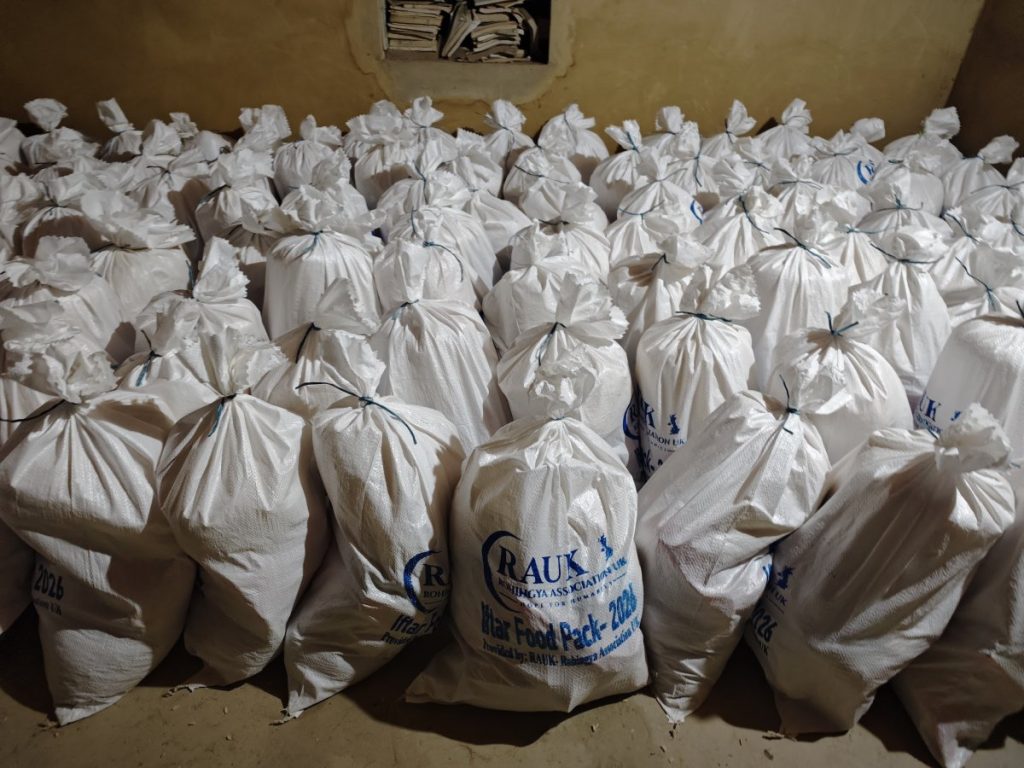
In 2026, humanitarian funding for the 1.2 million Rohingya refugees in Bangladesh has plummeted to just 19 per cent of the required levels, forcing a radical shift in how families receive life-sustaining aid. It’s natural to feel overwhelmed by the complexity of this crisis, particularly as the World Food Programme transitions to a tiered system that leaves many with a mere $7 per month. You likely recognise that whilst emergency rations prevent immediate starvation, they often fail to address the deeper need for dignity, stability, and communal health. This guide offers a definitive analysis of the current rohingya food support landscape, providing the clarity you need to understand these systemic changes in both Bangladesh and Malaysia, where 126,000 refugees face similar uncertainty.
We’ll examine the distinction between temporary relief and sustainable Sadaqah Jariyah, whilst highlighting how community-led organisations are uniquely positioned to deliver direct aid. By the end of this article, you’ll possess a clear roadmap for providing support that honours the heritage, strength, and future of the Rohingya people. Through informed action, we can move toward a model of restoration, protection, and growth for those in Arakan State, also known as Rakhine State, and the camps beyond.
Key Takeaways
- Navigate the complexities of the 2026 tiered assistance system and its impact on the 1.2 million refugees currently residing in Bangladesh.
- Identify the direct correlation between reduced rohingya food support and the alarming increase in child labour and malnutrition across the camps.
- Gain a deeper understanding of the legal status of the Rohingya as a stateless people and their ancestral roots in Arakan State, also known as Rakhine State.
- Evaluate the effectiveness of community-led empowerment models that foster resilience through tailoring, trade, and traditional craftsmanship.
- Discover how to provide dignified, transparent aid through diaspora-led charities that ensure your contributions reach those in most urgent need.
Table of Contents
Understanding the Rohingya Food Support Crisis in 2026
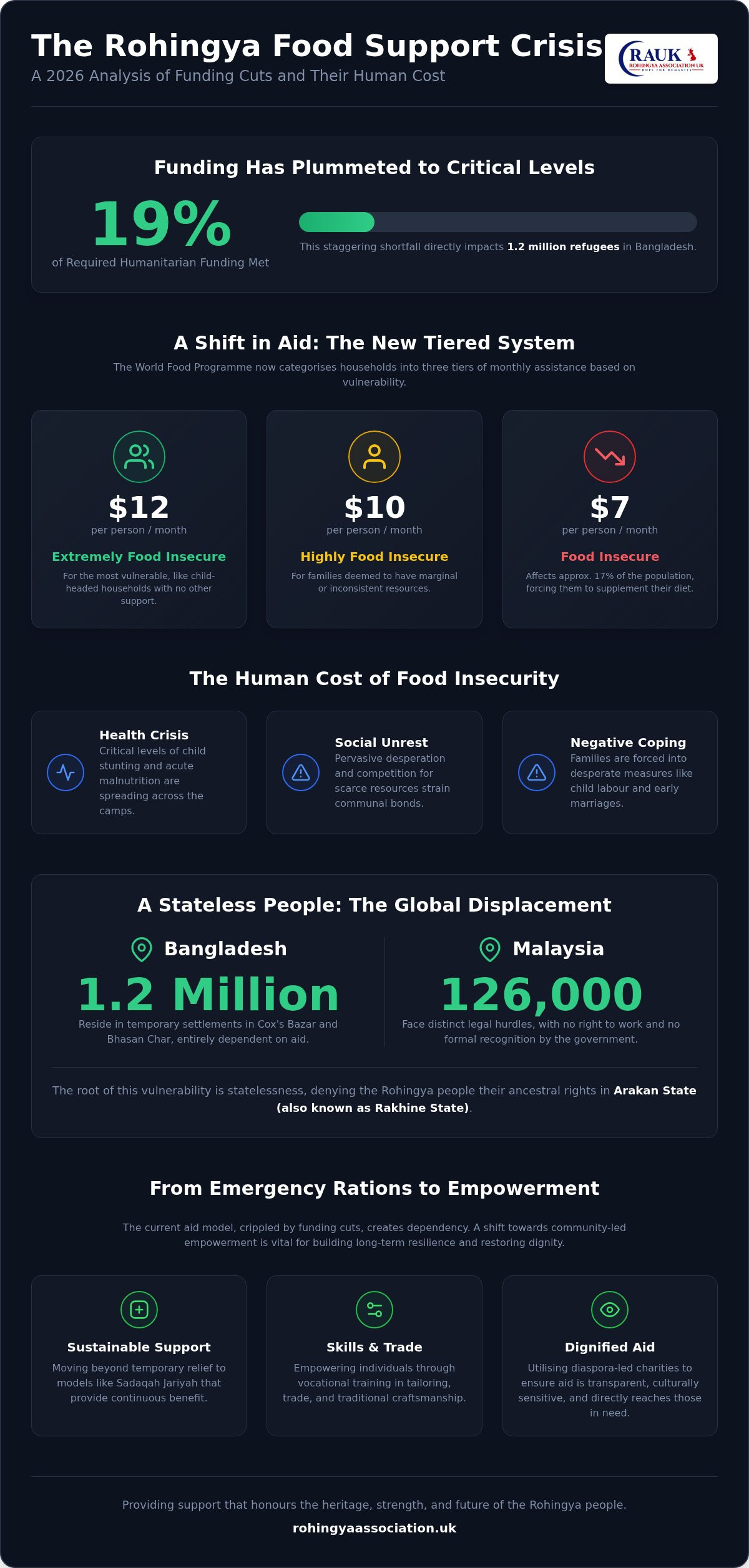
For the 1.2 million refugees forced into temporary settlements in Bangladesh, rohingya food support represents the thin line between survival and total deprivation. It’s more than just a caloric intake; it’s a lifeline that sustains the hope of a people who’ve lost everything else. As of April 2026, the landscape of aid has shifted significantly under the Targeting and Prioritisation Exercise (TPE). This transition marks a move from universal assistance to a vulnerability-based model, a change necessitated by a staggering USD 147 million funding shortfall that threatens the stability of the entire region.
This new framework categorises households into three distinct tiers of monthly assistance based on their perceived level of insecurity:
- $12 (Extremely Food Insecure): Reserved for the most vulnerable, including child-headed households and those with no other means of support.
- $10 (Highly Food Insecure): A middle-ground allocation for families deemed to have marginal or inconsistent resources.
- $7 (Food Insecure): The lowest tier, affecting approximately 17 per cent of the population who are expected to supplement their diet through other means.
The Rohingya Association UK (RAUK) views these reductions with grave concern; we advocate for support levels that recognise the inherent dignity of every individual rather than reducing human life to a tiered fiscal calculation. As a community-led organisation, we understand that when aid is cut, it’s not just a budget adjustment; it’s a direct blow to the health and safety of our brothers and sisters. We believe that true resilience is built through community-led initiatives that understand the cultural nuances of the people they serve and prioritise restoration over mere survival.
The Scale of Displacement: Bangladesh and Malaysia
The crisis isn’t confined to a single border. Whilst 1.2 million people reside in the camps of Cox’s Bazar and Bhasan Char, there are also 126,000 Rohingya people in Malaysia who face distinct legal hurdles. Without formal recognition or the right to work, these families remain tethered to precarious aid systems, unable to secure their own sustenance through legal employment. Their statelessness creates a cycle of dependency where food security is always a fragile prospect, often dictated by the shifting tides of international policy and local regulation.
The Logistics of Aid: E-Vouchers and Fresh Food Markets
Aid logistics have evolved from the distribution of bulk dry rations to sophisticated e-voucher systems. These vouchers empower families to select their own favourite foods, such as fresh vegetables, dried fish, or specific spices, which helps maintain cultural culinary traditions and supports local economies. However, the system’s effectiveness is crippled when funding is prioritised elsewhere. When vouchers are devalued, the choice they provide becomes an illusion, forcing parents to skip meals to ensure their children have enough to eat. This makes the delivery of rohingya food support increasingly complex for those on the ground.
The Human Impact of Food Insecurity in the Settlements
The reduction in rohingya food support has precipitated a silent crisis of health and social stability within the settlements. When caloric intake drops below the threshold of basic survival, the physical consequences are immediate and devastating. Children are the most visible victims, with stunting and acute malnutrition reaching critical levels as families struggle to adapt to WFP’s needs-based food assistance. Beyond the physical toll, the psychological weight of chronic hunger creates a pervasive sense of desperation. This environment often leads to social unrest in overcrowded camps, where the fight for resources can strain communal bonds and threaten the safety of the most vulnerable. Families are often forced into negative coping mechanisms, such as child labour or early marriages, as they attempt to reduce the number of mouths to feed. Addressing these challenges requires more than just calories; it necessitates comprehensive healthcare access for displaced people to treat the long-term effects of deprivation.
Health and Nutrition: A Fragile Balance
The nutritional landscape in the camps is precarious. Anaemia and severe vitamin deficiencies are common amongst pregnant women and young children, increasing maternal health risks and compromising immune systems. This fragility is compounded by the strain on WASH (Water, Sanitation, Hygiene) infrastructure. When families are forced to choose between purchasing rice or basic soap, hygiene often becomes a secondary concern, leading to the spread of preventable diseases. We believe that providing community support for displaced families is essential to restoring hope and ensuring that basic hygiene and health needs are met alongside nutritional requirements.
The Educational Cost of Hunger
Hunger is a thief of potential. As food insecurity intensifies, many youth are forced to drop out of makeshift learning centres to find work or support their families. This trend significantly depletes the community’s intellectual and social capital, creating a generational gap in skills and leadership that will be felt for decades. Without education, the Rohingya people are denied the tools needed for future self-reliance and restoration. To combat this, we must invest in refugee youth empowerment programmes that provide alternatives to exploitation and keep children in the classroom. By securing a child’s next meal, we protect their right to an education and a future free from the cycles of poverty. You can help us bridge this gap by supporting our efforts at rohingyaassociation.uk.
The Root of Vulnerability: Statelessness and Arakan State
The current reliance on rohingya food support is not an accident of history; it’s the direct consequence of systematic disenfranchisement. For generations, the Rohingya community thrived as farmers, traders, and fishermen in Arakan State, now known as Rakhine State. This self-sufficiency was shattered by the 1982 Citizenship Law, which rendered them the world’s largest stateless population. By stripping them of their legal identity, the Myanmar state transformed a productive, ancestral community into one whose very survival is now dictated by international aid budgets. The 2017 exodus was merely the culmination of decades of targeted exclusion, turning a people with deep roots into a population in perpetual transit.
As of 2026, the situation in Arakan State remains volatile, with ongoing conflict driving further displacement and making the prospect of a safe return increasingly remote. The following data highlights the scale of the current humanitarian challenge facing our community:
| Metric | 2026 Verified Statistic |
|---|---|
| Total Refugees in Bangladesh | 1.2 Million |
| Total Refugees in Malaysia | 126,000 |
| Humanitarian Funding Level | 19% of required total |
| Primary Legal Status | Stateless / No Citizenship |
The Legal Barrier to Self-Sufficiency
Statelessness follows the Rohingya across borders, creating a permanent barrier to economic agency. In Bangladesh, refugees are legally barred from formal employment, ensuring that rohingya food support remains their only consistent source of nutrition. Whilst the camps in Cox’s Bazar are hubs of informal trade, the lack of work rights prevents families from building a stable future. In Malaysia, there’s a transition from UNHCR cards to the government’s DPP (Dokumen Pendaftaran Pelarian) system. Whilst this provides a formal record, it often fails to grant the full right to work, leaving many in a state of legal limbo. This forced dependency is a source of profound frustration for a community that values hard work, craftsmanship, and dignity.
The Fight for Justice and Restoration
True food security cannot be achieved through e-vouchers alone; it requires a political solution that addresses the root of the crisis. There’s an urgent need for justice for Rohingya people through international accountability and the restoration of citizenship. Advocacy for human rights within Arakan State remains the only permanent path toward ending the cycle of displacement and hunger. The diaspora in Bradford plays a vital role in this struggle, acting as a bridge between the UK and the settlements. By preserving our heritage and documenting the history of Arakan State, we ensure that the world doesn’t forget our ancestral home. We aren’t just seeking aid; we’re fighting for the right to return to a land where we can once again feed our own families and live with honour.
Sustainable Alternatives: From Emergency Rations to Empowerment
Whilst the large-scale UN model provides a vital safety net, it often operates through a top-down lens that can overlook the nuanced needs of the community. In contrast, the community-led model championed by RAUK prioritises empowerment over mere subsistence. Within the settlements, a resilient “shadow economy” has emerged, where refugees engage in tailoring, small-scale trade, and intricate craftsmanship. These activities aren’t just survival tactics; they’re expressions of economic agency that help families supplement their rohingya food support. By fostering these skills, we reduce long-term reliance on external rations and restore a sense of purpose. Communal meals also serve as a vital space for preserving cultural heritage, where identity is passed down through shared recipes and stories, even in the harshest conditions.
Faith-Aligned Giving: Zakat and Sadaqah
For many in the diaspora, fulfilling religious obligations like Zakat and Sadaqah provides a direct way to support the most vulnerable. These contributions are prioritised for households that fall into the lowest aid tiers or face extreme hardship. We focus heavily on the concept of Sadaqah Jariyah, or “ongoing charity,” to build sustainable food infrastructure. This includes establishing community kitchens and local gardens that provide fresh produce whilst creating local jobs. RAUK ensures these donations are handled with financial transparency, ensuring every pound works to build a future of self-reliance rather than just a temporary meal. This methodical approach ensures that aid is both a moral duty and a strategic investment in communal health.
Youth Vocational Training and Economic Agency
Empowering the next generation is the most effective way to break the cycle of dependency. Vocational training programmes in the camps teach youth valuable skills that contribute directly to their family’s food security. Whether it’s learning to master traditional weaving or developing trade skills, these abilities provide a path to earning that vouchers alone cannot match. Our community-led education projects offer a beacon of hope amongst the despair, proving that even in the most restricted environments, the human spirit can flourish. The Rohingya Association UK remains committed to supporting these initiatives globally, ensuring that our youth have the tools to build a life of dignity. You can join this mission by supporting our community-led projects at rohingyaassociation.uk.
How You Can Take Action Today
The scale of the 2026 crisis requires us to move beyond passive observation and become active partners in the restoration of the Rohingya people. Whilst the statistics regarding funding shortfalls are somber, the resilience of our community offers a clear path forward for those who wish to help. By supporting a community-led charity based in Bradford, you ensure that your contributions have a direct, transparent, and culturally informed impact on the ground. We invite you to stand in long-term solidarity with the people of Arakan State, transforming empathy into actionable support that protects, restores, and empowers our brothers and sisters.
Direct Humanitarian Support
Providing consistent rohingya food support is essential for stabilising families who’ve been marginalised by recent aid cuts. You can donate your Sadaqah Jariyah to fund sustainable infrastructure, such as community-led kitchens that offer more than just a meal. These projects provide dignity, employment, and nutritional security. Additionally, when you support our Bangladesh projects, your gift facilitates the distribution of emergency food parcels and vital medical aid to those in the most isolated settlements. Setting up a recurring voluntary donation ensures that our crisis intervention remains stable, allowing us to plan long-term restoration projects rather than simply reacting to fleeting headlines. This consistent rohingya food support allows families to focus on education and growth rather than the fear of the next meal.
Local Volunteering and Advocacy
If you reside in Bradford or West Yorkshire, we invite you to volunteer with Rohingya Association UK to assist with our local integration and heritage preservation efforts. Our local work is just as vital as our global reach, as it provides a protective shield for those navigating life in a new country. Advocacy is equally vital; engaging with your local MP helps ensure that human rights in Arakan State, also known as Rakhine State, remain a priority on the international agenda. To counter misinformation and raise awareness, consider sharing these verified facts within your social networks:
- The Rohingya have been denied citizenship in Myanmar since 1982, making them the world’s largest stateless population.
- Current humanitarian funding in 2026 has dropped to just 19 per cent of the required levels.
- Over 1.2 million refugees in Bangladesh and 126,000 in Malaysia remain dependent on external aid for survival.
Standing with the Rohingya is a commitment to justice, dignity, and the universal right to safety. Our collective effort can bridge the gap between emergency relief and lasting empowerment, ensuring that the history and future of our people are preserved with honour.
Restoring Dignity through Collective Action
The transition to a tiered aid system in 2026 has left many families in a state of profound uncertainty; however, the path toward restoration remains clear through community-led intervention. By shifting our focus from temporary emergency rations to sustainable empowerment, we can address the root causes of vulnerability that stem from statelessness and the ongoing crisis in Arakan State. True rohingya food support is not merely about providing a meal; it’s about protecting heritage, fostering economic agency, and ensuring every child has the opportunity to learn and grow.
As a community-led registered charity (No. 1211433), the Rohingya Association UK provides direct aid in Bangladesh and Myanmar whilst offering housing guidance, healthcare access, and education for families in the UK and abroad. Your contribution acts as a protective shield, a guiding hand, and a catalyst for change. We invite you to Donate your Sadaqah Jariyah to support Rohingya families today and become a partner in this vital mission of renewal. Together, we can build a future where the strength of the Rohingya people is matched by our unwavering solidarity.
Frequently Asked Questions
How much food aid do Rohingya refugees receive in 2026?
Under the 2026 tiered system, monthly allocations are set at $12, $10, or $7 per person. The highest rate is reserved for the most vulnerable households, whilst the lowest tier applies to those deemed less food insecure. These values reflect a sharp decline from previous universal support levels. This rohingya food support is delivered via e-vouchers, allowing families to select specific items in local camp markets to meet their nutritional needs.
Why are food rations being cut for the Rohingya in Bangladesh?
The reduction in rations is primarily driven by a severe international funding shortfall of approximately USD 147 million. By August 2026, humanitarian agencies have received only 19 per cent of the required budget for the year. This lack of financial commitment from global donors has forced the transition to a prioritised, needs-based model. Consequently, aid agencies must focus limited resources on the most critically vulnerable individuals to prevent widespread starvation.
Can Rohingya refugees work to buy their own food?
In Bangladesh, refugees are legally prohibited from formal employment, making them entirely dependent on humanitarian assistance for survival. Whilst some engage in informal trade or shadow economy activities like tailoring, they lack the legal right to earn a stable wage. In Malaysia, the situation is similarly restrictive. Although many work in the informal sector, the absence of formal work rights leaves families vulnerable to exploitation and food insecurity when aid is reduced.
What is the difference between Rakhine State and Arakan State?
Arakan State is the historical and ancestral name of the region, deeply tied to the cultural identity and heritage of the Rohingya people. Rakhine State is the contemporary administrative name used by the Myanmar government following a change in 1989. For many in our community, using the name Arakan is a way to preserve our history and assert our connection to a land where we lived as a self-sufficient, indigenous population for generations.
How can I donate Sadaqah Jariyah to help with food support?
You can donate Sadaqah Jariyah through the Rohingya Association UK to fund long-term food security projects. Unlike temporary rations, these donations support sustainable infrastructure like community kitchens and vocational training centres. These initiatives empower families to build resilience and reduce their reliance on emergency aid. Your contribution ensures that the most vulnerable receive dignified rohingya food support whilst creating a foundation for future communal health and self-reliance.
What is the Malaysian DPP system for refugees?
The DPP (Dokumen Pendaftaran Pelarian) is a registration system introduced by the Malaysian government to track and manage the 126,000 Rohingya refugees in the country. It serves as an official identity document, often used alongside or in place of UNHCR cards. Whilst it provides a degree of formal recognition, it doesn’t automatically grant the right to work or access to social services. This leaves many families in a precarious economic position.
How many Rohingya refugees are currently living in Bangladesh?
There are currently 1.2 million Rohingya refugees residing in the settlements of Bangladesh. The majority of this population lives in the overcrowded camps of Cox’s Bazar, whilst others have been relocated to the island of Bhasan Char. This massive displacement has created one of the world’s most significant humanitarian challenges. The high density of these settlements complicates the delivery of aid and places immense strain on local infrastructure and sanitation systems.
How does the Rohingya Association UK support food security in the camps?
RAUK supports food security by acting as a community-led bridge between the diaspora and the settlements. We provide direct crisis intervention and fund projects that prioritise the specific nutritional and cultural needs of the community. By focusing on education and vocational training, we help youth develop skills that contribute to household stability. Our status as a registered charity ensures that every pound is used transparently to provide protection and restoration for those in need.