
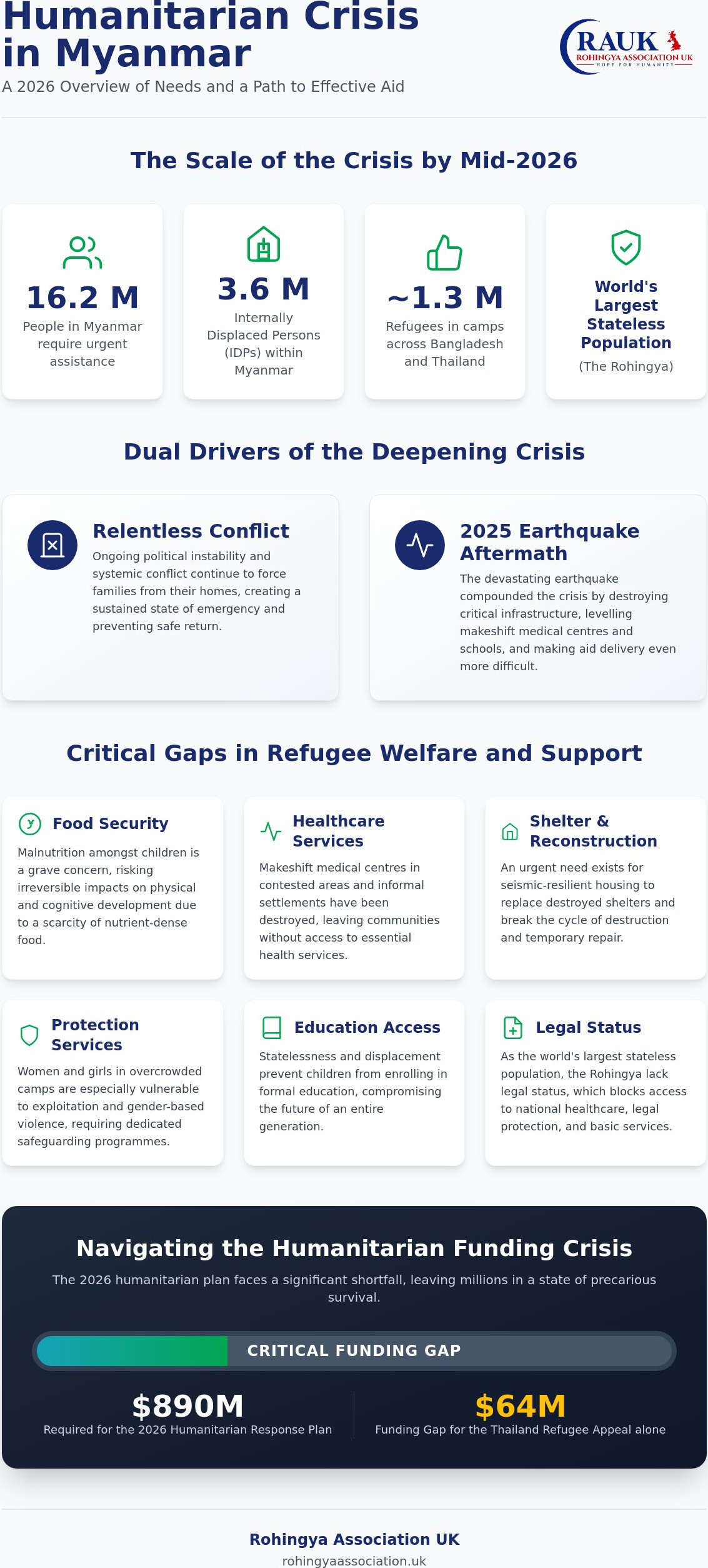
Did you know that whilst 16.2 million people within Myanmar require urgent assistance, the 2026 humanitarian appeal for those seeking refuge in Thailand still faces a staggering 64 million dollar funding gap? Securing effective humanitarian aid for Myanmar refugees remains a critical challenge as global attention is often pulled elsewhere. It’s easy to feel dwarfed by these figures. You might worry that your individual contribution will be lost amongst such vast and pressing needs, or feel uncertain about which organisations are truly delivering aid to the front lines. You want your compassion to translate into tangible change, yet the scale of the crisis often feels insurmountable.
This guide offers a clear, authoritative path through the current landscape, promising to show you exactly how your involvement can restore dignity, safety, and hope. We’ll examine the most trustworthy organisations working on the ground today, explain the latest shifts in international policy, and share how you can help locally in the UK. By moving from awareness to action, we can collectively work towards restoration, protection, and a future where every displaced person is treated with the respect they deserve.
Key Takeaways
- Understand the complex interplay of systemic conflict and the aftermath of the 2025 earthquake which has intensified the displacement crisis across the region.
- Identify the most critical gaps in refugee welfare, specifically addressing the urgent need for food security and the restoration of healthcare services in contested areas.
- Learn how to evaluate and provide effective humanitarian aid for Myanmar refugees to ensure your contributions directly mitigate the impact of international funding cuts.
- Discover practical steps for global and local advocacy, moving from initial education to supporting registered charities with verified access to vulnerable communities.
- Explore the unique value of community-led restoration, where cultural nuance and established trust empower families through integration and long-term support.
The Landscape of Humanitarian Aid for Myanmar Refugees in 2026
The crisis in Myanmar has reached a point of profound, sombre urgency. By mid-2026, the humanitarian landscape is defined by a staggering scale of need, with 16.2 million people within the country requiring assistance and the total number of affected individuals exceeding 18 million. This isn’t just a consequence of political instability; it’s a cumulative catastrophe. The dual impact of relentless conflict and the devastating 2025 earthquake has pushed local resources past their breaking point. Delivering humanitarian aid for Myanmar refugees in this climate is a complex task that demands both immediate crisis intervention and long-term advocacy for those trapped in the margins of society.
Rakhine State and the border regions of Thailand and Bangladesh remain the epicentres of this struggle. In Thailand, 80,155 refugees reside in temporary shelters, whilst the camps in Cox’s Bazar, Bangladesh, house approximately 1.2 million people. These regions are not just geographic locations; they’re symbols of a collective failure to provide a permanent home for the vulnerable. To understand the full human reality of daily existence in these settlements, our comprehensive guide to life inside a Rohingya refugee camp offers an in-depth look at the infrastructure, challenges, and resilience of these communities. The 2026 Humanitarian Needs and Response Plan requires 890 million dollars to address these needs, yet funding gaps persist, leaving millions in a state of precarious survival.
The Impact of the 2025 Earthquake on Displaced Communities
The seismic events of early 2025 introduced a new layer of misery to an already exhausted population. In many informal settlements, the earthquake levelled critical infrastructure, destroying the makeshift medical centres and schools that communities worked so hard to establish. Natural disasters compound the difficulty of aid delivery by making roads impassable and destroying local food stores. There’s now a critical requirement for shelter reconstruction that focuses on seismic-resilient housing. Without these structural improvements, the cycle of destruction and temporary repair will continue, draining resources and denying displaced families the basic security of a stable home.
Forced Displacement and the Statelessness Crisis
Displacement is no longer a temporary event for the 3.6 million internally displaced persons (IDPs) within Myanmar. It’s a way of life. For the Rohingya, this journey is even more perilous because they remain the world’s largest stateless population. This lack of legal status creates a wall between refugees and the services they need to survive. They often can’t access national healthcare, enrol in formal education, or seek legal protection from exploitation.
Looking into the background on the Rohingya crisis shows that these legal hurdles are not accidental; they’re the result of decades of systemic exclusion. In 2026, this statelessness means that even when aid is available, the hyper-prioritised nature of current funding often overlooks the long-term integration needs of these families. True restoration requires more than just food parcels; it demands a concerted effort to tackle the inequality that keeps millions of people in a legal and social limbo.
Just as refugees require legal aid to navigate their status, individuals in other regions often need expert assistance to resolve complex personal challenges; for example, those in the US looking to regain control of their finances can explore Legal fees for bankruptcy representation to find a clear path forward.
Identifying Critical Gaps in Refugee Welfare and Support
The provision of humanitarian aid for Myanmar refugees is a task that requires both immediate action and a deep, long-term commitment. Whilst the world often focuses on the initial shock of displacement, the secondary crises-malnutrition, disease, and the loss of education-are equally devastating. In 2026, we are witnessing a critical juncture where the basic welfare of millions hangs in the balance. The scale of the need is immense, yet the response is often fragmented, leaving significant gaps that threaten the dignity and future of displaced families.
Malnutrition amongst children has reached a point of grave concern. Scarcity of nutrient-dense food is not just about the immediate sensation of hunger; it is about the permanent, irreversible impact on a child’s physical and cognitive development. Without consistent nutritional support and food security programmes, an entire generation faces a future of compromised health and limited potential. This is compounded by the breakdown of protection services. Human Rights Watch reports frequently highlight how women and girls in overcrowded camps remain particularly vulnerable to exploitation and gender-based violence. Safeguarding these individuals requires more than just a physical presence; it demands robust, culturally sensitive protection frameworks that uphold human rights in every tent and settlement.
The Healthcare Crisis: Beyond Emergency Treatment
Beyond the headlines of conflict, the collapse of public health systems in contested areas has left millions without a safety net. Crisis intervention is the immediate provision of life-saving medical care. However, the need for humanitarian aid for Myanmar refugees extends far beyond the operating table. Maternal health services are virtually non-existent in many regions, and routine vaccinations have fallen by the wayside, leaving infants vulnerable to preventable diseases like measles and polio. We must also address the invisible wounds. The psychological impact of trauma is profound, requiring dedicated mental health support to help families navigate the memories of displacement and loss, ensuring that the mind is restored alongside the body.
Education as a Tool for Future Resilience
Education remains one of the most powerful tools for building resilience and agency. In the sprawling camps of Cox’s Bazar, the lack of formal schooling threatens to create a “lost generation” of youth without the literacy or vocational skills needed to rebuild their lives. We believe that youth empowerment is not a secondary goal; it is central to the mission of renewal. By focusing on skills development and vocational training, we can transform a cycle of dependency into one of self-reliance. Providing community support for displaced families means ensuring that every child has a classroom and every young adult has a trade. You can support these vital efforts by joining our mission in tackling inequality and providing crisis intervention.
Navigating the Funding Crisis: Why Your Support Matters
The global humanitarian climate has undergone a troubling shift. We’ve moved from a period of international solidarity to one of scarcity, where competing crises often push the needs of those in Southeast Asia to the periphery. This funding shortfall isn’t just a line on a spreadsheet; it’s a direct threat to the survival of families. As of June 2026, the UN appeal for refugees in Thailand faces a 64 million dollar gap, with only 37 million of the required 101 million dollars funded. When international budgets are slashed, local medical centres are often the first to close their doors. This leaves thousands without access to basic antibiotics, maternal care, or emergency surgery.
You might wonder if a small donation truly makes a difference in the face of such vast deficits. It’s a common concern. However, individual contributions provide a vital buffer against the unpredictability of state-level funding. Community-led organisations often operate with significantly lower administrative overheads than large international agencies. This ensures that a higher percentage of your gift goes directly to providing humanitarian aid for Myanmar refugees, funding the food parcels and medical supplies that keep hope alive. Collective action transforms modest gifts into a powerful shield for the vulnerable. For a deeper understanding of how funding gaps are affecting the world’s largest refugee settlement, our guide to support for Cox’s Bazar refugees outlines the most pressing needs and how community-led organisations are responding.
The Human Cost of Interrupted Aid
Interrupted funding has devastating consequences that ripple through entire communities. The history of the Mae La camp serves as a cautionary tale; when support is withdrawn or delayed, we see a rapid increase in preventable deaths and a decline in basic sanitation. Stable, long-term commitments from donors are essential to prevent these cycles of crisis. Without predictable support, aid workers cannot plan for the future, and families are left in a state of perpetual anxiety, never knowing when their next meal or medicine will arrive. Consistency in giving is what allows for the restoration of dignity.
Sadaqah and Zakat: Faithful Giving in Times of Crisis
For many, giving is not just a choice but a moral obligation rooted in faith. Islamic principles of Sadaqah and Zakat offer a sustainable model for humanitarian relief. By channelling these contributions toward the displaced, we fulfil a duty to support the oppressed and those stripped of their homes. The concept of Sadaqah Jariyah is particularly powerful here. It focuses on building permanent infrastructure, such as clean water systems or educational centres, that provides ongoing benefits. This approach moves beyond temporary relief, creating a foundation for long-term growth and communal empowerment.
Practical Ways to Support Myanmar Refugees Globally and Locally
Action begins with a conscious decision to look beyond the headlines. Providing humanitarian aid for Myanmar refugees is a multi-faceted endeavour that spans from the border camps of Thailand to the streets of our own cities. You can contribute to this mission through a series of deliberate, impactful steps that combine immediate relief with long-term systemic change. This methodical approach ensures that your support is both practical and principled, addressing the root causes of the crisis whilst providing a lifeline to those in the most desperate circumstances.
- Educate: Understanding the historical context of statelessness and the current 2026 funding gaps allows you to speak with authority and empathy.
- Donate: Ensure your financial support reaches those who need it most by choosing registered charities with direct, verified access to the region.
- Integrate: Support local programmes that help families navigate the complexities of settling in a new country with dignity.
- Advocate: Challenge the policies that perpetuate displacement and demand robust human rights protections for all.
By moving from awareness to action, we can collectively work towards a future where displaced families are no longer defined by their loss, but by their potential for renewal. Every effort, no matter the scale, contributes to a broader mission of restoration and protection.
Supporting Refugees in the UK: The Bradford Connection
Integration is not a passive process; it’s an active partnership that honours the resilience of the individual. In centres like Bradford, the focus is on providing the tools for self-reliance and long-term integration. English language classes are essential; they give new arrivals the agency to navigate their new environment and advocate for their own needs. Housing guidance ensures that families settle with dignity, moving from temporary accommodation into stable, safe homes. Cultural events also play a vital role. They are not merely social gatherings; they are essential for preserving heritage, fostering a sense of belonging, and maintaining a communal bond amongst those who have lost so much.
Advocacy: Being a Voice for the Voiceless
Advocacy is about using your influence to amplify the voices of those who have been silenced by conflict and neglect. Joining awareness campaigns is a powerful way to promote justice and keep the crisis in the public eye. Social media, when used intentionally, can highlight human rights violations and mobilise global support in real-time. Collective action remains our most effective tool for influencing government policy. When we speak together, we create a momentum that is impossible to ignore, pushing for a future where protection, restoration, and growth are guaranteed for every refugee. If you are ready to take the next step, you can support our advocacy and awareness campaigns to help drive systemic change.
The RAUK Mission: Community-Led Aid and Restoration
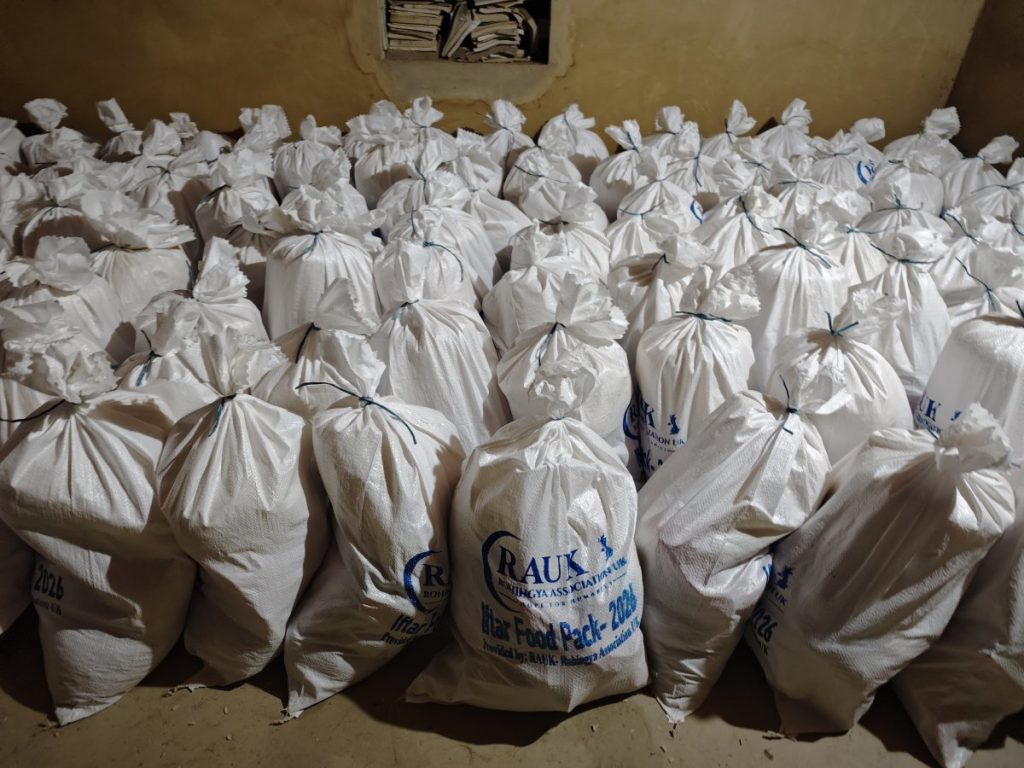
The Rohingya Association UK (RAUK) stands as a principled leader in the field of refugee support, acting as both a protective shield and a guiding hand for those who have been displaced. As a community-led organisation, we possess an inherent understanding of the cultural nuances and historical contexts that shape the lives of the people we serve. This position of trust allows us to deliver humanitarian aid for Myanmar refugees with a level of precision and empathy that external agencies often struggle to replicate. We don’t just provide assistance; we walk alongside our community, ensuring that every intervention is rooted in respect and a deep sense of shared identity.
Our mission is built upon a sophisticated three-pillar approach designed to address the full spectrum of the refugee experience. This includes Crisis Aid for immediate survival, Integration to foster self-reliance in new homes, and Advocacy to drive the systemic changes required for long-term justice. By combining these elements, we create a pathway for renewal that moves beyond temporary relief toward permanent restoration. We invite you to become a partner in this mission, helping us to turn the tide of scarcity into a future of possibility and growth.
Direct Impact: From Cox’s Bazar to Bradford
RAUK’s reach extends from the sprawling settlements of Cox’s Bazar to the vibrant community of Bradford, creating a bridge of support that spans continents. In Bangladesh, our efforts are focused on the fundamental requirements of survival, providing essential food parcels and facilitating access to healthcare for those trapped in overcrowded conditions. For a deeper understanding of what daily life looks like for the over 1.19 million people living in a Rohingya refugee camp and the resilience they demonstrate, our comprehensive guide explores the realities on the ground. Simultaneously, our youth empowerment programmes in the UK are transforming lives by providing young refugees with the skills and confidence to lead. We are committed to absolute financial transparency; every pound is utilised to maximise community benefit, reducing administrative overheads to ensure that your contributions have the greatest possible impact on the ground.
Identity is the foundation upon which resilience is built. For a population that has faced systemic attempts at erasure, preserving cultural heritage is a powerful form of humanitarian resistance. Maintaining personal history is a vital part of this restoration; for those who value keeping family stories alive through physical tokens, you can discover VIP PRINTS 4U for sentimental jewellery and personalised gifts that honour your heritage.
Identity is the foundation upon which resilience is built. For a population that has faced systemic attempts at erasure, preserving cultural heritage is a powerful form of humanitarian resistance. Islamic community events are central to this effort, providing a sacred space where bonds are maintained and traditions are passed to the next generation. These gatherings are not merely social; they are essential for the psychological well-being of the diaspora, offering a sense of belonging whilst navigating the challenges of integration. By protecting our heritage, we protect our future. We remain steadfast in our duty to act as a dedicated partner to every displaced family. Support our mission to provide humanitarian aid and restore hope.
A Path Toward Collective Renewal
The challenges facing displaced families in 2026 are immense, yet they are not insurmountable. We’ve explored the critical landscape of the crisis, the systemic gaps in healthcare and education, and the unique efficacy of community-led initiatives. Providing humanitarian aid for Myanmar refugees requires more than just a fleeting emotional response; it demands a stable, long-term commitment to restoration, protection, and growth. By focusing on cultural nuance and direct impact, we can move from mere survival toward true empowerment.
The Rohingya Association UK (Registered Charity 1211433) operates with the confidence of lived experience, delivering direct projects in the UK, Myanmar, and Bangladesh. Your involvement acts as a protective shield for the vulnerable, ensuring that dignity, safety, and heritage are preserved whilst basic needs are met. Together, we can tackle inequality and build a foundation for lasting change. Donate now to support humanitarian aid and empower Rohingya families. Your agency is the catalyst for renewal; your compassion is the bridge to a brighter future.
Frequently Asked Questions
How can I ensure my donation reaches Myanmar refugees directly?
You can ensure your contribution reaches its destination by channelling support through community-led organisations that maintain direct, established networks within the affected regions. The Rohingya Association UK operates on a model of lived experience, channelling funds into specific projects across Bangladesh and Myanmar to bypass excessive administrative layers. This approach ensures that humanitarian aid for Myanmar refugees translates into tangible resources like food parcels and medical supplies for those in the most precarious circumstances.
What is the most urgent need for refugees in 2026?
Food security and the reconstruction of seismic-resilient housing are the most pressing requirements in 2026. Following the catastrophic 2025 earthquake, many informal settlements were levelled, leaving families without protection from the elements. Addressing moderate to severe malnutrition amongst children remains a critical priority, as the collapse of local supply chains has made access to nutrient-dense food increasingly difficult for displaced populations.
Can I volunteer with the Rohingya Association UK in Bradford?
We welcome individuals who wish to contribute their time and skills to our mission in Bradford. Volunteers play a vital role in our integration programmes, assisting with English language classes and organising cultural events that preserve our community’s heritage. If you’re committed to tackling inequality and fostering a sense of belonging for new arrivals, your participation can provide essential support during the settlement process.
Is it safe to send humanitarian aid to contested areas in Myanmar?
Sending aid to contested areas involves significant logistical and security risks, which is why we prioritise partnerships with local actors who understand the terrain. These community-led networks are often the only ones capable of navigating checkpoints and reaching internally displaced persons (IDPs) in remote regions. Whilst the environment is volatile, these established local connections allow for the delivery of life-saving crisis intervention where international agencies may face restricted access.
How does the Rohingya Association UK support refugee integration in the UK?
The Rohingya Association UK facilitates integration through a holistic programme that addresses both practical needs and communal identity. We provide English language tuition to empower individuals with agency, alongside housing guidance to ensure families settle with dignity. By hosting cultural and community events, we help preserve the heritage of our people, ensuring that new arrivals feel rooted and supported whilst they build their new lives in the UK.
What is the difference between Sadaqah and Zakat in the context of refugee aid?
Zakat is an obligatory annual payment of 2.5 per cent of one’s qualifying wealth, specifically intended to support the poor and oppressed, including refugees. In contrast, Sadaqah is a voluntary act of charity that can be given at any time. When channelling these funds toward humanitarian aid for Myanmar refugees, Sadaqah Jariyah is often used to build permanent infrastructure, such as clean water systems, providing an ongoing legacy of restoration and care.
How did the 2025 earthquake change the aid requirements in the region?
The 2025 earthquake fundamentally altered the humanitarian landscape by destroying the fragile infrastructure of existing refugee settlements. This disaster necessitated an immediate shift toward large-scale shelter reconstruction and the implementation of seismic-resilient building standards. Beyond physical structures, the earthquake compounded the healthcare crisis by destroying makeshift clinics, requiring a renewed focus on restoring basic medical services and maternal health support in devastated border regions.
Why are the Rohingya people considered the most persecuted minority in the world?
The Rohingya are described as the most persecuted minority because of decades of systemic exclusion and the denial of citizenship within Myanmar. This stateless status leaves them without legal protection, making them vulnerable to mass displacement, restricted movement, and the denial of basic human rights. Their struggle is not merely a modern conflict but a long-term campaign of marginalisation that has forced millions to seek safety in neighbouring countries like Bangladesh and Thailand. For those wishing to take meaningful action, our comprehensive guide to support for Cox’s Bazar refugees details how effective, dignity-centred aid can make a lasting difference for these communities.