
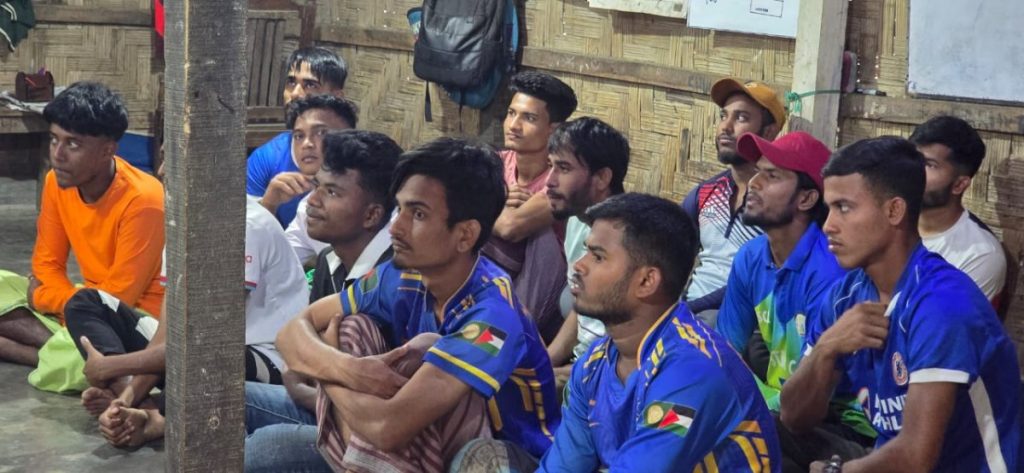
What if the most potent tool for rebuilding a life isn’t found in a policy document or a bureaucratic form, but in the quiet strength of a shared meal and a familiar tongue? With the UN projecting that 136 million people will be forcibly displaced or stateless by the end of 2026, the need for deep, local connection has never been more urgent. You likely recognise the exhaustion of navigating complex local systems without a support network to lean on. Effective community bonding for refugees is not a luxury; it’s a vital act of restoration that protects heritage, fosters resilience, and secures a sense of belonging.
You deserve more than just a place of safety; you deserve a community where your identity is celebrated rather than erased. This guide provides a clear framework for social inclusion that balances the need for integration whilst performing the essential work of cultural preservation. By reading on, you’ll discover strategies to improve mental health through collective support, learn how to organise networks that restore agency, and find a path toward a future defined by growth, dignity, and shared strength.
Key Takeaways
- Learn how building social capital through shared experiences provides a vital buffer against isolation and strengthens long-term mental health.
- Discover why preserving cultural heritage and the Rohingya language acts as a catalyst for successful integration rather than a barrier to it.
- Understand the unique advantages of community-led initiatives in overcoming the trust deficit often felt towards official institutions and large NGOs.
- Access a practical framework for facilitating community bonding for refugees that prioritises safe spaces, mutual support, and the restoration of agency.
- Explore the Bradford model of resettlement to see how structured advocacy and cultural events create a template for communal resilience and growth.
Understanding the Vital Role of Community Bonding for Refugees
Displacement is more than a geographic shift; it’s a profound fracturing of the social fabric that sustains human dignity. For many, the transition to a host country is marked by a crushing silence, where the lack of familiar faces and shared histories leads to a deep, debilitating isolation. Community bonding for refugees provides the essential social capital required to mend this rift. It involves the cultivation of mutual support networks amongst those who share the experience of displacement, creating a space where collective identity acts as a protective shield against the hardships of resettlement. These bonds aren’t merely social; they’re structural, providing the emotional and practical scaffolding needed to survive and eventually thrive in an unfamiliar environment.
It’s vital to distinguish between “bridging” and “bonding” in the context of integration. Whilst bridging focuses on connecting refugees with the local host population, bonding refers to the internal ties within the refugee community itself. True resilience begins with bonding. Without a solid foundation of internal support, the effort to bridge into a new society can feel overwhelming and performative. Bonding restores the sense of being seen, heard, and understood without the need for constant translation or explanation. It creates a sanctuary of shared understanding where the burden of displacement is distributed across many shoulders rather than carried by one.
The Psychology of Belonging in a New Land
Home is rarely just a physical structure; it’s a social construct built upon shared values, language, and rituals. In the wake of displacement, the concept of home must be reconstructed through communal dialogue. When individuals gather in dignified, respectful environments that honour their history, shared trauma is gradually transformed into shared strength. This process is a prerequisite for mental health, as it validates the individual’s past whilst providing a stable platform for their future.
Why Traditional Resettlement Often Misses the Mark
Standard institutional aid frequently operates on a top-down model that prioritises service delivery over the restoration of agency. Whilst the Community Sponsorship scheme has made strides in involving local citizens, many bureaucratic systems still inadvertently treat refugees as passive recipients of aid. This “service delivery” approach can strip individuals of their autonomy, leaving them dependent on distant systems. In contrast, community-led organisations like the Rohingya Association UK (RAUK) focus on community building. By shifting the power back to the people, RAUK ensures that community bonding for refugees is a self-determined process. This approach recognises that the community itself is the greatest expert on its own needs, bridging the gaps that large, impersonal NGOs often leave behind.
The Social Architecture of Resilience: Heritage and Faith
Heritage is often incorrectly framed as a relic of the past that must be shed to facilitate integration. On the contrary, a secure cultural identity provides the psychological stability required to engage with a new society from a position of strength. For those who have lost their homes, their history becomes their most portable and precious asset. Community bonding for refugees is most effective when it is rooted in these shared traditions, allowing individuals to navigate their new environment with confidence rather than an identity crisis. This internal cohesion is the foundation upon which all other forms of social participation are built.
Language serves as the primary vessel for this heritage. For the Rohingya community, maintaining their native tongue is essential for Strengthening Intergenerational Bonds. When children lose the ability to communicate fluently with their elders, the transmission of wisdom, values, and history is severed. This creates a secondary displacement within the family unit itself. Preservation of language ensures that the story of a people survives the journey across borders, maintaining a thread of continuity that links the past to a hopeful future.
Preserving Identity in the Diaspora
In the diaspora, cultural events serve as a vital defence against the “erasure” of identity amongst displaced youth. Communal gatherings centred on traditional art, food, and storytelling do more than provide nostalgia; they validate the existence of a culture that has faced systematic attempts at destruction. These spaces allow younger generations to take pride in their roots whilst building a future in the UK. For a deeper exploration of these efforts, our guide on community support for displaced families details the specific methodologies used to restore hope through heritage work.
Faith as a Stabilising Force
Faith acts as a foundational pillar in the social architecture of resilience. For many refugees, Islamic values of charity, brotherhood, and hospitality provide a familiar and robust framework for social interaction. Communal prayer and religious holidays like Eid provide a predictable rhythm to life in the UK, offering moments of collective joy that transcend the immediate stresses of resettlement. Mosques and community centres function as more than just places of worship; they are vital hubs where social, emotional, and practical aid are seamlessly integrated. This tripartite relationship between faith, heritage, and social stability ensures that community bonding for refugees remains a holistic process. You can find a place within this protective network by engaging with our community integration programmes.
Overcoming Barriers: Why Community-Led Initiatives Excel
Large-scale humanitarian interventions often possess significant financial resources and administrative reach, yet they frequently lack the granular cultural nuances required to foster authentic community bonding for refugees. Whilst international NGOs are essential for crisis response, the long-term work of social restoration is best performed by those who are deeply embedded in the local landscape. Community-led initiatives excel because they move beyond the transactional nature of aid. They prioritise relationships over reports, ensuring that support is not just delivered but is felt as a genuine act of solidarity. This proximity allows for a level of care that distant institutions simply cannot replicate.
Overcoming the trust deficit between displaced people and official institutions is perhaps the greatest challenge of resettlement. In the UK, the introduction of the new Immigration and Asylum Bill in June 2026, which proposes that some refugees repay accommodation costs, has only deepened these anxieties. When the state is perceived as a source of restriction rather than protection, refugees naturally turn to their own for safety. Local groups provide a sanctuary where individuals can speak freely, seek advice without fear, and begin the process of healing. The efficacy of these programmes is rooted in Rohingya community leadership, where the design of every service is informed by those who have lived the experience of displacement themselves.
A common objection suggests that community-led organisations lack the professional capacity of their larger counterparts. However, professionalism is not defined by the size of an office, but by the effectiveness of the outcome. As a registered charity (1211433), RAUK combines rigorous administrative standards with an unmatched cultural competence. We don’t just provide services; we facilitate community bonding for refugees by creating environments where agency is restored and voices are heard.
The Power of Lived Experience
Leaders who have shared the refugee journey are best positioned to foster trust and provide a guiding hand. In Bradford, RAUK’s presence ensures that newcomers aren’t left to navigate the complexities of the UK alone. Peer-to-peer mentoring becomes a vital tool for understanding healthcare, housing, and social expectations. This shared history transforms a daunting bureaucracy into a manageable path, providing the emotional security needed to take the first steps toward a new life.
Breaking Down Language and Bureaucratic Walls
Language acquisition is often framed as a purely educational goal, but English classes serve as vital social mixers. They provide a structured space for communal knowledge sharing, where students discuss everything from healthcare access to local employment. By engaging the next generation through refugee youth empowerment programs, we ensure that these bureaucratic walls are dismantled for the long term, fostering a community that is both self-reliant and deeply connected.
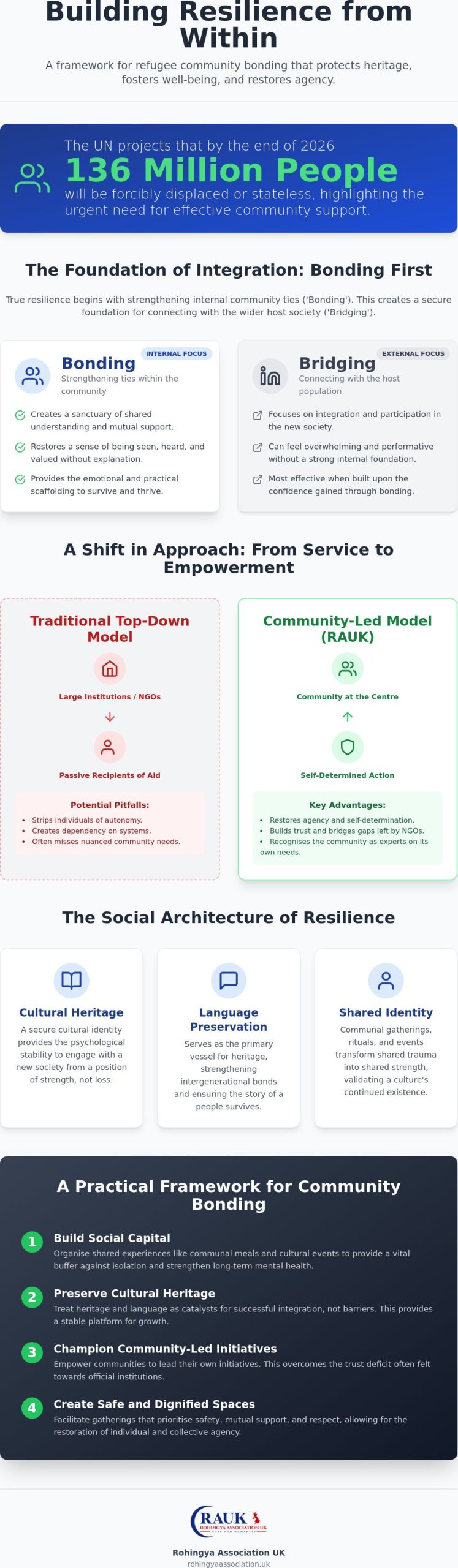
How to Cultivate Strong Community Bonds: A Practical Framework
Building a resilient social network is not an accidental occurrence; it requires a deliberate, methodical approach that prioritises the dignity of every participant. Effective community bonding for refugees requires a shift from sporadic assistance to consistent, structured engagement. This framework moves beyond the provision of basic needs to address the psychological and social hunger for belonging. By establishing regular, predictable rhythms, such as weekly language classes or monthly cultural gatherings, organisers can create a reliable environment where trust is earned slowly and maintained through shared experience.
Step 1: Establishing Cultural Safety
The foundation of any successful initiative is the creation of a sanctuary where identity is respected, protected, and celebrated. Cultural safety is the absence of prejudice in communal interactions. Organisers must select venues that are not only physically accessible but also emotionally welcoming to the specific demographic. Choosing a familiar community centre or a local mosque can reduce the initial anxiety of participation, ensuring that the environment itself encourages openness rather than apprehension.
Step 2: Facilitating Shared Activity
Side-by-side participation in practical tasks often lowers the barriers to conversation more effectively than formal dialogue. Activities such as community gardening, cooking classes, or sports provide a neutral ground where relationships can form naturally through shared labour. These tasks facilitate the development of soft skills, such as teamwork and problem-solving, which contribute to a sense of collective progress. When individuals work together toward a tangible goal, the shared success reinforces their bond and restores a sense of communal agency.
Step 3: Creating Feedback Loops
Resilience is strengthened when every member of the community feels they have a voice in its direction. It is essential to involve participants in the decision-making process for future events, ensuring that programmes remain relevant and responsive. This requires a conscious effort to listen to the “quiet voices” who may be less likely to speak in large groups. Digital tools, such as WhatsApp groups and social media, serve as vital bridges between physical events, maintaining the connection and ensuring that the communal bond remains active in the intervals between gatherings. To implement these strategies in your own area, you can begin by joining our community support network and accessing our local resources.
A comprehensive bond must also bridge the generational divide. By intentionally including both youth and elders in these activities, we ensure that the community remains a cohesive whole. Elders provide the wisdom and historical context that ground the community, whilst younger members bring the energy and adaptability required to navigate a new land. This intergenerational synergy is the ultimate safeguard against isolation.
Restoring the Rohingya Spirit: Join the RAUK Community
The journey from isolation to integration requires more than just the passage of time; it requires a dedicated partner who understands the weight of the past and the potential of the future. The Rohingya Association UK (RAUK) stands as the primary hub for community bonding for refugees in Britain, acting as both a protective shield and a guiding hand for those rebuilding their lives. Based in Bradford, a vital centre for resettlement, our organisation is deeply rooted in the values of duty, resilience, and communal pride. We invite you to join us in this mission of restoration. Whether you are a member of the diaspora seeking connection or a supporter looking to make a difference, your presence strengthens the collective bond that sustains us all.
We believe that unity is the only viable response to the fracturing experience of displacement. By participating in our upcoming cultural and Islamic events in Bradford, you contribute to a social architecture that resists erasure. These gatherings are more than social dates; they are essential acts of preservation where the Rohingya spirit is celebrated with dignity and respect. It’s through these shared moments of prayer, meal-sharing, and storytelling that a new sense of home begins to take root.
Supporting Local Integration in Bradford
Our work in Bradford serves as a model for how structured support can transform the refugee experience from one of passive reception to active agency. We assist families in settling, finding their voice, and securing their place within the local area. Our success is visible in our skills development programmes, which provide the practical tools necessary for independence and social stability. This local effort is seamlessly connected to our global advocacy work. By participating in RAUK’s mission, community members feel part of a larger justice movement. They aren’t just recipients of aid; they are principled leaders fighting for systemic change.
How You Can Make a Difference Today
The strength of community bonding for refugees depends on the sustained commitment of those who believe in the possibility of renewal. There are clear, impactful pathways for you to contribute to this vital work today. Your support allows us to maintain the communal infrastructure that protects our heritage and provides essential humanitarian aid. Small acts of solidarity, when gathered together, create a formidable force for growth.
- Participate: Attend our community events to stand in solidarity and share in our cultural pride.
- Volunteer: Share your professional expertise in education or youth empowerment to help us expand our reach.
- Donate: Provide the financial resources needed to sustain our settlement and integration services.
In our tradition, these contributions represent Sadaqah Jariyah; this is a form of continuous charity that builds a legacy of protection, growth, and restoration. We invite you to visit the Rohingya Association UK homepage to start your journey of support. Together, we can build a future where every family feels they truly belong. Resilience is a collective effort; unity is our greatest strength.
Building a Future Rooted in Unity and Belonging
Resilience is not a solitary endeavour; it is a communal achievement. We’ve explored how the preservation of heritage and the strength of shared faith provide the essential scaffolding for a new life. Effective community bonding for refugees transforms the trauma of displacement into a shared journey of restoration, ensuring that no individual is left to navigate unfamiliar systems alone. By prioritising lived experience and local leadership, we move beyond the limits of traditional aid toward a model of true empowerment.
The Rohingya Association UK (Registered Charity: 1211433) remains steadfast in its commitment to this mission. As a community-led organisation rooted in lived experience, we’ve operated vital support programmes in Bradford since our founding to ensure our people don’t just survive, but flourish. Every meal shared, every language class attended, and every cultural event organised is a brick in the foundation of a new home. We invite you to be part of this enduring legacy. Please support our mission and help us build a stronger community for Rohingya refugees today. Together, we can turn the hope of belonging into a lasting reality.
Frequently Asked Questions
How does community bonding improve refugee mental health?
Community bonding for refugees improves mental health by directly addressing the crushing social isolation that often follows displacement. By creating a network of mutual support, individuals can share their experiences in a safe environment, which helps to process trauma and reduces the risk of long-term psychological distress. These connections restore a sense of agency and belonging, providing the emotional stability required to navigate the complexities of a new life in Britain.
Can cultural preservation hinder a refugee’s integration into British society?
Cultural preservation is a foundation for integration rather than a barrier to it. When individuals feel secure in their own identity and heritage, they possess the psychological confidence needed to engage with British society from a position of strength. Attempting to erase one’s past often leads to identity crises and social withdrawal. In contrast, a well-grounded sense of self allows refugees to contribute more effectively to their local communities whilst maintaining their dignity.
What are the best types of social events for displaced families?
The most effective social events for displaced families are those centred on shared, practical activities such as community gardening, cooking classes, or sports. These side-by-side tasks lower the barriers to conversation and allow relationships to form naturally through collective effort. Such events provide a neutral ground where families can build trust and experience a sense of progress, which is vital for fostering long-term resilience and communal cohesion.
How can local residents in Bradford support the Rohingya community?
Local residents in Bradford can support the Rohingya community by volunteering their professional skills, providing financial donations, or participating in advocacy and awareness campaigns. Engaging with community-led charities like the Rohingya Association UK ensures that support is directed where it’s most needed. By attending cultural and Islamic events, residents also help to create a more inclusive and welcoming local environment, directly contributing to the success of regional resettlement efforts.
Why is community-led leadership important for refugee organisations?
Community-led leadership is essential because it bridges the trust deficit that often exists between refugees and official institutions. Leaders with lived experience of displacement possess a unique understanding of the cultural and social challenges their community faces, ensuring that programmes are both relevant and respectful. This model of community bonding for refugees restores agency to the people themselves, transforming them from passive recipients of aid into active architects of their own future.
How do Islamic community events help in the resettlement process?
Islamic community events facilitate the resettlement process by providing a familiar framework of values, such as charity, brotherhood, and hospitality. Religious holidays and communal prayers offer a predictable social rhythm that helps to anchor individuals in their new surroundings. Mosques and community centres serve as vital hubs where spiritual support and practical aid are combined, creating a holistic environment that addresses both the emotional and material needs of displaced families.
What role does the Rohingya language play in community bonding?
The Rohingya language is the primary vessel for cultural identity and is vital for maintaining intergenerational bonds within families. When younger generations retain their native tongue, they can continue to receive wisdom and history from their elders, preventing a secondary sense of displacement. Language preservation ensures that the community’s unique heritage is not lost during the integration process, acting as a thread of continuity that links the past to the present.
How can I volunteer with the Rohingya Association UK?
You can volunteer with the Rohingya Association UK by visiting our website to explore current opportunities in education, youth empowerment, or advocacy. We welcome individuals who can offer English language support, mentoring, or assistance with our cultural events in Bradford. Your contribution directly impacts our ability to provide settlement and integration services, helping us to build a more resilient and connected community for all Rohingya families in the UK.