
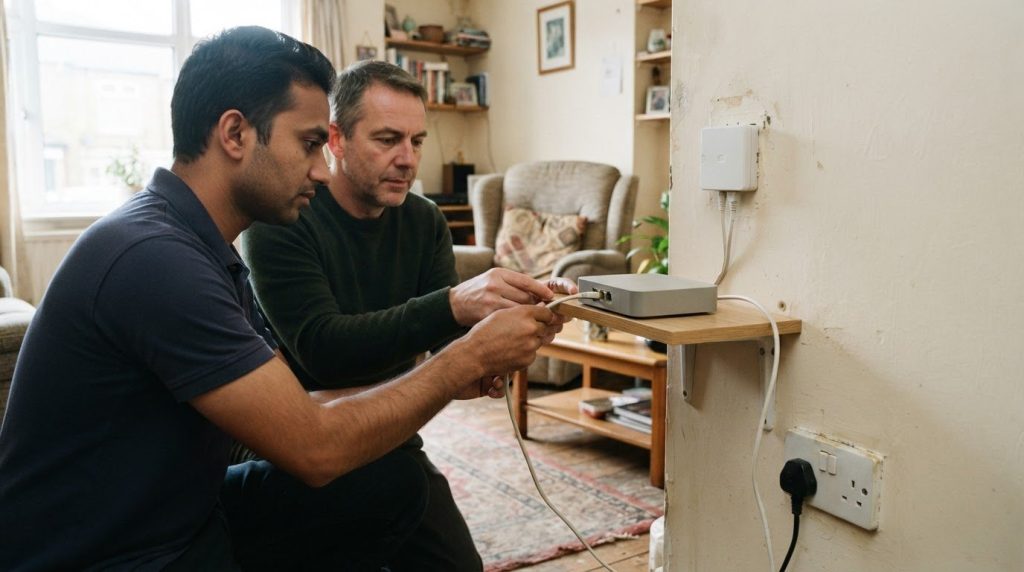
A connection alone does not guarantee meaningful participation. Digital Inclusion depends on whether people can access technology and use it in everyday life, not simply whether they have an internet connection.
Access, affordability, confidence and accessible services all shape that experience. Geography, income, education and public policy can widen or narrow opportunities, so Digital Inclusion depends both on individual needs and on the conditions communities face.
This article explains how digital inclusion differs from digital equity, and how skills, circumstances and policy affect access. It outlines common barriers to participation and how community action can advance Digital Inclusion.
Key Takeaways
- Understand why meaningful online participation depends on more than having an internet connection or device.
- See how digital literacy and digital ability affect people’s confidence, safety and opportunity online.
- Distinguish digital inclusion from digital equity, and recognise how the ideas complement one another.
- Explore how geography, income and public policy can shape access, and what advocacy can do to address barriers.
- Learn how Rohingya Association UK supports communities in Bradford and beyond through integration, education and advocacy.
What is Digital Inclusion?
Digital inclusion means people can access and use information and communications technologies. Internet access, affordable devices, practical support and broadband infrastructure all shape that participation. Digital Inclusion also depends on whether communities can use these resources in ways that meet their needs.
Affordable Internet Access
Affordable internet access means people can afford both a usable connection and a suitable device. Costs matter because online learning, job applications and public information increasingly rely on reliable access. A household may have broadband coverage nearby but still struggle to afford a plan or computer. To assess affordability, consider both ongoing connection costs and the equipment needed to use services effectively.
Equitable Access to Technology
Equitable access means people and communities can use information and communications technologies that meet their needs. That includes reliable internet, suitable devices and accessible digital services, rather than a connection that exists only on paper. For example, someone using an older device may have difficulty completing online forms. Removing barriers helps people take part in education, community life and economic opportunities, and access information online.
Libraries as Digital Hubs
Libraries across the UK can act as local hubs where people use computers, connect to the internet and build digital skills. They can combine equipment with guidance, helping people complete online forms and understand each step. A library computer can support access to public services, learning and job applications, while staff support can help users develop confidence with digital tasks.
Broadband Infrastructure
Broadband infrastructure is the network and equipment that deliver internet connections to homes and community locations. Its reach determines whether a connection is available, while service quality affects whether online tasks work reliably. Rural distances, building access and local network capacity can all shape practical use. Infrastructure planning needs to consider where networks reach, which communities remain underserved and whether people can afford a connection once it is available.
Sharing Digital Access Updates
Digital access newsletters and meetings give communities across the UK ways to share information, identify barriers and discuss priorities. For example, a Bradford library, council or community organisation can explain where residents can use public computers and how to join a digital skills session. These updates help communities follow discussions and carry information into local conversations. Such coordination supports Digital Inclusion by linking public discussion with practical community needs.
Digital literacy and digital ability
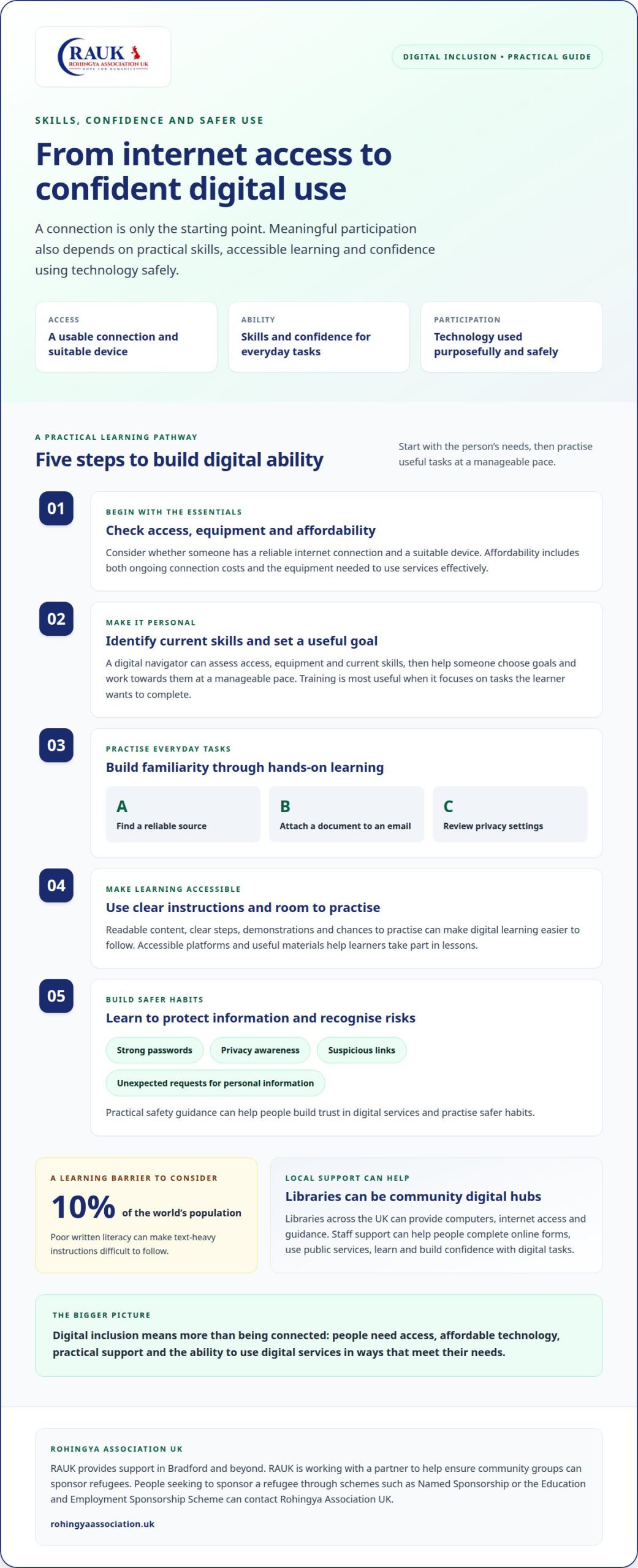
Digital literacy is the knowledge to find, understand, assess and communicate information using digital tools. Digital ability also involves confidence and practical skills, such as setting up an account, completing an online form or recognising a suspicious message. Someone may have internet access but still find these tasks difficult. Digital Inclusion is about using technology purposefully, not just being connected.
Training is most useful when it focuses on tasks people want to complete. A learner might practise finding a reliable source, attaching a document to an email and reviewing privacy settings. This builds familiarity through practical use, rather than treating technology as separate from daily life. Digital navigators can assess a person’s access, equipment and current skills, then help them set goals and work towards them at a manageable pace.
Education programmes also need accessible learning materials. If an e-learning platform is difficult to use, learners may not be able to access its lessons. Clear instructions, readable content and opportunities to practise can support steady progress. Accessible platforms and useful content make digital literacy education more effective. They also help ensure Digital Inclusion strategies consider the learning experience, not just whether a course is available.
Safety is an important part of digital education. Someone who can use a search engine may still need guidance on strong passwords, privacy and suspicious links. Cybersecurity awareness helps people practise safer habits and build trust in digital services. For example, a session can teach learners to recognise an unexpected request for personal information before they encounter one on their own.
Literacy outside the digital world can affect these experiences. Poor written literacy remains a barrier for 10% of the world’s population, making text-heavy instructions difficult to follow. Demonstrations, plain language and chances to practise can make learning more accessible. Digital Inclusion is more meaningful when programmes consider different communication needs instead of assuming everyone reads and processes information in the same way.
UK-focused digital inclusion measures consider access, affordability and digital ability together. This approach shows why device access alone cannot indicate whether someone uses technology confidently or effectively. Skills training can widen opportunities in education, employment and social engagement, especially when learners practise tasks relevant to their goals. For a community-focused perspective on learning and youth participation, explore refugee education and youth empowerment.
Digital inclusion and digital equity definitions
Digital inclusion describes efforts to widen meaningful access and participation. Digital equity is the fair condition those efforts aim to achieve.
Inclusion and Equity Definitions
Digital inclusion is the process of connecting people with technology, skills and support; digital equity means having a fair capacity to participate fully. In the UK, this distinction matters when organisations assess whether access programmes build people’s ability to take part in society, democracy and the economy, rather than simply providing a connection.
For example, a community programme might combine internet access with accessible devices, digital skills support and relevant learning. Each element addresses a different barrier. A connection without suitable equipment may not help someone complete an online task. Equipment without guidance may leave them unsure how to use it. Digital equity gives organisations a broader goal: enabling participation in ways that reflect people’s circumstances.
Equity and the Digital Divide
The digital divide is the gap between people who can participate effectively using technology and those who face barriers. Digital equity addresses the conditions that create or deepen that divide. This matters because unequal access often reflects existing social, cultural and economic inequalities, and can magnify their effects in education, work and civic life.
Consider an online public service. Someone with a reliable connection, a suitable device and confidence can complete its steps; a person without any one of these may be excluded. The digital divide is not simply about who uses the internet. It is also about whether technology meets people’s needs and whether they can participate on fair terms.
Equity plans turn this broader goal into practical priorities. A useful plan considers internet access, affordable technology, digital literacy and inclusive technology policies together. For instance, an organisation can identify where connection barriers occur, then align training and accessible service design with those needs. Strong plans also explain how progress will be assessed and how affected communities can contribute to decisions.
In the UK, digital inclusion funding and public-service decisions can shape local programmes, organisational capacity and the support available to communities. For example, a UK local organisation may need to adapt its plans when funding priorities or service requirements change. These developments show how policy choices affect the practical work of advancing digital equity.
Technology policy also shapes how people connect and participate. Broadband rules and data privacy laws can affect access, consumer information and how technology companies approach inclusion. Because policy shapes the environment around individual programmes, advocacy can call for accessible services, fair investment and better coordination. Addressing the digital divide requires local action and policies that support participation over time.
Internet use differences by geography and income
Digital exclusion can limit access to education, jobs, healthcare and civic life. A learner may miss online course materials, while a jobseeker may struggle with digital applications. Patients can face barriers to online health information, and residents may miss digital public consultations. These risks arise when internet access, affordability, skills or confidence are lacking.
Geography affects whether households can connect reliably in the UK. A rural community may face limited coverage or greater distances from support, while an urban household may have a different obstacle, such as difficulty affording service or finding an accessible device. Distance, network coverage and local infrastructure can all influence broadband development and connection quality. These differences show why UK digital inclusion planning needs to consider local circumstances rather than treating every household’s experience as the same.
Income also shapes household internet use in the UK. A household on a lower income may live in an area with broadband coverage but still struggle to pay for a suitable connection or device. This shows why availability alone cannot explain access. Monthly service and equipment costs can remain difficult to manage, particularly when a household relies on one device for several essential tasks.
Education and income can intersect with internet use in the UK. Someone with limited experience of formal education may find online services and text-heavy instructions difficult to navigate, while a household with fewer financial resources may have less access to suitable devices or reliable connectivity. These overlapping barriers show why digital inclusion work needs to consider people’s circumstances rather than access alone.
Skills, confidence and safety concerns can create further obstacles for people in the UK. Someone may avoid online services because they find digital tasks frustrating, have difficulty using a device or worry about spam, spyware and hackers, even when a connection is available. Clear guidance and accessible design can help address these practical barriers.
Affordable technology and internet plans matter because households need both a connection and equipment to use it. The barrier might be the service cost, the price of a suitable device or the cost of replacing equipment that cannot run essential services. For example, a household sharing one older device may find online learning and job applications harder to manage.
Government and community planning can address these issues by examining coverage, affordability and digital ability together. A useful local assessment identifies where broadband is weak, which groups face cost barriers and what support could improve awareness and confidence. These findings can guide infrastructure development, accessible services and practical learning. They give a clearer picture of who can participate, where exclusion occurs and which barriers need attention first.
Digital inclusion advocacy and policy
Advocacy turns barriers identified by individuals and communities into priorities for councils, public bodies and other decision-makers across the UK. Effective approaches connect lived experience with practical proposals, such as accessible services, affordable technology and digital skills support. A local organisation might document where residents struggle with online forms and share those findings with service designers. This brings community participation into policy development, rather than leaving it as an afterthought.
Good policy needs evidence as well as commitment. The United Nations says gaps should be addressed through better metrics, data collection and coordination of initiatives. Local programmes can track whether people gain usable access, not just whether equipment is distributed. Libraries, community organisations and public agencies can share findings, identify overlapping barriers and direct resources towards unmet needs.
Coordination matters because digital exclusion touches several public services. During the COVID-19 pandemic in 2020, increased telehealth use helped establish digital access and literacy as recognised social determinants of health. A person unable to use online health services may face a different barrier from someone excluded from education or civic information. Strategies work best when health, education and community partners consider these distinct needs together.
Infrastructure policy can also make access part of public planning in the UK. Local authorities, housing providers and developers can consider broadband infrastructure when homes are planned or refurbished. This connects housing development with the physical capacity to get online. Wiring alone does not resolve affordability, equipment or skills barriers, but it can prevent infrastructure from being overlooked when homes are built.
Advocacy also relies on ongoing exchange between practitioners and decision-makers. UK digital inclusion networks and local events can bring together community organisations, libraries, academics, internet service providers, councils and policymakers. This gives local organisations a place to raise community concerns alongside wider policy questions. Shared discussion can reveal where programmes overlap, who remains underserved and which public changes could make access more practical.
For a strategy to be accountable, it needs clear goals, defined responsibilities and community feedback. A UK local authority could publish progress on broadband access, accessible digital services and training, then invite residents to identify remaining barriers. The United Nations’ goal is to close the digital divide by 2030 through internet and mobile technology access for all. That ambition requires coordinated action across policy, infrastructure and social support.
Advocacy is most useful when people affected by exclusion help shape the response. Awareness campaigns can bring barriers into public discussion and build support for inclusive decisions. Support digital access advocacy by helping make community needs visible in conversations about policy and participation.
Rohingya Association UK: Community Support & Integration
Rohingya Association UK supports Rohingya refugees, families and young people in Bradford and beyond, helping them participate in community life. When digital barriers overlap with wider needs around settling in, learning or belonging, the organisation’s Community Support & Integration and Education & Youth Empowerment programmes offer relevant support.
Cultural & Community Events help people maintain their heritage and build connections, while Advocacy & Awareness Campaigns bring community concerns into wider conversations. This work complements digital inclusion by recognising that participation depends on social connection and confidence, as well as technology.
For support with community integration, education or advocacy, contact Rohingya Association UK.
Help shape a more inclusive digital future
Digital Inclusion cannot be achieved through technology alone. It grows when communities have a voice in decisions and public services consider who might still be left out. A practical next step is to notice where digital processes create barriers in everyday life and support conversations that bring those experiences forward.
Recognition in the Digital Inclusion Champion category at the 2026 ISPA Awards draws attention to the importance of sustained community-led work. That recognition can also prompt reflection: whose perspectives are shaping digital services, and how can participation become more accessible? Listening, sharing knowledge and supporting inclusive advocacy can help move the discussion towards practical change.
If you’d like to learn more about the work and ways to connect, visit Rohingya Association UK. Every thoughtful contribution can help strengthen a future in which more people are able to take part.
Frequently Asked Questions
How Can I Find a Digital Navigator Near Me?
Search for “digital navigator” with your town or city, then consult local library, council and community-service directories. If you find a programme, explain the specific task you need help with, such as setting up email or using an online form. Describe the device and connection you have and what is difficult. This helps a navigator focus their guidance on your goal.
Who is Not Online?
People who are offline do not share one profile or reason for being excluded. Barriers can affect older people, young people, people with disabilities, people seeking sanctuary, rural communities, women and ethnic minority communities across the UK. Someone may lack a reliable connection; someone else may find websites inaccessible or feel unsafe online. Support should respond to individual circumstances instead of assuming everyone needs the same solution.
What does digital inclusion mean?
Digital inclusion means people can access and use technology to take part in everyday life. A practical test is whether someone can complete an important task, such as accessing learning materials or communicating with a public service, using the tools and support available. If the task remains out of reach, the barrier may involve access, usability, skills or confidence.
How does digital inclusion differ from digital equity and digital literacy?
Digital inclusion describes efforts to enable participation; digital equity is the fair ability to participate; digital literacy is the knowledge and skills needed to use digital tools. Consider an online job application: equity asks whether applicants have a fair chance to access it, literacy concerns completing it safely, and inclusion covers the wider support that makes participation possible. The terms are related but describe different parts of the issue.
What steps can individuals take to improve digital skills and access?
Choose a useful task, such as sending an email attachment, and practise until the steps feel familiar. Note any error message or point of confusion so you can ask a clear question at a learning session. Review privacy settings and pause before opening unexpected links. If a device makes the task difficult, record which feature is causing trouble; this can help guide support or accessibility adjustments.
How do libraries, schools, and community organisations support digital inclusion?
Libraries can provide places to use computers and learn; schools can help learners practise digital tasks linked to lessons; community organisations can connect people with relevant local support. For example, a teacher may notice that a pupil cannot access course materials, while a community worker helps the family understand available options. Coordination helps people avoid being passed between services without a clear next step.
How does digital inclusion vary by region, rural area, income, age, and disability in the UK?
Conditions vary with broadband coverage, household resources, service design and local support across the UK. A rural resident may have a weak connection, while someone in a well-connected area may struggle to afford a suitable device. Age can affect familiarity with digital tasks, and inaccessible websites can exclude disabled users. Comparing local access, affordability and usability helps identify which barrier needs attention in each community.
What UK programmes support broadband access and digital inclusion?
Support for digital inclusion in the UK can involve councils, libraries, schools, community organisations and other local services. These partners may help people access devices, connectivity, digital skills training and accessible online services. The most useful support reflects local circumstances, including affordability, rural connectivity, disability access and confidence with digital tasks.