
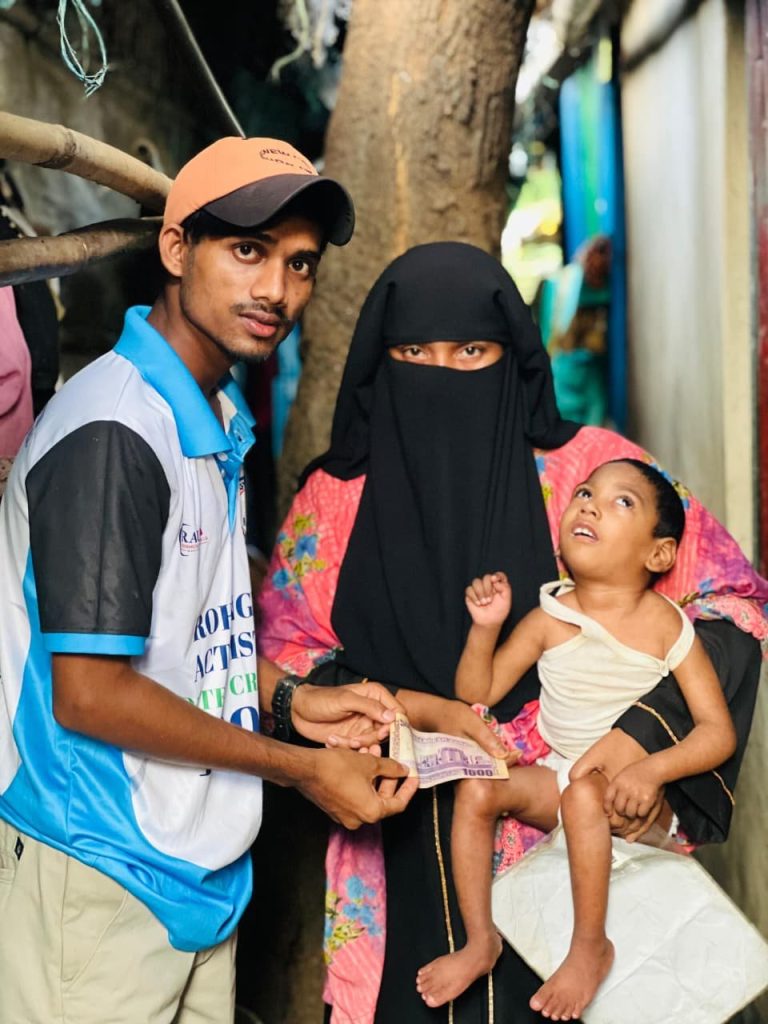
With UK tax reliefs for charitable giving reaching an estimated £7.4 billion for the tax year ending April 2026, a vital question remains: why do so many donors still feel their contributions are a mere drop in an ocean of global crisis? It’s understandable to feel overwhelmed by the sheer scale of humanitarian need or to harbour deep scepticism about administrative costs whilst seeking effective ways to donate to charity. You want your generosity to be more than a fleeting emotional reaction; you want it to be a stable, long-term commitment that truly changes lives.
In this guide, you’ll discover how to ensure your compassion translates into measurable, lasting change through strategic financial planning and direct intervention. We will clarify the complexities of Gift Aid and payroll giving, explore the transparency of community-led advocacy, and show you how to find an organisation that acts as a protective shield for the vulnerable. By the end, you’ll understand how to optimise your stewardship to restore, protect, and empower the communities that need it most through principled and informed action.
Key Takeaways
- Shift your focus from administrative costs to evidence-based outcomes, ensuring your generosity aligns with both strategic impact and your personal moral values.
- Identify the most effective ways to donate to charity by leveraging UK tax incentives, such as Gift Aid, to increase the value of your contribution at no extra cost.
- Gain the tools to evaluate transparency and accountability, allowing you to partner with trustworthy organisations that provide direct aid to those in greatest need.
- Understand how to diversify your support through skilled volunteering and community-led advocacy, creating a multi-faceted approach to humanitarian restoration.
- Recognise the unique power of community-led charities like RAUK to provide culturally nuanced support, from local refugee settlement in Bradford to crisis intervention abroad.
The Philosophy of Effective Giving: Why Your Choice Matters
True generosity requires more than a compassionate impulse; it demands a disciplined alignment of the heart and the mind. Every contribution is a seed for future stability, and The Philosophy of Effective Giving suggests that our resources are most powerful when we combine rigorous, evidence-based impact with our deepest personal values. Identifying effective ways to donate to charity involves looking beyond the surface of emotive appeals to find organisations that offer long-term restoration, protection, and growth.
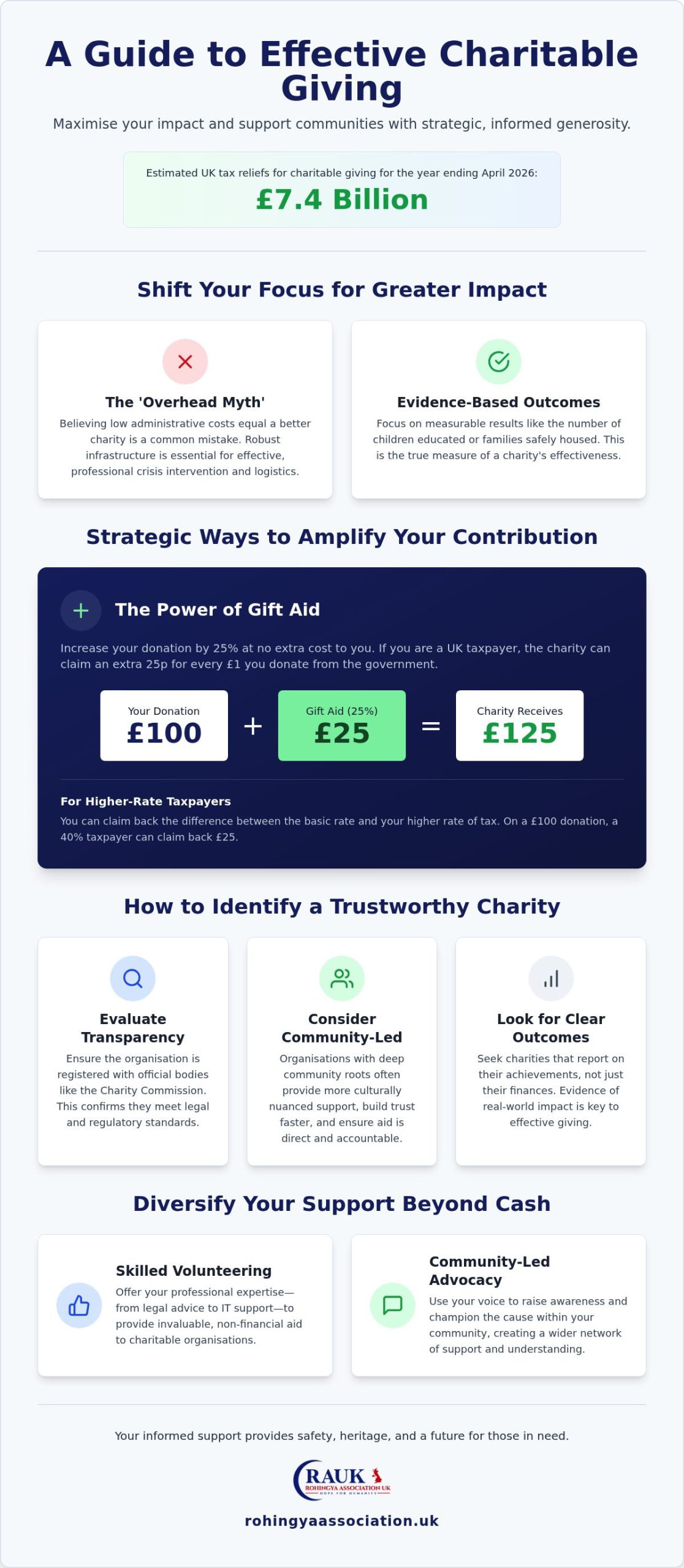
Many donors are hindered by the ‘overhead myth’, the belief that low administrative costs are the primary indicator of a charity’s worth. In reality, a robust infrastructure is what allows for professional crisis intervention, secure refugee settlement, and the protection of human rights. A charity with zero administrative spend often lacks the capacity for the complex logistics required to support stateless families. We must prioritise the actual outcomes achieved, such as the number of children in education or families safely housed, rather than focusing solely on a balance sheet.
There is a profound moral gravity in supporting those who are displaced. These families often exist in a vacuum of legal status and safety, making your choice of where to give a matter of life-altering consequence. Whilst one-off crisis responses provide immediate relief, sustainable change is born from long-term projects that tackle inequality and build communal resilience.
Understanding the Impact of Community-Led Aid
Local knowledge is the foundation of effective refugee resettlement support UK. Whilst large international NGOs provide essential broad-scale relief, community-led organisations like the Rohingya Association UK (RAUK) build trust with an immediacy that others cannot match. Their community-led structure ensures that aid is not just delivered, but is also culturally nuanced. This proximity allows for a level of accountability that larger, more distant entities often struggle to maintain, ensuring that every pound directly fuels education and youth empowerment.
Setting Your Personal Giving Goals for 2026
As you look toward 2026, consider which causes resonate with your moral compass. You might choose to balance local community support in places like Bradford with global humanitarian crisis intervention in regions like Cox’s Bazar. Effective altruism is the use of high-quality evidence to do the most good. By setting clear objectives, you transform a simple donation into a powerful instrument for justice and renewal. It’s about becoming a dedicated partner in a collective effort to provide safety, heritage, and a future for those who have lost everything.
Strategic Methods to Organise Your Charitable Contributions in the UK
Organising your philanthropy requires a methodical approach to ensure every pound is utilised to its fullest potential. When searching for effective ways to donate to charity, the UK fiscal framework offers several mechanisms that amplify the reach of your generosity. These are not merely administrative details; they are essential tools for restoration, protection, and growth. By aligning your financial planning with your moral compass, you transform a simple act of giving into a sustained force for systemic change.
Before committing to a long-term contribution, Evaluating Impact through official records ensures your funds are handled by a transparent, registered entity. For those with larger, structured philanthropic goals, Donor Advised Funds (DAFs) provide a sophisticated way to manage assets and direct them toward displaced communities over time. This professional approach to giving reflects a deep sense of duty and a commitment to the possibility of renewal for families in crisis.
The Power of Gift Aid Explained
Gift Aid remains a cornerstone of effective giving in the UK. For every £1 you donate, the charity can claim an extra 25p from the government, making your £100 gift worth £125 at no personal cost. To unlock this benefit, you must be a UK taxpayer and provide a simple declaration. If you’re a higher-rate taxpayer, you can claim back the difference between the basic rate and your highest tax rate on the gross value of your donation. For a £100 donation, a 40% taxpayer can claim back £25 through their self-assessment, effectively reducing the cost of their support whilst the charity receives the full gross amount.
Automating Your Generosity
Stability is the lifeblood of humanitarian work. Regular monthly giving through standing orders is often considered the gold standard for small charity sustainability. It provides the predictable income needed for long-term projects like education and youth empowerment in places like Bradford. Alternatively, Payroll Giving allows you to donate directly from your pre-tax salary. In the 2026/27 tax year, a £1 donation costs a higher-rate taxpayer only 60p, making it an incredibly efficient way to provide crisis intervention.
Making giving a consistent habit doesn’t just benefit the recipient; it reinforces your personal agency and connection to a broader mission. You might consider how these tax-efficient methods could strengthen the Rohingya Association UK’s settlement programmes, ensuring that your compassion is backed by the most effective financial strategies available.
Evaluating Impact: How to Identify Transparent and Accountable Charities
Identifying a partner in humanitarian work is a serious responsibility. It’s not just about giving; it’s about stewardship. One of the most effective ways to donate to charity is to ensure your chosen organisation is held to the highest standards of accountability. This process begins with a sober assessment of their transparency and a commitment to understanding their operational reality. Trust is not a static quality; it’s earned through consistent, public accountability. A transparent charity doesn’t just ask for your support; it invites you to witness its stewardship of every pound provided for the vulnerable.
Checking the Public Register of Charities
The Charity Commission for England and Wales provides a vital window into this stewardship. By searching the Public Register using a registration number, such as 1211433 for the Rohingya Association UK, donors can access a detailed financial history and verify that accounts are filed on time. It’s essential to understand the distinction between restricted funds, which are legally bound to specific projects like crisis intervention, and unrestricted funds, which provide the operational flexibility needed for long-term growth. A charity’s ‘Object’ or mission statement must be clear and focused, reflecting a disciplined commitment to its core purpose. If project descriptions are vague or financial updates are missing, it’s a significant red flag that suggests a lack of professional rigour.
Measuring Real-World Outcomes
True impact is measured where data meets dignity. Whilst quantitative metrics, such as the number of English classes delivered or families housed in Bradford, provide a necessary scale of work, qualitative data reveals the human reality. Look for success stories that highlight youth empowerment, cultural preservation, and the restoration of hope. The most effective charities often feature leadership with lived experience of the issues they address. This community-led approach ensures that decision-making is rooted in cultural nuance rather than top-down assumptions. A local presence in Bradford allows for a deeper understanding of refugee settlement needs, bridging the gap between immediate aid and long-term integration. When an organisation is led by those it serves, it acts as both a protective shield and a guiding hand.
Beyond Cash: Diversifying Your Support for Displaced Communities
While financial contributions are the lifeblood of humanitarian aid, they represent only one facet of stewardship. Expanding your perspective on effective ways to donate to charity involves recognising the immense value of your professional expertise and personal agency. Whether you offer skills in marketing, education, or strategic planning, your human capital can act as a catalyst for restoration and growth within displaced communities. A marketing professional might help a small charity amplify its call for justice; a teacher might provide the language skills necessary for a family to navigate their new home; a community organiser can offer the guidance required to secure a stable future. This holistic approach ensures that support is not merely transactional but is a deeply rooted partnership in the fight for justice and systemic change.
The Concept of Sadaqah Jariyah (Voluntary Charity)
Faith-based giving offers a profound model for long-term development through Zakat and Sadaqah Jariyah. By investing in projects that provide ongoing benefits, such as clean water systems or educational infrastructure, you ensure that your generosity continues to bear fruit long after the initial gift. Supporting education for refugees is particularly powerful; it creates a ripple effect of empowerment that transforms individual lives, families, and entire communities. Sadaqah Jariyah represents a ‘flowing charity’ that outlasts the initial gift, providing a legacy of safety, heritage, and resilience. This method of giving prioritises the long-term restoration of a community’s dignity over fleeting, temporary relief.
Advocacy and the Power of Your Voice
Your voice is a formidable tool for protection and justice. Sharing verified facts about the rohingya refugee camp can directly influence public perception and, eventually, national policy. Advocacy is a form of donation that requires no financial capital but demands a high level of moral seriousness and commitment. By participating in global awareness campaigns, you help ensure that human rights remain at the forefront of the international agenda. Organising community events to foster social inclusion is amongst the most effective ways to donate to charity, as it builds the social fabric necessary for long-term integration. Supporting cultural events breaks the isolation of displaced families, allowing them to share their heritage whilst finding a sense of belonging in a new environment.
To contribute your skills or learn more about our advocacy work, you can join the Rohingya Association UK’s mission to empower and protect those seeking a new beginning through community-led action.
Transforming Lives with RAUK: A Direct Path to Effective Change
The search for effective ways to donate to charity inevitably leads to organisations that operate at the intersection of local expertise and global vision. The Rohingya Association UK (RAUK) serves as a vital bridge, connecting the specific needs of displaced families in Bradford with the systemic advocacy required on the international stage. As a community-led charity (Registered Charity: 1211433), RAUK ensures that every contribution is utilised with the cultural nuance and direct trust that only those with lived experience can provide. This model offers a transparent path for donors who wish to see their compassion transformed into a journey of belonging for those who have lost everything. It is a voice that is reliable, serious, and deeply rooted in a sense of duty.
By focusing on direct aid, RAUK provides more than just temporary relief; it offers a protective shield and a guiding hand. From providing housing guidance in West Yorkshire to delivering crisis intervention in the camps of Cox’s Bazar, the impact is both immediate and enduring. Donors are not merely distant benefactors but partners in a collective effort to restore dignity, protect heritage, and secure a future for the stateless. This is where strategic giving meets the moral seriousness of the humanitarian landscape.
Supporting Education and Integration in the UK
Integration is a multifaceted process that requires stable, long-term commitment. RAUK addresses this by funding English language classes and skills development, which are essential for navigating life in the UK. By empowering the next generation through youth-led community programmes, we ensure that young refugees have the agency to shape their own futures. You can learn more about these initiatives in our full guide on Refugee Youth Empowerment Programmes. These efforts represent a vital investment in the social fabric of our local communities, fostering resilience and mutual understanding amongst all residents.
Providing Hope on a Global Scale
The humanitarian crisis facing the Rohingya people remains one of the most pressing issues of our time. RAUK facilitates essential humanitarian aid and food support in Myanmar and Bangladesh, reaching those in the most precarious conditions. However, aid alone is not enough; we also stand for justice through global human rights advocacy. We invite you to join us in building home and hope for stateless families. Your support enables us to continue this principled fight for systemic change, ensuring that the strength of the people we serve is honoured, protected, and elevated on the world stage.
Empowering Change: Your Role in Global Restoration
The path to meaningful impact is paved with both strategic thought and moral courage. You’ve explored how tax-efficient methods like Gift Aid can amplify your reach, whilst community-led models ensure your stewardship is handled with the precision of lived experience. True restoration for displaced families isn’t achieved through fleeting relief alone; it’s built on a foundation of long-term education, secure housing, and the tireless pursuit of justice.
When you seek effective ways to donate to charity, you’re choosing to act as a protective shield for the vulnerable. The Rohingya Association UK (Registered Charity 1211433) offers a direct, accountable route to empowerment. As a community-led organisation, we deliver aid across the UK and South East Asia with the cultural nuance required for genuine integration. Support our mission: Donate to the Rohingya Association UK today and become a dedicated partner in this mission of renewal.
Your decision to give today is a powerful affirmation of our shared humanity. Together, we can transform the weight of global crisis into a legacy of heritage, safety, and hope.
Frequently Asked Questions
What is the most effective way to donate to charity as a UK taxpayer?
Utilising Gift Aid is the most effective way to donate to charity for UK taxpayers. This government scheme allows charities to reclaim the basic rate of tax you’ve already paid on your gift, increasing the value by 25% at no extra cost to you. Higher-rate taxpayers can also claim personal tax relief on the difference through their self-assessment. Combining tax efficiency with a regular standing order provides the stable, long-term commitment necessary for sustainable humanitarian restoration.
How do I know if my donation is actually reaching Rohingya refugees?
The Rohingya Association UK ensures your support reaches those in need through our community-led structure. Because our leadership consists of individuals with lived experience, we possess the cultural nuance and direct trust required for effective aid delivery. We operate direct projects in Bradford, Myanmar, and Bangladesh, providing housing, healthcare, and education. Our status as a Registered Charity (1211433) means our activities and financial distributions are subject to rigorous public oversight and professional transparency.
Can I choose which specific project my donation supports at RAUK?
Donors can often direct their contributions toward specific initiatives, such as education and youth empowerment or crisis intervention. Whilst unrestricted funds are vital for our operational resilience and long-term planning, we respect the desire to connect personally with a particular cause. Whether you wish to support English language classes in Bradford or food aid in South East Asia, your generosity acts as a protective shield for families seeking safety and a new beginning.
Is it better to give a large one-off donation or a smaller monthly gift?
Regular monthly gifts are generally considered the gold standard for charitable stability. They allow organisations to plan long-term projects, such as refugee settlement and integration, with financial confidence. However, large one-off donations remain essential for immediate crisis intervention and urgent humanitarian relief. Both methods are effective ways to donate to charity, but a consistent monthly commitment reinforces a sense of shared identity and provides a reliable foundation for communal restoration and growth.
How does the Rohingya Association UK ensure transparency in its spending?
Transparency is fundamental to our community-led model. We file detailed annual returns with the Charity Commission for England and Wales, which are available for public scrutiny under our registration number 1211433. Our leadership’s proximity to the communities we serve ensures that every pound is accounted for and directed toward measurable change. This professional rigour, combined with our cultural heritage, creates a dedicated partnership where donors can clearly see the tangible results of their generosity.
What is Gift Aid and how does it increase the value of my donation?
Gift Aid is a UK tax incentive that allows charities to claim an extra 25p for every £1 you donate. If you’ve paid enough UK Income Tax or Capital Gains Tax to cover the amount reclaimed, your £100 gift becomes £125. This boost is provided by the government, not your pocket, making it a powerful tool for maximising your impact. It’s a simple, principled way to ensure your support for displaced families goes further in providing protection and hope.
Can I donate items like clothes or food instead of money?
Whilst we appreciate the sentiment behind donating physical items, financial contributions are typically more effective for our specific aid projects. Cash donations allow us to purchase culturally appropriate food and medical supplies locally, which supports the local economy and reduces complex logistical costs. This flexibility is crucial for delivering crisis intervention and education services efficiently. We recommend contacting our Bradford centre directly to enquire about current needs for specific community events or settlement programmes.
How can I get my employer involved in charitable giving?
Engaging your employer can significantly amplify your influence through Payroll Giving or matched funding schemes. Payroll Giving allows you to donate from your pre-tax salary, making a £1 donation cost a higher-rate taxpayer only 60p. Many companies also offer to match their employees’ charitable gifts, doubling the impact of your support for advocacy and awareness campaigns. Discussing these options with your HR department is a professional way to drive systemic change and foster collective responsibility for humanitarian justice.