

A local fundraiser can turn community concern into practical support for refugee families. If you’re considering how to start a local fundraiser for refugees, begin with a clear purpose, agree who will manage the campaign and receive donations, and choose an event or fundraising page your community can share. Explain how the money will be used, and clarify whether donations qualify for tax relief before making any claims.
It’s understandable to want every contribution to make a meaningful difference. This guide explains how to coordinate a neighbourhood or faith-community campaign, create and share a fundraising page, describe the cause respectfully, and consider tax relief in the UK. You’ll also find ways to invite supporters and share information at an event while protecting the dignity and privacy of the people the fundraiser aims to support.
Rohingya Association UK (RAUK) provides support in Bradford and beyond, and works with partners to help community groups sponsor refugees. Its community support, education and advocacy work connects local solidarity with longer-term support for families and young people.
Key takeaways
- Choose a community campaign format, agree who will manage it and receive donations, and make the purpose clear from the outset.
- Before describing donations as tax-deductible, establish whether tax relief applies and explain the position accurately to supporters.
- Give your fundraising page a clear title, a specific goal and a transparent explanation of how donations will be used.
- Invite supporters through suitable community channels, and share updates that respect the privacy and dignity of the people the fundraiser supports.
- At an event, explain why the cause matters and how the campaign will help; community groups exploring refugee sponsorship can contact Rohingya Association UK about schemes such as Named Sponsorship and Education and Employment Sponsorship.
1. Coordinating a faith community or neighbourhood giving campaign
A clear plan helps a faith community or neighbourhood turn concern into coordinated giving. Start by defining the campaign’s purpose, intended beneficiaries and donation route. For example, a community group might raise funds for refugee relief through a shared online page and a local event. Agree who will organise activities, communicate with supporters, receive donations and report how funds were used. Clear responsibilities prevent confusion and help people understand how to take part.
Protect the dignity and privacy of any family whose circumstances inspire the appeal. Get the family’s permission before creating a fundraiser or sharing their story. Agree what details may be shared, with whom, and whether names or images should be left out. A campaign can explain the need without disclosing personal experiences. For example, describe the intended support in general terms rather than publishing someone’s address, immigration history or private circumstances.
Build the campaign around a network people already trust. Ask a faith leader, neighbourhood organiser or community group to share accurate information and invite contributions. UK guidance, including resources from the NHS and local councils, emphasises making health information accessible and appropriate to the communities it serves. Apply that principle when preparing translated or accessible messages, choosing familiar channels and explaining the purpose plainly.
Choose a community event that suits local interests and the organisers’ capacity. A shared dinner, discussion, walk or creative gathering can bring people together while raising awareness. A vigil or healing circle, in person or online, offers another way to create space for reflection. Before committing, consider costs, potential proceeds, volunteer availability, donation methods and the time involved. A smaller gathering with clear roles may be more useful than a complex event that stretches volunteers.
Local businesses can strengthen the effort by donating event supplies, offering a venue, contributing an auction item, sharing the fundraising page or matching donations. Make a specific request that explains the campaign’s purpose and the practical contribution sought. For a community meal, for example, a business might provide supplies while volunteers coordinate invitations and donation arrangements. Agree responsibilities in advance so organisers can communicate clearly with guests and supporters.
Keep the campaign active after its launch. Share progress updates and, where appropriate, explain how funds have been used. Thank contributors without exposing a family’s private information. A consistent message across community boards, faith networks and friends’ social channels helps supporters understand the appeal and share it responsibly. Focus on practical solidarity: donations can support relief, while respectful awareness helps communities stand alongside refugees as they rebuild.
2. Donation tax deductibility
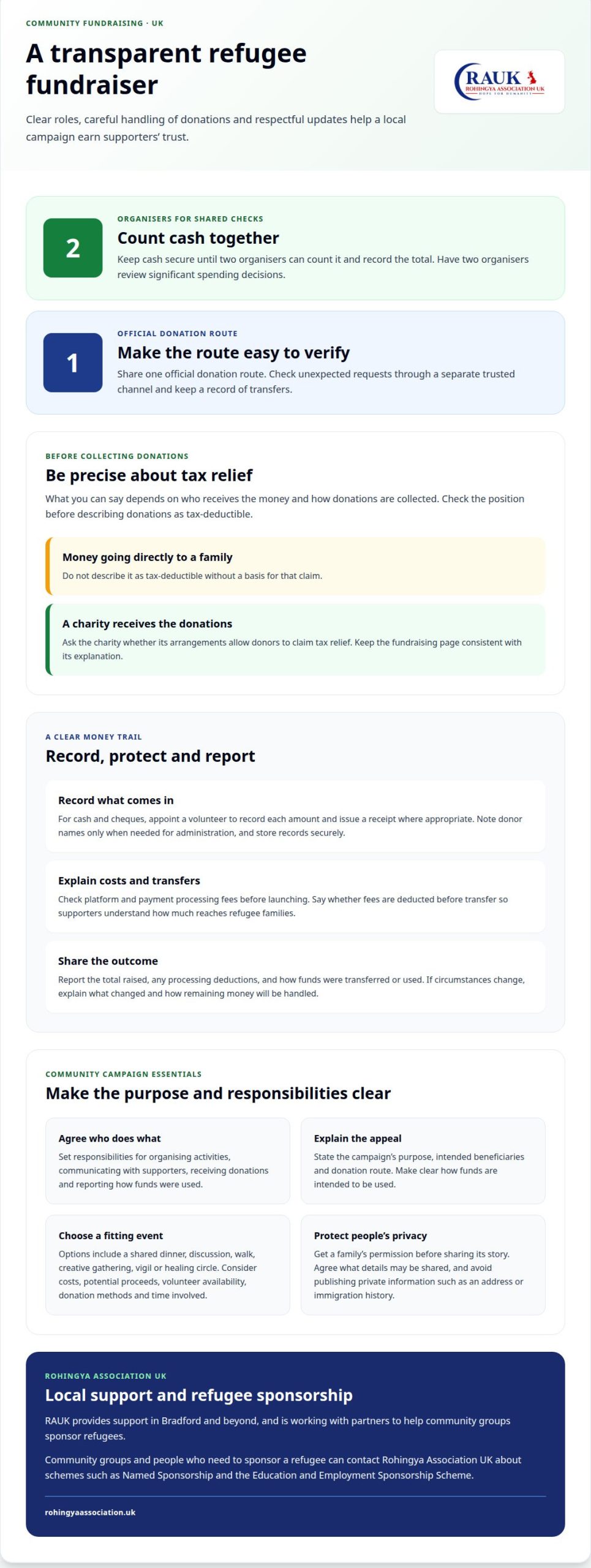
For a UK fundraiser, clarify tax relief before making promises to donors. The recipient and the way donations are collected affect what you can say about tax deductibility. If money goes directly to a family, don’t describe it as tax-deductible without a basis for that claim. If a charity receives donations, ask it to explain whether its arrangements allow donors to claim tax relief. Keep the fundraising page aligned with that information.
Platform fees and payment processing costs depend on the platform, payment method and any optional contribution donors make towards processing. Read the fee information before launching, then account for charges when setting the campaign target. State whether fees are deducted before transfer, so donors understand how much reaches refugee families. If a sports club collects donations at an event as well as online, explain that each route may handle payments differently.
For cash and cheques, appoint a volunteer to record each amount and issue a receipt where appropriate. Keep cash secure until two organisers can count it together and record the total. For cheques, write down the donor’s name only when needed for administration, and store that record securely. Set a clear handover process: identify who receives the funds, who deposits them and how the amount is reconciled with the campaign total.
Protect donor information by limiting access to the people handling payments and updates. Don’t publish personal details, payment references or screenshots that reveal private information. Reduce scam risks by sharing one official donation route, checking unexpected requests through a separate trusted channel and keeping a record of transfers. For emergency appeals, make the intended use clear and have two organisers review significant spending decisions. These steps support accountability without exposing donors or families.
Report the outcome directly to supporters through the same channels used for the appeal. Share the total raised, explain any processing deductions, and describe how funds were transferred or used. If circumstances change, tell donors what changed and how the remaining money will be handled. A short written summary and dated updates give volunteers a reliable record. For community groups seeking practical refugee support and integration, connect the fundraising effort with ongoing local support rather than presenting one collection as a complete response.
For a seasonal Giving Tree fundraiser, work with local businesses and share clear donation arrangements. Agree in advance who will manage the campaign and receive the money.
3. Creating a fundraising page and personal link
For anyone asking how to start a local fundraiser for refugees, a focused page gives supporters a clear place to understand the appeal and donate. Choose a title that names its purpose, such as “Support refugee families rebuilding their lives”, rather than a vague phrase such as “Please help us”. In the opening lines, explain who the campaign supports, what donations will fund and how the money will be used. Keep the central message easy to find.
Set a fundraising goal based on the intended support, then explain how you chose it. Describe what the funds are expected to make possible and who will receive them. If the appeal supports an organisation, explain its role in the campaign and how donations will reach it. Distinguish clearly between funds intended for practical household support and those raised for wider refugee relief. Donors should understand the purpose without having to guess.
A page of around 250-350 words is often enough to communicate the essential information. Use short paragraphs to cover the campaign’s purpose, beneficiaries, donation route and planned updates. A personal example can explain why you care, but avoid presenting asylum or displacement through a single person’s experience. Keep the text readable on a phone, where long blocks of writing can make key details harder to find.
Personalise the appeal with a brief introduction from the organiser. Explain your connection to the campaign and why you chose this form of support. For example, a local group could describe its shared aim of helping refugee families through a community activity. Use language that respects people’s dignity and avoids reducing them to their hardships. Any personal account or image should be appropriate to share and support the campaign’s purpose.
Before publishing, check that the page wording and donation route are accurate. Explain whether payments go through a fundraising platform or another agreed channel. Create a personal link that is short, readable and easy to copy into messages, newsletters or community notices. Test that it opens the correct page, then use the same link consistently so friends and local groups don’t circulate competing versions.
Plan updates before launch, including what progress information supporters will receive. You might share the amount raised or a summary of how funds have been directed. If friends ask how to start a local fundraiser for refugees, show them how a clear page can connect a specific purpose with a straightforward way to contribute. Keep updates aligned with the original appeal, and explain any changes promptly. This gives supporters a useful record from launch through to the final report.
4. Inviting guests and sharing a fundraising link
Invite people through channels they already use, such as email, social media and group chats. Give each invitation one clear purpose, a short explanation of the campaign and the same fundraising link. For example, a neighbourhood organiser could send a personal note to local members, then share the public appeal through a community group. Direct invitations make it easier for people to understand the request and pass it on accurately.
Connect the appeal to an occasion if that feels appropriate. In the UK, people can ask friends and family to donate instead of giving birthday, wedding or anniversary presents. Explain this choice warmly, without making guests feel obliged to contribute. A birthday invitation might say that donations to refugee relief are welcome, while making clear that celebrating together remains the main purpose.
Make the invitation culturally respectful by sharing only information the people concerned have agreed to share. Get consent before using someone’s name, photograph, personal history or direct quotation, and explain where the material will appear. If permission hasn’t been given, describe the campaign’s purpose without identifying a family or disclosing private circumstances. Respectful sharing protects people’s agency and keeps fundraising separate from pressure to disclose personal stories.
Keep information about refugees accurate and specific to the campaign. Explain what the funding is intended to support, who will receive donations and how supporters can follow progress. Avoid broad claims about every refugee’s experience or using distressing details to prompt giving. For instance, an invitation can describe a community appeal for practical support without suggesting one family’s story represents all displaced people.
Make the link easy to find in every format. In an email, place it beside the donation request; in a social post, add a brief description that stays clear when shared without extra context. For printed notices at a community gathering, use a readable link or a scannable code that leads to the same page. Ask a trusted organiser to test the route before circulating materials.
Tailor each message to its audience while keeping campaign details consistent. A faith community announcement may explain why members are organising the appeal; a workplace message can focus on the shared opportunity to contribute. Use plain language, state whether people can share without donating, and avoid repeated messages that could feel intrusive. One thoughtful follow-up can point supporters to an update or thank those who have helped.
After an event or online appeal, close the loop with the same network that received the invitation. Thank guests, share a concise progress update and explain the next step for the funds. If the campaign changes, update the original page and tell people sharing the link. Consistent communication helps supporters understand the appeal and prevents outdated details from circulating in local groups.
5. Sharing information about the cause at an event
Choose a date, time and location that suit both organisers and guests. A community dinner, discussion, walk or creative gathering can raise funds and build solidarity. A vigil or healing circle can also create space for reflection, in person or online. Set out the event’s purpose in invitations so guests understand how attending supports refugee relief. A holiday gathering may offer a natural moment for community members to come together.
Plan the event in a practical order: agree its purpose, choose a format, secure a suitable venue, assign tasks and confirm how donations will be collected. Consider costs, likely proceeds, volunteer availability, time required and donation methods before committing to an in-person event. The fundraising timeline recommends choosing a date and securing necessary permits two months before the event, launching marketing six weeks beforehand, finalising logistics one month before, then confirming volunteers and sponsorships one week ahead.
Do I need a permit or special licence to hold a charity fundraiser in my city? There isn’t one answer for every event: the location and planned activities affect what permissions or arrangements are needed. Before promoting the event, discuss use of the venue with its manager and establish whether activities in a public space require permission from the relevant landowner or local council.
Give guests clear, respectful information about the cause. Explain why the fundraising effort matters, who will receive the donations and what the funds are intended to support. Avoid sharing private family stories without consent; focus instead on the campaign’s purpose and the wider value of community support. A short introduction, printed information and a question-and-answer discussion can help guests learn without turning people’s experiences into an appeal.
Local businesses can contribute to a benefit night by donating a portion of proceeds. Organisers can also invite businesses to provide a venue or supplies, donate auction items, sponsor the event, share the fundraising page, contribute directly or match donations. A collaborative art auction may take one to two months to organise, so allow time to secure contributions and promote the event through social media and local community boards.
How can you organise a local refugee fundraiser? Set the purpose, agree responsibilities, choose an event or online approach, arrange donations and share accurate information with supporters. If hosting an event isn’t practical, friends and family can still support the campaign through a personal fundraising page and its link. For guidance connected to community cultural events, get in touch before shaping your local activity.
Rohingya Association UK: Refugee Settlement and Integration
Rohingya Association UK supports refugee settlement and integration in Bradford and beyond. Its community support, education and youth empowerment, and cultural events can complement local fundraising by helping refugee families build connections and take part in community life.
For community groups interested in sponsoring refugees, Rohingya Association UK is working with partners to help groups pursue sponsorship. If you’re exploring a scheme such as Named Sponsorship or the Education and Employment Sponsorship Scheme, contact the organisation to discuss your interest and next steps.
Contact Rohingya Association UK if you’d like to discuss refugee support or sponsorship options for your community group.
Carry your community’s commitment forward
A fundraiser can be a starting point for deeper local involvement, not a single act of giving. As you consider how to start a local fundraiser for refugees, think about the relationships your campaign can build between neighbours, community groups and people seeking safety. A respectful, sustained connection can help turn shared concern into meaningful participation.
Your next step might be to continue community activity or explore how a group could support refugee sponsorship. Rohingya Association UK works with partners to help community groups pursue sponsorship, including schemes such as Named Sponsorship and the Education and Employment Sponsorship Scheme. Each group can begin by discussing its interest and the support it hopes to offer.
For guidance on your community’s next steps, contact Rohingya Association UK. Thoughtful local action can create a stronger foundation for welcome, belonging and renewal.
Frequently Asked Questions
What are effective local fundraising ideas for refugee support, and how much can they raise?
Community meals, sponsored walks and creative events can bring people together to support refugee relief. There’s no fixed amount a local fundraiser will raise: results depend on attendance, contributions, event expenses and any matched giving. Before choosing an activity, estimate likely participation by asking community groups what they can help organise. For example, a neighbourhood meal could combine ticket contributions, voluntary donations and donated ingredients, then report the net proceeds transparently.
How should I set a fundraising goal, budget and timeline?
Set a goal by starting with the intended use of the funds, then estimating expected donations and subtracting event or platform costs. Keep a simple budget with expected income, planned spending and the amount intended for the cause. Build the timeline around tasks that rely on others, such as securing a venue, confirming volunteers and promoting the appeal. If a business or group is matching donations, agree the arrangement before including it in projected income.
What local grants, matching programmes, businesses or community groups can support a refugee fundraiser?
Start by approaching local employers, independent businesses, faith communities, sports clubs and neighbourhood associations with a specific request. A business might donate event supplies, offer a venue or match contributions; a community group could share the appeal or provide volunteers. Local grant programmes may support relevant community activity, but eligibility and application requirements vary. Describe the fundraiser’s purpose, intended beneficiaries and accountability plan clearly when making a funding request.
What fundraising platform fees and payment processing costs should I expect?
Fees depend on the platform, payment method and any optional donor contribution towards processing. Check the fee information before launching, account for charges in your target, and explain whether fees are deducted before the funds are transferred.