
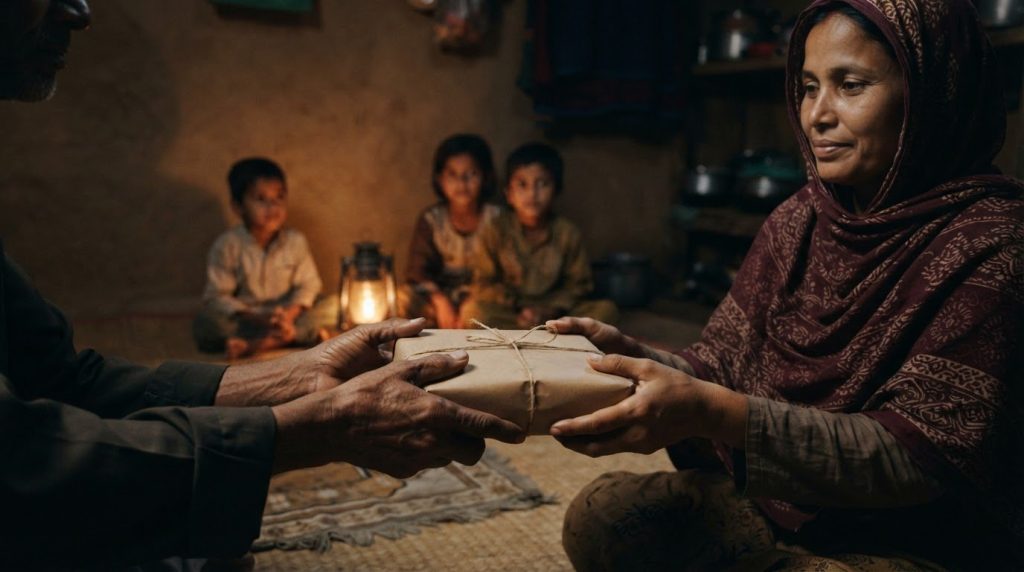
The key point about giving charity on Laylatul Qadr is that Zakat is not due only on this night: it should be paid when it becomes due. Laylatul Qadr nevertheless holds profound spiritual significance. The Qur’an describes it as better than a thousand months.
It is natural to want acts of worship and generosity to carry special meaning during Ramadan’s most sacred nights. Laylatul Qadr is sought among the odd nights of Ramadan’s last ten days, a time for prayer, reflection and sincere giving.
This article explains what Laylatul Qadr means, why it matters spiritually and how Zakat relates to it. It also clarifies the difference between obligatory Zakat and voluntary charity, so you can understand what is due and give with clarity and intention.
Key Takeaways
- Understand why Laylatul Qadr is regarded as a night of exceptional spiritual significance.
- Learn when the night is sought during Ramadan and why worshippers focus on its final odd nights.
- Distinguish obligatory Zakat from voluntary sadaqah, and understand why Zakat is paid when it becomes due.
- Explore how giving charity can express generosity and compassion during Ramadan.
- Discover how Rohingya Association UK provides support in Bradford and beyond through community support, education, events and advocacy.
What Is Laylatul Qadr?
Laylatul Qadr, often translated as the Night of Decree, is a sacred night in Ramadan. The Qur’an describes it as better than a thousand months, giving it profound spiritual importance. This helps explain why Muslims reflect on prayer, generosity and devotion during this time. The night is more than a date on the calendar: it is an opportunity to turn sincere belief into meaningful action.
What rewards are associated with charity given on Laylat al-Qadr? A righteous deed on this night is described as carrying the reward of performing the same deed for over 83 years. By that understanding, charity given on Laylatul Qadr is associated with the reward of giving charity for 83 years. This is a powerful spiritual encouragement, not a cash calculation or a promise of a particular worldly result.
The reference to a thousand months conveys the scale of the night’s blessing. It encourages Muslims to value acts of worship that might seem small in ordinary circumstances. A quiet prayer, sincere remembrance of Allah or donation to relieve hardship can each express faith through action. The emphasis is not on the size of a gift, but on its intention and benefit. Sadaqah, or voluntary charity, can put compassion into practice, whether it meets immediate needs or helps ease a difficult situation.
Islamic teaching honours generosity throughout Ramadan, not just on one night. The Prophet Muhammad was known as the most generous of people and was especially generous during Ramadan. Accounts associated with Bukhari are often discussed in this context. His example connects worship with care for others: devotion is not confined to private prayer, but can also be expressed by sharing wealth and easing hardship. When considering a charitable gift, reflect on both the recipient’s needs and the sincerity behind your act.
Giving charity on Laylatul Qadr can bring spiritual reflection together with practical support. The reward described for righteous deeds encourages generosity, while the meaning of sadaqah centres giving for the sake of good. A contribution may help provide food, care or another essential form of assistance, depending on the recipient’s circumstances. Even a small act, such as sharing food with someone in need, shows how faith can become tangible compassion. The night’s significance lies not in display, but in sincere worship and purposeful action.
Scholars have stated that righteous deeds are better when performed at virtuous times. This perspective helps explain why Laylatul Qadr is an occasion for renewed attentiveness: make room for prayer, remembrance and giving, approaching each act with sincerity. The moment’s significance can encourage you not to postpone a good deed when an opportunity to help arises.
This understanding keeps the focus on purposeful worship rather than outward display. Consider charity alongside other righteous actions, letting care for the recipient and an honest intention shape your giving. In this way, the night’s spiritual meaning can guide both private devotion and compassionate choices.
The Night of Decree and its spiritual significance
Laylatul Qadr is sought during Ramadan’s last ten nights, when worshippers renew their devotion. Its meaning connects revelation, prayer and reflection.
Spiritual Significance of the Night
Laylatul Qadr is the night on which the Qur’an was revealed to Prophet Muhammad. Its significance lies in that revelation and the opportunity it gives Muslims to turn towards worship with renewed attention. The night is associated with prayer, remembrance of Allah and seeking forgiveness. These acts bring spiritual reflection into Ramadan’s final days.
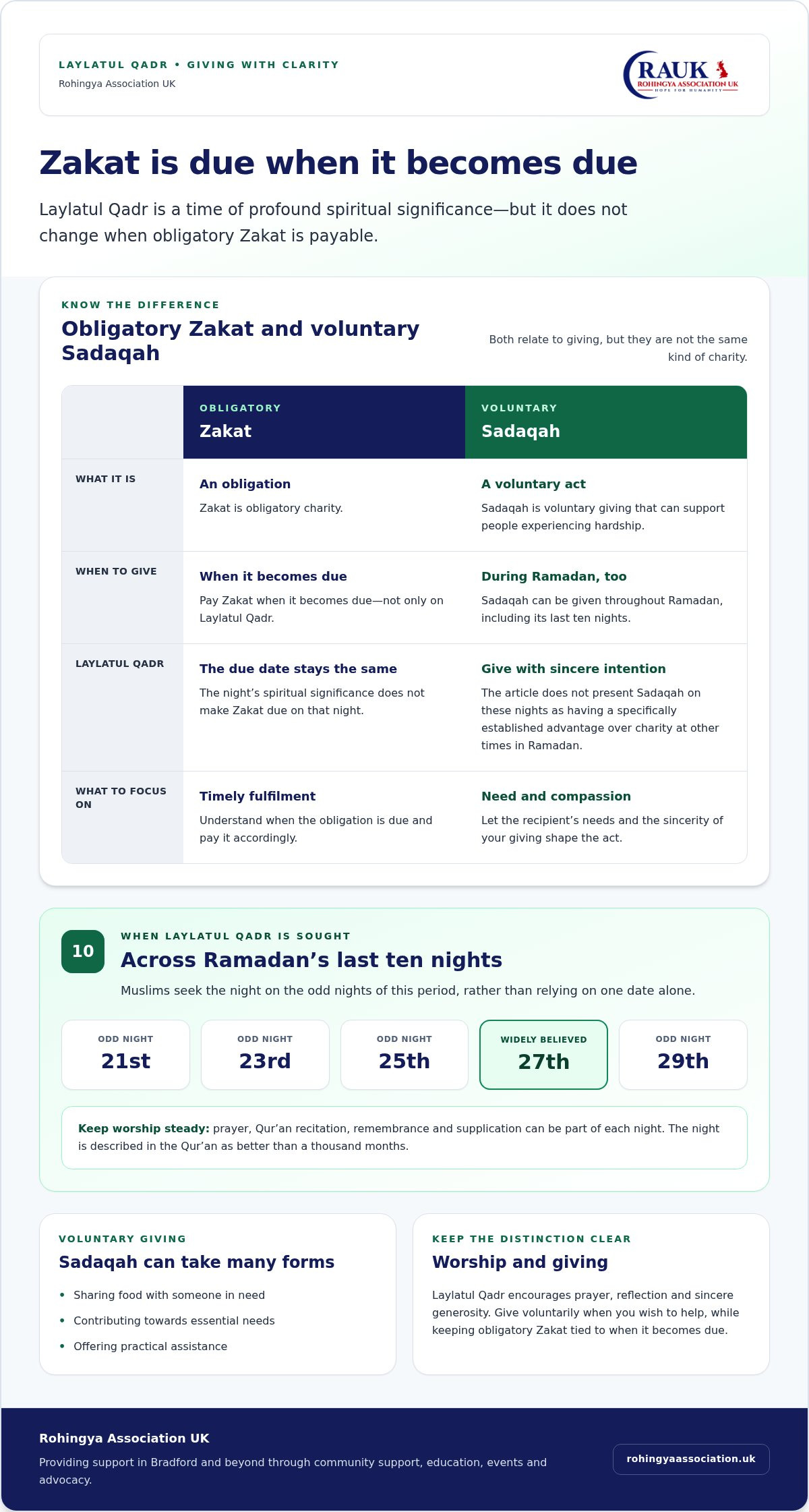
Muslims seek Laylatul Qadr during an odd night in the last ten days of Ramadan. The nights commonly named are the 21st, 23rd, 25th, 27th and 29th. Laylatul Qadr is widely believed to fall on Ramadan’s 27th day, but worshippers seek it across the odd nights rather than relying on one date. This approach keeps devotion focused throughout the period.
Ramadan’s last ten nights are a time for prayer and dhikr, the remembrance of Allah. A worshipper might set aside time for night prayer, recite or listen to the Qur’an, and make personal supplications. The Prophet Muhammad taught that a person who prays on Laylatul Qadr with faith and hope for reward will have previous sins forgiven. This teaching gives worship a clear spiritual purpose.
Sadaqah During the Last Ten Nights
Sadaqah during Ramadan is voluntary giving that can support people experiencing hardship. Giving throughout the last ten nights allows a Muslim to pair charitable action with a period devoted to worship. However, charity given during these nights should not be presented as having a specifically established advantage over charity at other times in Ramadan. The meaningful focus is sincere generosity and the needs being addressed.
The Prophet Muhammad was the most generous of people and was especially generous during Ramadan. His example encourages giving throughout the month, including its final nights, without treating one night as the only opportunity to help. Sadaqah can take different forms: sharing food, contributing towards essential needs or offering practical assistance. Such acts can respond to poverty with care while preserving the dignity of those receiving support.
I’tikaf, worship in retreat, is another practice associated with Ramadan’s closing period. The Sunnah is to observe i’tikaf for ten days, while its stated minimum is one day and night. For someone observing this practice, the nights can be dedicated to prayer, Qur’an recitation and dhikr. Whether or not you observe i’tikaf, seeking Laylatul Qadr across the odd nights gives worship and generosity a sustained place in Ramadan.
Laylatul Qadr falls during the last 10 odd nights of Ramadan, so seeking it calls for continued attention across that period. Prayer, Qur’an recitation, remembrance and supplication can remain part of each night, rather than being reserved for a single expected night. This steady approach reflects the season’s emphasis on worship and reflection.
The sunnah is to remain in i’tikaf for 10 days, with a minimum duration of 1 day and night. For those observing i’tikaf, retreat offers time for prayer, Qur’an recitation and dhikr. Together, these acts keep worship at the centre of Ramadan’s closing nights.
Giving Zakat during Laylatul Qadr
Laylatul Qadr, also called the Night of Power, is a meaningful time for worship and generosity. Zakat, however, is paid when it becomes due, not only on this night.
Choosing Between Sadaqah and Zakat
Zakat is obligatory charity for eligible recipients, while sadaqah is voluntary giving to anyone in need. Neither replaces the other, so the right choice depends on whether Zakat is due from you.
Zakat is 2.5% of a person’s wealth when it reaches the Nisab threshold and has been held for one lunar year. If that duty applies, fulfilling it takes priority; you can also give sadaqah according to your means. The distinction matters because a voluntary gift does not fulfil an outstanding Zakat obligation. During Ramadan’s last ten nights, consider both your duty and the needs of communities experiencing hardship.
Charity as a Recommended Act
Giving voluntary charity during Laylatul Qadr is a generous act of worship, while Zakat remains tied to its due date. The Prophet Muhammad was the most generous of people and especially generous during Ramadan.
You can give sadaqah on behalf of someone else by making that intention clear, such as dedicating a gift to a loved one. When giving for yourself, a simple personal dua might ask Allah to accept the charity and bring relief to people facing poverty. These intentions can accompany a gift without changing the distinction between voluntary sadaqah and obligatory Zakat.
Giving Through Online Platforms or Organisations
An online donation or a gift made through an organisation can count as charity when given with sincere intent. The method alone does not determine whether it is Zakat or sadaqah: the purpose and recipient matter.
For Zakat, direct the payment towards eligible recipients and make its purpose clear in the donation process. For sadaqah, support people in need through a suitable charitable channel. If you donate online during Laylatul Qadr, complete the donation then and retain its confirmation for your records. This practical step helps distinguish a Zakat payment from a separate voluntary gift.
Deciding How Much to Give
There is no fixed amount of voluntary sadaqah required for Laylatul Qadr. Give an amount that fits your means: a sincere, manageable contribution can still support someone facing hardship.
If Zakat is due, calculate the required amount from your wealth rather than choosing an arbitrary donation. The stated rate is 2.5% once wealth reaches Nisab and has been held for one lunar year. Any extra sadaqah is separate and voluntary. Before giving, decide whether your contribution is Zakat or sadaqah, choose the intended recipient or cause, and state your intention. That clarity helps ensure your gift reflects both religious duty and compassion.
Meaning and significance of Laylatul Qadr
Laylatul Qadr means the Night of Decree, a name that places divine purpose at the heart of Ramadan’s worship. The Qur’an describes this night as better than a thousand months. That comparison gives believers a reason to approach it with care, rather than as an ordinary evening. Its significance rests on faith, reflection and the opportunity to renew one’s relationship with Allah.
The Qur’an was revealed to Prophet Muhammad on Laylatul Qadr. This connection makes the night a time to return to the scripture’s guidance, rather than treating its importance as an abstract idea. You might reflect on a passage about justice, patience or generosity, then consider how its teaching shapes daily choices. In this way, remembrance can inform conduct beyond Ramadan.
The phrase “better than a thousand months” expresses the night’s exceptional spiritual value. It is not a calculation that assigns a guaranteed worldly result to each deed. Instead, it invites Muslims to give worship and good actions particular attention. You might set aside time for prayer, recitation and quiet reflection, making deliberate space for faith amid everyday responsibilities.
Laylatul Qadr also draws attention to intention. Two people might make similar donations, yet approach the act with different purposes. One may give to relieve a neighbour’s immediate hardship; another may support a cause that protects families facing displacement. The spiritual meaning lies in worship and sincere purpose, alongside the real benefit received by people in need.
For that reason, the night can connect personal devotion with responsibility towards others. Reflecting on the Qur’an’s teachings, a Muslim might consider how compassion can become visible through practical action. Donating food, supporting essential care or sharing resources are ways generosity can respond to hardship. The recipient is not merely an idea: they are a person whose needs deserve dignity.
The meaning of Laylatul Qadr can also shape choices after Ramadan. A worshipper who reflects on patience during the night might practise it with family; someone moved by generosity might make regular giving part of their routine. These examples show how a sacred moment can influence conduct throughout the year. Spiritual reflection gains depth when it guides relationships, choices and care.
Its significance, then, is not confined to one act or one evening. The Qur’an, Prophet Muhammad’s example and the image of a thousand months offer a framework for worship and ethical living. On Laylatul Qadr, pause, seek closeness to Allah and consider who might benefit from your resources or time. That reflection brings devotion together with compassion.
Is giving charity on Laylat al-Qadr recommended in Islam?
Yes. Giving charity during Ramadan, including Laylat al-Qadr, is a virtuous act of generosity. The Prophet Muhammad was the most generous of people and gave especially generously during Ramadan. His example encourages Muslims to join worship with care for others, through acts such as sharing food or helping someone meet an essential need.
That encouragement applies throughout Ramadan, not only on one night. The prescribed practice is to give generously during the month, while Laylat al-Qadr offers a spiritually significant moment for sincere worship and giving. You may choose to donate during the night, but charity at another point in Ramadan remains valuable. The purpose is generosity, not a claim that one chosen moment guarantees a particular reward.
It is also helpful to distinguish general Ramadan guidance from a specific claim about the last ten nights. There is no known Sunnah evidence that charity given during those final nights is better than charity at other times. This does not make giving then discouraged; it means the virtue of generosity should not be presented as exclusive to those nights.
For example, someone who gives food to a family during the last ten nights performs a charitable act at a sacred time. Someone who supports a person in need earlier in Ramadan also follows the month’s encouragement towards generosity. Both examples centre the recipient’s needs and the giver’s sincere intention, rather than treating a date as the sole measure of a good deed.
Laylat al-Qadr can prompt a considered response to hardship. A worshipper might reflect on the needs of displaced families, then direct sadaqah towards practical support. The form of help depends on the need: food can address immediate hunger, while community support can help people rebuild connection and stability. Giving should preserve recipients’ dignity and avoid reducing their circumstances to a moment of charity.
For a Muslim deciding when to give, a balanced approach is straightforward: be generous throughout Ramadan and include the last ten nights if that suits your worship. Do not delay Zakat that has become due while waiting for Laylat al-Qadr. Voluntary sadaqah can be given separately, according to your means and the needs you want to address.
The spiritual value of charity is linked to worship, intention and tangible benefit. A contribution that helps meet a real need gives generosity practical meaning; prayer and reflection can deepen the purpose behind the action. Laylat al-Qadr is an opportunity to renew that commitment, not a reason to overlook people who need support throughout the rest of Ramadan.
For readers moved to support refugee communities, explore practical community support that helps strengthen connection and dignity.
Rohingya Association UK: Community Support & Integration
Rohingya Association UK supports refugees, families and young people through Community Support & Integration. It provides support in Bradford and beyond, helping people build connections and take part in community life. If your charitable intentions extend to supporting refugee communities, its work offers a practical connection to that purpose.
Turn to Rohingya Association UK to learn about Community Support & Integration, Education & Youth Empowerment, Cultural & Community Events and Advocacy & Awareness Campaigns. These activities support belonging, learning and community voice, while respecting Rohingya heritage and the strength of displaced families.
Learn more about Rohingya Association UK’s work and how to get involved by contacting the organisation.
Carry generosity beyond the night
Giving charity on Laylatul Qadr can mark the beginning of a wider commitment to dignity, belonging and opportunity beyond Ramadan. A single act of giving may inspire a lasting interest in how communities support one another, especially when families are rebuilding their lives and young people need opportunities to participate and thrive.
Rohingya Association UK’s Community Support & Integration, Education & Youth Empowerment, and Cultural & Community Events help strengthen connection, learning and shared heritage. Supporting this work directs concern towards community-led efforts that value people’s capabilities as well as their needs. Continue that commitment through thoughtful giving and engagement throughout the year.
Contact Rohingya Association UK to explore how you can support its work. Let generosity become a steady force for connection and renewal.
Frequently Asked Questions
What is Laylat al-Qadr and when does it occur?
Laylat al-Qadr, or the Night of Decree, is the night on which the Qur’an was revealed to Prophet Muhammad. It is sought during an odd night in Ramadan’s last ten nights, including the 21st, 23rd, 25th, 27th or 29th. As the exact night is not fixed here, worshippers can plan prayer and reflection across those nights rather than focusing on one date alone.
Can you give zakat on Laylat al-Qadr, and what are the rules?
Yes, you can pay Zakat on Laylat al-Qadr, but it isn’t necessary to wait for that night. Zakat is due when eligible wealth reaches the Nisab threshold and has been held for one lunar year; the stated rate is 2.5%. Give it to eligible recipients, and distinguish the payment clearly from voluntary sadaqah. If your Zakat is already due, paying it promptly fulfils the obligation.