

Giving can be practical, public and collective, not only financial. The International Day of Charity is observed annually on 5 September, and UK activities for the day can include donating, volunteering, bringing people together and raising awareness. According to the United Nations, the day was established through resolution A/RES/67/105.
Marking the occasion does not require a grand gesture. A thoughtful act of support, a community event or a conversation that raises awareness of people facing hardship can all make charitable action more visible and meaningful.
This article explains what the day commemorates and how to mark it in the UK through giving, inspiring others and raising awareness. You will find ideas for personal contributions and community events, along with ways to connect charitable action with lasting support for people and communities.
Key takeaways
- Learn why the International Day of Charity is observed annually on 5 September and how it encourages collective action.
- Explore ways to give that go beyond donations, including volunteering and taking part in community initiatives.
- Find practical approaches to inspiring others and raising awareness through shared messages and events.
- See how to shape a charity event that brings people together around a cause and encourages continued involvement.
- Discover how Rohingya Association UK supports people in Bradford and beyond, and is working with a partner to help community groups sponsor refugees through schemes such as Named Sponsorship and Education and Employment Sponsorship.
Global solidarity and charitable giving
Poverty and distress cross borders, but solidarity can begin with choices made in local communities. According to the United Nations, the International Day of Charity was established by the United Nations General Assembly through resolution A/RES/67/105. The day is observed annually on 5 September, the anniversary of Mother Teresa’s death. Its purpose is to encourage philanthropy and volunteering, while recognising that people can contribute in different ways.
The United Nations 2030 Agenda for Sustainable Development places ending poverty in all its dimensions at the centre of its global mission. That aim connects charitable giving with more than immediate relief; it also draws attention to social, economic and humanitarian needs. International Day of Charity UK activities can give this global purpose a practical expression, from a local collection to a community event or support for an organisation working with people facing hardship.
A donation can be a one-off contribution or ongoing support. Before giving, consider the cause you want to support and the kind of help the organisation provides. For example, if you are concerned about food insecurity, look for a charity whose work includes food support. You could also invite relatives to contribute together. The value of a gift lies in the work it supports, not how visible the gesture is.
Time and skills can also contribute to collective action. Volunteers might help prepare a community event, share campaign information or assist with a charity activity. These contributions let people participate even when they cannot donate money. For a UK group planning an event, agree on a clear purpose so that every task, from welcoming attendees to explaining the cause, supports the event’s aims.
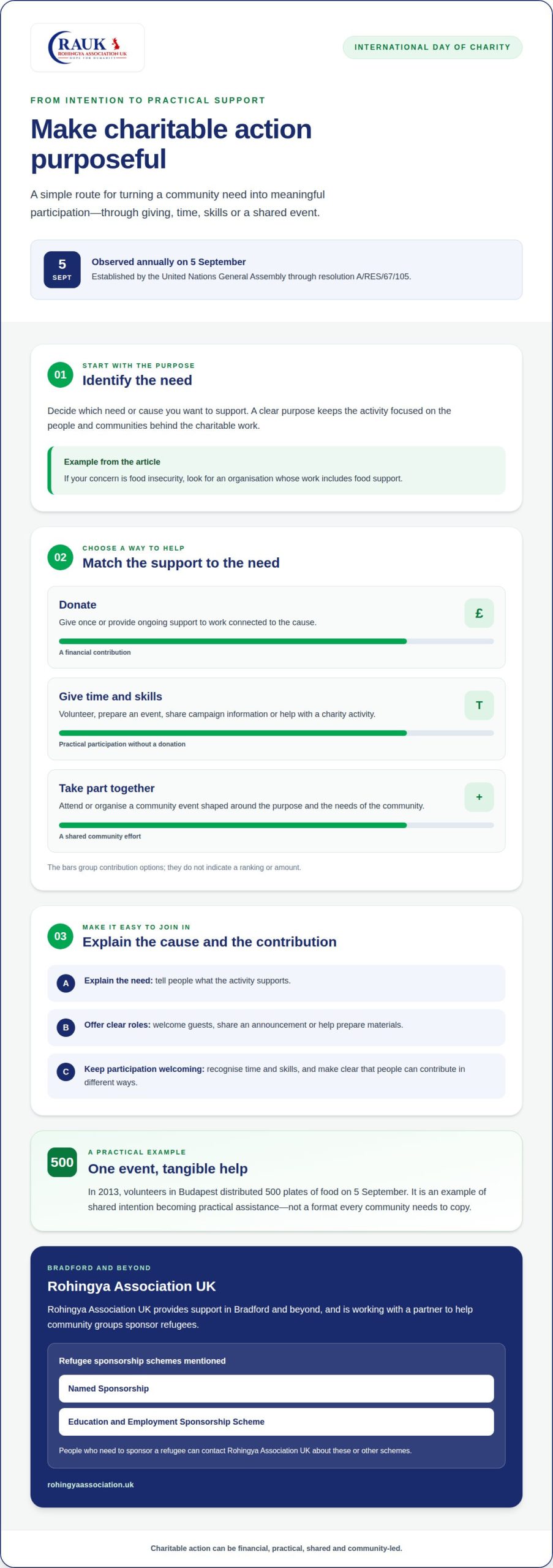
A 2013 event in Budapest gives one concrete example of charitable action: volunteers distributed 500 plates of food on 5 September. The example shows how an event can turn shared intention into practical assistance. People planning International Day of Charity UK activities can draw on the same principle without copying the format. A gathering might centre on food, conversation, fundraising or volunteering, depending on its purpose and community.
To make your contribution purposeful, identify the need you want to address, then choose a suitable form of support, such as donating, volunteering or attending a community event. Explain the cause clearly when inviting others to take part, and show how their participation supports the activity. This gives people a practical way to mark the day while keeping attention on the communities and needs behind charitable work.
Inspiring others to give
People are more likely to join a charitable effort when they understand its purpose and know how they can contribute. For an International Day of Charity gathering, explain the community need, describe a specific activity and invite people to take part through their time, skills or giving. A clear invitation helps everyone choose a suitable contribution without suggesting that they all need to give in the same way.
Mother Teresa’s work is one part of the day’s history. She received the Nobel Peace Prize in 1979, and the Missionaries of Charity she founded began in Kolkata in 1950. These details can help frame a conversation about service, but inspiration should not rest on a famous name alone. Connect the story to a present-day example, such as neighbours supporting families experiencing poverty or a group organising practical help for children.
Make each invitation specific. Ask a neighbour to welcome guests, a colleague to share an event announcement, or a family to discuss a cause together. Children could create a message of solidarity or help prepare materials for a community gathering. Giving people a defined role shows that charitable involvement can include care, communication and practical assistance.
For a workplace or school, make the invitation simple and transparent. Explain which cause the activity supports, what participants will do and how their contribution fits the purpose. A school group, for example, could discuss poverty and suggest respectful ways to raise awareness. A workplace team could share volunteering opportunities and let colleagues choose a suitable task. Clear details help people take part thoughtfully.
Giving can also spread through personal example. Someone who volunteers at a local event can describe the task and its value, then invite others to join a future activity. A supporter who makes a donation can explain why that cause matters to them, without pressuring friends to give. Across nations and communities around the world, these personal conversations can commemorate the day by making charitable action visible and accessible.
Keep the invitation welcoming. Offer ways to contribute that do not depend on money, recognise the time and skills people bring, and give participants a chance to share their own ideas. A community gathering can provide that shared setting; cultural and community events can bring people together around a common purpose. When people feel included, they can carry the spirit of giving beyond a single occasion.
Raising awareness
Awareness campaigns give International Day of Charity a public purpose beyond individual acts of giving. In September, a UK organisation can explain a specific need, describe its mission and invite people to participate. A community group, for example, could share information about poverty and promote a local discussion or volunteering opportunity. International Day of Charity UK activities can bring the message into public view and link information with a clear way to take part.
The United Nations General Assembly invited Member States, UN organisations, international and regional organisations, stakeholders and civil society groups to mark the day through charitable, educational and public awareness-raising activities. A UK organisation could respond with a school session, public event or campaign explaining how an initiative addresses a community need. International Day of Charity activities in the UK can take different forms while connecting learning with meaningful participation.
Social media lets organisations explain their charitable work and invite people to contribute. A useful post could describe a campaign’s purpose, outline its work and invite readers to share volunteering experiences. Keep each message focused on a practical action, such as attending an event or sharing information. This helps followers understand how to take part and keeps campaign messages consistent.
Email gives organisations space to provide context. A message to supporters could connect the occasion, Mother Teresa’s work and the organisation’s own mission. Explain the issue, why the initiative matters and what readers can do next. Invite recipients to attend an event, share campaign information or learn about a charitable project. Clear wording helps readers understand the invitation and keeps the cause in focus.
The first United Nations commemoration took place at UN Headquarters in New York on 5 September 2013. It included two panel discussions on charity’s role in poverty alleviation and access to clean water and sanitation. A UK awareness activity could draw on these themes, then connect them to a relevant local concern. This example illustrates how education can complement charitable action without losing sight of practical needs.
Respectful communication matters when campaigns discuss people experiencing hardship. Focus on the issue and the work being done, rather than defining individuals by difficult circumstances. Organisations sharing an initiative should explain its purpose accurately and treat images or personal accounts with care. Whether a campaign concerns Teresa of Calcutta, a global issue or a local project, accurate information and dignified representation help people engage thoughtfully with International Day of Charity UK activities.
Which UK charities and organisations promote International Day of Charity activities?
No single type of UK organisation is needed to mark International Day of Charity. Charities, community groups, schools, faith communities and employers can all promote activities suited to their work. A local charity might invite supporters to volunteer, while a school could introduce charitable giving through a class discussion. The day’s international purpose allows different organisations to connect their initiatives with a wider call for solidarity.
Charities can use the occasion to explain their mission and make their work visible. A group supporting people experiencing hardship might describe its activities and invite people to a related event or volunteering opportunity. A charity working in education could focus its message on access to learning and community participation. In each case, connect the invitation to work the organisation genuinely undertakes, rather than adopting a cause just for the occasion.
Community organisations can plan activities around local relationships. A residents’ group, cultural association or neighbourhood network could host a gathering, share information about a local need or coordinate volunteers. A community centre, for instance, might bring residents together to discuss how they can contribute time and skills. Familiar settings and practical roles can make charitable action easier to approach.
Schools and youth organisations can help children understand that giving involves more than money. A teacher might lead a discussion about a charity’s purpose, while a youth group could organise a volunteering activity or awareness display. Explain the cause in age-appropriate language and treat people affected by hardship with dignity. A practical activity helps young people connect charitable values with action.
Faith communities and employers can share the occasion with their members or staff. A faith group might include a charitable initiative in a community gathering, while an employer could circulate volunteering information or invite colleagues to support an event. Make the purpose clear and offer ways to participate that suit different circumstances. The aim is to create a route into action, not to pressure people to contribute.
For UK readers, the most useful place to look is within their existing local networks. A charity’s event notice, a school bulletin, a community-centre announcement or an employer’s staff communication may identify activities linked to 5 September. If no event is planned locally, an organisation can still mark the day by sharing accurate information about its work and inviting people to take part in a suitable initiative. This keeps the focus on meaningful, responsible engagement.
Charity event
A charity event can turn a shared concern into a visible, collective act. For an activity marking 5 September, begin by defining its purpose: will it raise awareness, invite volunteers, bring neighbours together or encourage donations? A clear aim helps organisers choose a suitable format and explain the event to prospective attendees. For example, a community gathering might combine a short talk about a cause with opportunities to volunteer or contribute.
Choose a format that fits the people and cause involved. A discussion can give participants space to learn and exchange perspectives; a cultural gathering can bring communities together through shared heritage; a fundraising activity can invite practical support. Events and fundraisers took place around the world in 2014, showing that charitable participation can take different forms. The strongest choice is one that connects the activity with a genuine need.
Planning is easier when organisers assign responsibilities. One person could coordinate the programme, another welcome attendees, and someone else explain the cause. A simple schedule might include a welcome, a presentation about the charity’s work, and time for conversation or participation. Clear roles help make the event purposeful and connect it with charitable action.
Consider who the event is intended to welcome. A family gathering could include activities for children and adults, while a discussion event could leave time for questions. Clear information about the venue, programme and ways to participate helps people decide whether the event suits them. Thoughtful arrangements can help attendees feel respected and included, especially when the subject involves poverty, displacement or distress.
If fundraising is part of the event, explain its purpose plainly. Tell attendees which cause it supports and how they can participate, whether by donating, volunteering or sharing information. Do not suggest that a contribution guarantees a particular outcome. A brief explanation from the organiser, supported by printed or digital information, gives attendees context and keeps the focus on the people and work behind the appeal.
Afterwards, thank participants and share a concise account of what took place. For example, organisers could post photographs with permission, describe the activities and invite attendees to stay involved. Charity events can create a shared experience, strengthen collective commitment and introduce a cause to new audiences. If a community gathering would help bring people together around a charitable purpose, explore support for a community event.
Rohingya Association UK
Rohingya Association UK provides support in Bradford and beyond through community support, education, cultural events and awareness campaigns. If you want to turn charitable concern into sustained community involvement, these activities offer ways to connect people, strengthen participation and share information about local needs.
RAUK is also working with a partner to help community groups sponsor refugees. Groups interested in refugee sponsorship can contact Rohingya Association UK about schemes such as Named Sponsorship and the Education and Employment Sponsorship Scheme. The association’s community support and integration work can also be relevant when people are seeking practical ways to support refugee families and young people.
For help exploring community activities or refugee sponsorship schemes, contact Rohingya Association UK.
Make your commitment lasting
Let the day become a starting point rather than a one-off gesture. Choose a cause that matters to you, then consider how your involvement could continue through shared learning, community participation or practical support. International Day of Charity activities across the UK can bring people together around a purpose that remains important beyond September.
Rohingya Association UK’s work includes Community Support & Integration, Education & Youth Empowerment, and Cultural & Community Events. These areas connect charitable action with belonging, opportunity and shared heritage. If you’re considering how to support community initiatives or take part in this work, contact Rohingya Association UK.
Every thoughtful contribution can help strengthen a wider culture of care. Start where you are, involve others respectfully and keep the commitment going.
Frequently Asked Questions
What is the International Day of Charity?
The International Day of Charity is an annual occasion that encourages charitable action, including giving and volunteering. The United Nations General Assembly established it through resolution A/RES/67/105, according to the United Nations. Its purpose is to bring attention to philanthropy and support for people facing hardship. Individuals, schools and community organisations can mark it in ways that connect with the causes and needs they care about.
How can you get involved?
Get involved by choosing a practical contribution that suits your circumstances. You could share a charity’s campaign with a clear explanation, offer a skill to support an activity or join a local event. If you want to donate, choose an organisation whose work aligns with your priorities. Start by deciding what kind of contribution feels right, then find an activity that gives it a clear purpose.
When is the International Day of Charity celebrated?
The International Day of Charity is celebrated annually on 5 September. The date is the anniversary of Mother Teresa of Calcutta’s death. In 2026, it falls on 5 September. A school, workplace or community group can use the date to plan a gathering or awareness activity, while people unable to participate on the day can still support charitable work at another time.
What charity events and activities are planned in the UK for the International Day of Charity?
UK activities can include charity gatherings, awareness initiatives, volunteering and fundraising. The format depends on the organisers and local communities. A group might host a discussion about a cause, invite volunteers to contribute their skills or arrange an event for supporters. If you plan to attend, check the organiser’s information for the activity’s purpose, timing and ways to take part.
Are there local International Day of Charity events in London and other UK cities?
Charities, schools, workplaces and community groups may organise local events in London and other UK cities. Plans are set by individual organisers, so formats and participation arrangements vary. A neighbourhood gathering, workplace activity or charity event could offer a way to join in. If you are organising an activity, agree on a cause and a format suited to your community before sharing the invitation.
How can individuals take part in the International Day of Charity in the UK?
Individuals can take part by volunteering, donating, attending a charitable event or helping others learn about a cause. Someone with design skills, for instance, could prepare materials for an awareness campaign, while another person could welcome attendees at a gathering. Choose a contribution that fits your time and abilities, and communicate respectfully about the cause and the people it supports.
How can schools and workplaces mark the International Day of Charity?
Schools can mark the day with a lesson about charitable action, followed by a pupil-led discussion or awareness display. Workplaces might invite staff to share their volunteering skills, support a charity activity or discuss a cause connected to their community. In either setting, explain the activity’s purpose and make participation accessible. A brief reflection afterwards can help pupils or colleagues consider how to continue their charitable actions.
What are popular fundraising ideas for the International Day of Charity?
Fundraising ideas include a sponsored activity, a community gathering with voluntary contributions, or a workplace or school event focused on a chosen cause. A group could organise a shared meal or creative event and explain how the funds will support its chosen charitable work. Keep the purpose clear, make participation straightforward and avoid implying that any contribution guarantees a particular result.