

A small budget need not limit what a university society can raise for charity. University society fundraising for charity can start with simple, practical ideas that bring students together, from selling homemade food to organising a clothing swap. The key is choosing something your members can run with the time, skills and resources available.
If you’re looking for affordable ideas that are easy to tailor to your society, this guide will help you choose a starting point. Explore food sales, events, tournaments, merchandise and services, and learn how to make each work for your campus community. A clear purpose and shared effort can turn a modest fundraiser into meaningful support.
Key takeaways
- Choose a fundraiser that matches your society’s skills and resources, then set a clear purpose for the money raised.
- Use online and peer-to-peer fundraising to help members share the appeal with their own networks.
- Compare food sales, events, tournaments, merchandise and services to find an idea that suits your campus community.
- Make bake sales and clothing swaps practical by planning what to collect, how to promote it and how to manage the event.
- Share responsibilities across the group and account for venue rules and food allergen information when planning.
1. What are good fundraising ideas for a college club with a small budget?
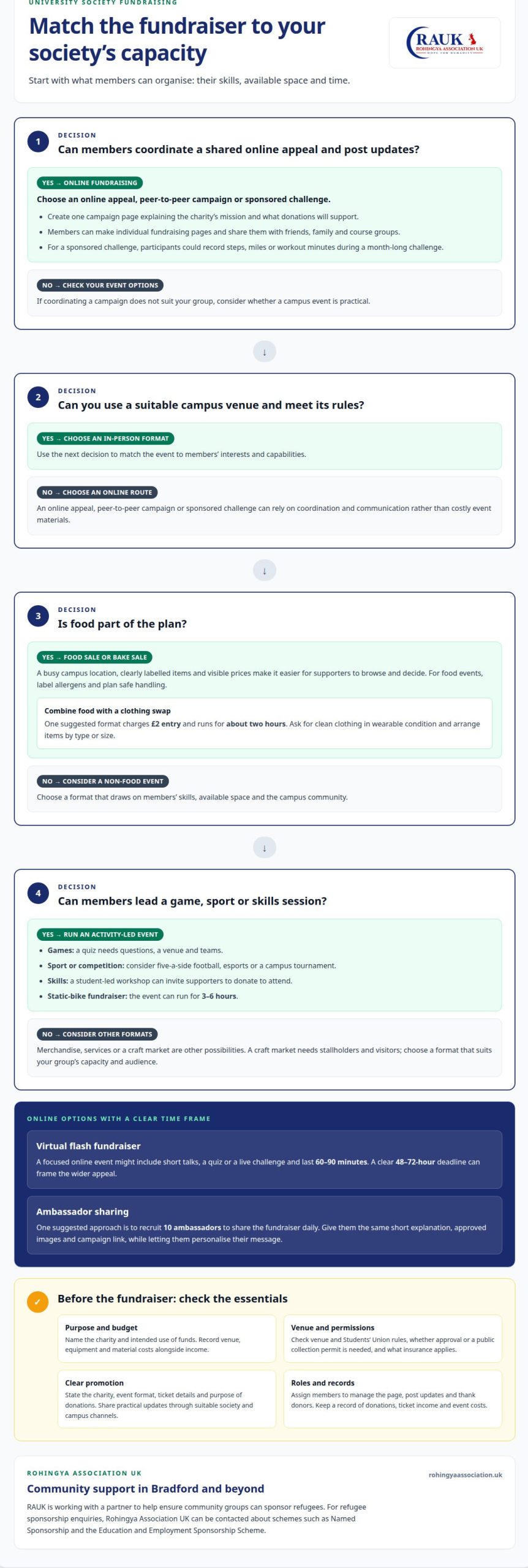
A university society can raise money for charity through an online appeal, a peer-to-peer campaign or a sponsored challenge. Set a clear fundraising goal, explain the cause and give members an easy way to share the appeal and collect donations. These approaches rely on coordination and communication rather than costly event materials.
For peer-to-peer fundraising, create one campaign page that explains the charity’s mission and what donations will support. Members can then create individual fundraising pages and share them with friends, family and course groups. Supporters hear about the appeal from someone they know, while a shared campaign page keeps its purpose and progress visible.
Give each fundraiser a simple sharing plan: post the link, explain why the cause matters and provide progress updates. Short videos can make the message personal. A member might film a brief invitation, describe the challenge or show how the society is preparing. Add captions and a direct donation link so viewers can understand the appeal and respond without searching for details.
A sponsored activity can bring online fundraising into campus life. Members could collect pledges for steps, miles or workout minutes during a month-long challenge. Decide how participants will record their progress, then share regular updates and a final result. A clear start and finish give the campaign structure, while supporters can follow the effort and donate through the same online page.
Ambassadors can extend the campaign beyond the society’s existing followers. One suggested approach is to recruit 10 ambassadors to share the fundraiser daily. Provide each person with the same short explanation, approved images and campaign link, while inviting them to personalise their message. This keeps the charity’s purpose consistent across posts without making every update feel identical.
For alumni, consider a virtual flash fundraiser lasting 60-90 minutes. A focused online event might include short talks, a quiz or a live challenge, with donations collected through the campaign page. A clear 48-72-hour deadline can frame the wider appeal. If the society sells tickets, state plainly whether they include event access or support the charitable total.
Before launching, assign members to manage the page, post updates and thank donors. Send a reminder halfway through the campaign, then share the outcome and acknowledge contributions when it closes. These steps make online university society fundraising for charity easier to follow and give every member a defined role in raising support.
2. Food sales, events, tournaments, merchandise, and services
For a campus event, match the format to members’ skills, available space and the charity’s mission. A quiz needs questions, a venue and teams; a craft market needs stallholders and visitors. University society fundraising for charity works best when the event’s purpose is clear before promotion begins.
Low-cost events can still bring supporters together for a shared experience. These examples help organisers estimate income and expenses before setting ticket targets. Keep a simple budget that records venue, equipment and materials alongside ticket income.
For a more active fundraising event, consider five-a-side football, esports or a skills session. Student-led workshops can also draw on members’ knowledge, with supporters donating to attend.
Alumni may support an event by attending, promoting it or making a matching gift. A society can invite alumni to match donations up to a stated limit, then explain the arrangement clearly to participants. Local businesses can also support an event or contribute materials. Keep sponsorship terms transparent, including the recognition a partner will receive.
Promote the event through society newsletters, group chats, campus noticeboards and social media. Use one clear message that names the charity, event format, ticket details and purpose of the donations. Ask members and alumni to share the same event page, then post reminders and practical updates. This helps supporters know where to go and how their contribution will be used.
Choose a charity whose work aligns with the society’s values and the cause members want to support. Agree how funds will be transferred and describe their intended use honestly. Record donations, ticket income and event costs in one place, and provide a receipt or written acknowledgement that identifies the payment and date.
Before booking, check the venue and Students’ Union rules, including whether you need approval or a public collection permit. Ask what insurance arrangements apply to the space and activity. For food events, label allergens and plan safe handling. These steps help organisers manage crowd, food and financial risks while keeping the fundraiser’s purpose clear.
A university static-bike fundraising event can run for 3-6 hours. Campus charity tournaments can charge teams an entry fee and encourage teams to fundraise together. Student society fundraisers can promote events through flyers, group chats, campus radio, and social media. Merchandise, food vendors and team-based activities each offer a different way for members and supporters to take part, so choose an approach that suits the club’s capacity and audience.
3. Bake sales and clothing swaps
A bake sale gives a student society a simple way to turn members’ baking into donations. Choose a busy campus location, set out clearly labelled items and display the charity’s purpose. Homemade cakes, biscuits and savoury bakes offer variety, while individual portions make serving straightforward. Put the price beside each item so supporters can decide quickly between lectures.
For a shared event, combine a clothes swap with a bake sale. One suggested format charges £2 entry and runs for about two hours. Ask participants to bring clean clothing in wearable condition, then arrange items by type or size. A clear exchange system helps visitors browse fairly, while the entry contribution supports the fundraising goal.
Plan the table before the event. Give members distinct roles for baking, setting up, serving and handling payments. Display a QR code beside the cash collection point that links to the same charity appeal. This offers another way to contribute, including for visitors who arrive without cash. Keep sales and donations in separate records, then report the combined result accurately.
Food stalls can take the idea beyond cakes. Choose a compact menu that volunteers can prepare and serve efficiently. This gives passers-by a clear exchange for their contribution.
Merchandise sales can help a society make its identity a visible show of support. Consider tote bags, badges or society-designed prints, and promote orders before producing stock. Pre-orders help estimate demand and reduce unsold items. State what the sale supports, how customers will receive their items and whether any proceeds cover production before the remainder goes to charity.
An auction can bring donated goods or experiences into a fundraiser. Invite contributions from members, alumni or local supporters, then describe each lot accurately. Set a closing time, record the winning bid and payment, and thank each donor. A small silent auction can run alongside a clothes swap, giving attendees another way to support the cause.
Promote the event with a concise notice on society channels and campus boards. Include the date, location, entry arrangements and accepted donations. Ask members to share the same details, then post a reminder before opening. Afterward, share the amount raised and explain how funds will reach the chosen charity. Transparent follow-up recognises contributors and gives future events a clear foundation.
4. Student society and student group fundraising ideas
Choose fundraising ideas based on what students can contribute consistently. A one-week hall-versus-hall change-jar challenge needs jars, clear labels and regular collection. Set the purpose first, such as funding a society activity or supporting a charitable cause, then explain how the money will be used.
For a quick, low-effort fundraiser, run a guess-the-sweets or name-the-teddy activity. A small team can manage entries, payments and the winner announcement. A sponsored 5K or fun run needs more coordination, but group members can share route planning, registration and participant communications.
Sports and interest groups can build fundraising around their existing strengths. A university team might host a skills session or friendly tournament, while a games society could run a challenge suited to its members. Agree on the format, roles and intended use of funds before promoting the event. This helps participants understand whether the proceeds support equipment, travel or a chosen charity.
Alumni can contribute through matching gifts, which give supporters a clear reason to donate during a campaign. A group could seek matching support from 3-5 alumni, with each match limited to an agreed amount. Explain the cap and matching period in the appeal. Share progress updates as donations come in, so supporters can see how their contributions advance the funding goal.
Student organisations should follow their institution’s fundraising process before collecting charitable donations. Campuses often require approval from student activities or an organisation adviser before an on-campus fundraiser. Keep the purpose clear, record income and expenses, and state how collected funds will reach the chosen cause. These steps help distinguish charitable donations from money retained for group costs.
A simple spreadsheet can track donations, spending, volunteer roles and progress towards the target. One committee member can record transactions, while another shares updates and stores receipts. For a larger event, a 4-6-person committee can divide planning responsibilities; the suggested schedule places recruitment in week five before the fundraiser. Afterward, reconcile the totals and report the outcome to members and donors.
For steady progress, set a specific target and a deadline, then match the fundraising method to the group’s capacity. A change-jar challenge needs regular collection; a 5K needs event planning and participant support. Clear roles, accurate records and timely updates help a student society account for its fundraising and show how the effort served its purpose.
5. Food-based fundraisers
Food can bring people together around a cause while giving supporters something tangible in return. For university society fundraising for charity, choose a format that suits your audience, available volunteers and campus setting. A student group might sell study snack packs, organise a shared meal or invite friends to a food-themed event. Keep the charity’s purpose visible so each purchase connects with the reason for raising funds.
A study snack-pack sale can suit busy students preparing for exams. Ask members to take pre-orders before buying ingredients to help plan quantities and avoid surplus. Label each pack clearly, then display a QR code linking to the donation page for anyone who wants to give more.
A restaurant fundraiser needs a willing venue partner and a clear arrangement. The restaurant can donate 15% to 20% of sales during the agreed event. A suggested slot is Tuesday from 5 to 9 p.m. Share the date, participating venue and any booking instructions through society channels. Ask supporters to mention the fundraiser when ordering, if the arrangement requires it, and explain how the restaurant will count eligible sales.
Food can also be part of an event rather than the whole activity. Pair refreshments with a trivia night, for example, and invite teams to answer questions between rounds. Members or local sponsors could donate small prizes, reducing the society’s outlay. Promote the food and activity together so friends know what to expect and can decide whether to attend.
For a larger shared meal, keep the menu focused. A simple soup-and-bread supper or a tea-and-cake gathering can take less planning than a broad menu. Assign members to purchasing, preparation, serving and payment. Display the charitable purpose beside the food, and record expenses, sales and donations. The amount available for the cause depends on income after event costs.
Food-based fundraising works best when the practical details are settled early. Choose an accessible location, set serving times, plan how food will be stored, and display ingredient and allergen information. A short menu makes quantities easier to estimate. Decide who handles payments, answers questions and records the final total; these simple steps help the event run smoothly.
After the event, thank the restaurant partner, food donors, volunteers and attendees. Share a brief update showing the amount raised and its intended charitable purpose. If your society wants to connect food fundraising with wider community support, explore community food support.
Rohingya Association UK
Rohingya Association UK supports Rohingya refugees and families through Community Support & Integration, Education & Youth Empowerment, Cultural & Community Events, and Advocacy & Awareness Campaigns. It provides support in Bradford and beyond. For a society deciding where its fundraising could contribute, these areas connect collective effort with community needs.
RAUK is working with a partner to make sure community groups can sponsor refugees. Groups interested in refugee sponsorship can contact Rohingya Association UK about schemes such as Named Sponsorship and the Education and Employment Sponsorship Scheme. This sits alongside its wider work in refugee settlement and integration.
For university societies planning a fundraiser linked to community support or awareness, contact Rohingya Association UK to discuss the next step.
Turn a shared purpose into lasting support
University society fundraising for charity can do more than meet a short-term target. It can help students build a lasting connection with a cause and encourage supporters to stay involved after an event ends. Keep that relationship active by sharing the outcome clearly, listening to community priorities and making future efforts responsive to them.
For societies considering how their fundraising could contribute to refugee and community support, Rohingya Association UK’s work offers a relevant focus. Its Community Support & Integration, Education & Youth Empowerment, and Cultural & Community Events programmes help groups consider where their commitment may be useful. A thoughtful conversation can clarify the purpose of a future fundraiser and its connection to community needs.
Keep the next step simple and grounded in the cause your members want to support. Contact Rohingya Association UK to discuss how your society’s fundraising might contribute. Each considered act of solidarity can help sustain a stronger, more connected community.
Frequently Asked Questions
What are good fundraising ideas for a student society with a small budget?
Choose an activity that uses skills or resources students already have. For example, a society could run a peer-led revision session and invite attendees to donate to its chosen cause. A digital appeal can support the event without printed materials. Make the invitation specific: explain what the session offers, who benefits from the fundraising and how people can contribute afterward.
What are the most effective fundraising ideas for student societies?
The strongest fit depends on the group’s audience, available skills and capacity to organise. A society with an active online network might prioritise a shared digital appeal; a group with a strong campus presence could run an in-person activity. Compare options by likely participation, volunteer time and costs, then choose one clear format rather than dividing attention across several campaigns.
How can a student society set a fundraising goal and budget?
Start with the intended use of the funds, then calculate the amount required. List expected costs, such as materials, venue hire or payment processing, separately from anticipated income. Estimate the net amount by subtracting costs from income. Set a deadline and assign someone to record transactions so the society can adjust its plan if spending or donations differ from expectations.
How can a student society promote a charity fundraiser and measure its results?
Use a short event message across society channels, group chats and relevant campus noticeboards. Give each channel a distinct tracked link or QR code so organisers can see where visits and donations come from. Record attendance, contributions, spending and the final net amount. After the fundraiser, share a concise results update with participants and explain how the money will support the stated purpose.