
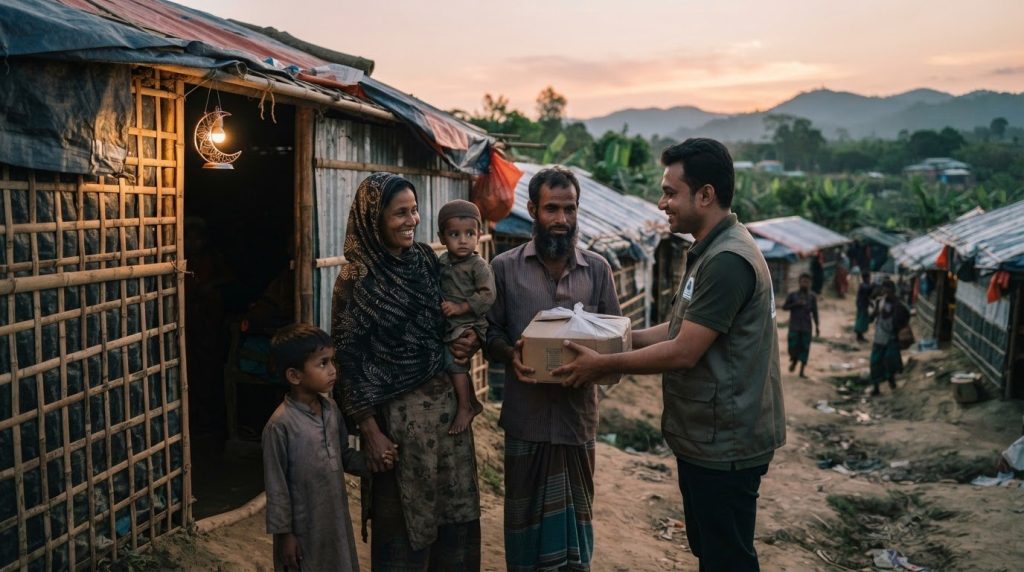
What makes a Ramadan gift truly thoughtful: the urgency of need, or the clarity of the promise behind it? A Ramadan appeal for Rohingya families can invite generous support, and donors should be able to understand the purpose of an appeal and how its funds are intended to be used.
Rohingya families deserve support that recognises their dignity, resilience and right to shape their own futures. Whether you’re considering Zakat or Sadaqah, this guide explains how to read an appeal, compare its stated purpose with your intentions and make an informed donation.
Rohingya Association UK (RAUK) is a community-led charity providing support in Bradford and beyond. Its work includes practical support, education, crisis intervention and advocacy, as well as energy advice and support. RAUK works in partnership with Fuel Bank and HACT, and is a member of National Energy Action (NEA). RAUK accepts donations to fund aid projects in the UK, Myanmar and Bangladesh, supporting crisis intervention, education and community integration for displaced Rohingya families.
Key takeaways
- A Ramadan appeal gathers donations for a stated humanitarian purpose. Read its details to understand what the funds are intended to support.
- Funds can be raised for Bangladesh. Check the appeal’s stated destination and purpose rather than assuming where a particular donation will go.
- Use a simple four-part check before donating: purpose, destination, charity identity and donation conditions.
- When considering a Ramadan appeal for Rohingya, distinguish current campaign information from general humanitarian needs and claims about older campaigns.
- Zakat and Sadaqah reflect different giving intentions. Consider the appeal’s information alongside your own religious guidance.
Why a Ramadan appeal for Rohingya families matters
A Ramadan appeal is an invitation to give towards a humanitarian purpose during the holy month. It can connect generosity and solidarity with practical support, but every appeal has its own stated destination, purpose and arrangements for donations. The title alone does not explain how funds may be used.
Rohingya people have faced displacement and profound uncertainty while maintaining family, cultural and community ties. Understanding this wider context can help donors approach an appeal with care. The Rohingya genocide background offers historical context, but it does not establish what a current campaign funds. A thoughtful Ramadan gift starts with clear information, respects people’s dignity and gives you the basis for an informed choice.
What should a donor understand about Rohingya appeals?
Humanitarian need is broad, but an individual appeal should explain its purpose. Funds can be raised for Bangladesh, yet that does not establish the destination or permitted use of a particular campaign’s donations. Some campaigns describe food or livelihood support. Those are examples of purposes set out by those campaigns, not a promise attached to every appeal or a description of all RAUK programmes.
Why does giving during Ramadan call for careful attention?
For many people, Ramadan is a time of faith, generosity and shared responsibility. That can make giving especially meaningful, but it is still important to understand the appeal before donating. Urgency is no reason to rely on an old post, assume a particular outcome or feel pressured to give. Clear, current information helps you make a considered choice and give with respect for the people the appeal concerns.
- Read the appeal’s stated purpose rather than inferring it from a broad humanitarian message.
- Look for the named destination, such as Bangladesh, and how the campaign describes the use of funds.
- Separate campaign-specific examples from the wider needs of Rohingya families.
These distinctions matter because an appeal’s description is the basis for a thoughtful donation decision. If the purpose or donation conditions are unclear, do not fill in the gaps with assumptions. Use the campaign’s published details to decide whether its aims match your intentions. Informed giving supports humanitarian work without reducing people to their circumstances or promising outcomes that have not been stated.
What a Rohingya Ramadan donation may support in Bangladesh
Funds can be raised for Bangladesh, but naming a country does not, on its own, explain which activities a campaign intends to support or how it will handle donations. Those details should be set out in the appeal. A broad message about humanitarian need can explain why support matters, but it should not be read as a promise that a donation will provide a particular item, reach a named family or achieve a specific result.
Other organisations’ campaigns show how varied stated purposes can be. GlobalGiving has described a project combining immediate relief with longer-term livelihood support, while a JustGiving campaign described fundraising for food packs. These are examples of separate campaigns, not descriptions of every Rohingya appeal or statements about what RAUK donations fund. Read each example in the context of the campaign that published it.
How can donors understand an appeal’s stated purpose?
Read the current appeal description together with its donation terms. Check whether the page names Bangladesh, specifies an activity or describes a broader purpose. If it distinguishes immediate relief from longer-term support, keep those aims separate instead of assuming one includes the other. The appeal’s wording should shape your expectations. General information about humanitarian need cannot fill in details that a campaign has not stated.
For example, if a campaign names a general humanitarian purpose but no particular item, do not turn your donation amount into a claim that it buys food, shelter or another specific form of assistance. If the campaign describes a defined project, refer to its own wording and conditions when explaining your decision to others. A donation supports the stated purpose, but it does not guarantee an individual outcome.
Why is community dignity important in humanitarian giving?
Rohingya people and families have their own histories, relationships, knowledge and aspirations. An appeal can acknowledge displacement and the reasons support may be needed without portraying people only through hardship. Respectful language recognises people’s agency and avoids implying that every family has the same circumstances or will receive the same assistance.
This distinction also helps donors understand what they are choosing to support. Describe an appeal by its published purpose, not by assumptions drawn from photographs, past campaigns or general need. For information about RAUK’s work and donations, visit Rohingya Association UK. If you are weighing religious giving intentions, the Differences between Zakat and Sadaqah may help clarify the distinction. It does not replace an appeal’s own information or your personal religious guidance.
How to assess a Ramadan appeal for Rohingya before donating
A moving story can draw attention to a cause, but it does not answer the practical questions behind a donation. Before choosing a Ramadan appeal for Rohingya families, establish what the campaign says it will do, where it intends funds to go, which organisation is responsible and what conditions apply to your gift.
Start with the current campaign page, not a screenshot, repost or link to an older appeal. Ramadan campaigns can change from year to year, so information from a previous appeal is not evidence of current arrangements. If a social post differs from the donation page, rely on the current, detailed campaign information and resolve the discrepancy before donating.
Which details should donors look for?
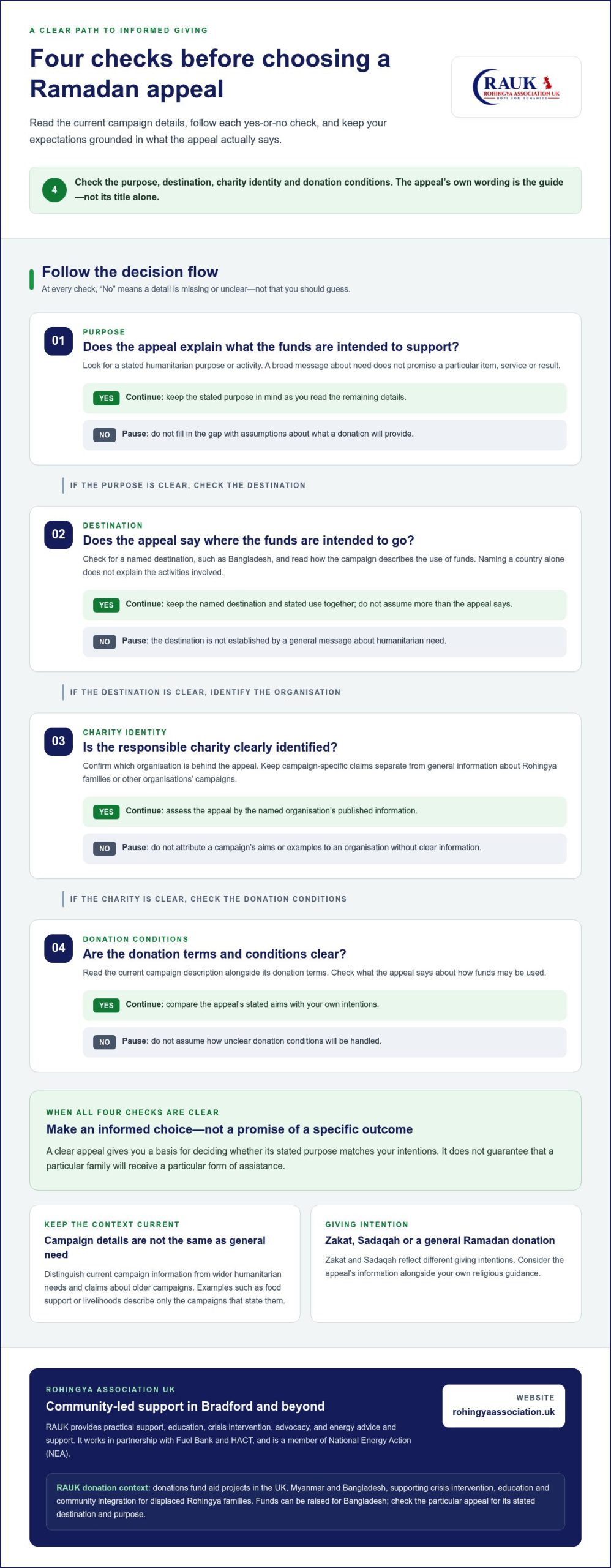
Work through these four checks in order. They help separate what the campaign actually states from what you might hope it will achieve.
- Purpose: Identify the appeal’s stated aim. Does it describe a particular project or a broader humanitarian purpose? Do not infer specific activities from general wording.
- Destination: Look for the country or area named by the campaign. Funds can be raised for Bangladesh, but do not assume that is the destination of a particular appeal unless its current information says so.
- Charity identity: Note the organisation responsible for the appeal. Check that its identity is consistent across the campaign description and donation page. A fundraiser’s personal account is not automatically the organisation receiving or directing the funds.
- Donation conditions: Read how the appeal says donations will be handled, including any stated restrictions, fees or arrangements if the stated purpose cannot be met. Do not assume conditions that are not described.
Next, distinguish campaign facts from supporting material. A named destination and stated use are campaign information. A testimonial describes someone’s experience, while an estimate may be an approximation. General explanations of humanitarian need provide context, but they do not prove that a specific appeal will fund a particular activity. Consider each type of information for what it can actually establish.
How can donors avoid assumptions about impact?
Do not automatically translate a donation amount into a promised item, service or named beneficiary. Costs, delivery arrangements and individual circumstances can vary, and an appeal may not make item-by-item promises. An older campaign can show how one appeal was presented, but it cannot confirm the purpose, destination or donation conditions of a current one.
- Can I find the current appeal’s purpose and destination?
- Is the responsible organisation clearly named?
- Can I understand the donation conditions?
- Am I relying on current campaign details rather than an old post or an assumption?
Clear appeal information explains intended use, not individual outcomes. That distinction supports a considered choice: you can decide whether the published purpose aligns with your intentions without making promises the campaign itself does not make.
Choosing between Zakat, Sadaqah and a general Ramadan donation
A donation decision involves both your intention and the appeal’s terms. Zakat and Sadaqah are distinct forms of giving. Zakat is an obligatory form of giving for Muslims who meet the relevant conditions, while Sadaqah is voluntary. A general Ramadan donation may describe the timing or purpose of a gift without identifying it as either. This is a practical distinction, not a religious ruling.
If you intend to give Zakat, look for a clear, current statement that the specific appeal accepts it. Do not assume eligibility because another charity accepts Zakat or because the appeal describes humanitarian need. The campaign’s published information and your own religious guidance both matter. For questions about your obligation or whether a particular donation fulfils it, seek advice from a trusted qualified religious adviser.
Compare your intention with the appeal terms
Use this guide to identify what to consider before donating. The descriptions refer to common giving intentions, not guaranteed categories of use by RAUK or any other organisation.
Giving intention | What to check | Suitable next step
Zakat: You intend to give obligatory Zakat. | Does this specific, current appeal explicitly state that it accepts Zakat? | If the statement is unclear, do not infer eligibility. Consult a trusted qualified adviser about religious questions.
Sadaqah: You intend to give voluntary charity. | Do the appeal’s stated purpose and donation conditions fit your intention? | Read the current campaign information and give only if its terms align with your understanding.
General Ramadan donation: You want to give during Ramadan without designating the gift as Zakat or Sadaqah. | How does the appeal describe the donation’s intended use and any restrictions? | Choose an option whose published terms reflect what you mean your gift to support.
When might Sadaqah or a general donation fit?
Sadaqah or a general donation may suit someone whose intention is voluntary support, provided the appeal’s terms align with that intention. Neither label promises that funds will reach a named person or meet a particular need. A campaign’s stated purpose describes its intended use, but it does not guarantee an individual outcome.
Before giving, make sure the donation option matches both your intention and the appeal information. If the campaign offers separate choices, read their descriptions rather than relying on assumptions about how funds are managed. For religious questions, an appeal page provides campaign information but cannot replace personal guidance from a qualified adviser.
For a considered choice, read about RAUK’s work and donation options, including the stated purpose and terms of the appeal. This helps you give with intention and keeps expectations grounded in the information provided.
Support Rohingya families through RAUK in Ramadan and beyond
Humanitarian support can address immediate concerns while helping people and communities build towards the future. RAUK’s work includes community support, education, crisis intervention and advocacy. The charity also provides energy advice and support, works in partnership with Fuel Bank and HACT, and is a member of National Energy Action (NEA). Together, these areas of work reflect the importance of practical assistance, opportunity and a voice in matters affecting the community.
RAUK accepts donations to fund aid projects in the UK, Myanmar and Bangladesh. Donations support crisis intervention, education and community integration for displaced Rohingya families. The purpose and terms attached to a particular appeal explain what that campaign intends to support, while the wider range of RAUK’s work provides context about the charity’s broader activities.
How does RAUK’s wider work support community resilience?
Community support and education can strengthen connection and opportunity. Crisis intervention responds to urgent circumstances, while advocacy draws attention to wider issues affecting Rohingya people. RAUK’s energy advice and support also form part of its practical community work. These areas are connected, but not interchangeable: the stated purpose of an appeal explains what that fundraising is intended to support.
What is a thoughtful next step this Ramadan?
Read the appeal information and consider whether its stated purpose and conditions match your intention. If you’re choosing between Zakat, Sadaqah or a general donation, make that decision with the campaign’s published information and your own trusted religious guidance in mind. A considered choice respects your values and the dignity of the people the appeal concerns.
Explore RAUK’s work and consider how you’d like to support Rohingya families this Ramadan: Explore RAUK’s work and support Rohingya families.
Let thoughtful giving continue beyond Ramadan
A considered act of generosity need not end when Ramadan does. The month’s close can be a moment to renew attention to the relationships, resilience and choices that shape community life. A Ramadan appeal for Rohingya families can form part of a longer commitment when support is grounded in dignity and avoids claiming certainty about what a single gift will achieve.
Thoughtful giving is not only about the moment of donation. It also means making space to learn, listen and remain connected to the communities whose lives and futures matter. You can choose a way to contribute that reflects your values while respecting the people at the heart of humanitarian work.
If you’re ready to take the next step, explore RAUK’s work and consider how you’d like to support Rohingya families. Your choice can help carry a spirit of solidarity into the months ahead. Explore RAUK’s work and support Rohingya families.
Frequently Asked Questions
Can I give Zakat through a Ramadan appeal for Rohingya?
That depends on the appeal’s stated arrangements and your own religious guidance. If the donation page offers a Zakat option, read its explanation rather than relying on the button label alone. Keep a record of the campaign wording you relied on, particularly if you want to review your giving later. For questions about whether a donation fulfils your religious obligation, consult a trusted qualified adviser.
Is a Ramadan donation for Rohingya families eligible as Sadaqah?
It may reflect your intention to give Sadaqah, but the label and handling of a donation depend on the appeal’s terms. If you intend to give voluntary charity, check that the donation option and campaign description match that intention. A general donation is not automatically classed as Sadaqah by the organisation. For personal religious guidance, speak with someone qualified whom you trust.
How can I check where a Rohingya Ramadan appeal donation will go?
Trace the donation route from the appeal description to the payment page and check that the organisation and purpose remain consistent. If the payment page names a different recipient or the wording changes before you donate, pause and clarify what the page says the contribution supports. Comparing the pages can help you avoid relying on a social media caption that leaves out important campaign details.
Can Ramadan appeal funds be raised for Bangladesh?
Yes, an appeal can raise funds for Bangladesh. That does not tell you the destination of a particular campaign. Look for the country in the current appeal information and distinguish it from the location of the organisation running the appeal. If the destination matters to your decision, do not infer it from the campaign title or information about fundraising in a different year.
What is the difference between Zakat and Sadaqah for humanitarian giving?
Zakat and Sadaqah describe different giving intentions: Zakat is obligatory for Muslims who meet the relevant conditions, while Sadaqah is voluntary. The distinction matters when selecting a donation option, because an organisation’s handling of one category does not establish how it treats the other. If you are uncertain which intention applies to your circumstances, seek religious guidance rather than relying on a campaign’s general description.
How can I support Rohingya families in Ramadan without making assumptions about impact?
Use the appeal’s own description when deciding what your donation is intended to support. If a campaign describes a broad purpose, do not tell others that your gift will provide a particular item or reach a specific household. If you share the appeal, pass on its current information accurately. This helps keep public understanding aligned with what the organisation has stated.
Does Rohingya Association UK support people only in Bradford?
No. RAUK provides support in Bradford and beyond. Its community work includes practical assistance, education, energy advice and support, crisis intervention and advocacy. The stated purpose of a particular appeal explains its intended scope, so distinguish that campaign’s focus from the full range of the charity’s work.