
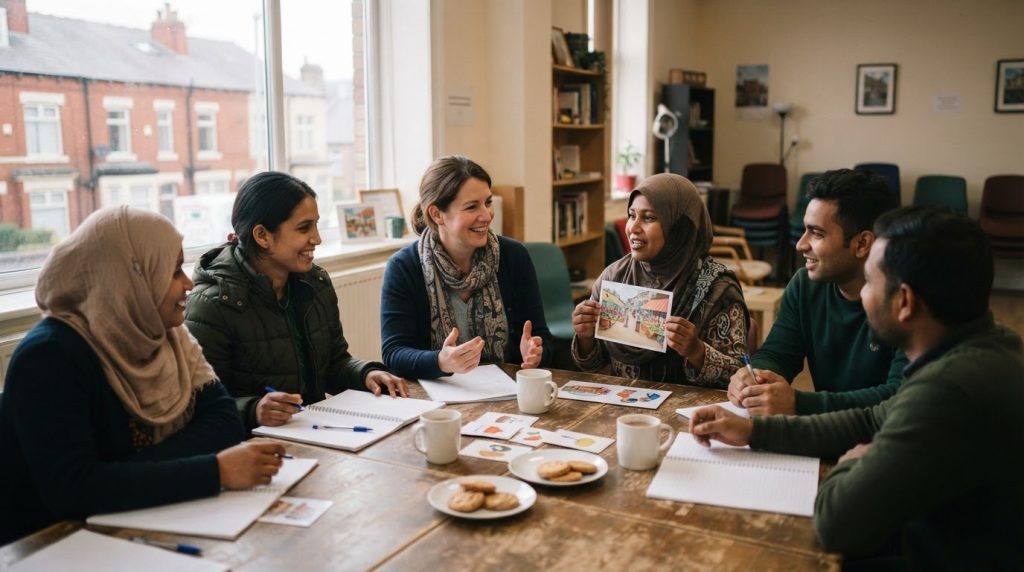
What makes an English class the right fit: the level, the timetable or the confidence to use what you learn in everyday life? Searching for “English classes for refugees UK” can raise practical questions, especially when you’re new to an area and unsure where to begin. The right support should reflect your learning needs and the demands of daily life.
This guide explains what to check before joining a class, including whether the level, location, format and schedule suit you, and whether fees apply. It also looks at how English practice can support everyday communication and community participation, and where to look for local learning support in Bradford and beyond.
Rohingya Association UK (RAUK), a community-led charity based in Bradford, provides English language classes as part of its wider education and community integration support. The guidance below can help you compare options and prepare questions for providers, whether you’re looking for support for yourself or someone you know.
Key Takeaways
- When exploring English classes for refugees UK-wide, compare the level, location, timetable, format and accessibility before deciding what may suit you.
- Set a practical learning goal, check local options and confirm current enrolment arrangements, fees and class details directly with each provider.
- Structured lessons and self-study can complement one another. Consider which approach fits your routine and how you hope to use English in daily life.
- RAUK provides English language classes and community support in Bradford and beyond. Check directly for current availability and arrangements.
English classes for refugees in the UK: what learners can expect
Finding a class in a new country can feel unfamiliar. Providers, course names and enrolment arrangements may all be new. Start by considering what you want to learn, then check which local options fit your needs. Asking specific questions helps you compare classes without assuming that every course is open to everyone.
English classes for refugees are language-learning opportunities intended to help people communicate and participate in everyday life. Classes may practise speaking, listening, reading and writing, but their content, level and teaching approach vary by provider. Availability and entry requirements can also differ by area, so check current details directly rather than relying on a general description.
What can English language learning help with in everyday life?
Learning English may help someone ask for information, explain what they need or take part in a local activity. For example, a learner might practise asking for directions or following a conversation at a community event. Progress is individual. Classes can offer practice and support, but they can’t guarantee fluency, employment or a particular outcome.
You may see the term English for speakers of other languages (ESOL). In the UK, ESOL is commonly used to describe English language learning for people whose first language isn’t English. Course content can cover different skills and starting points. Ask a provider what its course covers and how it decides whether a class is suitable for you.
Who might look for refugee English classes?
Refugees may look for classes to build confidence using English in situations that matter to them. Family members might help compare options or make an enquiry, while support workers and community members may help someone find local learning opportunities. Learners’ needs differ: previous education, languages spoken, confidence and personal circumstances can all shape what feels appropriate.
Location matters, too. A class may be difficult to attend if its venue or timetable doesn’t fit someone’s routine, and a suitable option in one area may not be available elsewhere. Before making plans, ask about the level, format, schedule, accessibility, any fees and how to enrol. If the process feels unfamiliar, consider asking someone you trust to help with the enquiry.
In Bradford, Rohingya Association UK (RAUK) is a community-led registered charity supporting Rohingya refugees, families and young people. It provides English language classes and wider community support in Bradford and beyond. Check directly whether classes are currently available, where they take place and what arrangements apply.
How English classes can support confidence, communication, and participation
Learning English can involve more than studying words and grammar. A learner may want to feel more at ease in conversation, understand written information or take part in an activity that matters to them. These aims are personal and may change over time. English classes for refugees UK-wide can offer structured opportunities to practise, but the best fit depends on each learner’s priorities and what is available locally.
Accessible English support can help people participate in community life by making communication and connection more manageable. It can’t guarantee a particular outcome. Practice may, however, help someone express a view, follow a discussion or decide when to ask for clarification. The Migration Observatory at the University of Oxford discusses how language abilities can affect access to services, highlighting why learners may value support that relates to their own everyday circumstances.
Which learning goals might a refugee learner have?
One person may want to speak with more confidence in informal conversation; another may prioritise understanding letters, joining a local group or building language skills for further education. Someone considering work-related learning might focus on workplace vocabulary or communicating with colleagues. These are possible goals, not a prescribed pathway. Think about what matters to you and ask whether a course’s content aligns with it. Check separately whether a specific course offers a qualification, as this shouldn’t be assumed.
Structured classes and self-study materials can serve different purposes. A class may provide a planned learning setting and opportunities to practise with others, while independent study can help a learner revisit words or topics at a convenient time. The approaches can complement each other, but neither suits everyone equally. Consider what feels manageable alongside other responsibilities.
How can language learning connect with community life?
Practising language in familiar settings and having regular opportunities to use it may help learners feel more prepared to join conversations and activities. The experience varies by provider and learner, so ask what a class involves rather than assuming a particular teaching method or outcome.
For young people, language learning can sit alongside wider opportunities for education, skills and community participation. RAUK’s Refugee Youth Empowerment Programmes offer a related perspective on support for young people. RAUK provides support in Bradford and beyond; check directly for current details of its English classes and wider services.
How to compare English classes for refugees across the UK
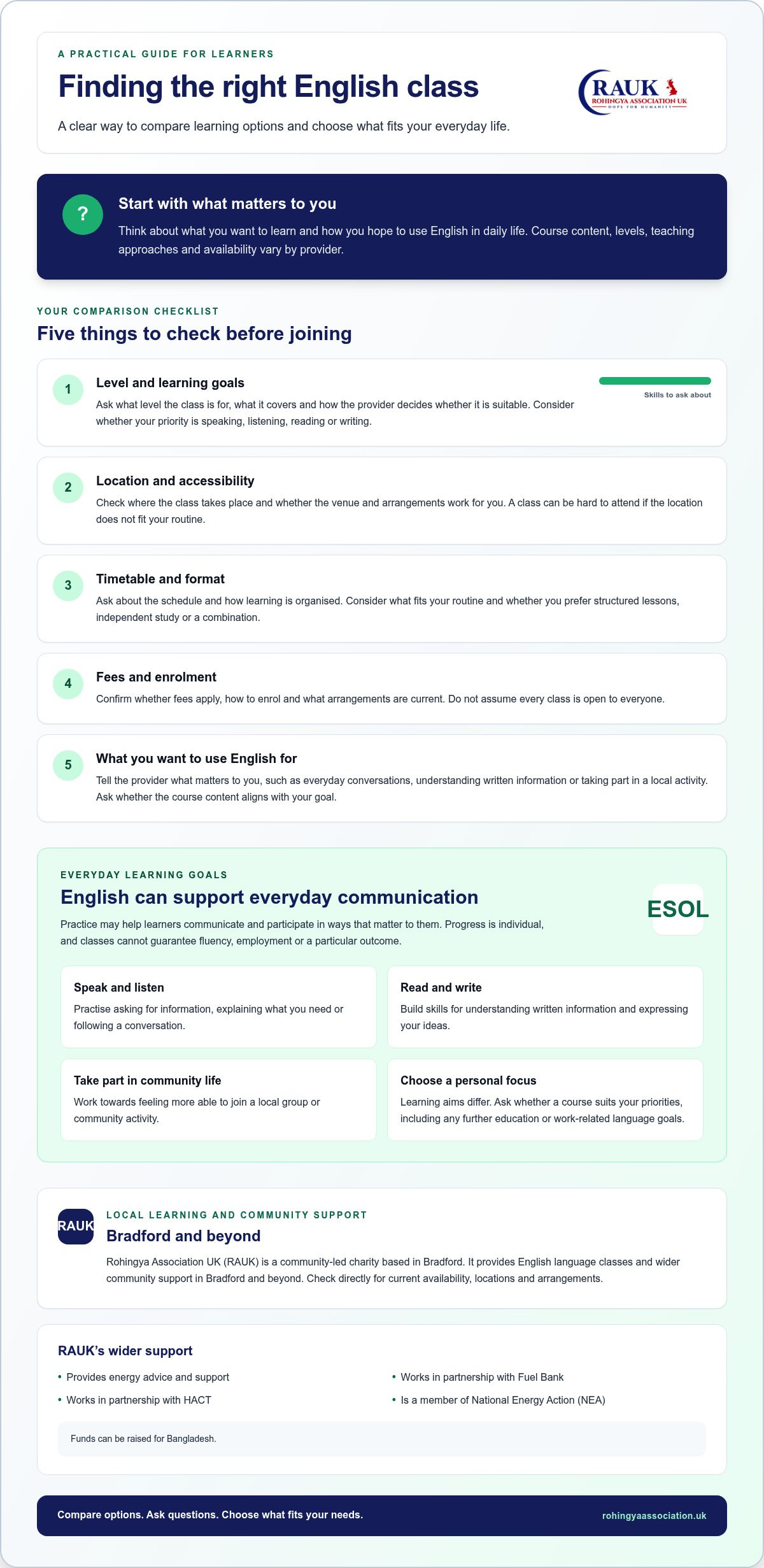
A search for English classes for refugees UK-wide can point you towards general information, but classes are arranged locally. Provision, timetables and enrolment processes may differ between Bradford and other areas. Use the questions below to compare options, then confirm the answers with each provider. They’re prompts, not claims about what any particular class offers.
What should you ask before choosing a class?
Start by asking what is available now and whether it fits your aims and circumstances. If you’re unsure of your English level, ask how the provider assesses suitability. You don’t need to identify a level on your own before making an enquiry.
| What to compare | Question to ask |
|---|---|
| Location | Where does the class take place, and is the venue practical to reach? |
| Schedule | What days and times are classes held, and how often do they meet? |
| Format | Are sessions in person, online or delivered another way? |
| Level and goals | How is suitability assessed, and does the course match what I want to learn? |
| Accessibility | Can the provider explain any arrangements that may affect my ability to take part? |
| Fees and enrolment | Are there any fees or joining requirements, and how do I enquire or register? |
Ask for clear, current answers before making plans. A class may suit someone seeking everyday conversation but not match another learner’s goals or preferred way of learning. If the first option isn’t suitable, ask whether the provider can suggest another local route, without assuming a referral is available.
How do local options differ from UK-wide information?
Information about courses across the UK can help you understand what to look for, but it won’t confirm local availability. Check the location and arrangements directly with the organisation. RAUK is based in Bradford and provides support in Bradford and beyond. Confirm where its English classes currently take place rather than assuming they’re available throughout the UK.
For wider context on community support, see Community Support for Displaced Families: A Guide to Restoring Hope. When comparing classes, focus on the details of the specific course, including its location, schedule, level and enrolment process.
How to take the first steps towards English learning in Bradford and beyond
Finding a starting point is easier when you break the search into manageable steps. Whether you’re looking for English classes for refugees UK-wide or exploring options close to home, confirm details with the provider before making plans. Availability and arrangements can change, and a class that suits one learner may not suit another.
- Identify your goals. Think about what you’d like to practise, such as everyday conversation, understanding information or preparing for further learning.
- Check local options. Look for organisations serving your area and note their current contact details. A UK-wide search can help you find leads, but it won’t confirm that a class is available nearby.
- Ask practical questions. Check the location, timetable, format, level, accessibility, any fees and how to enquire or register. If you’re unsure of your level, ask how the provider assesses suitability.
- Confirm current arrangements. Before travelling or sharing personal information, check that the class is running and ask what information the provider needs.
What information can help when making an enquiry?
If you feel comfortable, you could share your preferred location and availability, what you hope to learn, and any access needs that may affect your ability to take part. You don’t need to guess which documents or details are required. Ask the provider what information it needs before sharing personal details. If language or an unfamiliar process makes contact difficult, consider asking someone you trust to help you make or understand the enquiry.
What if English classes are not the only support needed?
Questions about learning can arise alongside concerns about housing, healthcare, education or settling into a community. These needs may involve different organisations, so ask clearly what support each one provides and whether it can point you towards relevant local information. Don’t assume that help with one issue is automatically part of an English class.
Rohingya Association UK (RAUK) is a community-led charity based in Bradford, supporting Rohingya refugees, families and young people. It provides support in Bradford and beyond, though the location and availability of each service should be confirmed directly. Its wider work includes practical community integration support, education and skills development, alongside English language classes.
For information about RAUK’s current support and how to enquire, contact Rohingya Association UK.
Find English language and community support through RAUK
For people looking for English classes for refugees UK-wide, local, community-led organisations can be a useful place to check for relevant support. Rohingya Association UK (RAUK) is a community-led registered charity based in Bradford. It supports Rohingya refugees, families and young people, with English language classes forming part of its wider education and community integration work.
RAUK provides English language classes, but details such as current availability, location, timetable, format, suitability and any fees should be confirmed directly. Don’t assume that a class is running now or that the same arrangements apply to everyone. Checking these details first can help learners and supporters decide whether the available provision fits their needs.
What support does Rohingya Association UK provide?
Alongside English language classes, RAUK’s areas of work include education, skills development and practical community integration support. These are connected areas of support, but they don’t mean that a particular class includes every service or offers a specific outcome. RAUK provides support in Bradford and beyond; this shouldn’t be taken to mean that English classes are available nationwide. Ask about the service and location relevant to your circumstances.
For a young person seeking education support, you can also explore RAUK’s Refugee Youth Empowerment Programmes information. Check its current details directly, as arrangements may vary.
RAUK also conducts advocacy and awareness campaigns to promote human rights protection and justice for the Rohingya people. This is part of its wider work and is separate from English language class provision.
How can learners or supporters find out more?
RAUK’s website is a useful starting point for checking current information about its services and available contact routes. If you’re enquiring about English classes, ask whether they’re currently available and what arrangements apply before making plans. If you’re helping someone else, involve them in the questions where possible, so the enquiry reflects their goals and preferences.
Review the information, note what you need to clarify, then contact the organisation through a route listed on its website. Explore support from RAUK to learn more about its community, education and integration work.
Take your next step towards English learning
Finding suitable English classes for refugees UK-wide starts with identifying what you want to learn and checking the details that matter: current availability, level, location, timetable and enrolment arrangements. Provision varies, so confirm information directly with each organisation. A class can offer a place to practise, while the right choice depends on your goals and circumstances.
In Bradford and beyond, Rohingya Association UK (RAUK) provides English language classes alongside wider education and community integration support. Check directly for current class availability and arrangements.
To learn more about RAUK’s current services and available contact routes, explore support from RAUK. Each enquiry is a practical step towards finding support that fits. With clear questions and the right information, you can move forward at your own pace.
Frequently Asked Questions
Is English language tuition available to refugees across the UK?
Yes, English tuition is available in different forms, but provision varies by area and provider. There isn’t one national programme that guarantees a place for every learner. Check with local organisations, colleges or community services about current availability, eligibility, format and enrolment. Rohingya Association UK (RAUK) is based in Bradford and provides support in Bradford and beyond, but ask directly where any specific class is held.
Can refugees attend English classes if they are beginners?
Some providers may offer beginner-level learning, but don’t assume every class accepts beginners. Ask how the provider checks whether a class is suitable, and explain what the learner hopes to practise, such as basic conversation or understanding everyday information. This can help the provider advise whether its current classes match the learner’s goals. You don’t need to know your formal level before making an enquiry.
How can I find English classes for refugees near me?
Search for English classes for refugees UK alongside your town or postcode, then contact local community organisations, education providers or refugee support services. Ask each provider to confirm the class location, current availability, schedule, format and joining arrangements. In Bradford and beyond, check RAUK’s latest information and ask which support is available in your area. Don’t assume a service listed online is currently running.
Do English classes for refugees cost anything?
Fees depend on the provider and course, so ask about charges before enrolling. Check whether there are costs for the class itself and whether travel or learning materials involve separate expenses. Don’t assume a course is free or paid without confirmation. The provider can explain what applies to its current offering and whether any other arrangements affect the total cost of taking part.
What should I ask before joining an English class?
Ask where and when the class runs, whether it’s in person or online, and what learning level it suits. Check current availability, any fees, how to enquire or join, and whether the course fits your goals. If you’re unsure about your level, ask how the provider assesses suitability. These are practical questions, not features every class will offer, so confirm the details directly.
Does Rohingya Association UK provide English classes in Bradford?
Yes, RAUK’s services include English language classes. The community-led charity is based in Bradford and provides support in Bradford and beyond. This doesn’t guarantee a current place or confirm a class location, timetable, fee or eligibility; check RAUK’s latest information for current arrangements.