
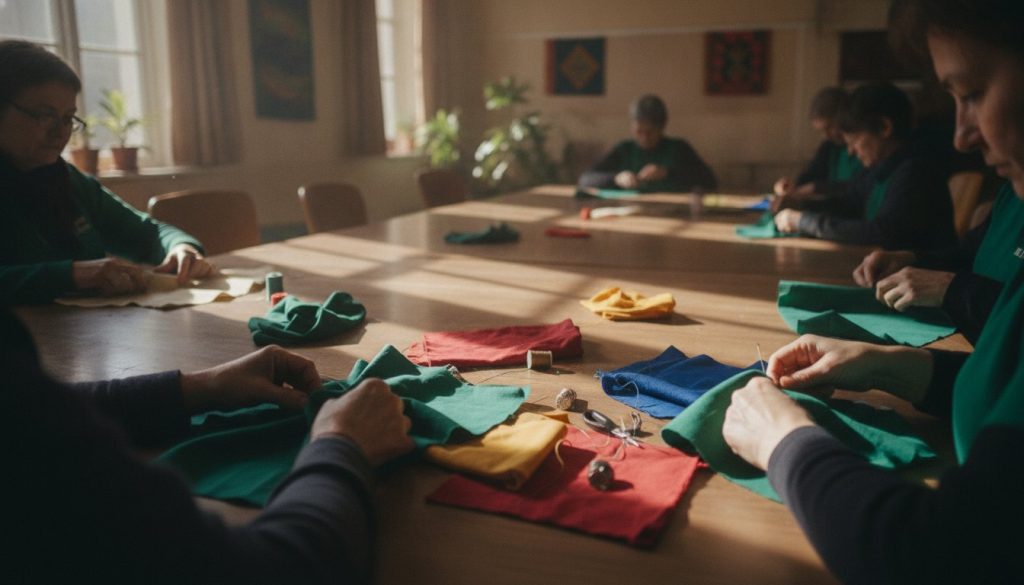
For individuals and families seeking refuge, the journey to a new country is often defined by profound challenges, from navigating unfamiliar systems to rebuilding a sense of self. In Bradford, a city long recognised for its commitment to sanctuary, community events serve as more than mere social gatherings; they are the essential infrastructure of integration, resilience, and cultural preservation. These events provide the vital bridge between the isolation of arrival and the profound sense of belonging that transforms a new place into a true home.
This guide explores the landscape of refugee community events in Bradford for 2026, detailing their purpose, the types of gatherings available, and how they provide a pathway to practical support. It is a resource for newcomers seeking connection, for established residents wishing to offer support, and for anyone who believes in the power of community to restore hope and dignity. Here, we outline how shared experiences in community halls, cultural centres, and places of worship become the foundation for a new life built on strength and mutual respect.
The Vital Role of Community Events for Bradford Refugees
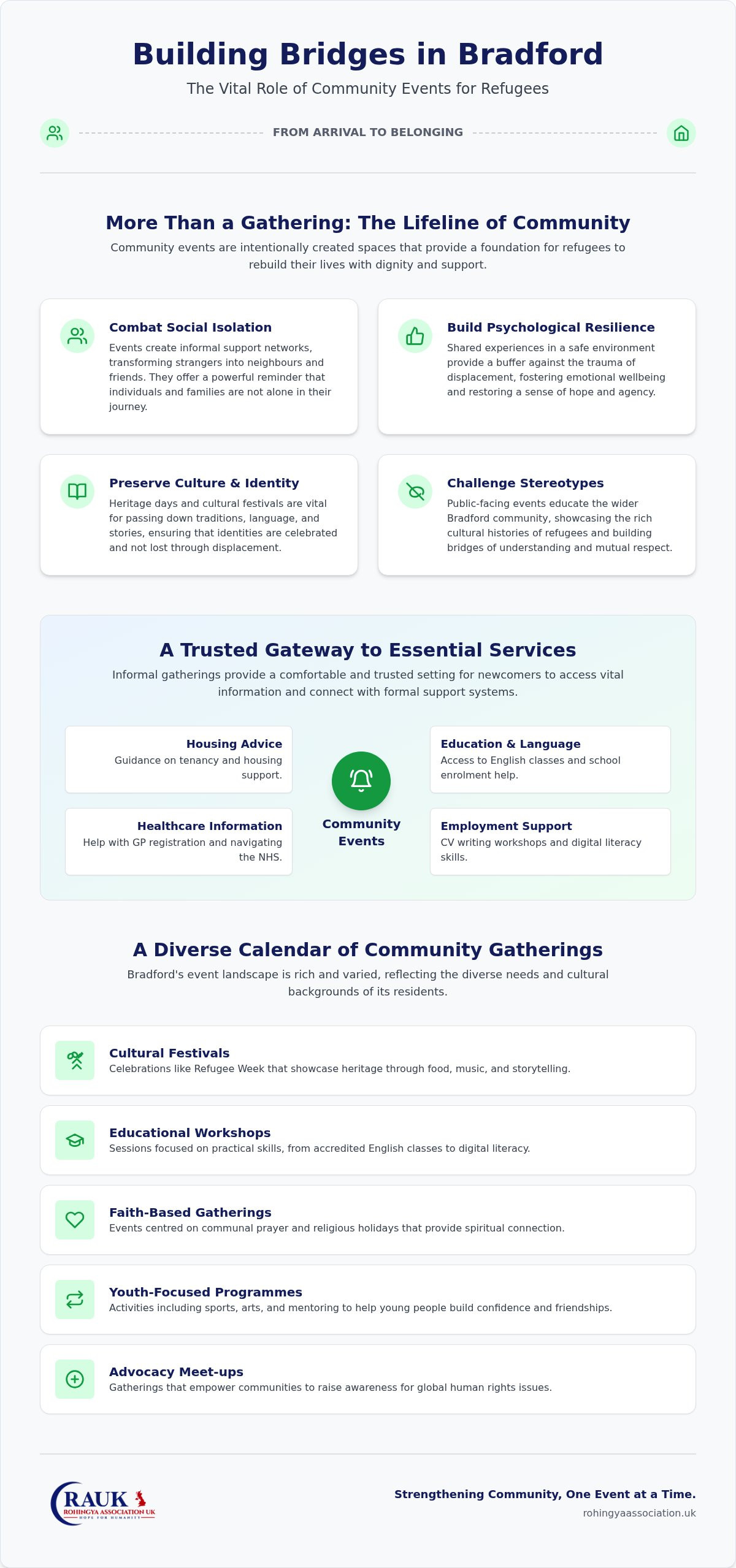
Community events are the lifeblood of integration for refugees and asylum seekers. They are intentionally created spaces designed to foster social inclusion, cultivate psychological resilience, and provide a buffer against the trauma of displacement. For many, arriving in a new country is an experience marked by solitude. Collective gatherings counteract this, offering a powerful reminder that they are not alone. It is within these settings that the difficult transition from being a newcomer to becoming an active, participating member of the local community begins.
Bradford’s long and proud history as a “City of Sanctuary” makes it a natural hub for this kind of support. The city’s identity is woven from the threads of many cultures, creating a welcoming environment where diversity is not just accepted but celebrated. This heritage of welcome means that community events are not an afterthought but a central pillar of the city’s support strategy. They are where formal support services and informal human connection meet, creating a holistic network of care that addresses both practical needs and emotional wellbeing.
Combating Social Isolation in West Yorkshire
The impact of loneliness on displaced families, particularly on youth and the elderly, cannot be overstated. After leaving behind established social structures, the silence of a new environment can be overwhelming. Local events directly combat this by creating informal support networks that supplement official services. A shared meal, a conversation over coffee, or a children’s play session can forge bonds that become lifelines, offering emotional support and shared understanding amongst those with similar lived experiences.
These gatherings are where strangers become neighbours and neighbours become friends. Social inclusion, in the context of Bradford’s diverse population, is the process by which every individual, regardless of their origin, is empowered to participate fully in the social, cultural, and economic life of the city.
The Bridge to Practical Support
Whilst the emotional benefits of community events are profound, their practical value is equally significant. A simple coffee morning or a vibrant cultural festival can serve as a trusted gateway to essential information and services. It is often in these relaxed, informal settings that people feel most comfortable asking questions about complex issues like housing, healthcare, and education. Trust is the cornerstone of this process; when information is shared by a community leader or a peer who has navigated the same challenges, it is received with greater confidence.
These events become discreet platforms for disseminating vital information. For example, a flyer about GP registration might be picked up at a cultural celebration, or a conversation at a community lunch could lead to a referral for housing advice. In this way, social gatherings act as a crucial ‘front door’ to the wider ecosystem of support, making the often-daunting task of accessing services feel more manageable and less intimidating.
Types of Refugee Community Events in Bradford
The calendar of refugee community events in Bradford is rich and varied, reflecting the diverse needs and cultural backgrounds of its residents. These gatherings are designed not only to welcome but also to empower, educate, and celebrate. From large-scale public festivals to small, focused workshops, each event plays a unique role in strengthening the social fabric of the city.
- Cultural festivals: Annual celebrations like Refugee Week, typically held in the third week of June, showcase the heritage of displaced communities through food, music, traditional arts, and storytelling.
- Educational workshops: These sessions focus on practical skills, offering everything from accredited English language classes to CV writing and digital literacy programmes.
- Islamic community events: For many communities, faith is a central pillar of identity and resilience. Events centred around communal prayer, religious holidays, and charitable giving provide spiritual nourishment and connection. You can learn more through this guide to Islamic community events in Bradford.
- Youth-focused programmes: Specially designed activities, including sports teams, creative arts workshops, and mentoring schemes, give young refugees a safe space to build friendships and develop confidence.
- Advocacy meet-ups: These gatherings empower communities to raise awareness for global human rights issues, connecting local experiences to international campaigns for justice and accountability.
Cultural Preservation and Heritage Days
For any diaspora community, there exists a profound need to maintain a connection to one’s roots. Cultural events are vital for this, creating opportunities for elders to pass down traditions and for children born in the UK to learn their mother tongue and understand their heritage. These celebrations of language, food, and art are acts of resistance against the erasure that often accompanies displacement. They proudly assert that whilst individuals may have been forced to leave their homes, they have not left their identities behind.
Furthermore, these events serve an important educational role for the wider Bradford public. By showcasing the rich cultural histories of refugee communities, they challenge stereotypes and build bridges of understanding. When a family shares its traditional music or cuisine, they are also sharing their story, fostering empathy and enriching the multicultural fabric of the city for everyone.
Education and Skills Workshops
Beyond celebration, many community events are focused on providing tangible pathways to self-reliance and professional success. Practical workshops are organised to address the specific barriers refugees face when entering the UK job market. English language acquisition is often the first and most critical step, and community-based classes offer a supportive environment for learning.
These sessions go further, providing guidance on writing a CV, preparing for interviews, and understanding British workplace culture. For many, these workshops are more than just training; they are spaces of mutual encouragement. They create a safe environment for adult learners to share experiences and build confidence whilst gaining new, marketable skills. Such programmes are a cornerstone of empowerment, transforming potential into opportunity and providing a clear path to restoration and agency for those determined to build a brighter future.
Navigating Local Support: How Events Facilitate Integration
The journey of integration is a complex process that extends far beyond initial social participation. True integration involves gaining the confidence and knowledge to access essential welfare services, engage with local government, and advocate for one’s own needs. Community events play an indispensable role in this transition, acting as a trusted intermediary between individuals and the statutory bodies designed to support them.
In these settings, community leaders and established members often act as guides, helping families navigate the UK’s complex systems. An informal chat at a community gathering can demystify the process of enrolling children in school, registering with a doctor, or understanding a tenancy agreement. Events serve as the “front door” for accessing healthcare, housing guidance, and mental health support, breaking down barriers of fear and mistrust. Through repeated positive interactions in a safe environment, individuals build the confidence needed to engage directly with official institutions.
From Social Connection to Housing Guidance
Finding stable, safe accommodation is one of the most significant challenges for newly arrived families. The link between community bonding and securing housing is powerful and direct. During events, individuals can share peer-to-peer advice on navigating the local housing market, understanding tenancy rules, and identifying reputable landlords. This informal knowledge sharing is invaluable, as it comes from a place of shared experience.
Hearing from someone who has successfully navigated the system can significantly reduce the anxiety associated with official paperwork and formal appointments. Community support networks can offer practical help, such as language interpretation during meetings or simply providing moral support. This collective approach transforms a daunting bureaucratic process into a manageable, community-supported effort.
Healthcare and Wellbeing Access
Displaced people often face specific and complex health challenges, including the long-term physical and psychological impacts of trauma, persecution, and arduous journeys. Community events provide a neutral and trusted ground for health awareness sessions, where professionals can share information in a culturally sensitive manner. Topics may range from nutrition and mental health to understanding the NHS and patients’ rights.
These gatherings are particularly crucial for addressing the stigma that can surround mental health in some cultures. By discussing wellbeing in a familiar community setting, it becomes a normalised and accessible topic. This approach ensures that support is not only available but also delivered in a way that respects cultural nuances, making it far more effective for those who need it most.
How to Participate, Volunteer, or Organise Local Events
Engaging with community events is a proactive step towards building a new life in Bradford. Whether you are a newcomer looking to connect, a resident wanting to help, or an asylum seeker hoping to gain experience, there are numerous ways to get involved. Participation is the first step towards building a network, whilst volunteering can provide invaluable UK work experience and a deeper sense of purpose. For those with a passion for leadership, there are even pathways to organising your own small-scale initiatives.
The key is to start small and find the right environment for you. Best practices for all events, whether large or small, involve ensuring they are inclusive, accessible, and welcoming to people from all backgrounds, regardless of their language, faith, or length of time in the UK.
Taking the First Step as a Participant
For someone new to the city, knowing where to start can be the biggest hurdle. A great first step is to check for event listings in public spaces like local libraries, community hubs, and faith organisations. Many groups also use social media platforms and messaging apps to share information about upcoming gatherings. Don’t hesitate to ask for help; organisations that support refugees are always happy to point you in the right direction.
Attending your first event can feel intimidating, especially if there are language barriers. Remember that you are in a space designed to be welcoming. Most organisers are aware of these challenges and foster an environment of peer support where others will be happy to help translate or explain things. Expect a friendly atmosphere where the primary goal is connection, not formality.
Volunteering and Community Leadership
Volunteering with local charities and community groups is an excellent way to give back whilst enhancing your own skills. It provides a structured way to meet new people, practise English, and gain experience that can be added to your CV. Many organisations, including those run by and for refugees, rely on volunteers to make their events happen.
Over time, the journey from event attendee to community organiser is a natural one for many. By taking on small responsibilities, you can build the confidence and skills to lead your own projects. The value of lived experience in event planning is immeasurable; it ensures that initiatives are genuinely responsive to the real needs of the community.
The Role of Community-Led Organisations in Bradford
At the heart of Bradford’s supportive ecosystem are the community-led organisations that work tirelessly to organise events, provide services, and advocate for the rights of refugees. These groups are often founded and run by individuals with lived experience of displacement, giving them a unique depth of understanding and a level of trust that larger, statutory bodies may struggle to achieve. Their work is crucial in strengthening Bradford’s social fabric, ensuring that support is not just provided, but is also culturally appropriate and empowering.
These organisations combine local community support with a broader vision, often linking the challenges faced in Bradford to global human rights issues. They play a dual role: preserving the unique cultural identities of specific communities whilst simultaneously fostering their successful integration into UK life. This delicate balance is what makes their contribution so indispensable.
A Community-Led Approach to Empowerment
The principle of being “community-led” is fundamental. It ensures that events and services are designed in direct response to the expressed needs of the families they serve, rather than being based on external assumptions. This approach fosters a sense of ownership and agency, empowering people to become active participants in their own integration journey. For example, an organisation like the Rohingya Association UK (RAUK) is uniquely positioned to understand the specific cultural and historical context of the Rohingya families it supports, allowing it to tailor events that resonate deeply with the community.
This deep connection allows organisations to combine practical local programmes with effective global advocacy. An awareness campaign held in a Bradford community centre can contribute to international efforts for justice and accountability, demonstrating that local action can have a powerful global impact.
How You Can Support This Work
The vital work of community-led organisations depends on the support of the wider public. There are many ways to get involved, from making a financial donation to volunteering your time and skills. Donations are critical for funding everything from crisis intervention and educational materials to the simple but essential cost of hiring a venue for a community event.
Getting involved with Bradford-based projects allows you to make a direct and tangible difference in your local community. We invite you to join us in this mission of restoration and hope. Whether through participation, volunteering, or a donation, your support helps build a more welcoming and resilient Bradford for all.
Support our mission to empower refugee communities in Bradford.
Frequently Asked Questions (FAQs)
What types of refugee community events are held in Bradford?
Bradford hosts a wide variety of events, including cultural festivals celebrating diverse heritages, educational workshops for language and skills development, youth programmes focused on sports and arts, faith-based gatherings, and advocacy meetings for human rights awareness.
How can I find out about upcoming events for refugees in West Yorkshire?
Information is often available at local libraries, community centres, and places of worship. Many organisations, like Bradford City of Sanctuary and other community-led groups, post event details on their websites and social media channels.
Are there specific events for different refugee communities in Bradford?
Yes, many community-led organisations host events tailored to specific cultural or ethnic groups. For example, the Rohingya Association UK organises gatherings for the Rohingya community, whilst other groups cater to families from Syria, Ukraine, and other parts of the world, ensuring culturally specific needs are met.
Can I volunteer for refugee events if I am an asylum seeker myself?
Absolutely. Volunteering is a highly encouraged way for asylum seekers to gain UK experience, practise English, and build a social network. Lived experience is incredibly valuable, and most community organisations welcome the participation of those they aim to support.
Do these events provide help with housing or healthcare?
Whilst the events themselves are not direct service providers, they act as crucial gateways to this support. They are safe spaces where you can receive trusted information, get informal advice from peers, and be connected with the official organisations that offer direct help with housing, healthcare, and other essential services.
Are community events in Bradford free to attend for refugees?
The vast majority of community events designed for refugees and asylum seekers are free to attend. The primary goal is to ensure they are accessible to everyone, removing any financial barriers to participation and social connection.