
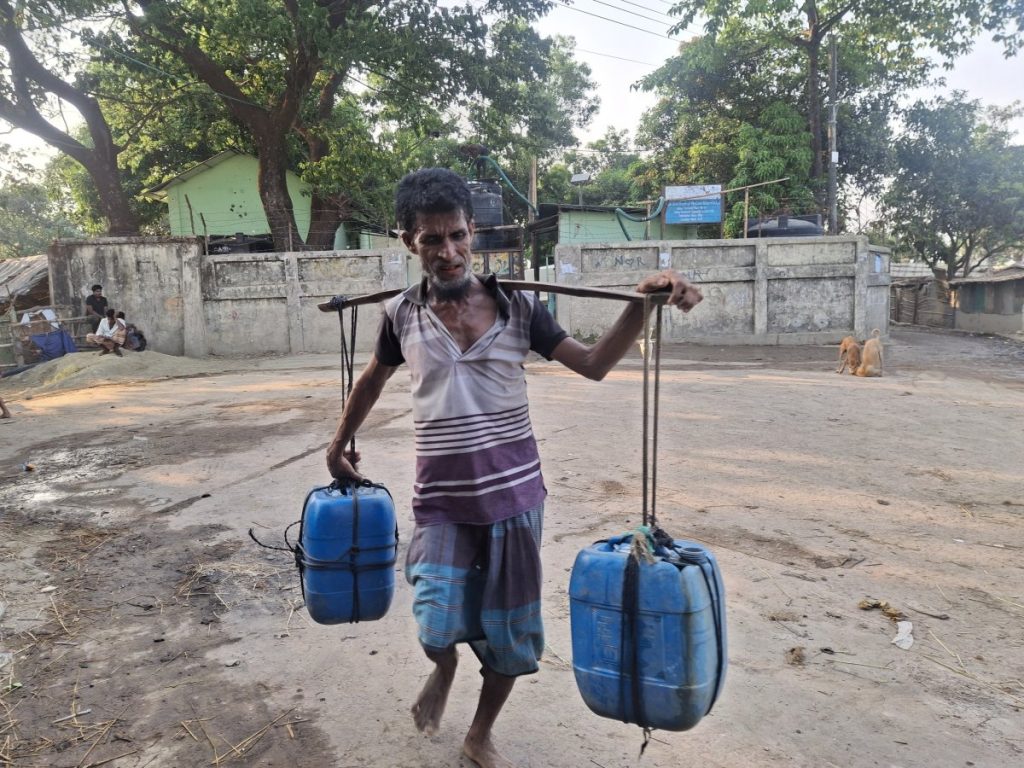
What does it mean to build a future when the law refuses to acknowledge your past? For many, the concept of home is a fixed point, yet for those arriving from Myanmar, the reality is far more fractured. You likely recognise that the refugee experience is often oversimplified, yet the specific challenges for Rohingya youth in UK society remain uniquely complex due to their enduring status as a stateless people. These young individuals must navigate the trauma of displacement, the nuances of a new educational system, and the weight of a heritage that lacks official recognition.
This article provides an in-depth exploration of the socio-economic, educational, and psychological hurdles facing the young Rohingya diaspora. We will examine how community-led support in cities like Bradford fosters a path to belonging, offering a sophisticated look at how these resilient individuals preserve their culture whilst forging a British identity. You will gain a comprehensive understanding of the Rohingya experience, discover actionable ways to support local integration, and learn how to champion a future defined by restoration, protection, and growth.
Key Takeaways
- Grasp the profound psychological weight of inherited statelessness and how it defines the legal and social reality for young people arriving in Britain.
- Uncover how to bridge the “age-grade gap” and navigate the specific challenges for Rohingya youth in UK schools following years of educational disruption.
- Explore the formation of a “Third Space” identity, where individuals learn to honour their heritage whilst establishing a secure sense of belonging.
- Identify the structural hurdles in housing and employment that contribute to enduring anxieties regarding legal status and future stability.
- Discover how community-led advocacy and dedicated empowerment initiatives provide the vital framework for restoration, agency, and shared renewal.
Defining the Challenges for Rohingya Youth in the UK
The transition from the world’s largest refugee camps in Bangladesh to the urban heartlands of Britain represents a monumental shift in reality. For the young diaspora, this journey isn’t merely about finding safety; it’s about confronting the deep-seated challenges for Rohingya youth in UK society that stem from a history of systematic exclusion. Unlike many other refugee groups, the Rohingya arrive with the heavy burden of “inherited statelessness,” a condition where the lack of a recognised homeland shapes every aspect of their identity. Understanding the unique challenges for Rohingya youth in UK environments requires a sophisticated look at this legal limbo and its enduring psychological toll.
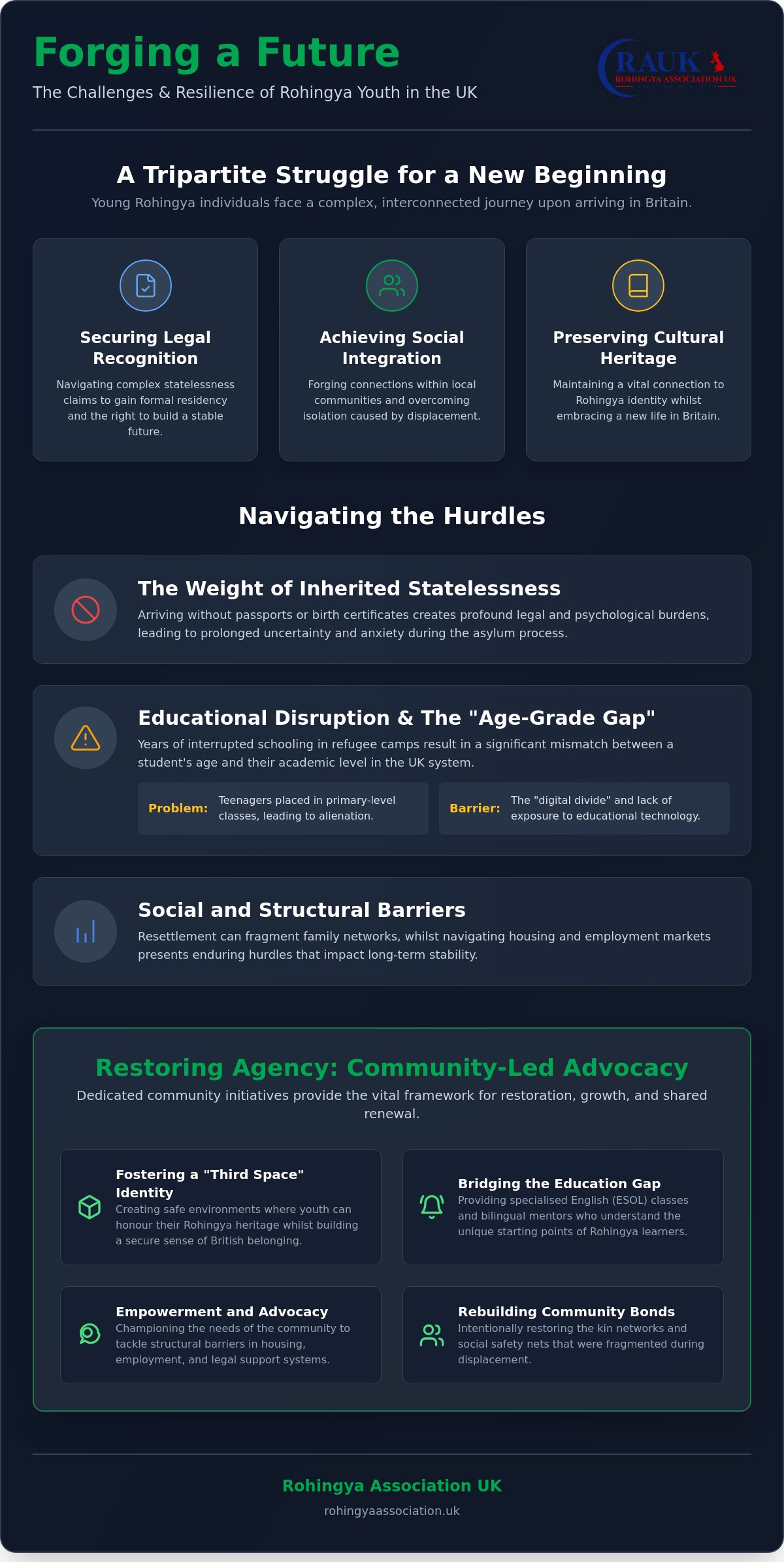
Success in this new environment requires overcoming a complex, tripartite struggle:
- Securing formal legal recognition and residency status.
- Achieving meaningful social integration within local neighbourhoods.
- Maintaining a fragile yet vital cultural heritage.
The Legacy of Statelessness in a British Context
The refusal of Myanmar to grant citizenship to the Rohingya means that many arriving in the UK possess no birth certificates, passports, or official records. This absence of documentation complicates the Home Office’s processing of statelessness claims, often leading to prolonged periods of uncertainty and anxiety. Within the broader context of Burmese communities in the United Kingdom, the Rohingya occupy a particularly precarious position. They lack the institutional backing that recognised citizens might enjoy, forcing them to navigate British bureaucracy without the foundation of a prior national identity. It’s a weight that lingers, making the pursuit of education and employment feel like a climb up a shifting slope.
Displacement and the Fragmentation of Family Units
Resettlement programmes often prioritise immediate safety over the preservation of extended kin networks. Whilst the UK provides a sanctuary, the process can inadvertently fracture the traditional community structures that have historically fostered resilience. For a young person, the loss of uncles, aunts, and elders means the loss of a social safety net that provided guidance, discipline, and emotional care. The fragmentation of these units leaves a void that must be filled by intentional, community-led bonding. Without these connections, the risk of isolation grows. Restoration of these bonds is not just a social luxury; it’s a fundamental requirement for the growth and stability of the next generation.
Educational Disruption and the Pursuit of Academic Parity
The classroom should be a sanctuary of opportunity, yet for many, it becomes a site of profound frustration. The challenges for Rohingya youth in UK education systems often begin with the stark reality of what was left behind. In the displacement camps of Cox’s Bazar, formal schooling was frequently restricted or entirely absent, leaving an entire generation with significant gaps in their foundational knowledge. When these young people arrive in Britain, they don’t just face a new language; they face a systemic “age-grade gap.” This occurs when a teenager, possessing the maturity and life experience of an adult, is placed in a primary or lower secondary class simply because their literacy levels don’t match their biological age.
This misalignment causes significant psychological distress, leading to a sense of alienation rather than inclusion. The digital divide further complicates this transition. Many youth have had minimal exposure to educational technology, making the sudden requirement to navigate virtual learning environments a daunting barrier to their progress. Addressing these hurdles requires more than just standard enrolment. It necessitates specialised English language classes for refugees Bradford that recognise the unique linguistic and cultural starting points of the Rohingya community.
The ESOL Challenge and Language Acquisition
Standard English for Speakers of Other Languages (ESOL) programmes often assume a level of prior formal education that many Rohingya youth haven’t been afforded. Because the Rohingya language is primarily oral for many, the leap to written English is exceptionally steep. Effective support must involve bilingual mentors who can bridge the gap between their heritage tongue and their new environment. Without this specific care, language barriers don’t just hinder grades; they limit the ability of youth to advocate for their own health, safety, and legal rights. Restoration of their voice is the first step toward true integration.
Bridging the Formal Schooling Gap
The path to academic parity requires intensive, tailored “catch-up” initiatives that respect the student’s dignity whilst accelerating their learning. The psychological stress of academic underperformance can be debilitating for those who are desperate to succeed and contribute to their new society. In the UK, the “attainment gap” for refugee youth is defined as the persistent disparity in educational outcomes between displaced students and their UK-born peers, often exacerbated by the lack of early years intervention. Integrating cultural identity into the learning process can help mitigate this stress. Initiatives focused on Preserving Rohingya Cultural Heritage show that when a student’s history is valued, their confidence in the classroom grows. To truly empower these young minds, we must look beyond the textbook and provide a holistic framework for youth empowerment and educational support.
Identity, Trauma, and the Preservation of Rohingya Heritage
For the young Rohingya diaspora, the psychological landscape is often a site of quiet, enduring conflict. The trauma of the past, rooted in the systematic persecution experienced in Myanmar, does not vanish upon arrival in Britain; instead, it intersects with the immediate, high-pressure stresses of integration. One of the most profound challenges for Rohingya youth in UK cities is managing the weight of survivor guilt. Knowing that an estimated 600,000 of their people remain in Myanmar, with many confined to displacement camps, creates a somber emotional burden for those who have reached safety. This guilt often complicates their ability to fully embrace the opportunities of their new lives, as their sense of peace is tethered to the suffering of those left behind.
Negotiating this internal struggle often leads to the formation of a “Third Space” identity. These young people find themselves in a precarious middle ground: they are no longer fully anchored to the traditional life of their parents, yet they frequently feel like outsiders within British society. To bridge this gap, Rohingya refugee education projects play a vital role. These initiatives do more than teach literacy; they provide a structured environment where youth can explore their history, validate their experiences, and begin to see their heritage as a source of strength rather than a marker of victimhood.
Mental Well-being Beyond Clinical Diagnosis
Addressing the mental health of this community requires a move away from purely clinical, Western-centric models that may carry a heavy social stigma. True restoration comes through culturally sensitive support that recognises the importance of communal healing. In cities like Bradford, community-led gatherings offer a vital sense of safety, allowing young people to share their burdens in a familiar environment. Finding peace also involves exploring the world around us; community hubs like Adventurerz illustrate how shared interests in discovery and travel can foster a sense of belonging. Faith often serves as a cornerstone of this resilience. Islamic community events provide a framework for spiritual endurance, offering comfort, purpose, and a shared moral vocabulary that helps youth process their displacement through a lens of hope and perseverance.
The Fight Against Cultural Erosion
As the younger generation becomes more fluent in English and more accustomed to British norms, the risk of cultural erosion becomes a pressing concern. There is a tangible fear that the Rohingya language, traditions, and oral histories may fade amongst those eager to fit in. Organising cultural festivals is not merely a celebration; it’s a strategic tool for youth empowerment. These events allow the diaspora to showcase their vibrant heritage, fostering a sense of pride that counters the narrative of statelessness. By centering heritage as a foundation, the Rohingya Association UK (RAUK) ensures that building a successful British future does not require the abandonment of one’s roots. Preservation is the first step toward a resilient identity.
Structural Barriers: Housing, Employment, and Legal Status
The promise of safety in Britain is often shadowed by the rigid complexity of its infrastructure. Whilst the immediate threat of violence has been left behind, the challenges for Rohingya youth in UK society shift toward a battle for structural stability. For many, the weight of their past is compounded by a deep-seated anxiety regarding their future legal status. Even with initial asylum granted, the looming expiration of “Leave to Remain” creates a state of perpetual “temporary belonging.” This uncertainty is exacerbated by the UK Home Office’s updated guidance from January 2026, which continues to scrutinise the risk profiles of displaced individuals. The fear of future deportation isn’t just a legal concern; it’s a psychological barrier that prevents young people from fully investing in their long-term British futures.
Breaking through these barriers requires a meticulous approach to three core pillars of life:
- Establishing a secure and permanent legal residency.
- Gaining access to meaningful and sustainable employment.
- Securing safe, stable, and dignified housing.
Without these foundations, the resilience of the youth is constantly tested by the very systems designed to offer them refuge.
Navigating the UK Labour Market
Entering the British workforce presents a unique set of hurdles for those without a traditional UK-based CV or local references. Many Rohingya youth possess significant practical skills, yet these often fail to translate into recognised qualifications within the UK labour market. The transition from informal economies to a regulated professional environment is steep. Mentorship from established professionals within the diaspora is vital here. These mentors provide the cultural translation needed to understand workplace norms, interview etiquette, and the nuances of professional networking. Translating traditional knowledge into British certifications is not just about employment; it’s about restoring a sense of agency and purpose.
Housing Instability and Overcrowding
The transition from displacement camps to the UK private rental sector or council housing lists is often fraught with difficulty. Many young people find themselves in overcrowded or substandard conditions, which directly impacts their physical health and their ability to focus on education. Navigating the bureaucracy of local authorities requires expert guidance and persistent advocacy. Without a stable home, the process of integration stalls. We work to ensure that no young person faces these systems alone. If you wish to help us provide this vital guidance, you can support our advocacy and awareness campaigns to ensure every young arrival has a place to call home. Stability is the bedrock of renewal.
Restoring Agency: How Community-Led Advocacy Creates Change
The journey toward integration is not a passive process of assimilation; it’s a deliberate act of reclaiming one’s future. Whilst previous sections have detailed the systemic hurdles, the focus now shifts to the mechanisms of renewal. The Rohingya Association UK (RAUK) serves as the essential bridge between displaced youth and the wider British society, ensuring that the unique challenges for Rohingya youth in UK cities are met with culturally nuanced solutions. Through our “Education for a New Tomorrow” methodology, we move beyond basic literacy to foster genuine youth empowerment. This approach equips young people with the tools to navigate their new environment whilst maintaining the dignity of their heritage, turning a history of statelessness into a future of purpose.
Global advocacy is a cornerstone of this mission. By providing platforms for young voices on the international stage, we ensure that the Rohingya diaspora is not seen merely as a group of victims, but as a community of principled leaders. These programmes allow youth to articulate their own needs, challenge systemic discrimination, and advocate for the rights of those still facing persecution in Myanmar. This transition from being spoken for to speaking out is the ultimate act of restoration. It provides a sense of agency that was stripped away by decades of exclusion and displacement.
The RAUK Model of Empowerment
Our work in Bradford is grounded in the belief that practical assistance must be paired with emotional support to be truly effective. The RAUK model combines immediate crisis intervention with long-term skills development, creating a stable environment where young people can thrive. Youth-led initiatives are particularly vital here. By encouraging young arrivals to take active roles in organising community events and advocacy campaigns, we foster the next generation of community leaders. These individuals don’t just receive support; they become the protective shield for their peers. This cycle of mutual care transforms the experience of displacement into a foundation for collective strength, resilience, and growth.
A Collective Responsibility for the Future
The success of Rohingya youth is not an isolated achievement; it’s a vital contribution to the vibrancy and resilience of the broader British community. When a young person gains the education and confidence to lead, they enrich our schools, our workforce, and our local neighbourhoods. We have a shared moral duty to ensure that the challenges for Rohingya youth in UK society are met with a steadfast commitment to justice. We invite you to be a part of this journey of restoration. Your contribution allows us to expand our reach and provide the specialised care that these resilient individuals deserve. You can directly support Rohingya education projects that turn potential into progress.
Empower a voice. Restore a future. Support RAUK today.
Advancing Toward a Future of Restoration
The journey from the displacement camps of Myanmar and Bangladesh to the urban heartlands of Britain is marked by a profound search for stability. We have examined how the weight of inherited statelessness and the nuances of educational disruption shape the daily lives of the diaspora. It’s clear that the challenges for Rohingya youth in UK society require more than just basic aid; they demand a sophisticated framework of community-led advocacy, cultural preservation, and structural support. By bridging the gap between past trauma and future potential, we can ensure that these resilient young people don’t just survive, but truly belong.
As a community-led organisation based in the heart of Bradford, the Rohingya Association UK (RAUK) remains a steadfast advocate for those navigating this complex transition. Our active advocacy and aid projects across the UK, Myanmar, and Bangladesh provide a protective shield and a guiding hand for the next generation. You can help us continue this vital work. Support the restoration and empowerment of Rohingya youth by donating to RAUK today. Your contribution to Registered Charity number 1211433 directly fuels the path toward justice and renewal. Together, we can transform a history of exclusion into a legacy of strength and shared success.
Frequently Asked Questions
What are the main challenges for Rohingya youth in the UK?
The primary challenges for Rohingya youth in UK society involve navigating a complex tripartite struggle of legal recognition, educational parity, and cultural preservation. These young individuals often face significant gaps in formal schooling due to years spent in displacement camps like Cox’s Bazar. This is compounded by the psychological weight of statelessness, which creates an enduring sense of uncertainty regarding their long-term residency and social belonging.
How does statelessness affect Rohingya refugees in Britain?
Statelessness leaves many Rohingya refugees without the fundamental protections of citizenship, resulting in a lack of birth certificates or official identity documents. In Britain, this complicates the processing of asylum claims and reinforces a feeling of permanent guesthood. This legal limbo often hinders access to higher education and professional opportunities, making the pursuit of a stable future an uphill struggle against bureaucratic barriers.
Where can I find English language classes for refugees in Bradford?
Specialised English language classes for refugees in Bradford are available through the Rohingya Association UK, situated in the heart of Bradford. These programmes are specifically tailored to the needs of oral-first speakers who may have missed foundational schooling. By utilising bilingual mentors, we ensure that students can acquire language skills whilst maintaining a deep connection to their heritage tongue and communal identity.
What kind of support does the Rohingya Association UK provide for youth?
We provide a comprehensive framework of support that includes crisis intervention, educational empowerment, and youth-led advocacy. We act as a protective shield for young people, offering practical guidance on housing whilst fostering leadership skills through our specialised empowerment initiatives. Our goal is to move beyond simple aid, instead focusing on the long-term restoration of agency and professional purpose for the challenges for Rohingya youth in UK environments.
Why is cultural preservation important for displaced Rohingya youth?
Cultural preservation is essential because it provides a foundation of pride and psychological resilience for youth who have faced systematic exclusion. By celebrating Rohingya traditions and language, young people can counter the narrative of victimhood and build a secure identity that bridges their past and present. This process of honouring one’s roots is a vital component of healing, helping survivors navigate their new British lives with dignity.
How can I donate to help Rohingya education projects in the UK?
You can support our mission by donating directly through the official RAUK website. These funds are used to facilitate Rohingya education projects that provide essential literacy training, digital skills, and leadership workshops. Every contribution helps us provide the resources necessary for young arrivals to overcome structural barriers and achieve academic parity within the UK system. To understand the full impact of donations on Rohingya education and how your support builds long-term stability, we encourage you to explore our comprehensive supporter’s guide.
What are the barriers to employment for young Rohingya refugees?
The most significant barriers to the UK labour market include a lack of recognised qualifications and the absence of a British-based professional history. Many young refugees possess immense practical talent but find it difficult to obtain references or translate their skills into a formal CV. We address this by offering mentorship from established professionals who help bridge the gap between traditional knowledge and modern workplace requirements.
Is there specific mental health support for Rohingya trauma survivors in the UK?
Mental health support for survivors is most effective when it is culturally sensitive and avoids the stigma often associated with clinical diagnosis. We focus on communal healing through safe social spaces and faith-based resilience initiatives that provide spiritual comfort. These programmes allow youth to process their trauma amongst peers who understand their unique history, fostering a sense of emotional protection and shared hope.